Jaroslaw Jura – författare
Visar alla böcker från författaren Jaroslaw Jura. Handla med fri frakt och snabb leverans.
4 produkter
China's Vertical Multilateralism and the Global South
Narratives, Networks, and Money
Av Mario Esteban, Bartosz Kowalski m. fl.
E-bok, 2025
831 kr
Lägg i varukorg
This book provides an in-depth analysis of China-led multilateralism and decodes China's narratives, and political and business practices, both from theoretical and practical dimensions.Introducing the mechanisms that govern China-led multilateral formats in what China sees as the Global South, the …
China's Vertical Multilateralism and the Global South
Narratives, Networks, and Money
Av Mario Esteban, Bartosz Kowalski m. fl.
E-bok, 2025
831 kr
Lägg i varukorg
This book provides an in-depth analysis of China-led multilateralism and decodes China's narratives, and political and business practices, both from theoretical and practical dimensions.Introducing the mechanisms that govern China-led multilateral formats in what China sees as the Global South, the …
China's Vertical Multilateralism and the Global South
Narratives, Networks, and Money
Av Dominik Mierzejewski, Jarosław Jura m. fl.
Inbunden, 2025
2513 kr
Lägg i varukorg
This book provides an in-depth analysis of China-led multilateralism and decodes China’s narratives, and political and business practices, both from theoretical and practical dimensions.Introducing the mechanisms that govern China-led multilateral formats in what China sees as the Global South, the …
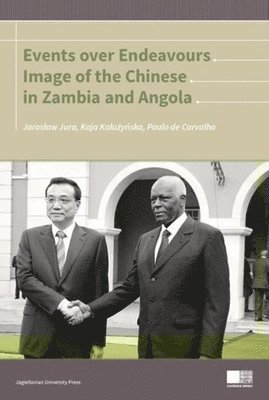
Events Over Endeavours – Image of the Chinese in Zambia and Angola
Av Jaroslaw Jura, Kaja Kaluzynska m. fl.
Häftad, 2015
394 kr
Lägg i varukorg
The contemporary Chinese engagement in Africa dates back to the 1950's, and it has gained momentum in the last two decades. The Chinese presence in African countries has been getting more and more visible; not only the number of Chinese investments in the area and international agreements has been …