Ben Orlove - Böcker
Visar alla böcker från författaren Ben Orlove. Handla med fri frakt och snabb leverans.
4 produkter
4 produkter
State, Capital, And Rural Society
Anthropological Perspectives On Political Economy In Mexico And The Andes
Inbunden, Engelska, 2019
2 098 kr
Skickas inom 10-15 vardagar
This volume represents recent anthropological research on the political economy of Latin America. Dependency theories, modes of production analysis, and theories of the state all attempt to conceptualize the interrelations among "class," "interest," and, at some level, "power." All three, that is, focus on classical questions of political economy. The studies presented in this volume both draw on the insights of this literature and challenge the grander theories in important respects. The chapters in this volume represent an anthropological contribution to the political economy of Latin America, a bypassing of dependency theory and the adoption of its successors, mode of production analysis and state theory.
State, Capital, And Rural Society
Anthropological Perspectives On Political Economy In Mexico And The Andes
Häftad, Engelska, 2021
620 kr
Skickas inom 10-15 vardagar
This volume represents recent anthropological research on the political economy of Latin America. Dependency theories, modes of production analysis, and theories of the state all attempt to conceptualize the interrelations among "class," "interest," and, at some level, "power." All three, that is, focus on classical questions of political economy. The studies presented in this volume both draw on the insights of this literature and challenge the grander theories in important respects. The chapters in this volume represent an anthropological contribution to the political economy of Latin America, a bypassing of dependency theory and the adoption of its successors, mode of production analysis and state theory.
260 kr
Skickas inom 7-10 vardagar
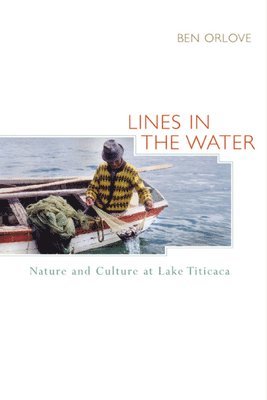
This beautifully written book weaves reflections on anthropological fieldwork together with evocative meditations on a spectacular landscape as it takes us to the remote indigenous villages on the shore of Lake Titicaca, high in the Peruvian Andes. Ben Orlove brings alive the fishermen, reed cutters, boat builders, and families of this isolated region, and describes the role that Lake Titicaca has played in their culture. He describes the landscapes and rhythms of life in the Andean highlands as he considers the intrusions of modern technology and economic demands in the region. Lines in the Water tells a local version of events that are taking place around the world, but with an unusual outcome: people here have found ways to maintain their cultural autonomy and to protect their fragile mountain environment. The Peruvian highlanders have confronted the pressures of modern culture with remarkable vitality. They use improved boats and gear and sell fish to new markets but have fiercely opposed efforts to strip them of their indigenous traditions.They have retained their customary practice of limiting the amount of fishing and have continued to pass cultural knowledge from one generation to the next--practices that have prevented the ecological crises that have followed commercialization of small-scale fisheries around the world. This book--at once a memoir and an ethnography--is a personal and compelling account of a research experience as well as an elegantly written treatise on themes of global importance. Above all, Orlove reminds us that human relations with the environment, though constantly changing, can be sustainable.
679 kr
Skickas inom 7-10 vardagar
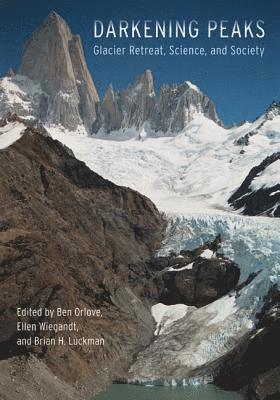
Looking up at mountains, people now see bare, dark rock where white snow and ice once stood - dramatic evidence of the accelerating pace of glacier retreat due to climate change. This groundbreaking work is the first to provide an integrated, multidisciplinary, global exploration of the scientific, social, and economic dimensions of this phenomenon. Bringing together contributors from five continents, "Darkening Peaks" discusses the ways that scientists have observed and modeled glaciers, tells how climate change is altering their size and distribution, and looks closely at their effect on human life.