Ben Vickers - Böcker
Visar alla böcker från författaren Ben Vickers. Handla med fri frakt och snabb leverans.
5 produkter
5 produkter
183 kr
Tillfälligt slut
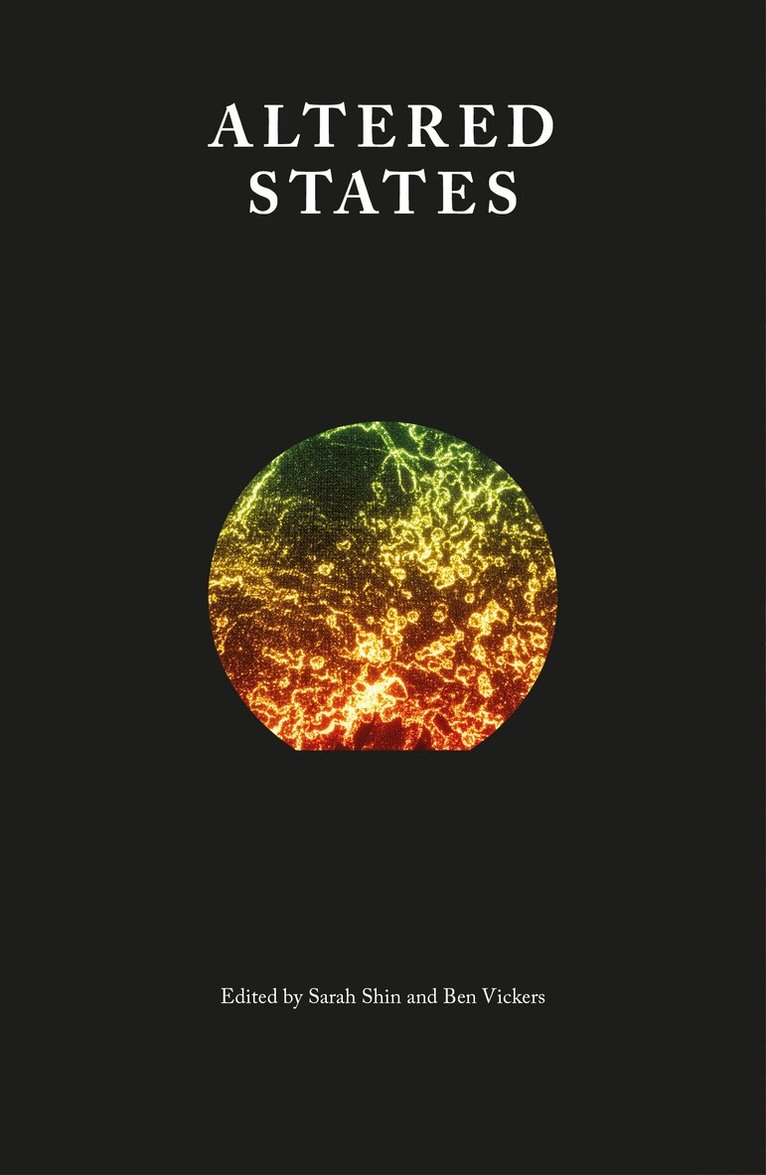
What are altered states of consciousness? Can altered states produce altered worlds? Altered States brings together poetic journeys that explore the varieties of revelatory experience. These poems expand our sense of selfhood and place in the cosmos, complicating the boundaries between alterity and the ordinary, to propose a new psychedelic style for the 21st century.With contributions from K Allado-McDowell, Will Alexander, Rachael Allen, Khairani Barokka, Jen Calleja, Jesse Darling, Paige Emery, James Goodwin, Hannah Gregory, Johanna Hedva, Caspar Heinemann, IONE, Lucy Ives, Bhanu Kapil, Daisy Lafarge, Dorothea Lasky, So Mayer, Lucy Mercer, Precious Okoyomon, Irenosen Okojie, Nisha Ramayya, Mark von Schlegell, Erica Scourti, Yasmine Seale, Emily Segal, Tai Shani, Merlin Sheldrake, Sin Wai Kin, Himali Singh Soin, Janaka Stucky, Jenna Sutela, Rebecca Tamas, Ayesha Tan Jones, Bett Williams and Flora Yin-Wong.
411 kr
Skickas
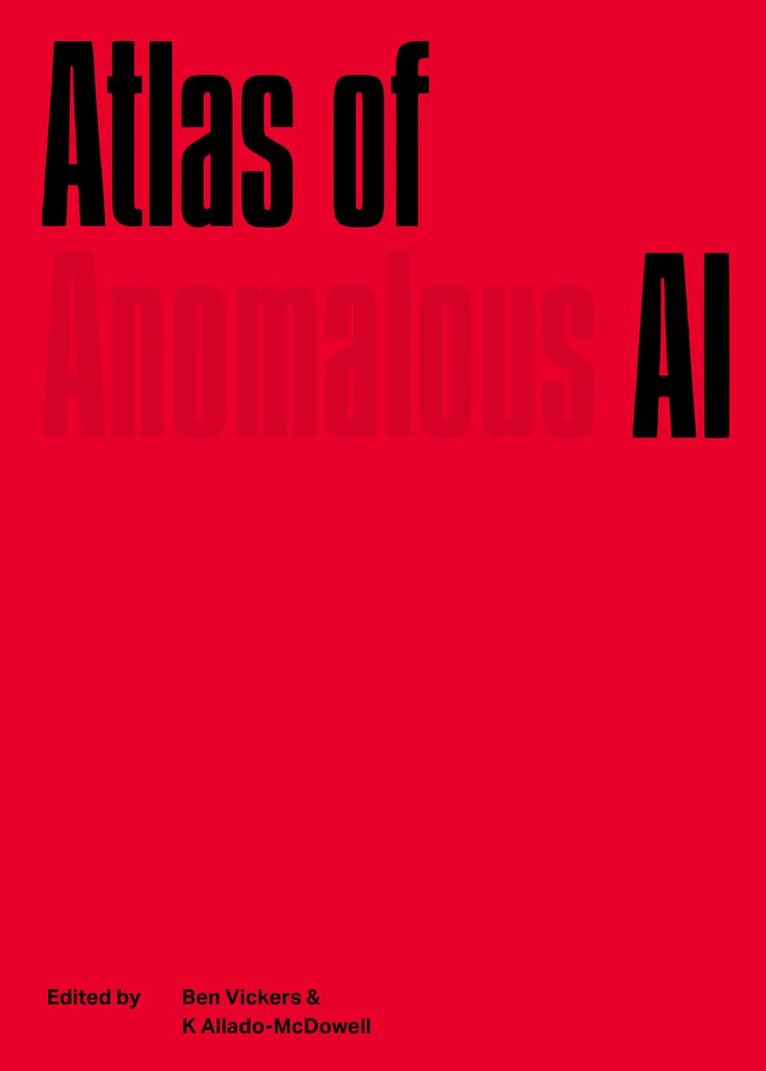
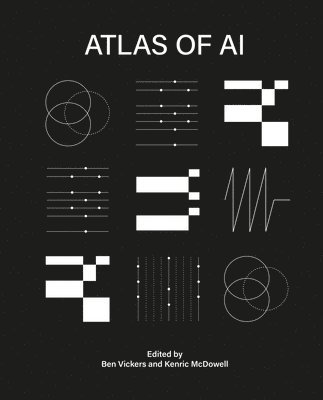
What do the divinatory practices of Ancient Greece’s Oracle of Delphi, the Incan knotted quipu counting device, the I Ching, the nine billion names of God and Elizabethan mathematician John Dee have to do with artificial intelligence? The Atlas of Anomalous AI is a compelling and surprising map of our complex relationship to intelligence, from ancient to emerging systems of knowledge. A wildly associative constellation of ideas, stories, artworks and historical materials, the Atlas draws on art historian Aby Warburg’s Mnemosyne Atlas — an image map of the “afterlife of antiquity” — to approach the defining concepts of AI from an imaginative, artistic and revitalising perspective.The Atlas presents a hyperdimensional view of the world, through a broad range of perspectives that explore the question of what AI has been and what it is becoming. Key texts on modelling, prediction and automation are brought together with stories of science fiction, dreams and human knowledge, set among visionary and surreal images by Emma Kunz, Pablo Amaringo, Carl Jung, Hilma af Klint, William Blake.The Atlas expands our common understanding of AI and raises new questions beyond a illusory fixation on linear progression, towards a new horizon of infinite play in the construction of artificial intelligence today.
159 kr
Skickas
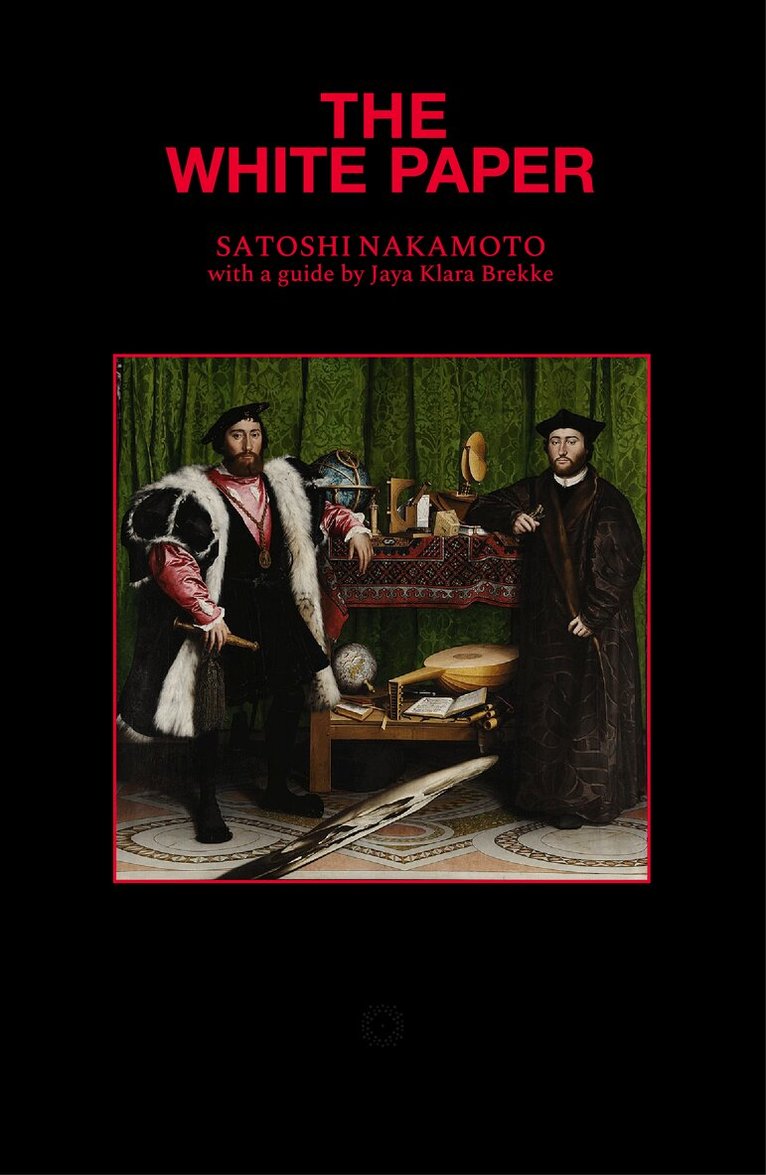
In the wake of the 2008 financial crisis, the mysterious Satoshi Nakamoto published a revolutionary white paper that described a simple peer-to-peer electronic cash system that would later become Bitcoin, laying the foundations for the technical innovation known as the blockchain. In the decade since its publication, the nascent technology behind cryptocurrency has become recognised holding the same transformative potential of the printing press or the internet, set to impact our sense of identity and provenance as much as finance. It has disrupted traditional financial markets with a spectacular explosion in value, paved the way for thousands of similar digital currencies and laid the groundwork for a decentralised future of the web. But what does it mean for everyday life? The White Paper returns to the document that started it all, taking Nakamoto’s text as a Rosetta Stone to decode the meaning of blockchain for contemporary society. This guide to the innovative technology shows how it holds up a mirror to our understanding of the world, both timeless and mutating: from the archetypal origin story, to concepts of trust and value, and the changing shapes of power and privacy. In an acute and definitive Introduction, James Bridle, leading technologist, artist and author of New Dark Age, charts the rise of blockchain from its roots in clandestine online cultures. Delving into the first conversations between initial members of the Bitcoin community - a disparate group of cyber ideologues ranging from right-wing Libertarians to radical Web 2.0 utopian, Bridle shows how they shed light on the cryptographic imagination that points towards the future of the Bitcoin dream. Through the lens of encryption as philosophy and practice, Bridle examines the continuing debates around the meaning of money, democratic values and security in an era of surveillance capitalism. Fully annotated with key secondary texts, The White Paper presents new perspectives on the radical paper.
399 kr
Tillfälligt slut
331 kr
Skickas
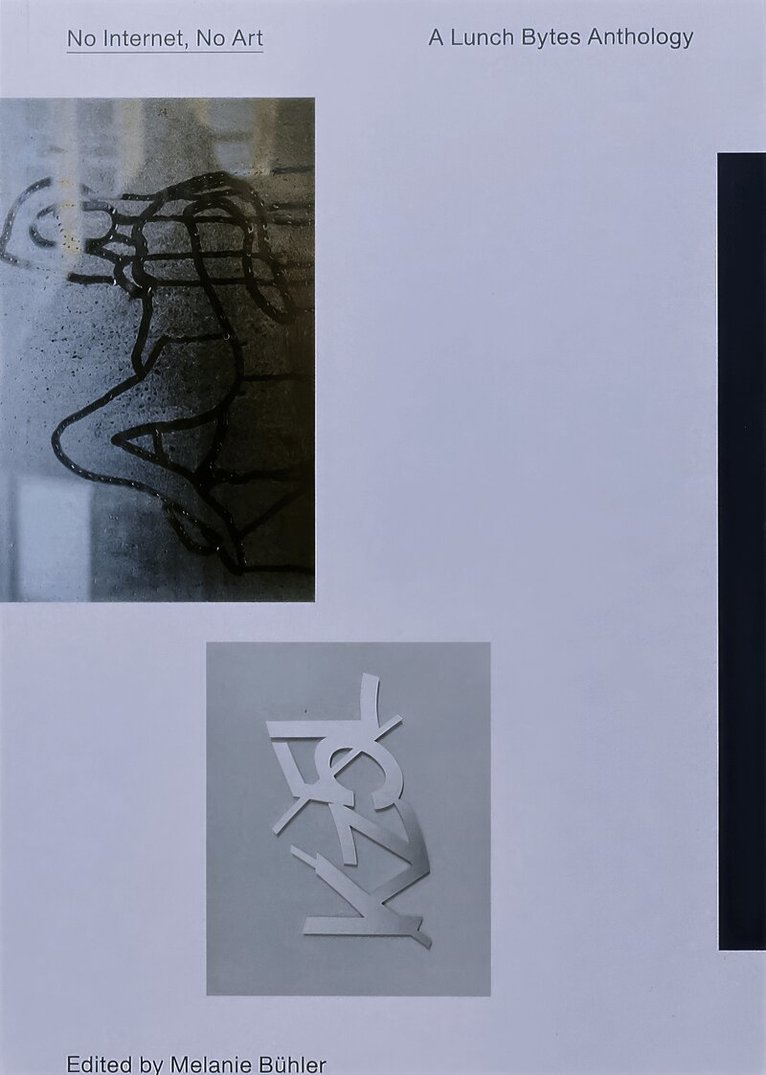
Today it has become increasingly difficult to find a person or an object without some kind of connection to the internet. No Internet, No Art is dedicated to exploring what this situation entails with respect to one cultural field in particular: art. This anthology forms both the culmination and a continuation of a series of public events titled Lunch Bytes – Thinking about Art and Digital Culture, held in Washington, D. C. , which invited artists and experts from different fields to discuss their work in relation to this overarching theme. By opening up the often narrowly-defined discursive field of “post-internet,” artistic practices are examined thematically within the larger context of digital culture. As such, this anthology offers valuable new contributions to the fields of art history, media studies, philosophy, curatorial studies, and design. With contributions by: Philipp Albers, Kari Altmann, Karen Archey, Aram Bartholl, Michael Bell-Smith, David M. Berry, Natalie Bookchin, Andreas Broeckmann, Melanie Bühler, Harry Burke, Adam Cruces, Michel van Dartel, Annet Dekker, Niels van Doorn, Raffael Dörig, Claire L. Evans, Kenneth Goldsmith, Joel Holmberg, Paul Kneale, Katja Kwastek, Monica Lam, Geert Lovink, Pierre Lumineau, m-a-u-s-e-r, Greg Niemeyer, Nicolas Nova, Jaakko Pallasvuo, Christiane Paul, Daniel Pinkas, Domenico Quaranta, Jon Rafman, Rafaël Rozendaal, Cornelia Sollfrank, Jenna Sutela, Douglas Thomas, Mark Tribe, Brad Troemel, UBERMORGEN, Ben Vickers, Bernadette Wegenstein, Peter Weibel, Elvia Wilk.