Benedict Morrison - Böcker
Visar alla böcker från författaren Benedict Morrison. Handla med fri frakt och snabb leverans.
3 produkter
3 produkter
1 255 kr
Skickas inom 5-8 vardagar
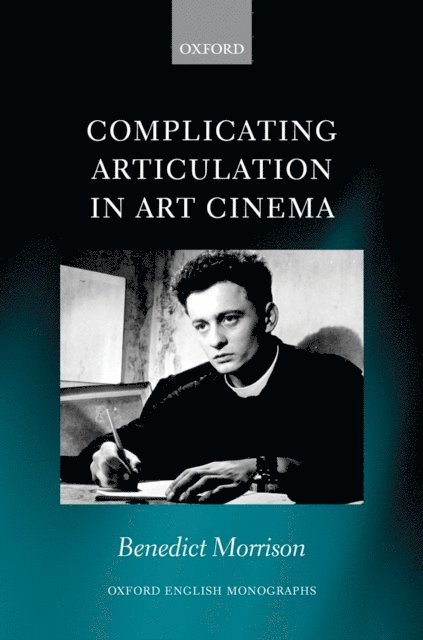
Complicating Articulation in Art Cinema argues that art cinema draws attention to its disjointed, multi-parted form, but that criticism has too frequently sought to explain this complexity away by stitching the parts together in totalizing readings. This stitching together has often relied on the assumption that the solution to art cinema's puzzles lies in interpreting each film as the expression of a focalizing character's internal disturbance. This book challenges this assumption. It argues that the attempt to explain formal complexity through this character-centric approach reduces formal achievements and enigmatic characters to inadequate approximations of one another. Reference to character cannot fully tame unschematic and unpredictable combinations of - and collisions between - contradictory levels of narration, clashing styles, discontinuously edited shots, jarring allusions, dislocated genre signifiers, and intermedial elements. Through close analyses of films by Roberto Rossellini, Robert Bresson, Luis Buñuel, Terence Davies, Peter Greenaway, and Kelly Reichardt, Complicating Articulation in Art Cinema offers an ethics of criticism that suggests that the politics of art cinema's eccentric form are limited by character-centred readings. Each of the featured films presents inarticulate characters, whose emotional and intellectual lives are unknowable, further complicating the relationship between character and form. This book argues that, by acknowledging this resistance to interpretation, critics can think in new ways about art cinema's interrogation of the possibilities of knowledge.
422 kr
Skickas inom 5-8 vardagar
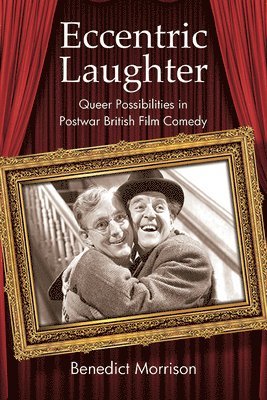
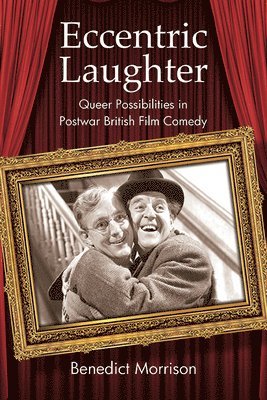
Dispels the idea that postwar British comedies were apolitical, arguing instead that they presented subversive, iconoclastic, queer experiments in living for a country that was rebuilding and reimagining itself after years of conflict.Eccentric Laughter explores new ways to watch postwar British film comedies, arguing that their representations of eccentricity offered a set of possible queer futures for a Britain that had been destabilized by years of conflict and social upheaval. Far from being the apolitical cinema described by previous critics, these comedies-including both perennial favorites from Ealing Studios and neglected films ripe for rediscovery-make a joke of and suggest alternatives to the heterocentric home and family. Referencing a wide range of theories, the book gives details of how these films' comic queernesses are not structured on fixed identities but on an open play of possibilities, depicting eccentricity, artifice, drag, ruins, and the wild in ways that can still offer inspiration for experiments in living today. Engaging with contemporary queer theories and politics, the book argues that these films continue to address questions of urgent relevance to students and other viewers in the twenty-first century. Films discussed include The Belles of St. Trinian's, Genevieve, The Lavender Hill Mob, Simon and Laura, The Stranger Left No Card, and Young Wives' Tale.
1 019 kr
Skickas
Dispels the idea that postwar British comedies were apolitical, arguing instead that they presented subversive, iconoclastic, queer experiments in living for a country that was rebuilding and reimagining itself after years of conflict.Eccentric Laughter explores new ways to watch postwar British film comedies, arguing that their representations of eccentricity offered a set of possible queer futures for a Britain that had been destabilized by years of conflict and social upheaval. Far from being the apolitical cinema described by previous critics, these comedies-including both perennial favorites from Ealing Studios and neglected films ripe for rediscovery-make a joke of and suggest alternatives to the heterocentric home and family. Referencing a wide range of theories, the book gives details of how these films' comic queernesses are not structured on fixed identities but on an open play of possibilities, depicting eccentricity, artifice, drag, ruins, and the wild in ways that can still offer inspiration for experiments in living today. Engaging with contemporary queer theories and politics, the book argues that these films continue to address questions of urgent relevance to students and other viewers in the twenty-first century. Films discussed include The Belles of St. Trinian's, Genevieve, The Lavender Hill Mob, Simon and Laura, The Stranger Left No Card, and Young Wives' Tale.