Benjamin F. Alexander - Böcker
Visar alla böcker från författaren Benjamin F. Alexander. Handla med fri frakt och snabb leverans.
6 produkter
6 produkter
Ararat in America
Armenian American Culture and Politics in the Twentieth Century
Inbunden, Engelska, 2023
1 245 kr
Skickas inom 10-15 vardagar
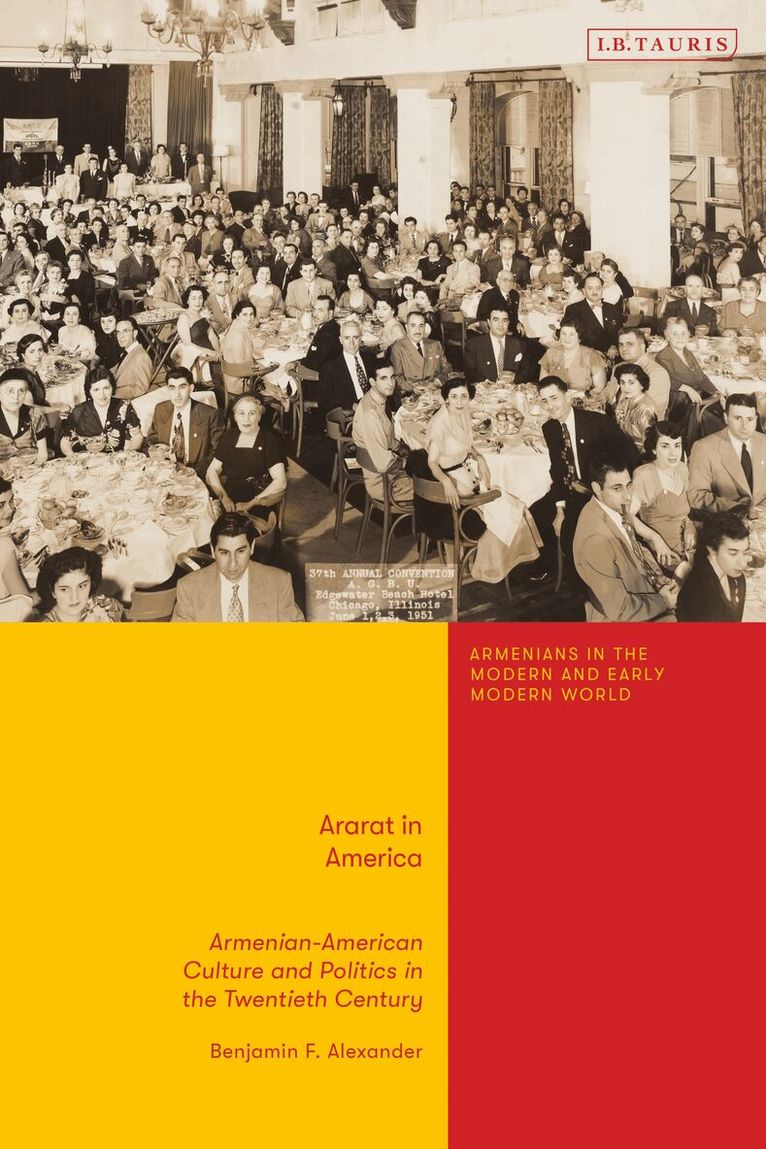
How has the distinctive Armenian-American community expressed its identity as an ethnic minority while ‘assimilating’ to life in the United States? This book examines the role of community leaders and influencers, including clergy, youth organizers, and partisan newspaper editors, in fostering not only a sense of Armenian identity but specific ethnic-partisan leanings within the group’s population. Against the backdrop of key geopolitical events from the aftermath of the Armenian Genocide to the creation of an independent and then Soviet Armenia, it explores the rivalry between two major Armenian political parties, the Tashnags and the Ramgavars, and the relationship that existed between partisan leaders and their broader constituency. Rather than treating the partisan conflict as simply an impediment to Armenian unity, Benjamin Alexander examines the functional if accidental role that it played in keeping certain community institutions alive. He further analyses the two camps as representing two conflicting visions of how to be an ethnic group, drawing a comparison between the sociology-of-religion models of comfort religion and challenge religion. A detailed political and social history, this book integrates the Armenian experience into the broader and more familiar narratives of World War I, World War II, and the Cold War in the USA.
Ararat in America
Armenian American Culture and Politics in the Twentieth Century
Häftad, Engelska, 2025
406 kr
Skickas inom 10-15 vardagar
How has the distinctive Armenian-American community expressed its identity as an ethnic minority while ‘assimilating’ to life in the United States? This book examines the role of community leaders and influencers, including clergy, youth organizers, and partisan newspaper editors, in fostering not only a sense of Armenian identity but specific ethnic-partisan leanings within the group’s population. Against the backdrop of key geopolitical events from the aftermath of the Armenian Genocide to the creation of an independent and then Soviet Armenia, it explores the rivalry between two major Armenian political parties, the Tashnags and the Ramgavars, and the relationship that existed between partisan leaders and their broader constituency. Rather than treating the partisan conflict as simply an impediment to Armenian unity, Benjamin Alexander examines the functional if accidental role that it played in keeping certain community institutions alive. He further analyses the two camps as representing two conflicting visions of how to be an ethnic group, drawing a comparison between the sociology-of-religion models of comfort religion and challenge religion. A detailed political and social history, this book integrates the Armenian experience into the broader and more familiar narratives of World War I, World War II, and the Cold War in the USA.
582 kr
Skickas inom 7-10 vardagar
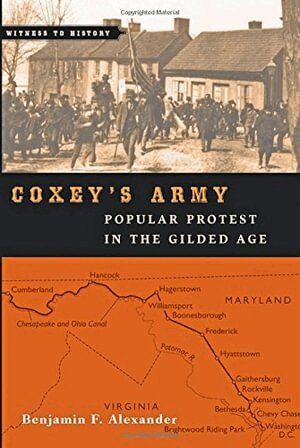
In 1893, after a major British bank failure, a run on U.S. gold reserves, and a late-June stock-market crash, America was in the throes of a serious economic depression. Unemployment rose, foreclosures climbed, and popular unrest mounted. By the following spring, businessman and Populist agitator Jacob S. Coxey was fed up with government inactivity in the face of the crisis. With the help of eccentric showman Carl Browne, he led a group of several hundred unemployed wage earners, small farmers, and crossroads merchants on a march from Massillon, Ohio, to Washington, D.C., to present a "petition in boots" for government-financed jobs building and repairing the nation's roads. On May 1, the Coxeyites descended on the center of government, where Coxey attempted to deliver a speech on the Capitol steps. The police attacked, a melee ensued, and Coxey and Browne spent a month in jail. Meanwhile, other Coxey-inspired contingents were on their way east from places as far away as San Francisco and Portland. Some of them even hijacked trains along the way. Who was Coxey, and what motivated him-along with the angry marchers who joined his cause?What did other Americans think of the protesters? Was there ever any chance that the protesters' demands would be met? Where did the agitators fit in with the politics of their day, and how did their actions jibe with the other labor-related protests happening that year? In this concise and gripping narrative, Benjamin F. Alexander contextualizes the march by vividly describing the misery wrought by the Panic of '93. Alexander brings both Coxey and his fellow leaders to life, along with the reporters and spies who traveled with them and the diverse group of captivated newspaper readers who followed the progress of the marches and train heists. Coxey's Army explains how the demands of the Coxeyites-far from being the wild schemes of a small group of cranks-fit into a larger history of economic theories that received serious attention long before and long after the Coxey march. Despite running a gauntlet of ridicule, the marchers laid down a rough outline of what, some forty years later, emerged as the New Deal.
264 kr
Skickas inom 7-10 vardagar
In 1893, after a major British bank failure, a run on U.S. gold reserves, and a late-June stock-market crash, America was in the throes of a serious economic depression. Unemployment rose, foreclosures climbed, and popular unrest mounted. By the following spring, businessman and Populist agitator Jacob S. Coxey was fed up with government inactivity in the face of the crisis. With the help of eccentric showman Carl Browne, he led a group of several hundred unemployed wage earners, small farmers, and crossroads merchants on a march from Massillon, Ohio, to Washington, D.C., to present a "petition in boots" for government-financed jobs building and repairing the nation's roads. On May 1, the Coxeyites descended on the center of government, where Coxey attempted to deliver a speech on the Capitol steps. The police attacked, a melee ensued, and Coxey and Browne spent a month in jail. Meanwhile, other Coxey-inspired contingents were on their way east from places as far away as San Francisco and Portland. Some of them even hijacked trains along the way. Who was Coxey, and what motivated him-along with the angry marchers who joined his cause?What did other Americans think of the protesters? Was there ever any chance that the protesters' demands would be met? Where did the agitators fit in with the politics of their day, and how did their actions jibe with the other labor-related protests happening that year? In this concise and gripping narrative, Benjamin F. Alexander contextualizes the march by vividly describing the misery wrought by the Panic of '93. Alexander brings both Coxey and his fellow leaders to life, along with the reporters and spies who traveled with them and the diverse group of captivated newspaper readers who followed the progress of the marches and train heists. Coxey's Army explains how the demands of the Coxeyites-far from being the wild schemes of a small group of cranks-fit into a larger history of economic theories that received serious attention long before and long after the Coxey march. Despite running a gauntlet of ridicule, the marchers laid down a rough outline of what, some forty years later, emerged as the New Deal.
551 kr
Tillfälligt slut
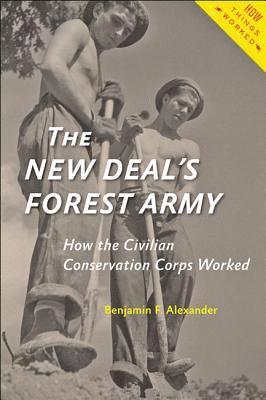
How the Civilian Conservation Corps constructed, rejuvenated, and protected American forests and parks at the height of the Great Depression.Propelled by the unprecedented poverty of the Great Depression, President Franklin D. Roosevelt established an array of massive public works programs designed to provide direct relief to America’s poor and unemployed. The New Deal’s most tangible legacy may be the Civilian Conservation Corps’s network of parks, national forests, scenic roadways, and picnic shelters that still mark the country’s landscape. CCC enrollees, most of them unmarried young men, lived in camps run by the Army and worked hard for wages (most of which they had to send home to their families) to preserve America’s natural treasures. In The New Deal’s Forest Army, Benjamin F. Alexander chronicles how the corps came about, the process applicants went through to get in, and what jobs they actually did. He also explains how the camps and the work sites were run, how enrollees spent their leisure time, and how World War II brought the CCC to its end. Connecting the story of the CCC with the Roosevelt administration’s larger initiatives, Alexander describes how FDR’s policies constituted a mixed blessing for African Americans who, even while singled out for harsh treatment, benefited enough from the New Deal to become an increasingly strong part of the electorate behind the Democratic Party. The CCC was the only large-scale employment program whose existence FDR foreshadowed in speeches during the 1932 campaign—and the dearest to his heart throughout the decade that it lasted. Alexander reveals how the work itself left a lasting imprint on the country’s terrain as the enrollees planted trees, fought forest fires, landscaped public parks, restored historic battlegrounds, and constructed dams and terraces to prevent floods. A uniquely detailed exploration of life in the CCC, The New Deal’s Forest Army compellingly demonstrates how one New Deal program changed America and gave birth to both contemporary forestry and the modern environmental movement.
208 kr
Tillfälligt slut
How the Civilian Conservation Corps constructed, rejuvenated, and protected American forests and parks at the height of the Great Depression.Propelled by the unprecedented poverty of the Great Depression, President Franklin D. Roosevelt established an array of massive public works programs designed to provide direct relief to America’s poor and unemployed. The New Deal’s most tangible legacy may be the Civilian Conservation Corps’s network of parks, national forests, scenic roadways, and picnic shelters that still mark the country’s landscape. CCC enrollees, most of them unmarried young men, lived in camps run by the Army and worked hard for wages (most of which they had to send home to their families) to preserve America’s natural treasures. In The New Deal’s Forest Army, Benjamin F. Alexander chronicles how the corps came about, the process applicants went through to get in, and what jobs they actually did. He also explains how the camps and the work sites were run, how enrollees spent their leisure time, and how World War II brought the CCC to its end. Connecting the story of the CCC with the Roosevelt administration’s larger initiatives, Alexander describes how FDR’s policies constituted a mixed blessing for African Americans who, even while singled out for harsh treatment, benefited enough from the New Deal to become an increasingly strong part of the electorate behind the Democratic Party. The CCC was the only large-scale employment program whose existence FDR foreshadowed in speeches during the 1932 campaign—and the dearest to his heart throughout the decade that it lasted. Alexander reveals how the work itself left a lasting imprint on the country’s terrain as the enrollees planted trees, fought forest fires, landscaped public parks, restored historic battlegrounds, and constructed dams and terraces to prevent floods. A uniquely detailed exploration of life in the CCC, The New Deal’s Forest Army compellingly demonstrates how one New Deal program changed America and gave birth to both contemporary forestry and the modern environmental movement.