Benjamin Lellouch – författare
Visar alla böcker från författaren Benjamin Lellouch. Handla med fri frakt och snabb leverans.
3 produkter
3 produkter
Häftad, Engelska, 2012
1 764 kr
Skickas inom 5-8 vardagar
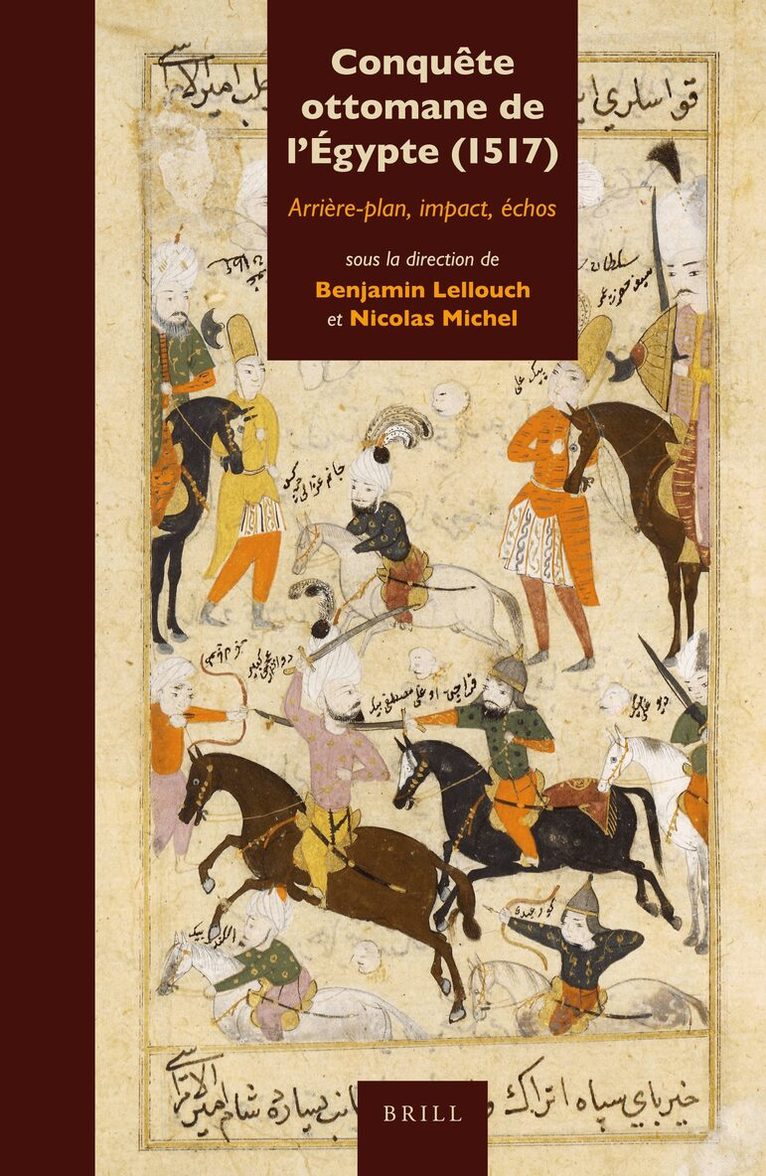
Conquête ottomane de l’Égypte (1517) est le premier ouvrage collectif consacré à la victoire de Selīm Ier sur les Mamelouks, qui a fait du sultanat ottoman l’unique puissance musulmane en Méditerranée orientale, et ravalé l’Égypte au rang de province. Il en renouvelle l’approche en faisant appel à des sources ottomanes, arabes et occidentales très variées.Les contributions réunies par Benjamin Lellouch et Nicolas Michel s’attachent à mesurer les transformations structurelles qu’a induites l’événement dans la société, les pouvoirs, la culture littéraire, artistique et matérielle en Égypte. Elles explorent ses antécédents et son impact géopolitique, et restituent les échos, bruyants puis assourdis, qu’il a suscités, au Proche-Orient, en Italie, et plus généralement en Méditerranée. Conquête ottomane de l’Égypte (1517) is the first collective work that deals with Selīm Ist’s crushing victory over the Mamluks, which made the Ottoman sultanate into the sole remaining Muslim power in the eastern Mediterranean, and reduced Egypt to the rank of a province. The book offers new insights into this major event by using a wide range of Ottoman and Arabic as well as Western sources. These essays in French and English collected by Benjamin Lellouch and Nicolas Michel examine to what extent the Ottoman conquest altered the structures of Egyptian society, power relations, literature, arts and material culture. They explore both its backgrounds and geopolitical aftermath, and reconstruct its echoes - loud at first, then gradually fading out - in the Middle East, Italy, and the Mediterranean.
E-bok
PDF, Engelska, 20121 882 kr
Läs direkt efter köp
Conquete ottomane de l'Egypte (1517) est le premier ouvrage collectif consacre a la victoire de Selim Ier sur les Mamelouks, qui a fait du sultanat ottoman l'unique puissance musulmane en Mediterranee orientale, et ravale l'Egypte au rang de province. Il en renouvelle l'approche en faisant appel a des sources ottomanes, arabes et occidentales tres variees.Les contributions reunies par Benjamin Lellouch et Nicolas Michel s'attachent a mesurer les transformations structurelles qu'a induites l'evenement dans la societe, les pouvoirs, la culture litteraire, artistique et materielle en Egypte. Elles explorent ses antecedents et son impact geopolitique, et restituent les echos, bruyants puis assourdis, qu'il a suscites, au Proche-Orient, en Italie, et plus generalement en Mediterranee. Conquete ottomane de l'Egypte (1517) is the first collective work that deals with Selim Ist's crushing victory over the Mamluks, which made the Ottoman sultanate into the sole remaining Muslim power in the eastern Mediterranean, and reduced Egypt to the rank of a province. The book offers new insights into this major event by using a wide range of Ottoman and Arabic as well as Western sources. These essays in French and English collected by Benjamin Lellouch and Nicolas Michel examine to what extent the Ottoman conquest altered the structures of Egyptian society, power relations, literature, arts and material culture. They explore both its backgrounds and geopolitical aftermath, and reconstruct its echoes - loud at first, then gradually fading out - in the Middle East, Italy, and the Mediterranean.
E-bok
PDF, Franska, 20231 734 kr
Läs direkt efter köp
-- This book has won the Prix Saintour by the Academie des Inscriptions et Belles Lettres! -- Prix Saintour On sait depuis longtemps que les juifs furent, parmi bien d'autres au Caire, victimes de violences pendant la revolte du gouverneur ottoman Ahmed Pacha (1523-1524), et qu'ils commemorerent chaque annee leurs epreuves au cours d'une fete locale de Pourim. Ce livre mobilise pour la premiere fois une riche documentation en turc, italien et arabe sur ces violences et leur contexte. Il souligne l'apport de Capsali (m. 1550), dont la chronique de la revolte en hebreu, negligee par les chercheurs, est traduite ici ; il invite a reconsiderer l'histoire de la chronique liturgique (megillah) anonyme, donc aussi celle de la fete. Dernier avatar d'une tradition historiographique vieille de cinq siecles, il renouvelle en profondeur l'expose des faits et l'analyse des dynamiques sociales a l' uvre dans la revolte, en les inscrivant dans l'histoire de la transition des Mamelouks aux Ottomans en Egypte et en Syrie. It has been long known that Jews, among many others in Cairo, were victims of violence during the revolt of the Ottoman governor Ahmed Pasha (1523-1524), and that they would commemorate their sufferings each year, during a local Purim festival. For the first time, this book draws on a wealth of documentation in Turkish, Italian and Arabic on these acts of violence and their context. It highlights the contribution of Capsali (d. 1550), whose chronicle of the revolt in Hebrew - neglected by scholars - has been translated here; it also prompts readers to reconsider the history of the anonymous liturgical chronicle (megillah), and therefore that of the festival as well. As the last avatar of a five-century-old historiographical tradition, it thoroughly recasts the presentation of facts along with an analysis of the social dynamics at work in the revolt, contextualizing them within the history of the transition from the Mamluks to the Ottomans in Egypt and Syria.