Benjamin Moffitt - Böcker
Visar alla böcker från författaren Benjamin Moffitt. Handla med fri frakt och snabb leverans.
8 produkter
8 produkter
901 kr
Skickas inom 10-15 vardagar
Offering the first in-depth analysis of the relationship between populism and political meritocracy, this book asks why states with meritocratic systems such as Singapore and China have not faced the populist challenge to the extent that liberal-democratic states have. Is political meritocracy immune to populism? Or does it fan its flames?Exploring this puzzle, the authors argue that political meritocracies are simultaneously immune and susceptible to populism. The book maintains that political meritocracy’s focus on the intellect, social skills, and most importantly virtue of political leaders can reduce the likelihood of populist actors rising to power; that meritocracy’s promise of upward mobility for the masses can work against elitism; and that rule by the ‘meritorious’ can help avoid crises, diminishing the political opening for populism. However, it also shows that meritocracy does little to eliminate grievances around political, cultural, and social inequality, instead entrenching a hierarchy – an allegedly ‘just’ one. The book ultimately argues that the more established the system of political meritocracy becomes, the more it opens the door to populist resentment and revolt.Pitched primarily to scholars and postgraduate students in political theory, comparative politics, Asian studies, and political sociology, this book fills an important scholarly gap.
2 088 kr
Skickas inom 10-15 vardagar
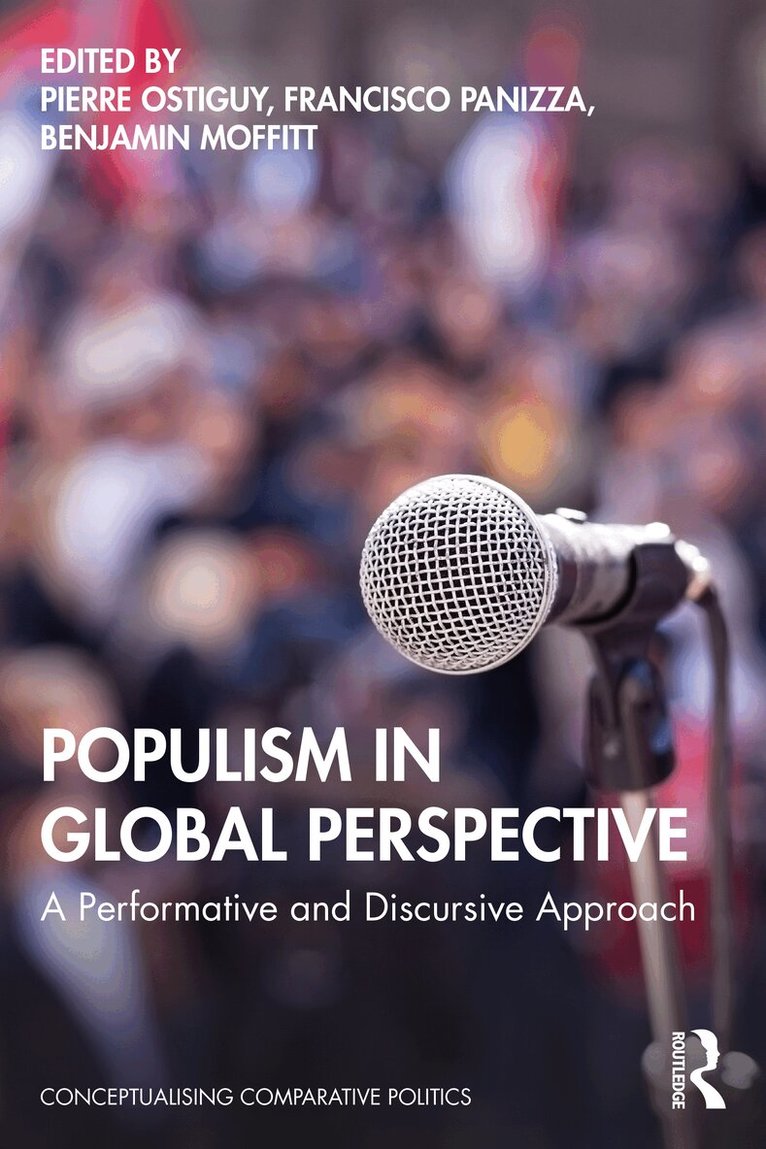
Pathbreaking theoretically and innovative in treatment, Populism in Global Perspective is a seminal addition to the literature on arguably the most controversial and fervently discussed topic in political science today.The book brings together established and rising stars in the field of populism studies, in an integrated set of theoretical and empirical studies centered on a discursive-performative notion of populism. Contributors argue that populist identification is relational and sociocultural, and demonstrate the importance of studying populism phenomenologically together with anti-populism. The truly global series of case studies of populism in the US, Western and Southern Europe, Latin America, South Africa, the Philippines, and Turkey achieves a deliberate balance of left and right instances of populism, including within regions, and of populism in government and opposition. Written in a style approachable to students and specialists alike, the volume provides a substantial foundation for current knowledge on the topic. Populism in Global Perspective is a must read for comparativists, political theorists, sociologists, area studies specialists, and all educated readers interested in populism worldwide.
576 kr
Skickas inom 10-15 vardagar
Pathbreaking theoretically and innovative in treatment, Populism in Global Perspective is a seminal addition to the literature on arguably the most controversial and fervently discussed topic in political science today.The book brings together established and rising stars in the field of populism studies, in an integrated set of theoretical and empirical studies centered on a discursive-performative notion of populism. Contributors argue that populist identification is relational and sociocultural, and demonstrate the importance of studying populism phenomenologically together with anti-populism. The truly global series of case studies of populism in the US, Western and Southern Europe, Latin America, South Africa, the Philippines, and Turkey achieves a deliberate balance of left and right instances of populism, including within regions, and of populism in government and opposition. Written in a style approachable to students and specialists alike, the volume provides a substantial foundation for current knowledge on the topic. Populism in Global Perspective is a must read for comparativists, political theorists, sociologists, area studies specialists, and all educated readers interested in populism worldwide.
1 111 kr
Skickas inom 7-10 vardagar
Once seen as a fringe phenomenon, populism is back. While some politicians and media outlets present it as dangerous to the U.S., Europe, and Latin America, others hail it as the fix for broken democracies. Not surprisingly, questions about populism abound. Does it really threaten democracy? Why the sudden rise in populism? And what are we talking about when we talk about "populism"?The Global Rise of Populism argues for the need to rethink this concept. While still based on the classic divide between "the people" and "the elite," populism's reliance on new media technologies, its shifting relationship to political representation, and its increasing ubiquity have seen it transform in nuanced ways that demand explaining. Benjamin Moffitt contends that populism is not one entity, but a political style that is performed, embodied, and enacted across different political and cultural contexts. This new understanding makes sense of populism in a time when media pervades political life, a sense of crisis prevails, and populism has gone truly global.
332 kr
Skickas inom 10-15 vardagar
Offering the first in-depth analysis of the relationship between populism and political meritocracy, this book asks why states with meritocratic systems such as Singapore and China have not faced the populist challenge to the extent that liberal-democratic states have. Is political meritocracy immune to populism? Or does it fan its flames?Exploring this puzzle, the authors argue that political meritocracies are simultaneously immune and susceptible to populism. The book maintains that political meritocracy’s focus on the intellect, social skills, and most importantly virtue of political leaders can reduce the likelihood of populist actors rising to power; that meritocracy’s promise of upward mobility for the masses can work against elitism; and that rule by the ‘meritorious’ can help avoid crises, diminishing the political opening for populism. However, it also shows that meritocracy does little to eliminate grievances around political, cultural, and social inequality, instead entrenching a hierarchy – an allegedly ‘just’ one. The book ultimately argues that the more established the system of political meritocracy becomes, the more it opens the door to populist resentment and revolt.Pitched primarily to scholars and postgraduate students in political theory, comparative politics, Asian studies, and political sociology, this book fills an important scholarly gap.
270 kr
Skickas inom 7-10 vardagar
Once seen as a fringe phenomenon, populism is back. While some politicians and media outlets present it as dangerous to the U.S., Europe, and Latin America, others hail it as the fix for broken democracies. Not surprisingly, questions about populism abound. Does it really threaten democracy? Why the sudden rise in populism? And what are we talking about when we talk about "populism"?The Global Rise of Populism argues for the need to rethink this concept. While still based on the classic divide between "the people" and "the elite," populism's reliance on new media technologies, its shifting relationship to political representation, and its increasing ubiquity have seen it transform in nuanced ways that demand explaining. Benjamin Moffitt contends that populism is not one entity, but a political style that is performed, embodied, and enacted across different political and cultural contexts. This new understanding makes sense of populism in a time when media pervades political life, a sense of crisis prevails, and populism has gone truly global.
599 kr
Skickas inom 7-10 vardagar
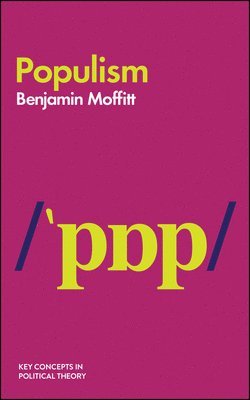
Populism is the key political phenomenon of the 21st century. From Trump to Brexit, from Chávez to Podemos, the term has been used to describe leaders, parties and movements across the globe who disrupt the status quo and speak in the name of ‘the people’ against ‘the elite’. Yet the term remains something of a puzzle: poorly understood, vaguely defined and, more often than not, used as a term of abuse. In this concise and engaging book, leading expert Benjamin Moffitt cuts through this confusion. Offering the first accessible introduction to populism as a core concept in political theory, he maps the different schools of thought on how to understand populism and explores how populism relates to some of the most important concepts at the heart of political debate today. He asks: what has populism got to do with nationalism and nativism? How does it intersect with socialism? Is it compatible with liberalism? And in the end, is populism a good or bad thing for democracy? This book is essential reading for anyone – from students and scholars to general readers alike – seeking to make sense of one the most important and controversial issues in the contemporary political landscape.
204 kr
Skickas inom 7-10 vardagar
Populism is the key political phenomenon of the 21st century. From Trump to Brexit, from Chávez to Podemos, the term has been used to describe leaders, parties and movements across the globe who disrupt the status quo and speak in the name of ‘the people’ against ‘the elite’. Yet the term remains something of a puzzle: poorly understood, vaguely defined and, more often than not, used as a term of abuse. In this concise and engaging book, leading expert Benjamin Moffitt cuts through this confusion. Offering the first accessible introduction to populism as a core concept in political theory, he maps the different schools of thought on how to understand populism and explores how populism relates to some of the most important concepts at the heart of political debate today. He asks: what has populism got to do with nationalism and nativism? How does it intersect with socialism? Is it compatible with liberalism? And in the end, is populism a good or bad thing for democracy? This book is essential reading for anyone – from students and scholars to general readers alike – seeking to make sense of one the most important and controversial issues in the contemporary political landscape.