
Häftad, Engelska
301 kr
Skickas inom 3-6 vardagar
301 kr
Skickas inom 3-6 vardagar

332 kr
Skickas inom 5-8 vardagar

166 kr
Skickas inom 5-8 vardagar

415 kr
Skickas inom 5-8 vardagar

296 kr
Skickas inom 5-8 vardagar

401 kr
Skickas inom 5-8 vardagar

223 kr
Skickas inom 5-8 vardagar
3 022 kr
Skickas inom 10-15 vardagar
639 kr
Skickas inom 10-15 vardagar
746 kr
Läs direkt efter köp
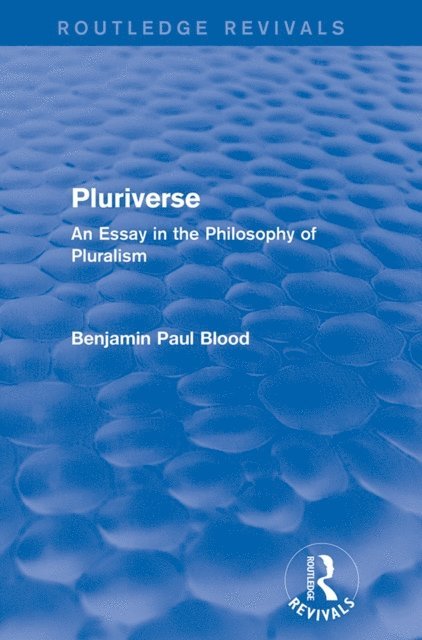
Pluriverse, the final work of the American poet and philosopher Benjamin Paul Blood, was published posthumously in 1920. After an experience of the anaesthetic nitrous oxide during a dental operation, Blood came to the conclusion that his mind had been opened, that he had undergone a mystical experience, and that he had come to a realisation of the true nature of reality.
This title is the fullest exposition of Blood’s esoteric Christian philosophy-cum-theology, which, though deemed wildly eccentric by commentators both during his lifetime and later in the twentieth century, was nonetheless one of the most influential sources for American mystical-empiricism. In particular, Blood’s thought was a major inspiration for William James, and can be seen to prefigure the latter’s concept of Sciousness directly.
746 kr
Läs direkt efter köp
Pluriverse, the final work of the American poet and philosopher Benjamin Paul Blood, was published posthumously in 1920. After an experience of the anaesthetic nitrous oxide during a dental operation, Blood came to the conclusion that his mind had been opened, that he had undergone a mystical experience, and that he had come to a realisation of the true nature of reality.
This title is the fullest exposition of Blood’s esoteric Christian philosophy-cum-theology, which, though deemed wildly eccentric by commentators both during his lifetime and later in the twentieth century, was nonetheless one of the most influential sources for American mystical-empiricism. In particular, Blood’s thought was a major inspiration for William James, and can be seen to prefigure the latter’s concept of Sciousness directly.

301 kr
Skickas inom 3-6 vardagar

349 kr
Tillfälligt slut

196 kr
Tillfälligt slut