Benjamin Pinkus - Böcker
Visar alla böcker från författaren Benjamin Pinkus. Handla med fri frakt och snabb leverans.
4 produkter
4 produkter
2 088 kr
Skickas inom 10-15 vardagar
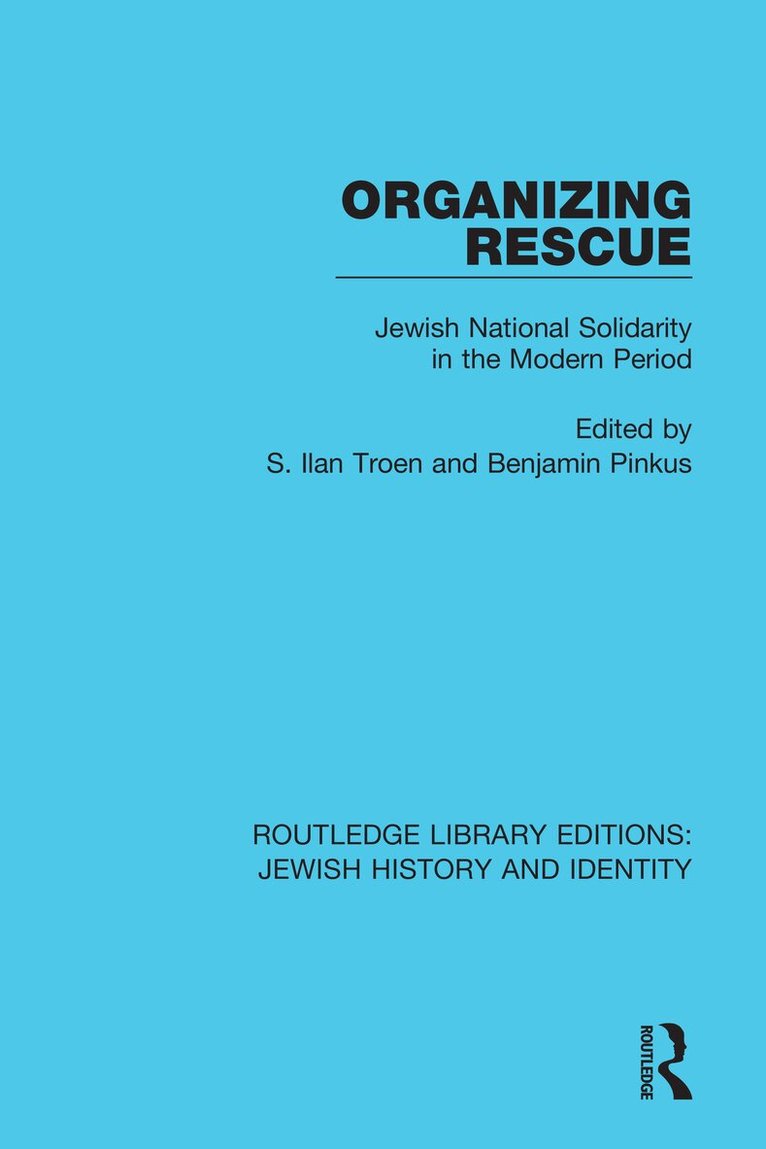
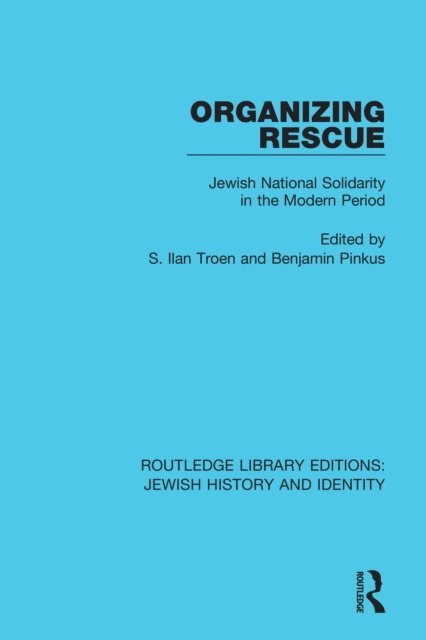
Upheavals of the modern period have dramatically changed the traditional pattern of the rescue of Jews by Jews. Whereas until the mid-nineteenth century rescue was carried out by community leaders in accordance with the religiously rooted injunction for the redemption of captives, in the modern period largely secular international Jewish organizations and the State of Israel have emerged as the primary instruments of expressing Jewish national solidarity. The campaigns to restore the exodus from the Soviet Union and to rescue Ethiopian Jews through Operation Moses are the most recent expressions of the imperative to save threatened Jewish communities and reconstitute them elsewhere. The dynamics and achievements of organized rescue in the modern period are critically assessed in this volume, which includes 18 interpretive essays and case studies by leading European, American and Israeli scholars. Organizing Rescue is divided into four sections. The introductory essays examine the roots of Jewish solidarity in Jewish law, and trace the transformation of rescue activity from a religious to a largely secular undertaking. The three sections that follow group selected case studies chronologically. Part I, from the Damascus Affair to the First World War (1840-1914), deals with new patterns of response to the persecution of Jews in Europe, Asia and Africa under the impact of emancipation, nationalism and antisemitism. Part II, World Wars and the Shadow of the Holocaust (1914-1948), deals with the transitional period that brought hope and bitter disillusion to Jews in Europe and the Middle East. Part III, The Contemporary Period (1948 to the present), examines the different manifestations of Jewish national solidarity that developed in response to the Holocaust and the creation of the State of Israel. These studies illuminate and evaluate the efforts of Jews to defend and preserve communities separated by vast distances and diverse cultural and political systems. By placing these studies in an integrated historical and comparative framework, Organizing Rescue provides a timely and unique perspective for understanding national Jewish solidarity in the modern period.
508 kr
Skickas inom 10-15 vardagar
Upheavals of the modern period have dramatically changed the traditional pattern of the rescue of Jews by Jews. Whereas until the mid-nineteenth century rescue was carried out by community leaders in accordance with the religiously rooted injunction for the redemption of captives, in the modern period largely secular international Jewish organizations and the State of Israel have emerged as the primary instruments of expressing Jewish national solidarity. The campaigns to restore the exodus from the Soviet Union and to rescue Ethiopian Jews through Operation Moses are the most recent expressions of the imperative to save threatened Jewish communities and reconstitute them elsewhere. The dynamics and achievements of organized rescue in the modern period are critically assessed in this volume, which includes 18 interpretive essays and case studies by leading European, American and Israeli scholars. Organizing Rescue is divided into four sections. The introductory essays examine the roots of Jewish solidarity in Jewish law, and trace the transformation of rescue activity from a religious to a largely secular undertaking. The three sections that follow group selected case studies chronologically. Part I, from the Damascus Affair to the First World War (1840-1914), deals with new patterns of response to the persecution of Jews in Europe, Asia and Africa under the impact of emancipation, nationalism and antisemitism. Part II, World Wars and the Shadow of the Holocaust (1914-1948), deals with the transitional period that brought hope and bitter disillusion to Jews in Europe and the Middle East. Part III, The Contemporary Period (1948 to the present), examines the different manifestations of Jewish national solidarity that developed in response to the Holocaust and the creation of the State of Israel. These studies illuminate and evaluate the efforts of Jews to defend and preserve communities separated by vast distances and diverse cultural and political systems. By placing these studies in an integrated historical and comparative framework, Organizing Rescue provides a timely and unique perspective for understanding national Jewish solidarity in the modern period.
672 kr
Skickas inom 7-10 vardagar
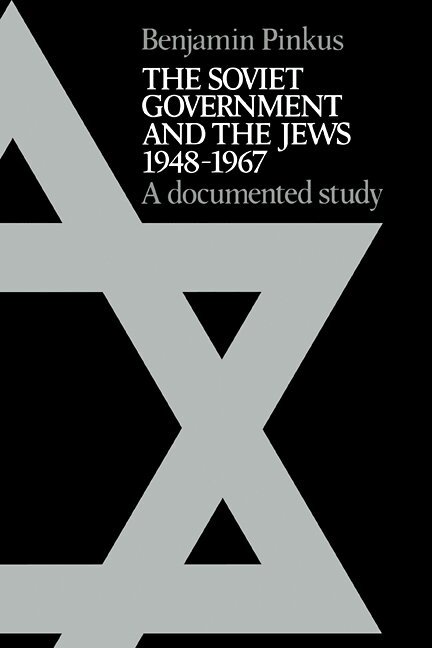
Provides the English reader with a comprehensive study, based on first-hand documentary material, of Soviet policy towards the Jews of the USSR from the Stalinist era, through to the interregnum (1953-7), the Khrushchev period and the 'collective leadership' of Brezhnev, Kosygin and Podgorny (1964-7). In 1948 the State of Israel was established with the support of the Soviet bloc. But the period 1948-53 (the so-called 'black years'), also witnessed the murder of the actor Shlomo Mikhoels, the closing of the Jewish Anti-Fascist Committee, the liquidation of all Jewish cultural institutions, and the launching of the anti-cosmopolitan campaign and the 'Doctors' Plot'. After Stalin there were improvements in the policy towards the non-Russian nationalities, and even certain gestures of goodwill towards the Jewish population; but these proved to be more symbolic than substantive, and the Jews as individuals and as a national minority came to feel increasingly and inescapably trapped. Government restrictions, crude attacks on Judaism, Zionism, and on the State of Israel became regular features of the post-Stalin era.
Del 62 - Cambridge Russian, Soviet and Post-Soviet Studies
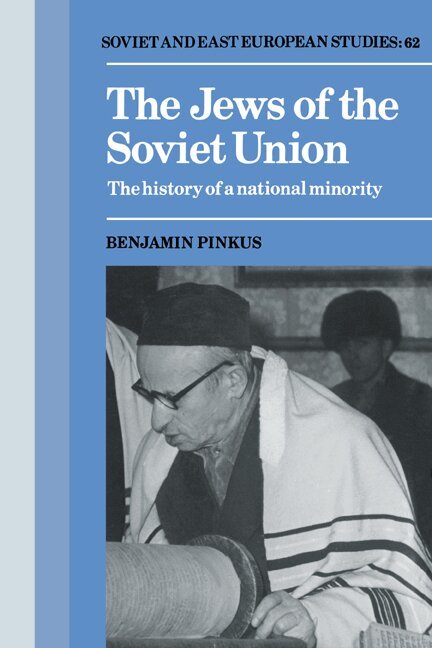
The Jews of the Soviet Union
The History of a National Minority
Häftad, Engelska, 1990
441 kr
Skickas inom 7-10 vardagar
This is a comprehensive and topical history of the Jews in the Soviet Union and is based on firsthand documentary evidence and the application of a pioneering research method into the fate of national minorities. Within a four-part chronological framework, Professor Pinkus examines not only the legal-political status of the Jews, and their reciprocal relationship with the Soviet majority, but also the impact of internal economic, demographic and social processes upon the religious, educational and cultural life of Soviet Jewry. A second layer of analysis describes in depth the complex linkages between the Jews of the Soviet Union, the Jews in other diasporas and the state of Israel itself. The Jews of the Soviet Union marks a major contribution to the historiography and social analysis of its subject and provides a worthy companion to Professor Pinkus's acclaimed documentary study The Soviet Union and the Jews 1948-1967.