Benjamin Pollock - Böcker
Visar alla böcker från författaren Benjamin Pollock. Handla med fri frakt och snabb leverans.
5 produkter
5 produkter
637 kr
Skickas inom 7-10 vardagar
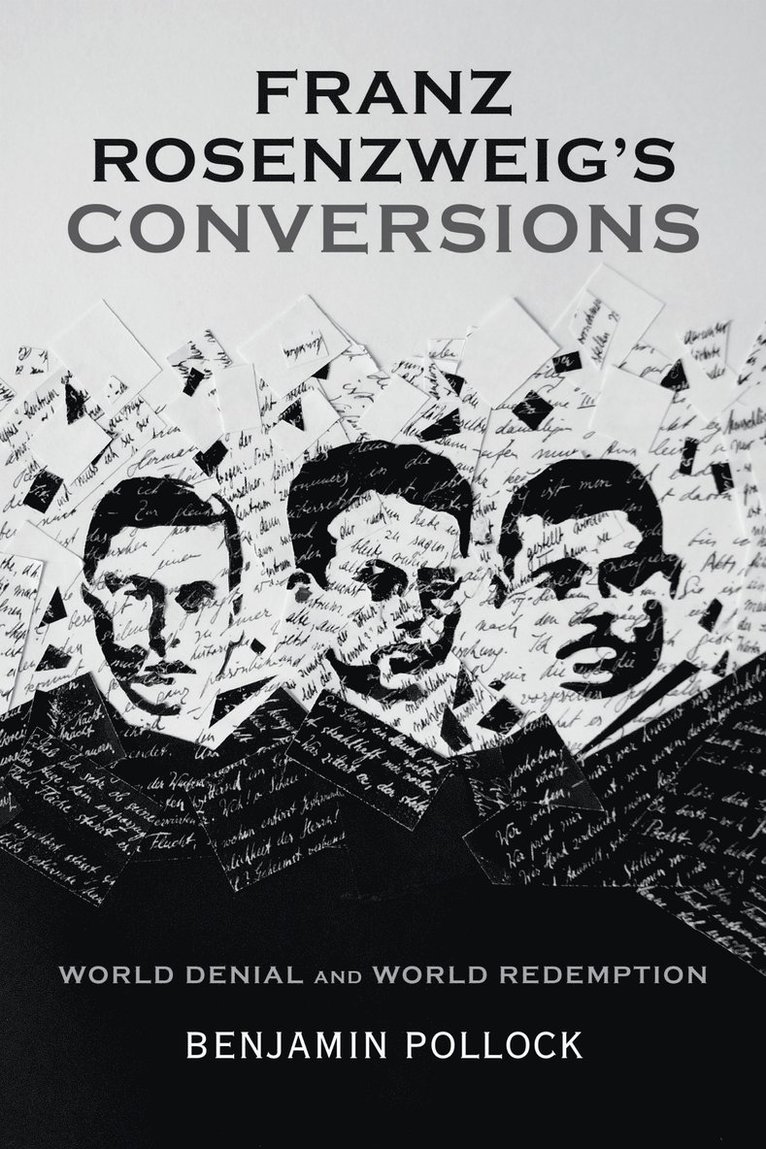
Franz Rosenzweig's near-conversion to Christianity in the summer of 1913 and his subsequent decision three months later to recommit himself to Judaism is one of the foundational narratives of modern Jewish thought. In this new account of events, Benjamin Pollock suggests that what lay at the heart of Rosenzweig's religious crisis was not a struggle between faith and reason, but skepticism about the world and hope for personal salvation. A close examination of this important time in Rosenzweig's life, the book also sheds light on the full trajectory of his philosophical development.
1 442 kr
Skickas inom 7-10 vardagar
Benjamin Pollock argues that Franz Rosenzweig's The Star of Redemption is devoted to a singularly ambitious philosophical task: grasping 'the All' - the whole of what is - in the form of a system. In asserting Rosenzweig's abiding commitment to a systematic conception of philosophy, this book breaks rank with the assumptions about Rosenzweig's thought that have dominated recent scholarship. Indeed, the Star's importance is often claimed to lie precisely in the way it opposes philosophy's traditional drive for systematic knowledge and upholds instead a 'new thinking' attentive to the existential concerns, the alterity, and even the revelatory dimension of concrete human life. Pollock shows that these very innovations in Rosenzweig's thought are in fact to be understood as part and parcel of the Star's systematic program. But this is only the case, Pollock claims, because Rosenzweig approaches philosophy's traditional task of system in a radically original manner.
1 057 kr
Tillfälligt slut
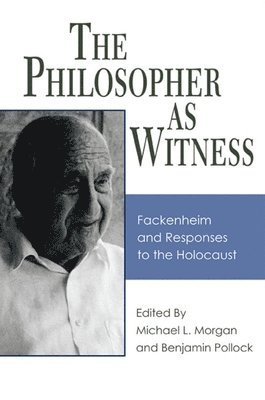
Responses to Fackenheim's reflections on the centrality of the Holocaust to philosophy, Jewish thought, and contemporary experience.Emil Fackenheim (1916–2003), one of the most important Jewish philosophers of the twentieth century, called on the world at large not only to bear witness to the Holocaust as an unprecedented assault on Judaism and on humanity, but also to recognize that the question of what it means to philosophize-indeed, what it means to be human-must be raised anew in its wake. The Philosopher as Witness begins with two recent essays written by Fackenheim himself and includes responses to the questions that Fackenheim posed to philosophy, Judaism, and humanity after the Holocaust. The contributors to this book dare to extend that questioning through a critical examination of Fackenheim's own thought and through an exploration of some of the ramifications of his work for fields of study and realms of religious life that transcend his own.
382 kr
Tillfälligt slut
Responses to Fackenheim's reflections on the centrality of the Holocaust to philosophy, Jewish thought, and contemporary experience.Emil Fackenheim (1916–2003), one of the most important Jewish philosophers of the twentieth century, called on the world at large not only to bear witness to the Holocaust as an unprecedented assault on Judaism and on humanity, but also to recognize that the question of what it means to philosophize-indeed, what it means to be human-must be raised anew in its wake. The Philosopher as Witness begins with two recent essays written by Fackenheim himself and includes responses to the questions that Fackenheim posed to philosophy, Judaism, and humanity after the Holocaust. The contributors to this book dare to extend that questioning through a critical examination of Fackenheim's own thought and through an exploration of some of the ramifications of his work for fields of study and realms of religious life that transcend his own.
600 kr
Skickas inom 7-10 vardagar
Benjamin Pollock argues that Franz Rosenzweig's The Star of Redemption is devoted to a singularly ambitious philosophical task: grasping 'the All' - the whole of what is - in the form of a system. In asserting Rosenzweig's abiding commitment to a systematic conception of philosophy, this book breaks rank with the assumptions about Rosenzweig's thought that have dominated recent scholarship. Indeed, the Star's importance is often claimed to lie precisely in the way it opposes philosophy's traditional drive for systematic knowledge and upholds instead a 'new thinking' attentive to the existential concerns, the alterity, and even the revelatory dimension of concrete human life. Pollock shows that these very innovations in Rosenzweig's thought are in fact to be understood as part and parcel of the Star's systematic program. But this is only the case, Pollock claims, because Rosenzweig approaches philosophy's traditional task of system in a radically original manner.