Benjamin R. Young - Böcker
Visar alla böcker från författaren Benjamin R. Young. Handla med fri frakt och snabb leverans.
3 produkter
3 produkter
Reds, Revolutions, and Rebellions
How China, Cuba, and Vietnam Transformed Guerilla Warfare
Inbunden, Engelska, 2026
440 kr
Kommande
Reds, Revolutions, and Rebellions investigates how insurgent strategies from three revolutionary states – Mao's China, Guevara's Cuba, and Ho Chi Minh's Vietnam – shaped the tactics of armed movements across the Global South. The afterlife of twentieth-century communist guerilla warfare still echoes in contemporary warfare as armed Islamist groups, often seen as violently opposed to leftist principles, adopt the same military methods and tactics that Chinese leader Mao Zedong once espoused. Investigating the strategic thought of communist revolutionary movements in China, Cuba, and Vietnam, within the framework of the Global Cold War and the theoretical tensions that existed within and around the Third World Left, Benjamin R. Young exposes how these movements became the centers of revolutionary strategy and offered the most viable examples for decolonization.To examine the historical trajectory and genealogy of communist insurgency strategy from the Chinese and Cuban revolutions to the present day, Young draws on declassified intelligence reports, memoirs, and security studies scholarship to follow the migration of insurgent ideas and reveal how armed groups have studied and repurposed leftist military doctrine. He traces the ways in which communist military theory traveled far beyond its original context, challenging the assumption that insurgency was always local or ideologically fixed. In showing how leftist revolutionary war theory became a global language of resistance, Reds, Revolutions, and Rebellions reframes our understanding of both insurgency and counterinsurgency and provides a reason why, long after their revolutions, China, Cuba, and Vietnam still shape how rebels fight and how empires respond.
1 300 kr
Skickas inom 7-10 vardagar
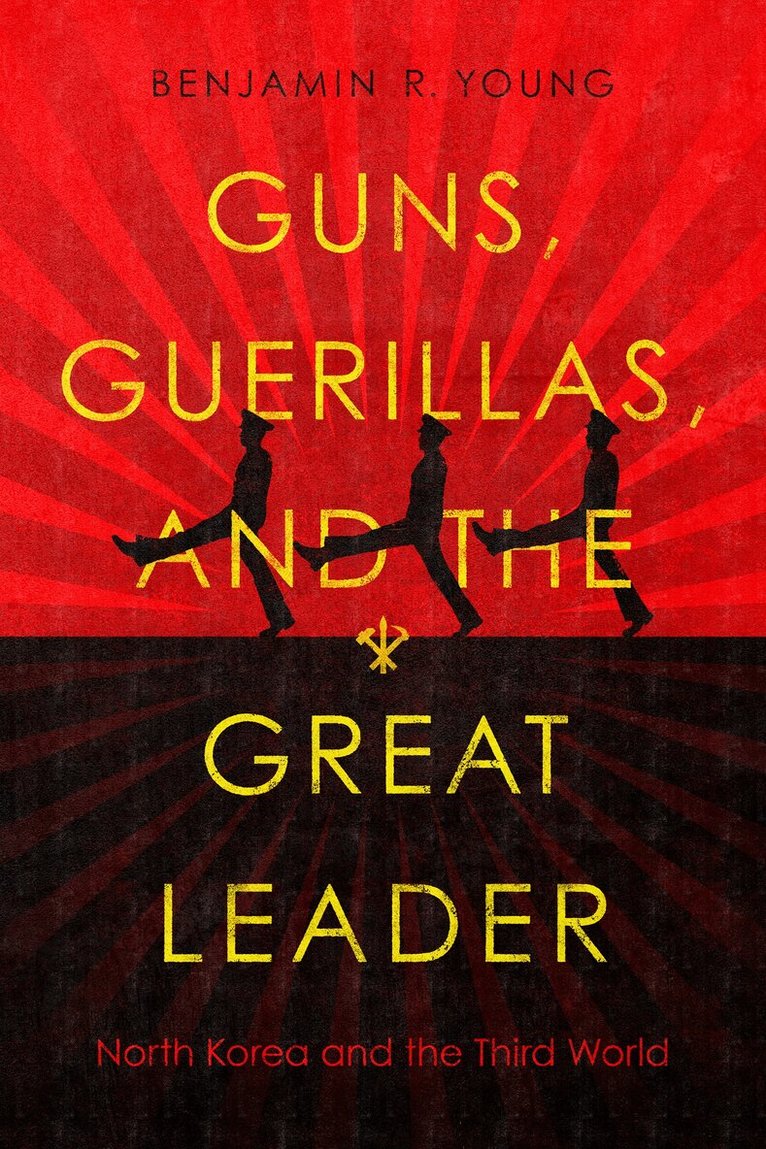
Far from always having been an isolated nation and a pariah state in the international community, North Korea exercised significant influence among Third World nations during the Cold War era. With one foot in the socialist Second World and the other in the anticolonial Third World, North Korea occupied a unique position as both a postcolonial nation and a Soviet client state, and sent advisors to assist African liberation movements, trained anti-imperialist guerilla fighters, and completed building projects in developing countries. State-run media coverage of events in the Third World shaped the worldview of many North Koreans and helped them imagine a unified anti-imperialist front that stretched from the boulevards of Pyongyang to the streets of the Gaza Strip and the beaches of Cuba. This book tells the story of North Korea's transformation in the Third World from model developmental state to reckless terrorist nation, and how Pyongyang's actions, both in the Third World and on the Korean peninsula, ultimately backfired against the Kim family regime's foreign policy goals. Based on multinational and multi-archival research, this book examines the intersection of North Korea's domestic and foreign policies and the ways in which North Korea's developmental model appealed to the decolonizing world.
317 kr
Skickas inom 7-10 vardagar
Far from always having been an isolated nation and a pariah state in the international community, North Korea exercised significant influence among Third World nations during the Cold War era. With one foot in the socialist Second World and the other in the anticolonial Third World, North Korea occupied a unique position as both a postcolonial nation and a Soviet client state, and sent advisors to assist African liberation movements, trained anti-imperialist guerilla fighters, and completed building projects in developing countries. State-run media coverage of events in the Third World shaped the worldview of many North Koreans and helped them imagine a unified anti-imperialist front that stretched from the boulevards of Pyongyang to the streets of the Gaza Strip and the beaches of Cuba. This book tells the story of North Korea's transformation in the Third World from model developmental state to reckless terrorist nation, and how Pyongyang's actions, both in the Third World and on the Korean peninsula, ultimately backfired against the Kim family regime's foreign policy goals. Based on multinational and multi-archival research, this book examines the intersection of North Korea's domestic and foreign policies and the ways in which North Korea's developmental model appealed to the decolonizing world.