
Benjamin T. Lynerd – författare
Visar alla böcker från författaren Benjamin T. Lynerd. Handla med fri frakt och snabb leverans.
5 produkter
5 produkter
Inbunden, Engelska, 2026
916 kr
Kommande
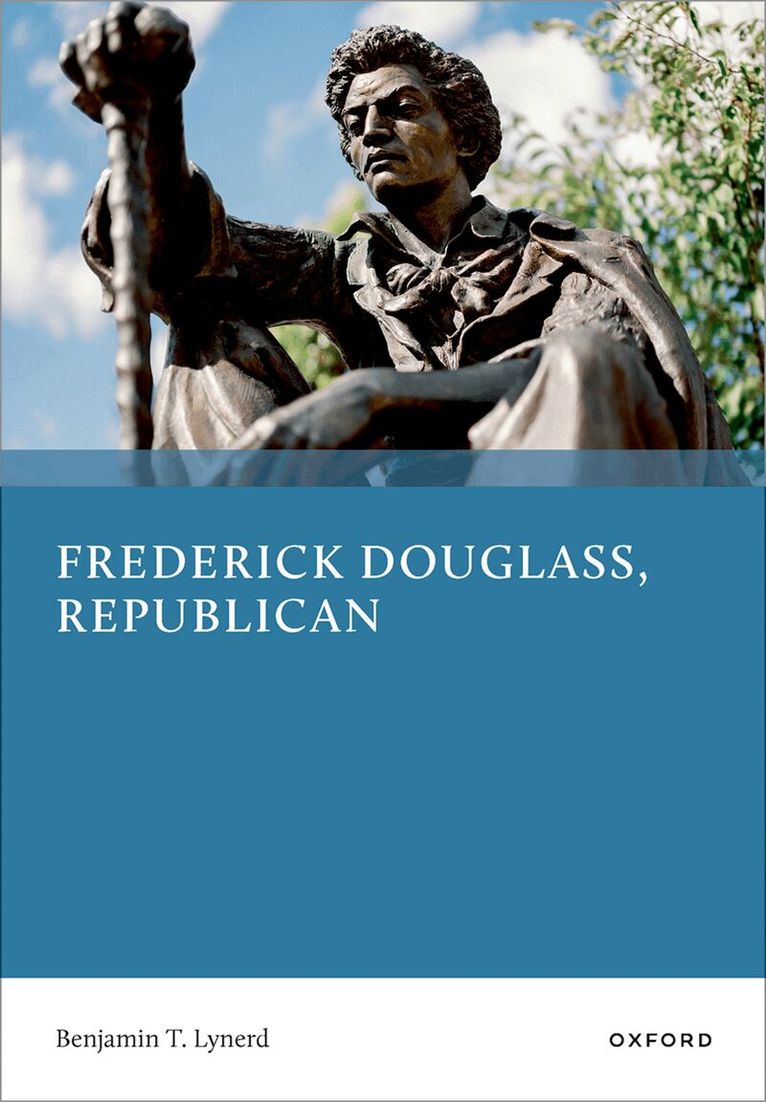
This book analyzes the political thought of Frederick Douglass within the larger Black Republican tradition of the nineteenth century. It argues that Douglass's overriding goal during five decades of public life was to cultivate a political order across the western hemisphere that would ensure self-determination as a universal right. To this end, the book examines Douglass's views on national sovereignty, democratic citizenship, civic virtue, and economic independence. Douglass's expansive--though largely unrealized--visions for emancipation and integration offers a constructive framework for the pursuit of racial justice today. This is because Douglass builds his philosophy on a robust conception of freedom as nondomination--for individuals and for society at large--and, crucially, thinks through what it would take to overcome systemic forms of domination. What makes Douglass's approach distinctively republican is its reliance on structural as well as moral reforms--changes to how political and economic power is distributed within American society alongside changes in how Americans (of all races) use the power they have.
Inbunden, Engelska, 2014
2 078 kr
Skickas inom 7-10 vardagar
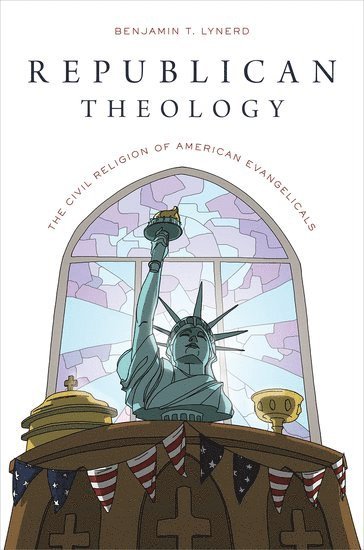
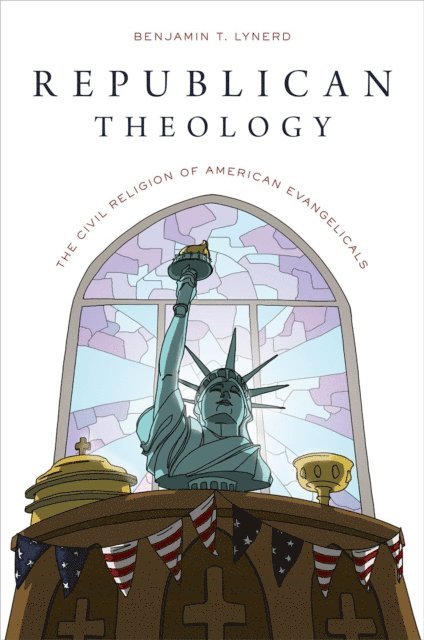
As an electoral bloc, contemporary white evangelical Christians maintain a remarkable ideological and partisan conformity, perhaps unmatched by any other community outside of African Americans. Historically, evangelicals have supported various political parties, but their approach to civil religion, or the way that they apply the spiritual to the public realm, has, as Republican Theology argues, been consistent in its substance since the founding of the nation. Put simply, this civil religion holds that limited government and a free-market are essential to the cultivation of Christian virtue, while the livelihood of the republic depends on the virtue of its citizens. While evangelicals have long promoted conservative moral causes, from temperance and anti-obscenity in the nineteenth century to abstinence education in the twentieth, they have also aligned themselves on many other seemingly unrelated agendas: in support of the Revolution in the 1770s, on antislavery in the 1820s, against labor unionism in the 1880s, against the New Deal in the 1930s, on assertive anticommunism in the 1950s (a major theme in Billy Graham's early sermons), and in favor of deregulation and lower taxes in the 1980s. As Benjamin T. Lynerd contends, the rise of the "New Right " movement at the end of the twentieth century had as much to do with small-government ideology as with a recovery of traditional morality. This libertarian ethos combined with restrictive public moralism is conflicted, and it creates friction both within the New Right alliance and within the church, particularly among evangelicals interested in social justice. Still, it has formed the entire subtext of evangelical participation in American politics from the 1770s into the twenty-first century. Lynerd looks at the evolution of evangelical civil religion, or "republican theology " to demonstrate how evangelicals navigate this logic.
Häftad, Engelska, 2014
530 kr
Skickas inom 5-8 vardagar
As an electoral bloc, contemporary white evangelical Christians maintain a remarkable ideological and partisan conformity, perhaps unmatched by any other community outside of African Americans. Historically, evangelicals have supported various political parties, but their approach to civil religion, or the way that they apply the spiritual to the public realm, has, as Republican Theology argues, been consistent in its substance since the founding of the nation. Put simply, this civil religion holds that limited government and a free-market are essential to the cultivation of Christian virtue, while the livelihood of the republic depends on the virtue of its citizens. While evangelicals have long promoted conservative moral causes, from temperance and anti-obscenity in the nineteenth century to abstinence education in the twentieth, they have also aligned themselves on many other seemingly unrelated agendas: in support of the Revolution in the 1770s, on antislavery in the 1820s, against labor unionism in the 1880s, against the New Deal in the 1930s, on assertive anticommunism in the 1950s (a major theme in Billy Graham's early sermons), and in favor of deregulation and lower taxes in the 1980s. As Benjamin T. Lynerd contends, the rise of the "New Right " movement at the end of the twentieth century had as much to do with small-government ideology as with a recovery of traditional morality. This libertarian ethos combined with restrictive public moralism is conflicted, and it creates friction both within the New Right alliance and within the church, particularly among evangelicals interested in social justice. Still, it has formed the entire subtext of evangelical participation in American politics from the 1770s into the twenty-first century. Lynerd looks at the evolution of evangelical civil religion, or "republican theology " to demonstrate how evangelicals navigate this logic.
E-bok
PDF, Engelska, 2014498 kr
Läs direkt efter köp
White evangelicals occupy strange property on the ideological map in America, exhibiting a pronounced commitment to the principle of limited government, and yet making a significant exception for issues relating to personal morality - an exception many observers take to be paradoxical at best. Explanations of this phenomenon usually point to the knotty political alliance evangelicals built with free-market types in the late twentieth century, but sermonic evidence suggests a deeper and longer intellectual thread, one that has pervaded evangelical thought all the way back to the American founding. In Republican Theology, Benjamin Lynerd offers an historical and theological account of the hybrid position evangelicals have long affected to hold in American culture - as champions of individual liberty and as guardians of American morality. Lynerd documents the development of a resilient, if problematic, tradition in American political thought, one that sees a free republic, a virtuous people, and an assertive Christianity as mutually dependent. Situating the recent rise of the "New Right" within this larger framework, Republican Theology traces the contentious political journey of evangelicals from its earliest moments, laying bare the conceptual tensions built into their civil religion.
E-bok
Engelska, 2014498 kr
Läs direkt efter köp
White evangelicals occupy strange property on the ideological map in America, exhibiting a pronounced commitment to the principle of limited government, and yet making a significant exception for issues relating to personal morality - an exception many observers take to be paradoxical at best. Explanations of this phenomenon usually point to the knotty political alliance evangelicals built with free-market types in the late twentieth century, but sermonic evidence suggests a deeper and longer intellectual thread, one that has pervaded evangelical thought all the way back to the American founding.In Republican Theology, Benjamin Lynerd offers an historical and theological account of the hybrid position evangelicals have long affected to hold in American culture - as champions of individual liberty and as guardians of American morality. Lynerd documents the development of a resilient, if problematic, tradition in American political thought, one that sees a free republic, a virtuous people, and an assertive Christianity as mutually dependent. Situating the recent rise of the "New Right" within this larger framework, Republican Theology traces the contentious political journey of evangelicals from its earliest moments, laying bare the conceptual tensions built into their civil religion.