Benjamin Wittes – författare
Visar alla böcker från författaren Benjamin Wittes. Handla med fri frakt och snabb leverans.
15 produkter
15 produkter
Häftad, Engelska, 2009
298 kr
Skickas inom 5-8 vardagar
Inbunden, Engelska, 2015
649 kr
Skickas inom 3-6 vardagar
Häftad, Engelska, 2007
197 kr
Skickas inom 10-15 vardagar
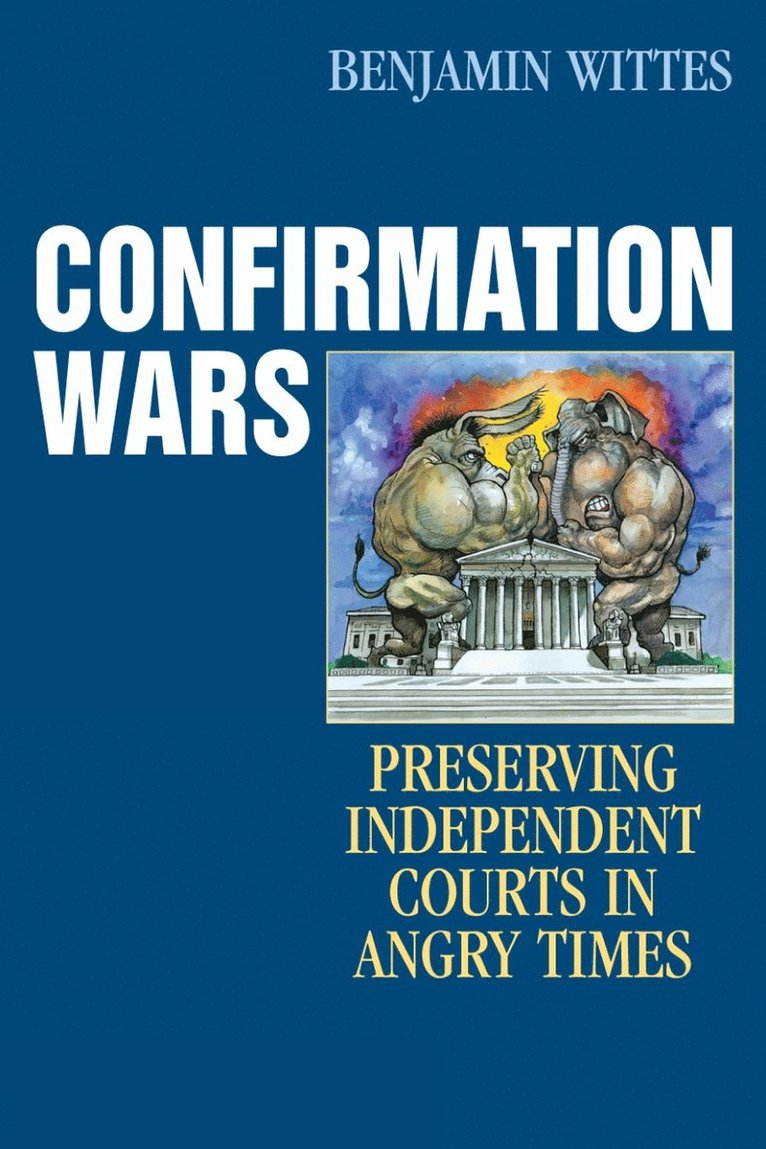
In Confirmation Wars, Benjamin Wittes rejects the parodies offered by both the Right and Left of the decline of the process by which the United States Senate confirms—or rejects—the president’s nominees to the federal judiciary. He draws on original reporting and new historical research to provide a more accurate understanding of the current climate. He argues that the transformations the process has undergone should not be understood principally in partisan terms but as an institutional response on the part of the legislative branch to the growth of judicial power in the past five decades. While some change may have been inevitable, the increasing aggressiveness of the Senate’s conception of its function poses significant challenges for maintaining independent courts over the long term. The problem, Wittes argues, lies both in the extortionate quality of modern confirmations, in which senators make their votes contingent on reassurance by the nominees about substantive areas of concern, and in the possibility that the breakdown of the confirmation process represents a far larger effort by the Senate to rein in judicial power. Wittes offers several strategies for managing the political conflict surrounding nominations, strategies that seek to protect the independence of the courts and the prerogative of the president to choose judges while maximizing the utility to democratic government of a Senate that takes its advice and consent role seriously. Most importantly, Wittes argues for ending the relatively new practice of having nominees testify before the Senate Judiciary Committee.Published in cooperation with the Hoover Institution.
E-bok
PDF, Engelska, 2010374 kr
Läs direkt efter köp
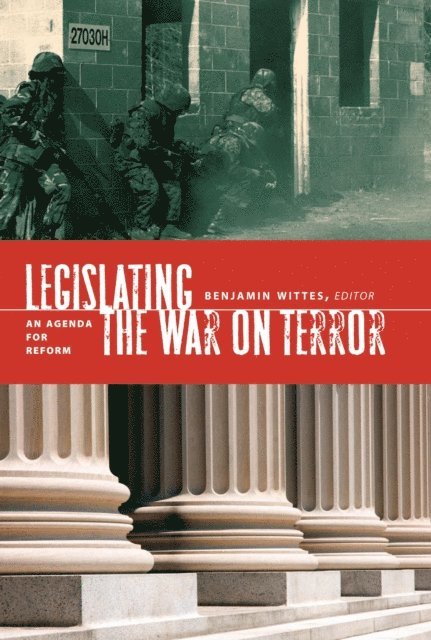
A Brookings Institution Press and the Hoover Institution and the Georgetown Center on National Security and the Law publicationThe events of September 11 and subsequent American actions irrevocably changed the political, military, and legal landscapes of U.S. national security. Predictably, many of the changes were controversial, and abuses were revealed. The United States needs a legal framework that reflects these new realities. Legislating the War on Terror presents an agenda for reforming the statutory law governing this new battle, balancing the need for security, the rule of law, and the constitutional rights that protect American freedom.The authors span a considerable swath of the political spectrum, but they all believe that Congress has a significant role to play in shaping the contours of America's confrontation with terrorism. Their essays are organized around the major tools that the United States has deployed against al Qaeda as well as the legal problems that have arisen as a result. Mark Gitenstein compares U.S. and foreign legal standards for detention, interrogation, and surveillance. Matthew Waxman studies possible strategic purposes for detaining people without charging them, while Jack Goldsmith imagines a system of judicially reviewed law-of-war detention. Robert Chesney suggests ways to refine U.S. criminal law into a more powerful instrument against terrorism. Robert Litt and Wells C. Bennett suggest the creation of a specialized bar of defense lawyers for trying accused terrorists in criminal courts. David Martin explores the relationship between immigration law and counterterrorism. David Kris lays out his proposals for modernizing the Foreign Intelligence Surveillance Act. Justin Florence and Matthew Gerke outline possible reforms of civil justice procedures in national security litigation. Benjamin Wittes and Stuart Taylor Jr. investigate ways to improve interrogation laws while clarifying the definition and limits of torture. Kenneth Anderson argues for the protection of
E-bok
PDF, Engelska, 2011271 kr
Läs direkt efter köp
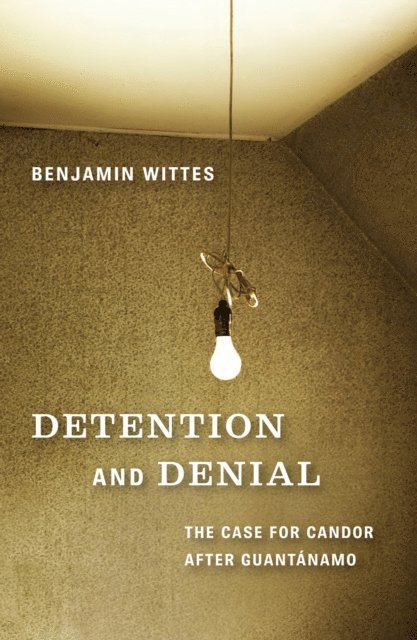
""Our current stalemate over detention serves nobodynot the military or any other component of the U.S. government that has to operate overseas.... It is a system that no rational combination of values or strategic considerations would have produced; it could have emerged only as a consequence of a clash of interests that produced a clear victory for nobody.""from the IntroductionBenjamin Wittes issues a persuasive call for greater coherence, clarity, and public candor from the American government regarding its detention policy and practices, and greater citizen awareness of the same. In Detention and Denial, he illustrates how U.S. detention policy is a tangle of obfuscation rather than a serious set of moral and legal decisions. Far from sharpening focus and defining clear parameters for action, it sends mixed signals, muddies the legal and military waters, and produces perverse incentives. Its random operation makes a mockery of the human rights concerns that prompted the limited amount of legal scrutiny that detention has received to date. The government may actually be painting itself into a corner, leaving itself unable to explain or justify actions it may need to take in the future. The situation is unsustainable and must be addressed.Preventive detention is a touchy subject, an easy target for eager-to-please candidates and indignant media, so public officials remain largely mum on the issue. Many Americans would be surprised to learn that no broad principle in American jurisprudence actually prohibits preventive detention; rather, the law ""eschews it except when legislatures and courts deem it necessary to prevent grave public harm."" But the habeas corpus legal cases that have come out of the Guantánamo Bay detentionfacilitywhich remains open, despite popular expectations to the contraryhave addressed only a small slice of the overall issue and have notand will notproduce a coherent body of policy.U.S. government an
Häftad, Engelska, 2012
366 kr
Skickas inom 10-15 vardagar
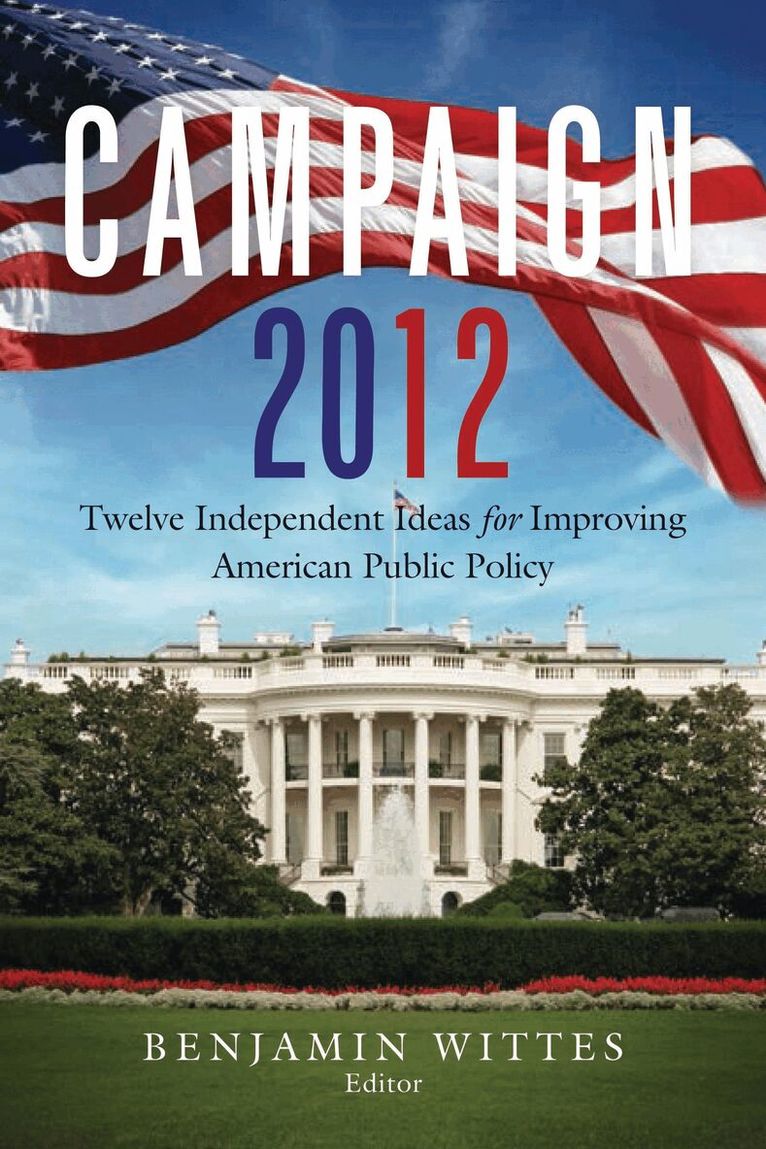
Campaign 2012: Twelve Independent Ideas for Improving American Public Policy is an indispensable guide to the questions facing White House hopefuls in 2012, as well as the challenges awaiting the winner. It presents authoritative analyses of a dozen key policy issues currently testing the nation:-domestic economic growth-America's role in the world-the budget deficit-China relations-health care-Afghanistan and Pakistan-federalism-Iran-reforming government institutions-the Middle East-climate change-terrorismThis is truly Brookings at its bestindependent expert analysis, presented in an accessible manner and offering viable solutions.
E-bok
Engelska, 2012380 kr
Läs direkt efter köp
Campaign 2012: Twelve Independent Ideas for Improving American Public Policy is an indispensable guide to the questions facing White House hopefuls in 2012, as well as the challenges awaiting the winner. It presents authoritative analyses of a dozen key policy issues currently testing the nation:-domestic economic growth-America's role in the world-the budget deficit-China relations-health care-Afghanistan and Pakistan-federalism-Iran-reforming government institutions-the Middle East-climate change-terrorismThis is truly Brookings at its bestindependent expert analysis, presented in an accessible manner and offering viable solutions.
E-bok
Engelska, 2011307 kr
Läs direkt efter köp
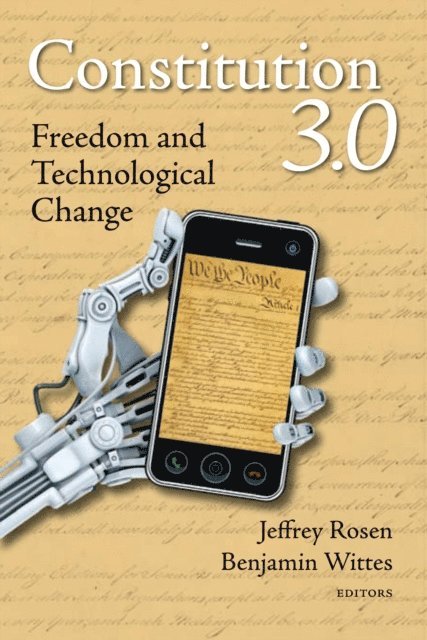
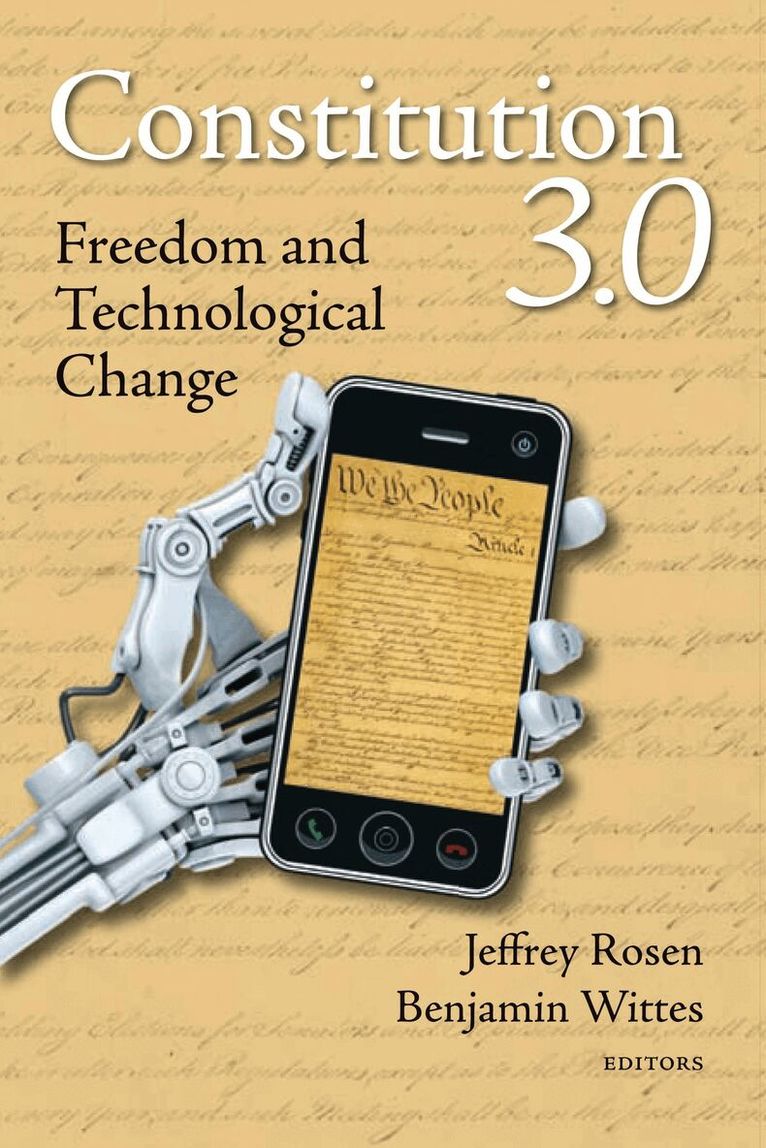
At the beginning of the twenty-first century, breathtaking changes in technology are posing stark challenges to our constitutional values. From free speech to privacy, from liberty and personal autonomy to the right against self-incrimination, basic constitutional principles are under stress from technological advances unimaginable even a few decades ago, let alone during the founding era. In this provocative collection, America's leading scholars of technology, law, and ethics imagine how to translate and preserve constitutional and legal values at a time of dizzying technological change.Constitution 3.0 explores some of the most urgent constitutional questions of the near future. Will privacy become obsolete, for example, in a world where ubiquitous surveillance is becoming the norm? Imagine that Facebook and Google post live feeds from public and private surveillance cameras, allowing 24/7 tracking of any citizen in the world. How can we protect free speech now that Facebook and Google have more power than any king, president, or Supreme Court justice to decide who can speak and who can be heard? How will advanced brain-scan technology affect the constitutional right against self-incrimination? And on a more elemental level, should people have the right to manipulate their genes and design their own babies? Should we be allowed to patent new forms of life that seem virtually human? The constitutional challenges posed by technological progress are wide-ranging, with potential impacts on nearly every aspect of life in America and around the world.The authors include Jamie Boyle, Duke Law School; Eric Cohen and Robert George, Princeton University; Jack Goldsmith, Harvard Law School; Orin Kerr, George Washington University Law School; Lawrence Lessig, Harvard Law School; Stephen Morse, University of Pennsylvania Law School; John Robertson, University of Texas Law School; Christopher Slobogin, Vanderbilt Law School; O. Carter Snead, Notre
Häftad, Engelska, 2013
286 kr
Skickas inom 10-15 vardagar
At the beginning of the twenty-first century, breathtaking changes in technology are posing stark challenges to our constitutional values. From free speech to privacy, from liberty and personal autonomy to the right against self-incrimination, basic constitutional principles are under stress from technological advances unimaginable even a few decades ago, let alone during the founding era. In this provocative collection, America's leading scholars of technology, law, and ethics imagine how to translate and preserve constitutional and legal values at a time of dizzying technological change.Constitution 3.0 explores some of the most urgent constitutional questions of the near future. Will privacy become obsolete, for example, in a world where ubiquitous surveillance is becoming the norm? Imagine that Facebook and Google post live feeds from public and private surveillance cameras, allowing 24/7 tracking of any citizen in the world. How can we protect free speech now that Facebook and Google have more power than any king, president, or Supreme Court justice to decide who can speak and who can be heard? How will advanced brain-scan technology affect the constitutional right against self-incrimination? And on a more elemental level, should people have the right to manipulate their genes and design their own babies? Should we be allowed to patent new forms of life that seem virtually human? The constitutional challenges posed by technological progress are wide-ranging, with potential impacts on nearly every aspect of life in America and around the world.The authors include Jamie Boyle, Duke Law School; Eric Cohen and Robert George, Princeton University; Jack Goldsmith, Harvard Law School; Orin Kerr, George Washington University Law School; Lawrence Lessig, Harvard Law School; Stephen Morse, University of Pennsylvania Law School; John Robertson, University of Texas Law School; Christopher Slobogin, Vanderbilt Law School; O. Carter Snead, Notre
E-bok
Engelska, 2015318 kr
Läs direkt efter köp
What would the father of the Constitution think of contemporary developments in American politics and public policy?Constitutional scholars have long debated whether the American political system, which was so influenced by the thinking of James Madison, has in fact grown outmoded. But if Madison himself could peer at the present, what would he think of the state of key political institutions that he helped originate and the government policies that they produce? In What Would Madison Do?, ten prominent scholars explore the contemporary performance of Madison's constitutional legacy and how much would have surprised him.Contents:1. Introduction: Perspectives on Madison's Legacy for Contemporary American Politics, Pietro S. Nivola and Benjamin Wittes2. Mr. Madison's Communion Suit: Implementation-Group Liberalism and the Case for Constitutional Reform, John J. DiIulio Jr.3. Constitutional Surprises: What James Madison Got Wrong, William A. Galston4. Overcoming the Great Recession: How Madison's "Horse and Buggy" Managed, Pietro S. Nivola5. Gridlock and the Madisonian Constitution, R. Shep Melnick
Häftad, Engelska, 2015
297 kr
Skickas inom 10-15 vardagar
What would the father of the Constitution think of contemporary developments in American politics and public policy?Constitutional scholars have long debated whether the American political system, which was so influenced by the thinking of James Madison, has in fact grown outmoded. But if Madison himself could peer at the present, what would he think of the state of key political institutions that he helped originate and the government policies that they produce? In What Would Madison Do?, ten prominent scholars explore the contemporary performance of Madison's constitutional legacy and how much would have surprised him.Contents:1. Introduction: Perspectives on Madison's Legacy for Contemporary American Politics, Pietro S. Nivola and Benjamin Wittes2. Mr. Madison's Communion Suit: Implementation-Group Liberalism and the Case for Constitutional Reform, John J. DiIulio Jr.3. Constitutional Surprises: What James Madison Got Wrong, William A. Galston4. Overcoming the Great Recession: How Madison's ""Horse and Buggy"" Managed, Pietro S. Nivola5. Gridlock and the Madisonian Constitution, R. Shep Melnick
Häftad, Engelska, 2021
319 kr
Skickas inom 3-6 vardagar
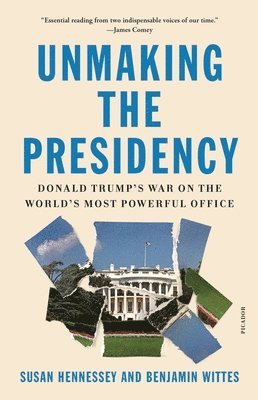
The definitive account of how Donald Trump has wielded the powers of the American presidency.
E-bok
Engelska, 2008143 kr
Läs direkt efter köp
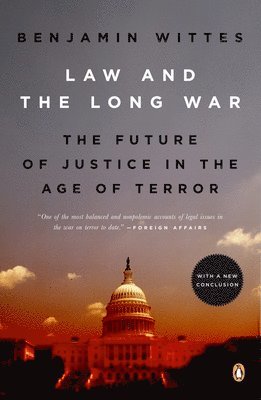
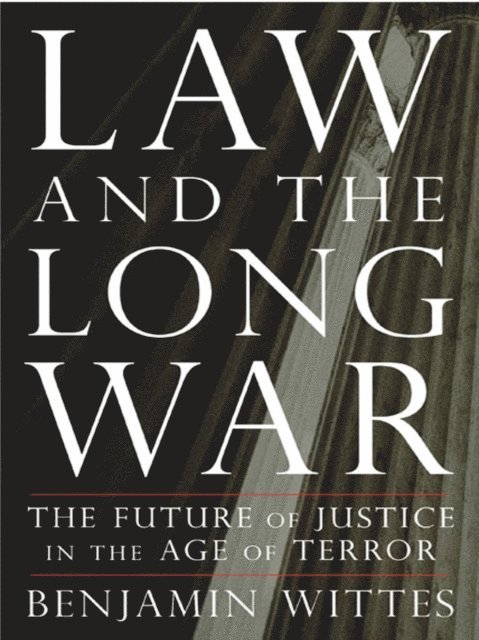
An authoritative assessment of the new laws of war and a sensible and sophisticated roadmap for the future of liberty in the Age of Terror America is losing a crucial front in the ongoing war on terror. It is losing not to Al Qaeda, but to its own failure to construct a set of laws that will protect the American people during this global conflict. As debate continues to rage over the legality and ethics of war, Benjamin Wittes enters the fray with a sober-minded exploration of law in wartime that is definitive, accessible, and nonpartisan. Outlining how this country came to its current impasse over human rights and counterterrorism, Law and the Long War paves the way toward fairer, more accountable rules for a conflict without end.
Häftad, Engelska, 2009
366 kr
Skickas inom 10-15 vardagar
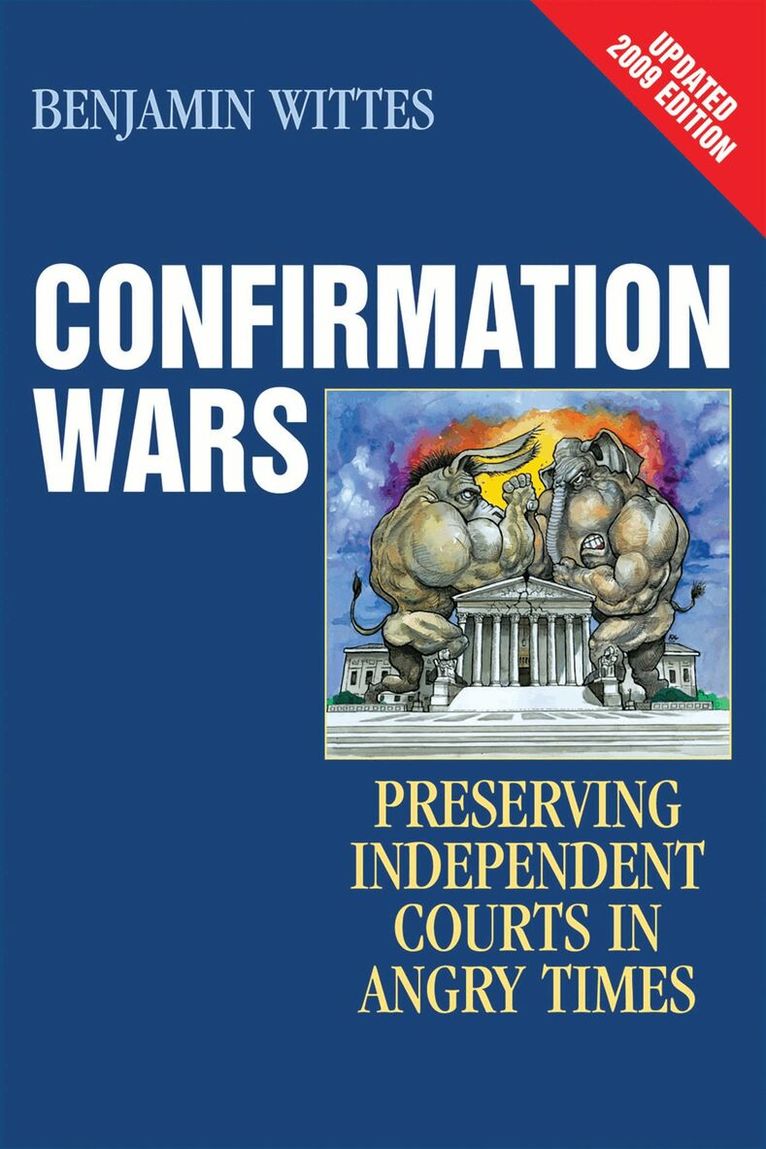
Just in time for the first Supreme Court confirmation of the Obama administration, one of America's most insightful legal commentators updates the critically acclaimed Confirmation Wars: Preserving Independent Courts in Angry Times to place the nomination of Judge Sonia Sotomayor in the context of the changing nature of judicial nominations by recent presidents. Our system has gone from one in which people like Sotomayor or recent highly qualified nominees like John Roberts and Samuel Alito are shoe-ins for confirmation to a system in which they are shoe-ins for confirmation confrontations. While rejecting parodies offered by both the Right and Left of the decline of the process by which the United States Senate confirms—or rejects—the president's nominees to the federal judiciary, Wittes explains why and how this change took place. He argues that the trade has been a bad one—offering only the crudest check on executive appointments to the judiciary and putting nominees in the most untenable and unfair situations. Published in cooperation with the Hoover Institution
Häftad, Engelska, 2017
116 kr
Skickas
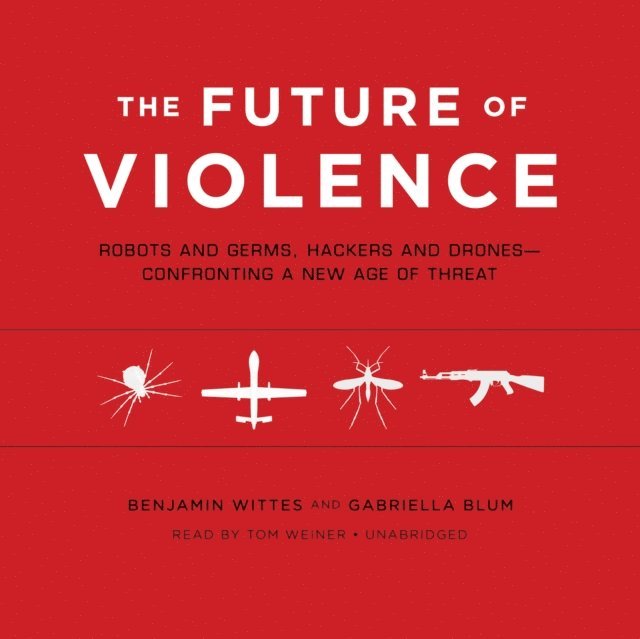
From drone warfare in the Middle East to digital spying, today’s governments have harnessed the power of cutting-edge technology to awesome effect. But what happens when ordinary people have the same tools at their fingertips? Advances in cybertechnology, biotechnology and robotics mean that more people than ever before have access to potentially dangerous technologies – from drones to computer networks and biological agents – which could be used to attack states and private citizens alike. In The Future of Violence, security experts Benjamin Wittes and Gabriella Blum detail the myriad possibilities and enormous risks present in the modern world, and argue that if our national governments can no longer adequately protect us from harm, they will lose their legitimacy. They explain how governments, companies and citizens must rethink their efforts to protect our lives and liberty.As a senior fellow at the Brookings Institution and co-director of the Harvard Law School–Brookings Project on Law and Security, Benjamin Wittes is arguably the Unites States’ leading expert on security and law. Gabriella Blum is the Rita E. Hauser Professor of Human Rights and Humanitarian Law at Harvard University.