Berel Lang – författare
Visar alla böcker från författaren Berel Lang. Handla med fri frakt och snabb leverans.
20 produkter
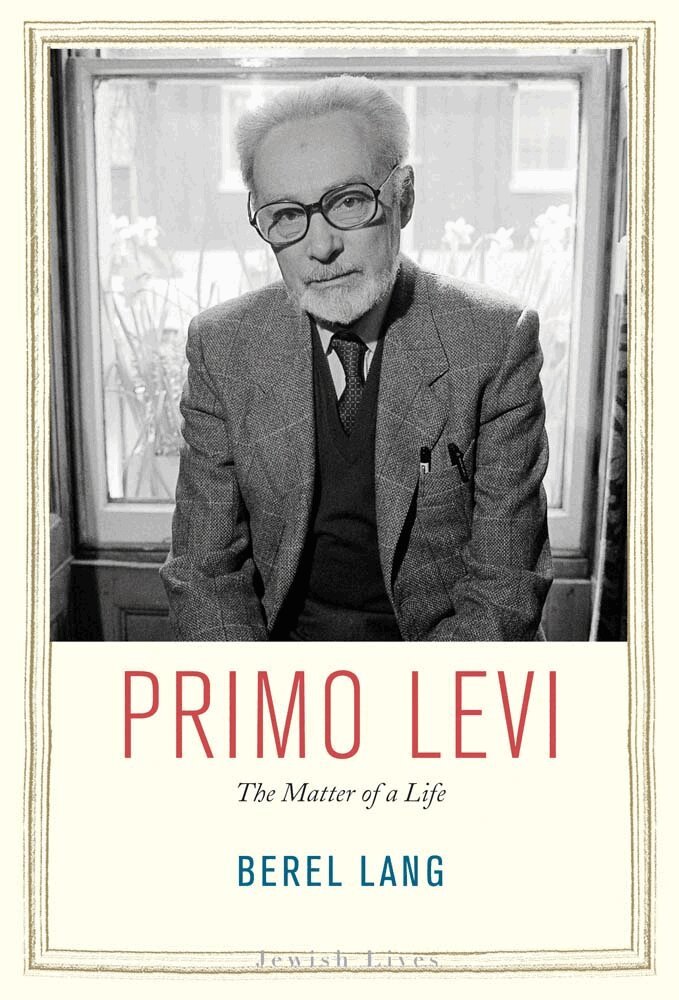
Primo Levi
The Matter of a Life
Av Berel Lang
Inbunden, 2013
282 kr
Lägg i varukorg
From the prizewinning Jewish Lives series, the first intellectual biography of Primo Levi to describe the intersection of his roles as both chemist and writerIn 1943, twenty-four-year-old Primo Levi had just begun a career in chemistry when, after joining a partisan group, he was captured by the …
Post-Holocaust
Interpretation, Misinterpretation, and the Claims of History
Av Berel Lang
Häftad, 2005
247 kr
Lägg i varukorg
"These essays are extremely well written, with the clarity and accessibility that one has come to expect from Berel Lang, one of the most respected and significant philosophers writing about the Holocaust and its impact." —Michael L. MorganIn these trenchant essays, philosopher Berel Lang examines …
Writing and the Moral Self
Av Berel Lang
Inbunden, 2020
1830 kr
Lägg i varukorg
Originally published in 1991, this book analyses the relation between writing and ethics in a number of social contexts – in politics, as language discloses its connections to the institutions of totalitarianism and democracy; in the university, as contemporary scholarly ideals find an …
Writing and the Moral Self
Av Berel Lang
Häftad, 2022
547 kr
Lägg i varukorg
Originally published in 1991, this book analyses the relation between writing and ethics in a number of social contexts – in politics, as language discloses its connections to the institutions of totalitarianism and democracy; in the university, as contemporary scholarly ideals find an …
Heidegger's Silence
Av Berel Lang
Inbunden, 1996
729 kr
Lägg i varukorg
In What Is Called Thinking, Martin Heidegger wrote, "Man speaks by being silent." Berel Lang demonstrates that Heidegger's own silence spoke consciously and deliberately in response to what has been called the "Jewish Question." Posed simply, the Jewish Question, as it gained currency in the …
Future of the Holocaust
Between History and Memory
Av Berel Lang
Inbunden, 1999
1648 kr
Lägg i varukorg
In The Future of the Holocaust, Berel Lang continues his inquiry into the causal mechanisms of decision-making and conduct in Nazi Germany and into responses to the genocide by individuals and nations—an inquiry that he began in Act and Idea in the Nazi Genocide and pursued in Heidegger's Silence. …
Future of the Holocaust
Between History and Memory
Av Berel Lang
Häftad, 1999
502 kr
Lägg i varukorg
In The Future of the Holocaust, Berel Lang continues his inquiry into the causal mechanisms of decision-making and conduct in Nazi Germany and into responses to the genocide by individuals and nations—an inquiry that he began in Act and Idea in the Nazi Genocide and pursued in Heidegger's Silence. …
Concept of Style
Av Berel Lang
Häftad, 1987
532 kr
Lägg i varukorg
A ground-breaking attempt at a prolegomenon to the study of style, this collection brings together eleven essays by distinguished philosophers, literary theorists, art historians, and musicologists, all addressing the role played by style in the arts and literature.
Holocaust Representation
Art within the Limits of History and Ethics
Av Berel Lang
Häftad, 2003
435 kr
Lägg i varukorg
Since Theodor Adorno's attack on the writing of poetry "after Auschwitz," artists and theorists have faced the problem of reconciling the moral enormity of the Nazi genocide with the artist's search for creative freedom. In Holocaust Representation, Berel Lang addresses the relation between ethics …
Genocide
The Act As Idea
Av Berel Lang, George J. Andreopoulos
Inbunden, 2016
347 kr
Lägg i varukorg
The term "genocide"-"group killing"-which first appeared in Raphael Lemkin's 1944 book, Axis Rule in Occupied Europe, had by 1948 established itself in international law through the United Nations Convention on the Prevention and Punishment of the Crime of Genocide. Since then the charge of …
Genocide
The Act As Idea
Av Berel Lang, George J. Andreopoulos
E-bok, 2016
424 kr
Lägg i varukorg
The term "genocide"-"group killing"-which first appeared in Raphael Lemkin's 1944 book, Axis Rule in Occupied Europe, had by 1948 established itself in international law through the United Nations Convention on the Prevention and Punishment of the Crime of Genocide. Since then the charge of …
Act and Idea in the Nazi Genocide
Av Berel Lang
Häftad, 2003
224 kr
Lägg i varukorg
This work is an analysis of the ideology, causal patterns, and means employed in the Nazi genocide against the Jews. It argues that the events of the genocide compel reconsideration of such moral concepts as individual and group responsibility, the role of knowledge in ethical decisions, and the …
Writing and the Moral Self
Av Berel Lang
E-bok, 2020
641 kr
Lägg i varukorg
Originally published in 1991, this book analyses the relation between writing and ethics in a number of social contexts – in politics, as language discloses its connections to the institutions of totalitarianism and democracy; in the university, as contemporary scholarly ideals find an …
Writing and the Moral Self
Av Berel Lang
E-bok, 2020
627 kr
Lägg i varukorg
Originally published in 1991, this book analyses the relation between writing and ethics in a number of social contexts – in politics, as language discloses its connections to the institutions of totalitarianism and democracy; in the university, as contemporary scholarly ideals find an …
Holocaust
A Reader
Inbunden, 2004
1767 kr
Lägg i varukorg
This interdisciplinary collection of primary and secondary readings encourages scholars and students to engage critically with current debates about the origins, implementation and postwar interpretation of the Holocaust. Interdisciplinary content encourages students to engage with philosophical, …
Holocaust
A Reader
Häftad, 2004
584 kr
Lägg i varukorg
This interdisciplinary collection of primary and secondary readings encourages scholars and students to engage critically with current debates about the origins, implementation and postwar interpretation of the Holocaust. Interdisciplinary content encourages students to engage with philosophical, …
Holocaust
A Reader
Av Berel Lang, Simone Gigliotti
E-bok, 2012
1884 kr
Lägg i varukorg
This interdisciplinary collection of primary and secondary readings encourages scholars and students to engage critically with current debates about the origins, implementation and postwar interpretation of the Holocaust. Interdisciplinary content encourages students to engage with philosophical, …
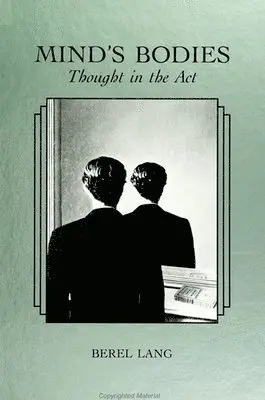
Mind's Bodies
Thought in the Act
Av Berel Lang
Häftad, 1995
394 kr
Tillfälligt slut
Subverting the boundaries between philosophy and literature, this book addresses such topics as aesthetics, criticism, epistemology, and ethics and social theory.Mind's Bodies: Thought in the Act both marks and subverts the boundaries between philosophy and literature. On the analogy of the …
Holocaust Representation
Art within the Limits of History and Ethics
Av Berel Lang
Inbunden, 2000
544 kr
Tillfälligt slut
Since Theodor Adorno's attack on the writing of poetry "after Auschwitz," artists and theorists have faced the problem of reconciling the moral enormity of the Nazi genocide with the artist's search for creative freedom. In Holocaust Representation, Berel Lang addresses the relation between ethics …
Philosopher in the Community
Essays in Memory of Bertram Morris
Av Berel Lang, William Sacksteder m. fl.
Inbunden, 1984
654 kr
Tillfälligt slut
This collection of essays was written in honor of the late Bertram Morris, a philosopher in his own right and professor of philosophy for the greater part of his career at the University of Colorado in Boulder. The contributors are all former students and colleagues of Morris's. Centered around the …