Bergsvik Knut Andreas Bergsvik – författare
Visar alla böcker från författaren Bergsvik Knut Andreas Bergsvik. Handla med fri frakt och snabb leverans.
3 produkter
3 produkter
E-bok
Engelska, 2017459 kr
Läs direkt efter köp
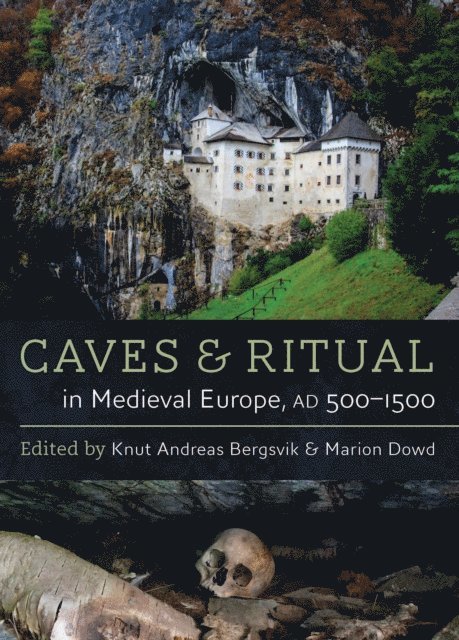
Caves and rockshelters in Europe have traditionally been associated with prehistory, and in some regions cave archaeology has become synonymous with the Palaeolithic. However, there is abundant evidence that caves and rockshelters were important foci for activities in historic times. During the medieval period (here taken as AD 500–1500) caves were used for short-term shelter, habitation, specialized craft activities, storage, as hideaways, and for tending animals. Caves were also used for religious purposes. Caves and Ritual in Medieval Europe, AD 500–1500 focuses on this neglected field of research – the ritual and religious use of caves. It draws together interdisciplinary studies by leading specialists from across Europe: from Iberia to Crimea, and from Malta to northern Norway. The different religions and rituals in this vast area are unified by the use of caves and rockshelters, indicating that the beliefs in these natural places – and in the power of the underworld – were deeply embedded in many different religious practices. Christianity was widespread and firmly established in most of Europe at this time, and many of the contributions deal with different types of Christian practices, such as the use of rock-cut churches, unmodified caves for spiritual retreat, caves reputedly visited by saints, and caves as places for burials. But parallel to this, some caves were associated with localized popular religious practices, which sometimes had pre-Christian origins. Muslims in Iberia used caves for spiritual retreat, and outside the Christian domain in northern Europe, caves and rockshelters were places for carving symbols among Pictish groups, places for human burial, for bear burials amongst the Sámi, and places for crafting and votive deposition for Norse populations.
E-bok
PDF, Engelska, 2017459 kr
Läs direkt efter köp
Caves and rockshelters in Europe have traditionally been associated with prehistory, and in some regions cave archaeology has become synonymous with the Palaeolithic. However, there is abundant evidence that caves and rockshelters were important foci for activities in historic times. During the medieval period (here taken as AD 500–1500) caves were used for short-term shelter, habitation, specialized craft activities, storage, as hideaways, and for tending animals. Caves were also used for religious purposes. Caves and Ritual in Medieval Europe, AD 500–1500 focuses on this neglected field of research – the ritual and religious use of caves. It draws together interdisciplinary studies by leading specialists from across Europe: from Iberia to Crimea, and from Malta to northern Norway. The different religions and rituals in this vast area are unified by the use of caves and rockshelters, indicating that the beliefs in these natural places – and in the power of the underworld – were deeply embedded in many different religious practices. Christianity was widespread and firmly established in most of Europe at this time, and many of the contributions deal with different types of Christian practices, such as the use of rock-cut churches, unmodified caves for spiritual retreat, caves reputedly visited by saints, and caves as places for burials. But parallel to this, some caves were associated with localized popular religious practices, which sometimes had pre-Christian origins. Muslims in Iberia used caves for spiritual retreat, and outside the Christian domain in northern Europe, caves and rockshelters were places for carving symbols among Pictish groups, places for human burial, for bear burials amongst the Sámi, and places for crafting and votive deposition for Norse populations.
E-bok
PDF, Engelska, 2012413 kr
Läs direkt efter köp
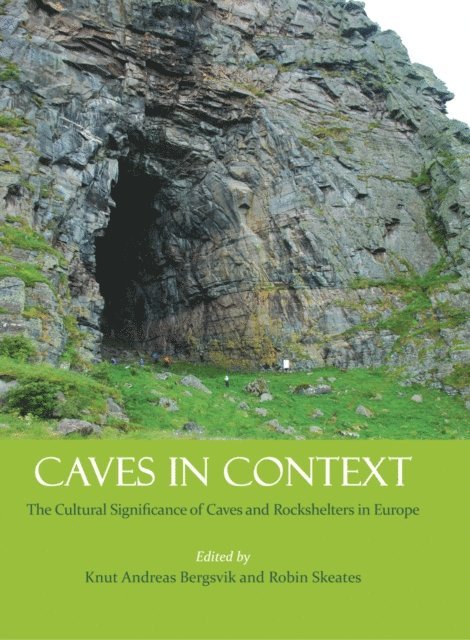
Caves in Context provides the thriving inter-disciplinary field of cave studies with a European-scale survey of current research in cave archaeology. It is unified by a contemporary theoretical emphasis on the cultural significance and diversity of caves over space and time. Caves and rockshelters are found all over Europe, and have frequently been occupied by human groups, from prehistory right up to the present day. Some appear to have only traces of short occupations, while others contain deep cultural deposits, indicating longer and multiple occupations. Above all, there is great variability in their human use, both secular and sacred. The aim of this book is to explore the multiple significances of these natural places in a range of chronological, spatial, and cultural contexts across Europe. The volume demonstrates, through a diversity of archaeological approaches and examples, that cave studies, whist necessarily focussed, can also be of significance to wider, contemporary, archaeological research agendas, particularly when a contextual approach is adopted. The book is also of relevance to other scholars working in the related fields of speleology, earth sciences, landscape studies, and anthropology, which together comprise the inter-disciplinary field of cave studies.