Bernard Dieny – författare
Visar alla böcker från författaren Bernard Dieny. Handla med fri frakt och snabb leverans.
6 produkter
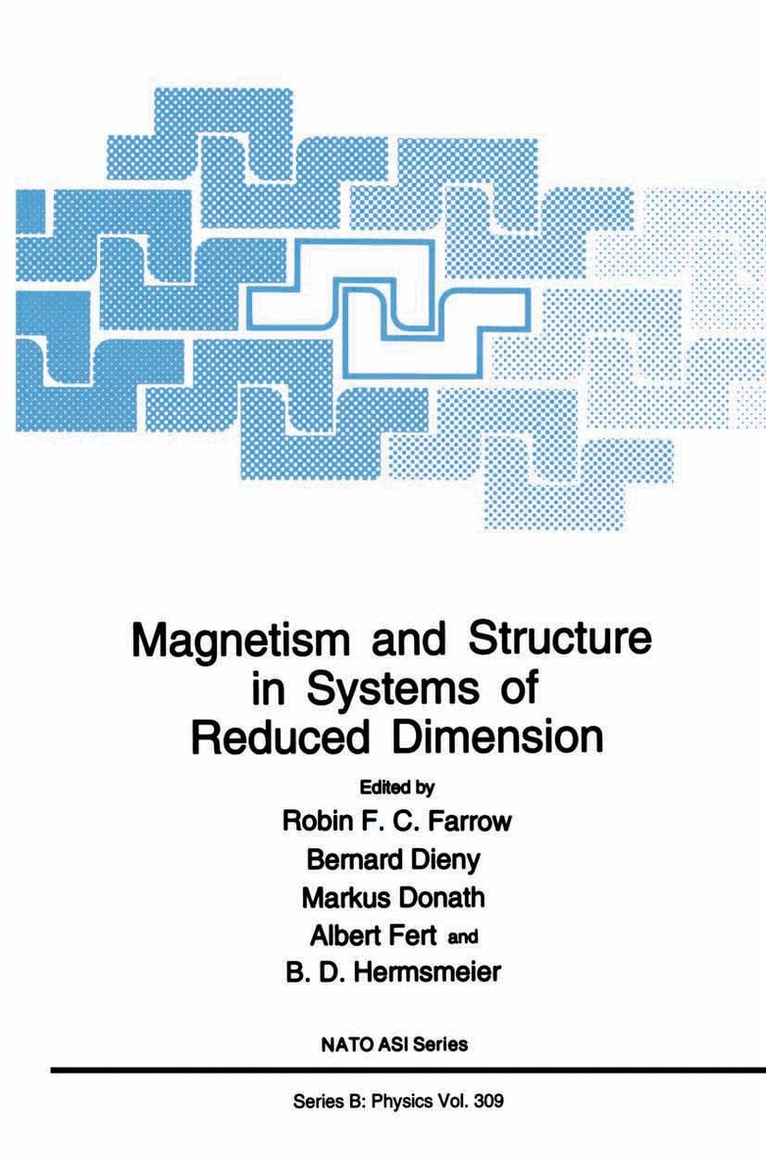
Magnetism and Structure in Systems of Reduced Dimension
Av Robin F.C. Farrow, Bernard Dieny m. fl.
Inbunden, 1993
2179 kr
Lägg i varukorg
This volume contains the papers presented at the NATO Advanced Research Workshop on "Magnetism and Structure in Systems of Reduced Dimension", held at l'Institut d'Etudes Scientifiques de Cargese - U.M.S. - C.N.R.S. - Universite de Corte Universite de Nice Sophia - Antipolis during June 15-19, …
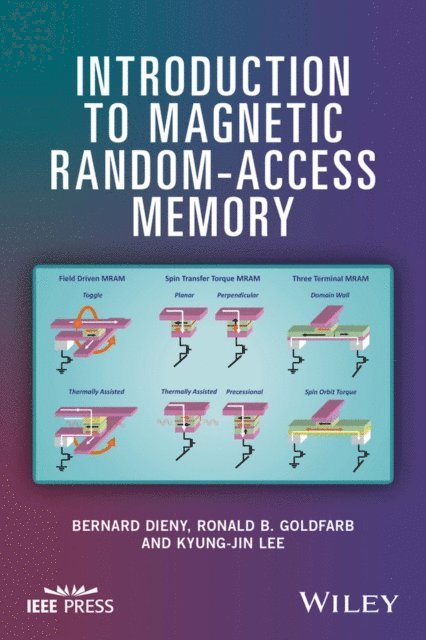
Introduction to Magnetic Random-Access Memory
Av Bernard Dieny, Ronald B. Goldfarb m. fl.
Inbunden, 2016
1503 kr
Lägg i varukorg
Magnetic random-access memory (MRAM) is poised to replace traditional computer memory based on complementary metal-oxide semiconductors (CMOS). MRAM will surpass all other types of memory devices in terms of nonvolatility, low energy dissipation, fast switching speed, radiation hardness, and …
Introduction to Magnetic Random-Access Memory
Av Kyung-Jin Lee, Ronald B. Goldfarb m. fl.
E-bok, 2016
1743 kr
Lägg i varukorg
Magnetic random-access memory (MRAM) is poised to replace traditional computer memory based on complementary metal-oxide semiconductors (CMOS). MRAM will surpass all other types of memory devices in terms of nonvolatility, low energy dissipation, fast switching speed, radiation hardness, and …
Introduction to Magnetic Random-Access Memory
Av Kyung-Jin Lee, Ronald B. Goldfarb m. fl.
E-bok, 2016
1692 kr
Lägg i varukorg
Magnetic random-access memory (MRAM) is poised to replace traditional computer memory based on complementary metal-oxide semiconductors (CMOS). MRAM will surpass all other types of memory devices in terms of nonvolatility, low energy dissipation, fast switching speed, radiation hardness, and …
Magnetism and Structure in Systems of Reduced Dimension
Av B.D. Hermsmeier, Albert Fert m. fl.
E-bok, 2013
2925 kr
Lägg i varukorg
This volume contains the papers presented at the NATO Advanced Research Workshop on "Magnetism and Structure in Systems of Reduced Dimension", held at l''Institut d''Etudes Scientifiques de Cargese - U.M.S. - C.N.R.S. - Universite de Corte Universite de Nice Sophia - Antipolis during June 15-19, …
Magnetism and Structure in Systems of Reduced Dimension
Av Robin F.C. Farrow, Bernard Dieny m. fl.
Häftad, 2013
2171 kr
Lägg i varukorg
This volume contains the papers presented at the NATO Advanced Research Workshop on "Magnetism and Structure in Systems of Reduced Dimension", held at l'Institut d'Etudes Scientifiques de Cargese - U.M.S. - C.N.R.S. - Universite de Corte Universite de Nice Sophia - Antipolis during June 15-19, …