Bert Sakmann – författare
Visar alla böcker från författaren Bert Sakmann. Handla med fri frakt och snabb leverans.
5 produkter
5 produkter
Inbunden, Engelska, 1995
3 668 kr
Skickas inom 10-15 vardagar
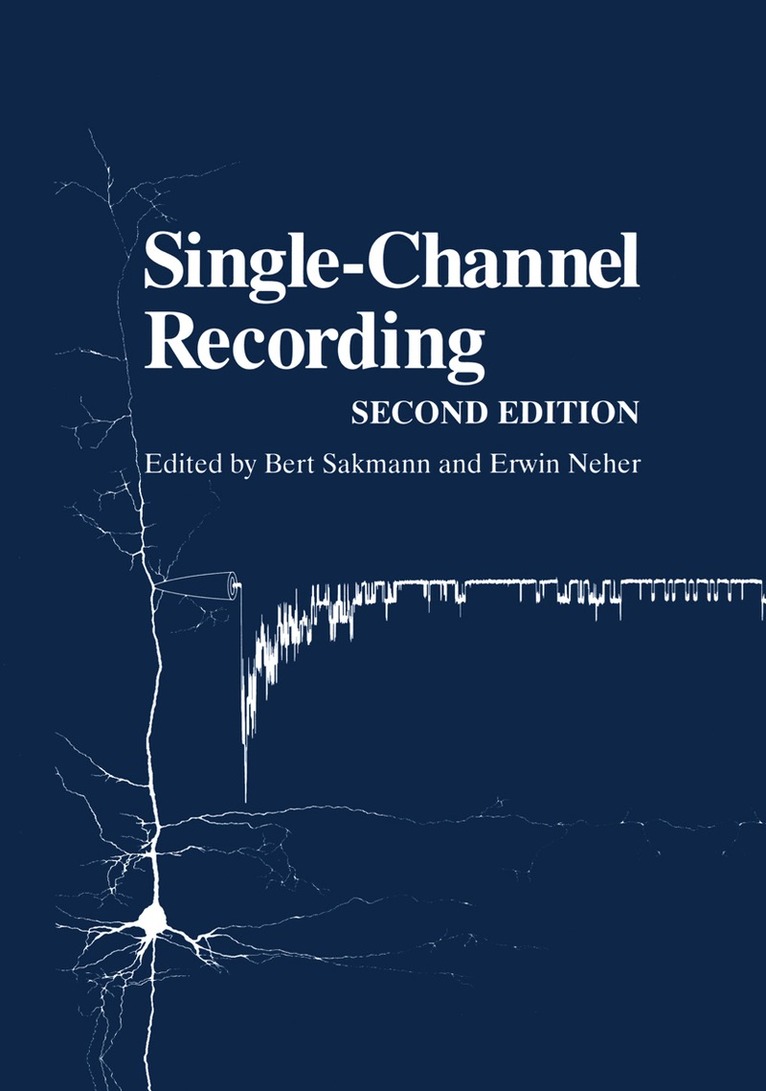
Edited by the 1991 winners of the Nobel Prize in Physiology or Medicine, this Second Edition includes new chapters covering such applications as capacitance measurements; single-cell PCR measurements; whole-cell recording from brain slices in combination with imaging techniques; atomic force microscopy of cells and membranes attached to glass pipettes; and patch clamping.
E-bok
PDF, Engelska, 20094 422 kr
Läs direkt efter köp
Edited by the 1991 winners of the Nobel Prize in Physiology or Medicine, this Second Edition includes new chapters covering such applications as capacitance measurements; single-cell PCR measurements; whole-cell recording from brain slices in combination with imaging techniques; atomic force microscopy of cells and membranes attached to glass pipettes; and patch clamping.
Häftad, Engelska, 2009
3 775 kr
Skickas inom 10-15 vardagar
Edited by the 1991 winners of the Nobel Prize in Physiology or Medicine, this Second Edition includes new chapters covering such applications as capacitance measurements; single-cell PCR measurements; whole-cell recording from brain slices in combination with imaging techniques; atomic force microscopy of cells and membranes attached to glass pipettes; and patch clamping.
E-bok
PDF, Engelska, 20131 416 kr
Läs direkt efter köp
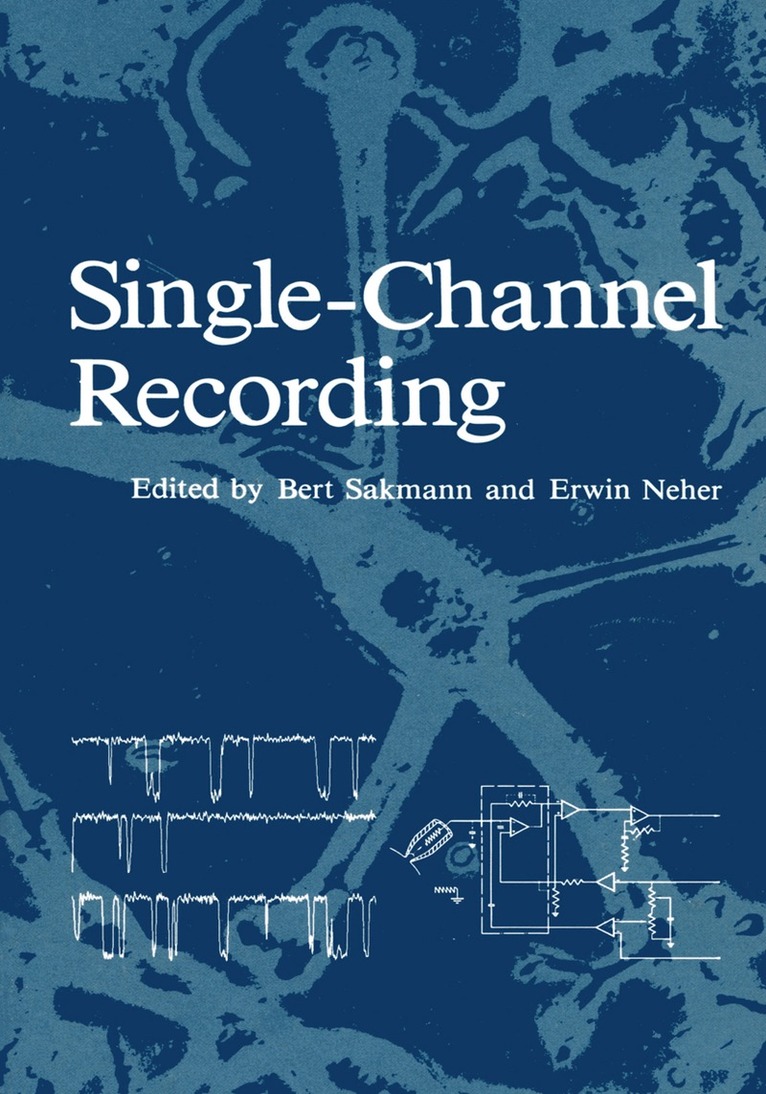
Single-channel recording has become a widely used tool for the study of ion permeation mechanisms in biological membranes. Whereas the technique might have been considered an "art" after its introduction in 1976, it developed into a relatively simple method after it became possible to obtain high-resistance (several gigaohm) membrane-pipette seals. In the summer of 1982, a course on the technique was held at the Ettore Majorana Center for Scientific Culture in Erice, Sicily. It brought together people from most of the laboratories involved in patch clamping at that time. During the course, it became apparent that the technique had reached a state of maturity. Repeatedly, the opinion was expressed that a detailed description of all the aspects of the technique including representative examples of results should be available. We therefore asked the course instructors, as well as several other colleagues, to provide chapters on selected topics in order to produce this volume. The different variants of patch clamping were described quite extensively in an article by Hamill, Marty, Neher, Sakmann, and Sigworth (Pflugers Archiv 391:85) in 1981. Rather than repeating this survey in an introductory chapter, we chose to reprint that article in the Appendix of this volume (by permission of Springer-Verlag). The methods section will, therefore, go straight into detailed aspects of the technol ogy.
Häftad, Engelska, 2012
1 084 kr
Skickas inom 10-15 vardagar
Single-channel recording has become a widely used tool for the study of ion permeation mechanisms in biological membranes. Whereas the technique might have been considered an "art" after its introduction in 1976, it developed into a relatively simple method after it became possible to obtain high-resistance (several gigaohm) membrane-pipette seals. In the summer of 1982, a course on the technique was held at the Ettore Majorana Center for Scientific Culture in Erice, Sicily. It brought together people from most of the laboratories involved in patch clamping at that time. During the course, it became apparent that the technique had reached a state of maturity. Repeatedly, the opinion was expressed that a detailed description of all the aspects of the technique including representative examples of results should be available. We therefore asked the course instructors, as well as several other colleagues, to provide chapters on selected topics in order to produce this volume. The different variants of patch clamping were described quite extensively in an article by Hamill, Marty, Neher, Sakmann, and Sigworth (Pflugers Archiv 391:85) in 1981. Rather than repeating this survey in an introductory chapter, we chose to reprint that article in the Appendix of this volume (by permission of Springer-Verlag). The methods section will, therefore, go straight into detailed aspects of the technol ogy.