Bettina Aptheker - Böcker
Visar alla böcker från författaren Bettina Aptheker. Handla med fri frakt och snabb leverans.
6 produkter
6 produkter
47 kr
Tillfälligt slut
293 kr
Skickas inom 10-15 vardagar
On August 7, 1970, a revolt by Black prisoners in a Marin County courthouse stunned the nation. In its aftermath, Angela Davis, an African American activist-scholar who had campaigned vigorously for prisoners' rights, was placed on the FBI's "ten most wanted list." Captured in New York City two months later, she was charged with murder, kidnapping, and conspiracy. Her trial, chronicled in this "compelling tale" (Publishers Weekly), brought strong public indictment. The Morning Breaks is a riveting firsthand account of Davis's ordeal and her ultimate triumph, written by an activist in the student, civil rights, and antiwar movements who was intimately involved in the struggle for her release.First published in 1975, and praised by The Nation for its "graphic narrative of [Davis's] legal and public fight," The Morning Breaks remains relevant today as the nation contends with the political fallout of the Sixties and the grim consequences of institutional racism. For this edition, Bettina Aptheker has provided an introduction that revisits crucial events of the late 1960s and early 1970s and puts Davis's case into the context of that time and our own—from the killings at Kent State and Jackson State to the politics of the prison system today. This book gives a first-hand account of the worldwide movement for Angela Davis's freedom and of her trial. It offers a unique historical perspective on the case and its continuing significance in the contemporary political landscape.
Tapestries of Life
Women's Work, Women's Consciousness and the Meaning of Daily Experience
Häftad, Engelska, 1989
389 kr
Skickas inom 7-10 vardagar
567 kr
Skickas inom 10-15 vardagar
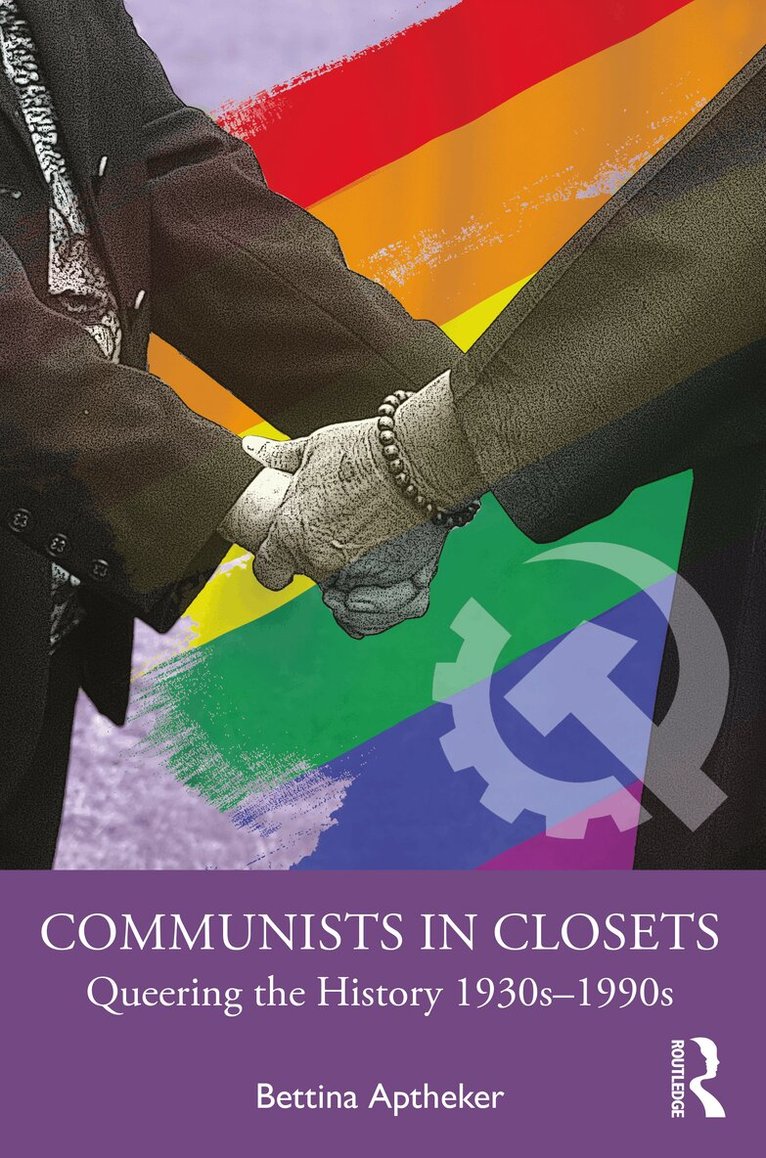
Communists in Closets: Queering the History 1930s–1990s explores the history of gay, lesbian, and non-heterosexual people in the Communist Party in the United States.The Communist Party banned lesbian, gay, bisexual, and transgender (LGBT) people from membership beginning in 1938 when it cast them off as "degenerates." It persisted in this policy until 1991. During this 60-year ban, gays and lesbians who did join the Communist Party were deeply closeted within it, as well as in their public lives as both queer and Communist. By the late 1930s, the Communist Party had a membership approaching 100,000 and tens of thousands more people moved in its orbit through the Popular Front against fascism, anti-racist organizing, especially in the south, and its widely read cultural magazine, The New Masses. Based on a decade of archival research, correspondence, and interviews, Bettina Aptheker explores this history, also pulling from her own experience as a closeted lesbian in the Communist Party in the 1960s and ‘70s. Ironically, and in spite of this homophobia, individual Communists laid some of the political and theoretical foundations for lesbian and gay liberation and women’s liberation, and contributed significantly to peace, social justice, civil rights, and Black and Latinx liberation movements.This book will be of interest to students, scholars, and general readers in political history, gender studies, and the history of sexuality.
2 088 kr
Skickas inom 10-15 vardagar
Communists in Closets: Queering the History 1930s–1990s explores the history of gay, lesbian, and non-heterosexual people in the Communist Party in the United States.The Communist Party banned lesbian, gay, bisexual, and transgender (LGBT) people from membership beginning in 1938 when it cast them off as "degenerates." It persisted in this policy until 1991. During this 60-year ban, gays and lesbians who did join the Communist Party were deeply closeted within it, as well as in their public lives as both queer and Communist. By the late 1930s, the Communist Party had a membership approaching 100,000 and tens of thousands more people moved in its orbit through the Popular Front against fascism, anti-racist organizing, especially in the south, and its widely read cultural magazine, The New Masses. Based on a decade of archival research, correspondence, and interviews, Bettina Aptheker explores this history, also pulling from her own experience as a closeted lesbian in the Communist Party in the 1960s and ‘70s. Ironically, and in spite of this homophobia, individual Communists laid some of the political and theoretical foundations for lesbian and gay liberation and women’s liberation, and contributed significantly to peace, social justice, civil rights, and Black and Latinx liberation movements.This book will be of interest to students, scholars, and general readers in political history, gender studies, and the history of sexuality.
Intimate Politics
How I Grew Up Red, Fought for Free Speech, and Became a Feminist Rebel
Häftad, Engelska, 2006
250 kr
Skickas inom 5-8 vardagar
At eight years old, Bettina Aptheker watched her family's politics play out in countless living rooms across the country when her father, historian and U.S. Communist Party leader Herbert Aptheker, testified on television in front of the House on Un-American Activities Committee in 1953. Born into one of the most influential U.S. Communist families whose friends included W. E. B. Du Bois, Paul Robeson, and Elizabeth Gurley Flynn, Bettina lived her parents' politics witnessing first-hand one of the most dramatic upheavals in American history. She also lived with a terrible secret: incest at the hands of her famous father and a frightening and lonely life lived inside a home wrought with family tensions.A gripping and beautifully rendered memoir, Intimate Politics is at its core the story of one woman's struggle to still the demons of her personal world while becoming a controversial public figure herself. This is the story of childhood sexual abuse, abortion, sexual violence, activism, and the triumph over one's past. It's about FBI harassment and persecution, Jewish heritage, and lesbian identity. It is, finally, about the courage to speak one's truth despite the consequences and to break the sacred silence of family secrets.