Bettina Bergo - Böcker
Visar alla böcker från författaren Bettina Bergo. Handla med fri frakt och snabb leverans.
7 produkter
7 produkter
590 kr
Skickas inom 5-8 vardagar
Anxiety looms large in historical works of philosophy and psychology. It is an affect, philosopher Bettina Bergo argues, subtler and more persistent than our emotions, and points toward the intersection of embodiment and cognition. While scholars who focus on the work of luminaries as Freud, Levinas, or Kant often study this theme in individual works, they seldom draw out the deep and significant connections between various approaches to anxiety. This volume provides a sweeping study of the uncanny career of anxiety in nineteenth and twentieth century European thought. Anxiety threads itself through European intellectual life, beginning in receptions of Kant's transcendental philosophy and running into Levinas' phenomenology; it is a core theme in Schelling, Kierkegaard, Schopenhauer, and Nietzsche. As a symptom of an interrogation that strove to take form in European intellectual culture, Angst passes through Schelling's romanticism into Schopenhauer's metaphysical vitalism, before it is explored existentially by Kierkegaard. And, in the twentieth century, it proves an extremely central concept for Heidegger, even as Freud is exploring its meaning and origin over a thirty year-long period of psychoanalytic development. This volume opens new windows onto philosophers who have never yet been put into dialogue, providing a rigorous intellectual history as it connects themes across two centuries, and unearths the deep roots of our own present-day "age of anxiety."
1 173 kr
Skickas inom 5-8 vardagar
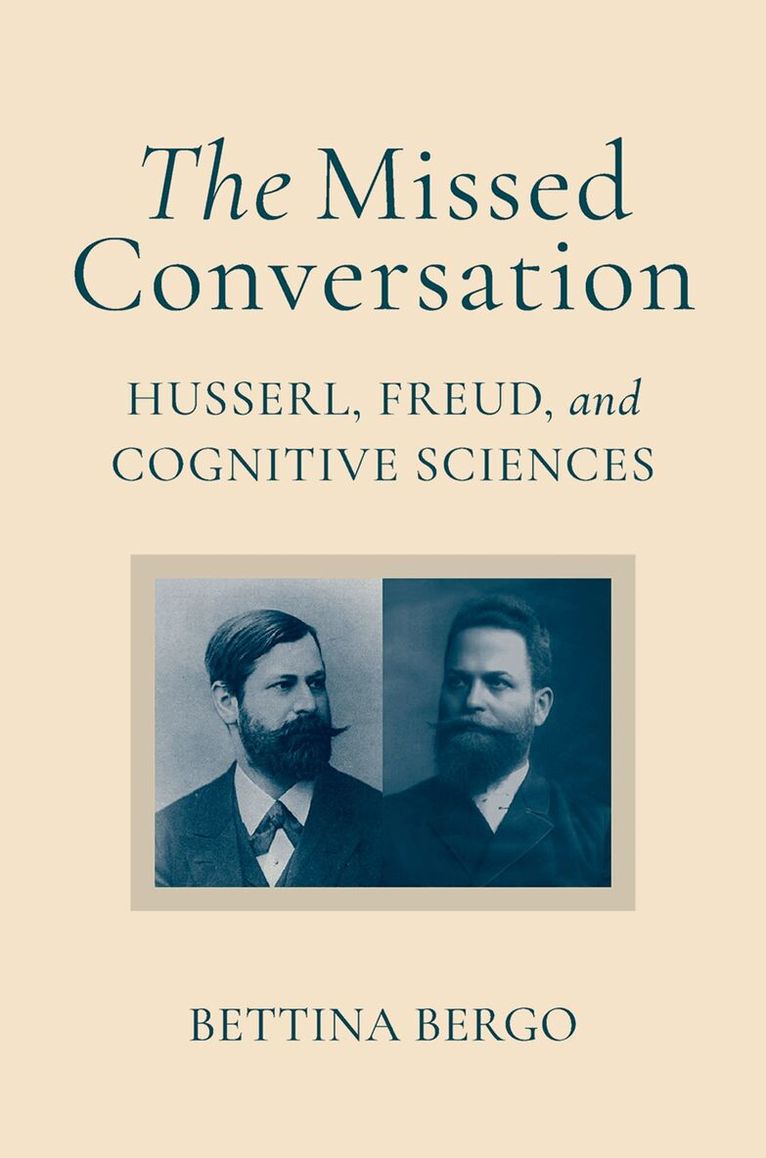
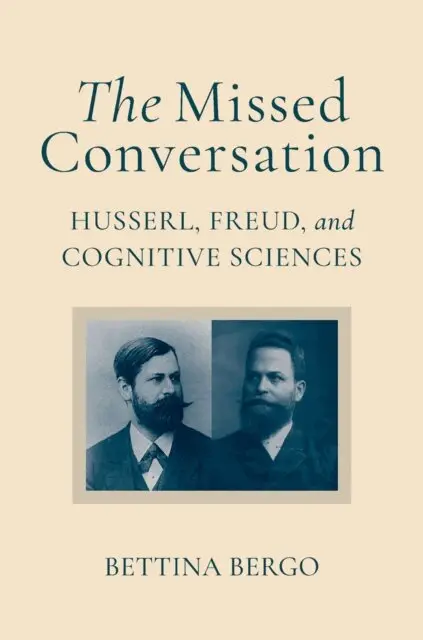
Many of the new trends in the philosophy of mind are little over a generation old. They could hardly have come about without the crucial scientific and philosophical innovations forged between 1890 and 1935. During that revolutionary period, important thinkers aspired to describe dynamic processes and unearth the "genetic" foundations of their disciplines. They addressed the question of consciousness and bodily intelligence, seeking a way past inherited versions of mind-body dualism. Early neurological and phenomenalist models would more than influence computationalism, connectionism, and enactivist approaches to consciousness, representations and judgments, memory, and even lived intersubjectivity. They constitute the first act in the complex drama ongoing today.The Missed Conversation thus enacts a conversation--among others, between Freud the neurologist and Husserl in his pursuit of the embodied depths of consciousness. While they never studied each other, the book shows how dynamic neurology and psychology can be set into enlightening dialogue with phenomenology. It sheds light on the history of philosophy of mind, showing its value to sciences of mind today. Without "naturalizing" phenomenology, Bettina Bergo demonstrates the importance of phenomenology for contemporary computational and enactive inquiry. She argues for the value of a neurologically-informed psychology, able to expand the descriptive limits of phenomenology while addressing contemporary problems in cognitive science.This groundbreaking work presents the fruit of 20 years of research in phenomenology, the history of neurology, psychoanalysis, and metapsychology. It shows how we might think critically about the history of philosophy of mind, mobilizing a pluralistic approach to embodiment, embeddedness in the world, as well as about the relationship between first and third-person standpoints.
1 108 kr
Skickas inom 7-10 vardagar
The essays that Jill Stauffer and Bettina Bergo collect in this volume locate multiple affinities between the philosophies of Nietzsche and Levinas. Both philosophers question the nature of subjectivity and the meaning of responsibility after the "death of God." While Nietzsche poses the dilemmas of a self without a ground and of ethics at a time of cultural upheaval and demystification, Levinas wrestles with subjectivity and the sheer possibility of ethics after the Shoah. Both argue that goodness exists independently of calculative reason--for Nietzsche, goodness arises in a creative act moving beyond reaction and ressentiment; Levinas argues that goodness occurs in a spontaneous response to another person. In a world at once without God and haunted by multiple divinities, Nietzsche and Levinas reject transcendental foundations for politics and work toward an alternative vision encompassing a positive sense of creation, a complex fraternity or friendship, and rival notions of responsibility.Stauffer and Bergo group arguments around the following debates, which are far from settled: What is the reevaluation of ethics (and life) that Nietzsche and Levinas propose, and what does this imply for politics and sociality? What is a human subject--and what are substance, permanence, causality, and identity, whether social or ethical--in the wake of the demise of God as the highest being and the foundation of what is stable in existence? Finally, how can a "God" still inhabit philosophy, and what sort of name is this in the thought of Nietzsche and Levinas?
578 kr
Skickas inom 3-6 vardagar
The essays that Jill Stauffer and Bettina Bergo collect in this volume locate multiple affinities between the philosophies of Nietzsche and Levinas. Both philosophers question the nature of subjectivity and the meaning of responsibility after the "death of God." While Nietzsche poses the dilemmas of a self without a ground and of ethics at a time of cultural upheaval and demystification, Levinas wrestles with subjectivity and the sheer possibility of ethics after the Shoah. Both argue that goodness exists independently of calculative reason--for Nietzsche, goodness arises in a creative act moving beyond reaction and ressentiment; Levinas argues that goodness occurs in a spontaneous response to another person. In a world at once without God and haunted by multiple divinities, Nietzsche and Levinas reject transcendental foundations for politics and work toward an alternative vision encompassing a positive sense of creation, a complex fraternity or friendship, and rival notions of responsibility.Stauffer and Bergo group arguments around the following debates, which are far from settled: What is the reevaluation of ethics (and life) that Nietzsche and Levinas propose, and what does this imply for politics and sociality? What is a human subject--and what are substance, permanence, causality, and identity, whether social or ethical--in the wake of the demise of God as the highest being and the foundation of what is stable in existence? Finally, how can a "God" still inhabit philosophy, and what sort of name is this in the thought of Nietzsche and Levinas?
405 kr
Skickas inom 7-10 vardagar
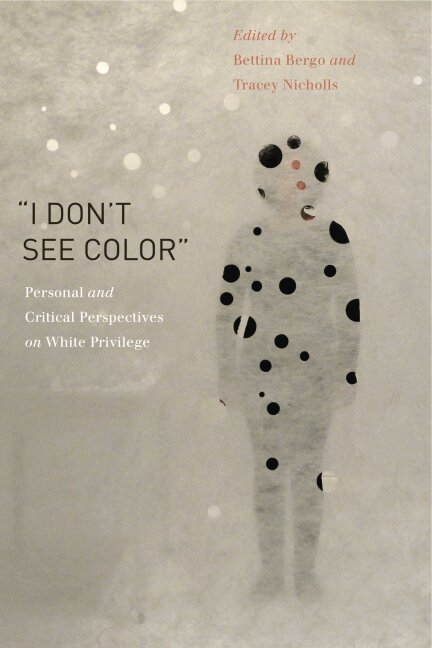
Who is white, and why should we care? There was a time when the immigrants of New York City’s Lower East Side—the Irish, the Poles, the Italians, the Russian Jews—were not white, but now “they” are. There was a time when the French-speaking working classes of Quebec were told to “speak white,” that is, to speak English. Whiteness is an allegorical category before it is demographic.This volume gathers together some of the most influential scholars of privilege and marginalization in philosophy, sociology, economics, psychology, literature, and history to examine the idea of whiteness. Drawing from their diverse racial backgrounds and national origins, these scholars weave their theoretical insights into essays critically informed by personal narrative. This approach, known as “braided narrative,” animates the work of award-winning author Eula Biss. Moved by Biss’s fresh and incisive analysis, the editors have assembled some of the most creative voices in this dialogue, coming together across the disciplines. Along with the editors, the contributors are Eduardo Bonilla-Silva, Nyla R. Branscombe, Drucilla Cornell, Lewis R. Gordon, Paget Henry, Ernest-Marie Mbonda, Peggy McIntosh, Mark McMorris, Marilyn Nissim-Sabat, Victor Ray, Lilia Moritz Schwarcz, Louise Seamster, Tracie L. Stewart, George Yancy, and Heidi A. Zetzer.
967 kr
Skickas inom 10-15 vardagar
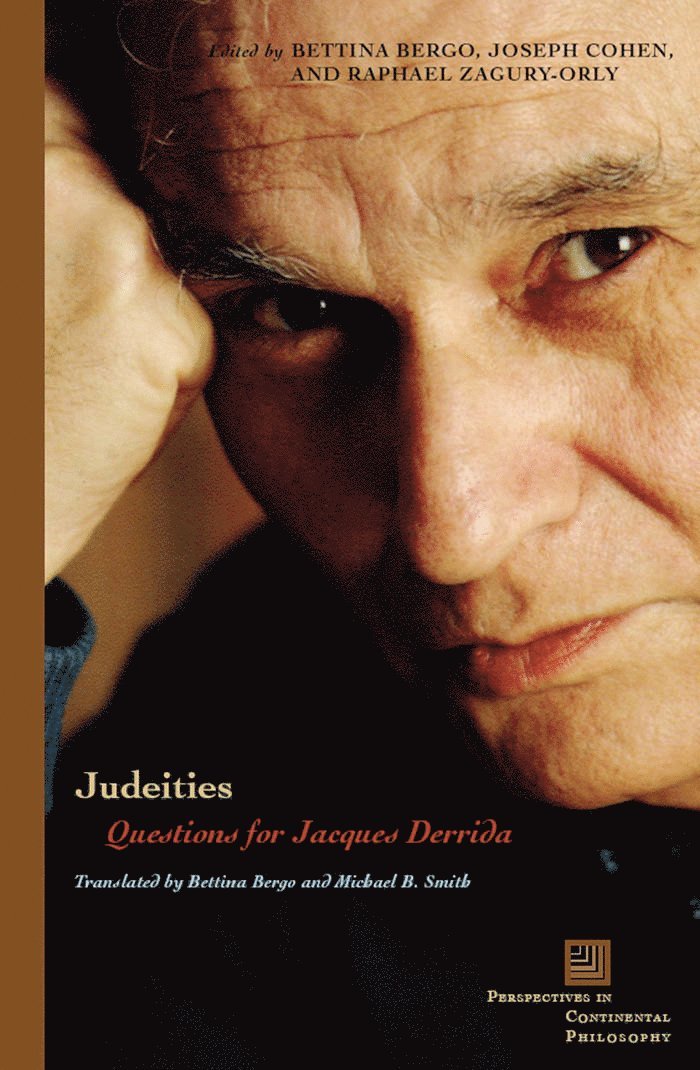
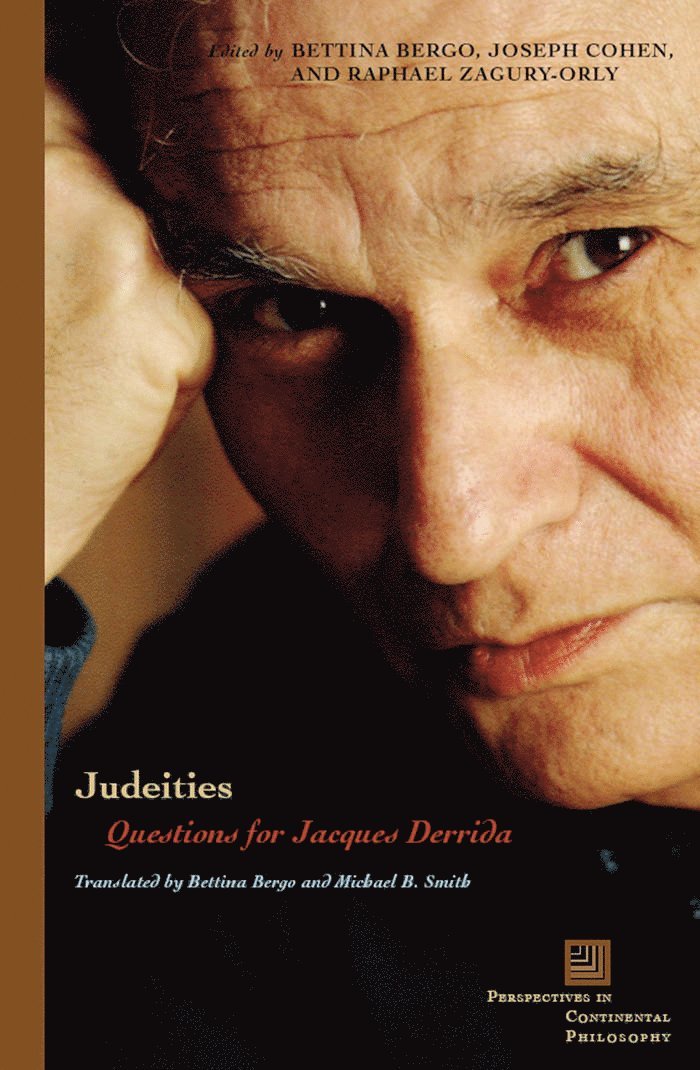
Invited to answer questions about his relationship to Judaism, Jacques Derrida spoke through Franz Kafka: "As for myself, I could imagine another Abraham."From the experience of a summons that surprises us and prompts the query "Who, me?" Derrida explores the movement between growing up Jewish, "becoming Jewish," and "Jewish being" or existence. His essay "The Other Abraham" appears here in English for the first time. We no longer confront "Judaism" but "judeity," multiple Judaisms and Jewishnesses, manifold ways of being and writing as a Jew—in Derrida's case, as a French-speaking Algerian deprived of, then restored to French nationality in the 1940s. What is it to be a Jew and a philosopher? How has the notion of "Jewish identity" been written into and across Jewish literature, Jewish thought, and Jewish languages? Here distinguished scholars address these questions, contrasting Derrida's thought with philosophical predecessors such as Rosenzweig, Levinas, Celan, and Scholem, and tracing confluences between deconstruction and Kabbalah. Derrida's relationship to the universalist aspirations in contemporary theology is also discussed, and his late autobiographical writings are evaluated. This multifaceted volume aims to open the question of Jewishness, above all, to hold it open as a question, though not one of practical or theoretical identity. As much a contestation of identity as a profound reflection on what it means today to seek, elude, and finally to wrestle with the significance of "being-jew," Judeities invites us to revisit the human condition in the twenty-first century.
407 kr
Skickas inom 10-15 vardagar
Invited to answer questions about his relationship to Judaism, Jacques Derrida spoke through Franz Kafka: "As for myself, I could imagine another Abraham."From the experience of a summons that surprises us and prompts the query "Who, me?" Derrida explores the movement between growing up Jewish, "becoming Jewish," and "Jewish being" or existence. His essay "The Other Abraham" appears here in English for the first time. We no longer confront "Judaism" but "judeity," multiple Judaisms and Jewishnesses, manifold ways of being and writing as a Jew—in Derrida's case, as a French-speaking Algerian deprived of, then restored to French nationality in the 1940s. What is it to be a Jew and a philosopher? How has the notion of "Jewish identity" been written into and across Jewish literature, Jewish thought, and Jewish languages? Here distinguished scholars address these questions, contrasting Derrida's thought with philosophical predecessors such as Rosenzweig, Levinas, Celan, and Scholem, and tracing confluences between deconstruction and Kabbalah. Derrida's relationship to the universalist aspirations in contemporary theology is also discussed, and his late autobiographical writings are evaluated. This multifaceted volume aims to open the question of Jewishness, above all, to hold it open as a question, though not one of practical or theoretical identity. As much a contestation of identity as a profound reflection on what it means today to seek, elude, and finally to wrestle with the significance of "being-jew," Judeities invites us to revisit the human condition in the twenty-first century.