Betty Houchin Winfield – författare
Visar alla böcker från författaren Betty Houchin Winfield. Handla med fri frakt och snabb leverans.
2 produkter
2 produkter
578 kr
Skickas inom 3-6 vardagar
Power was at the heart of Franklin Delano Roosevelt's relationship with the media: the power of the nation's chief executive to control his public messages versus the power of the free press to act as an independent watchdog over the president and the government. This compelling study of Roosevelt points to his consummate news management as a key to his political artistry and leadership legacy. Winfield explores FDR's handling of the media as a study in the conflict between confidentiality and openness in a democratic society. During the Depression FDR's leadership mode was flexible and open, seeking new answers for problems that had not responded to conventional solutions. Correspondingly, his dealings with the media were frank and freewheeling. But, during the war years, when invasion was a legitimate fear and information could be used as a weapon, FDR was forced to be more secretive and less candid. Winfield includes anecdotes and assessments culled from FDR's personal communications with journalists and from diaries and accounts of those who worked closely with FDR.She also gleans insights from the 1933-1945 press conferences and radio transcripts, journalists' responses, news articles, memoirs, letters to the White House, and the era's newspapers.
1 009 kr
Skickas inom 10-15 vardagar
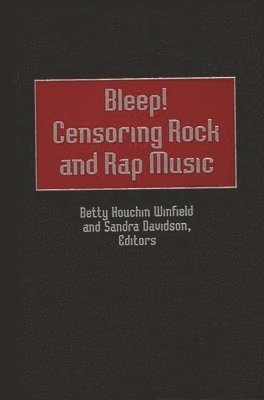
Examining the various boundaries of American artistic tolerance, chapters address the societal and legal responses to rock and rap music. Artistic expression has historically clashed with mainstream views, resulting in apprehension acted upon internally and externally, especially when expression is aimed toward children or young adults. This work studies the mass media content and programming in network television, Rolling Stone magazine, and the New York Times reviews and spot news concerning rock and rap music. The National Endowment for the Arts, the FCC, and the music industry's internal responses to parents and adults are discussed as well. Inhibitions and censoring, it is argued, stem from adult concerns for a healthy functioning society and from anxiety about the impact of sexual explicitness and uncontrolled behavioral expression on adolescents. This work attempts to explain why societal intolerance has a pattern of limiting the lyrics and sounds of rock and rap music.Uniquely combining both societal and legal viewpoints on censorship of America's popular music culture, these essays address issues of concern to various scholars including those studying mass media, censorship, and American popular culture. Legal appendices are included as useful references, such as the National Endowments for the Arts Obscenity and Rejections Sections.