Betul Basaran - Böcker
Visar alla böcker från författaren Betul Basaran. Handla med fri frakt och snabb leverans.
2 produkter
2 produkter
715 kr
Skickas inom 7-10 vardagar
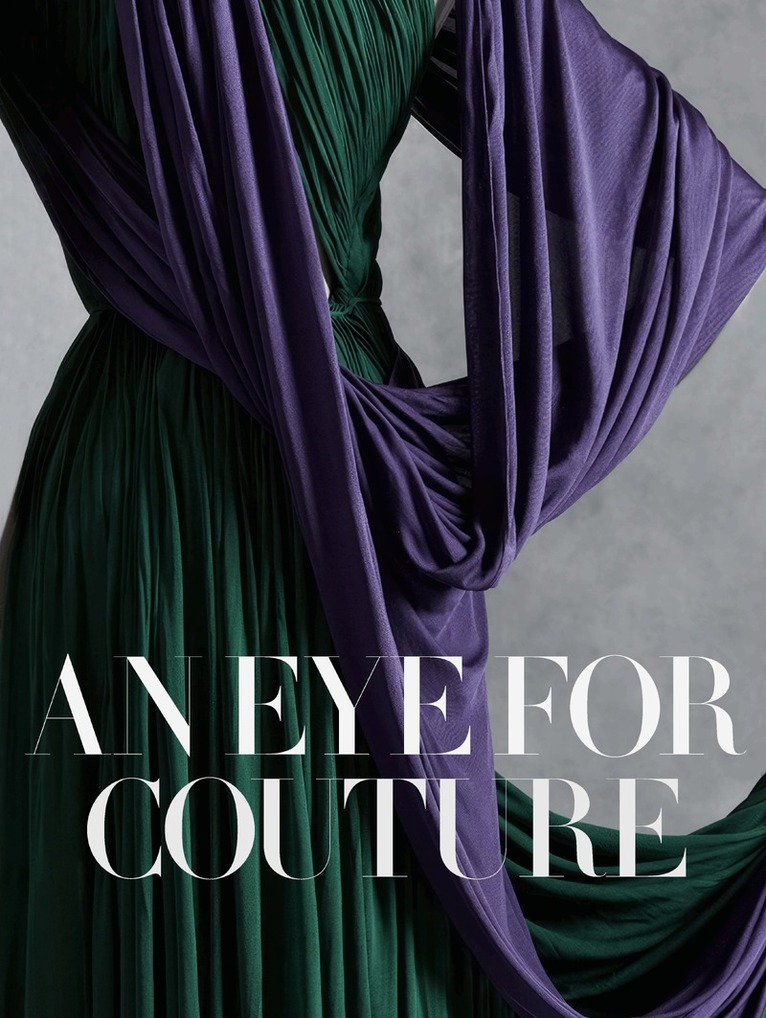
In this stunning book, one of the world's leading art dealers reveals her passion project-collecting French haute couture from the twentieth century and telling the stories of the women who wore them.Francesca Galloway's collection, unique in concept, spans the great period of French haute couture and fashion. It includes an outstanding group by the luminary Paul Poiret and important pieces by, among others, Jeanne Lanvin, Gabrielle Chanel, Madeleine Vionnet, Sonia Delaunay, Elsa Schiaparelli, Cristobal Balenciaga, Christian Dior, Yves Saint Laurent, Paco Rabanne and Yohji Yamamoto.These garments and accessories come to life through the women who wore them. Denise Poiret-Paul's muse, collaborator and model-is the subject of a specially commissioned essay. So is Princess Niloufer of Hyderabad: known as one of the most beautiful women in the world. She was photographed by Horst P. Horst for Vogue in 1939 and used her status to campaign for women's rights. With an eye for design innovation, technical brilliance, and the material dialog between East and West, Galloway has assembled a collection spanning more than one hundred pieces-from evening gowns to hats and shoes.The striking imagery is the result of a collaboration between a fashion photographer, set designer and costume conservator/dresser. The images are positioned between haute couture and still life photography to bring these pieces of fashion history to life.
Del 56 - Ottoman Empire and its Heritage
Selim III, Social Control and Policing in Istanbul at the End of the Eighteenth Century
Between Crisis and Order
Inbunden, Engelska, 2014
2 350 kr
Skickas inom 5-8 vardagar
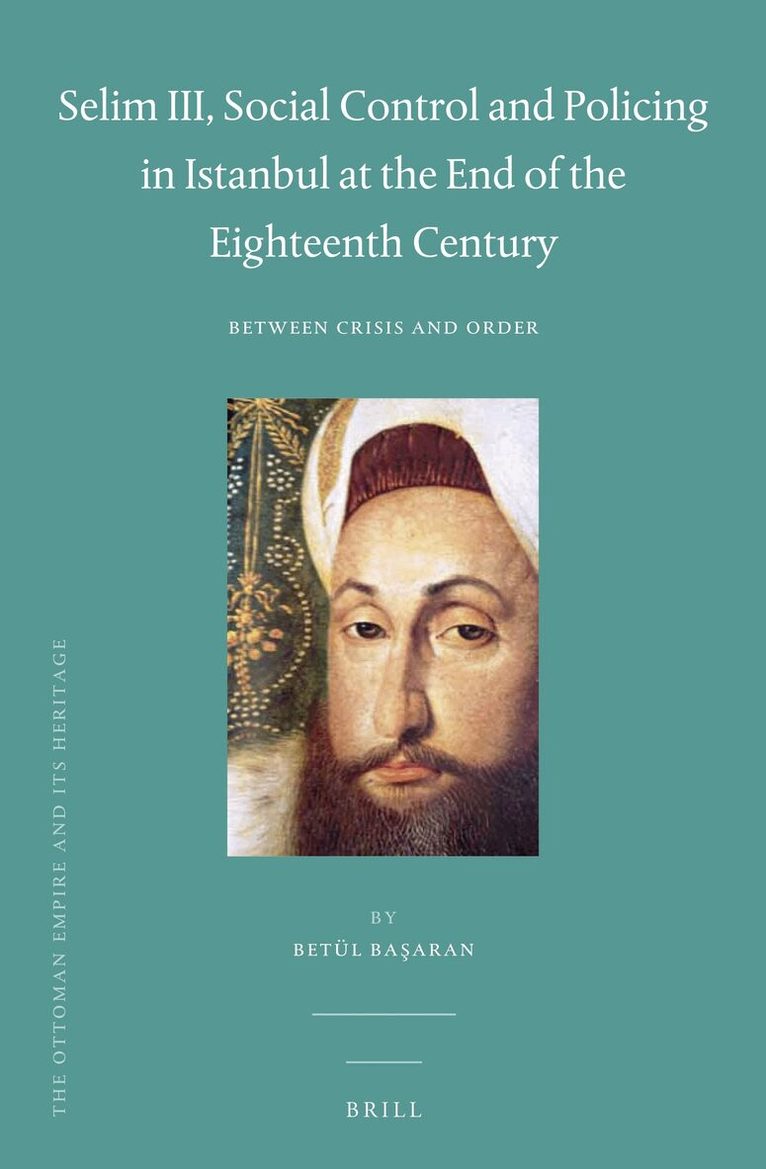
In Selim III, Social Order and Policing in Istanbul at the End of the Eighteenth Century Betül Başaran examines Sultan Selim III’s social control and surveillance measures. Drawing mainly from a set of inspection registers and censuses from the 1790s, as well as court records she paints a colorful picture of the city’s residents and artisans. She argues that the period constitutes the beginnings of large-scale population control and crisis management and urges us to think about the Ottoman Empire as a polity that was increasingly becoming a “statistical” state, along with its contemporaries in Europe, and to go beyond mechanistic models of borrowing that focus primarily on military reform and European influence in our discussions of Ottoman reform and “modernity”.