Birgit Tautz - Böcker
Visar alla böcker från författaren Birgit Tautz. Handla med fri frakt och snabb leverans.
8 produkter
8 produkter
1 197 kr
Skickas inom 7-10 vardagar
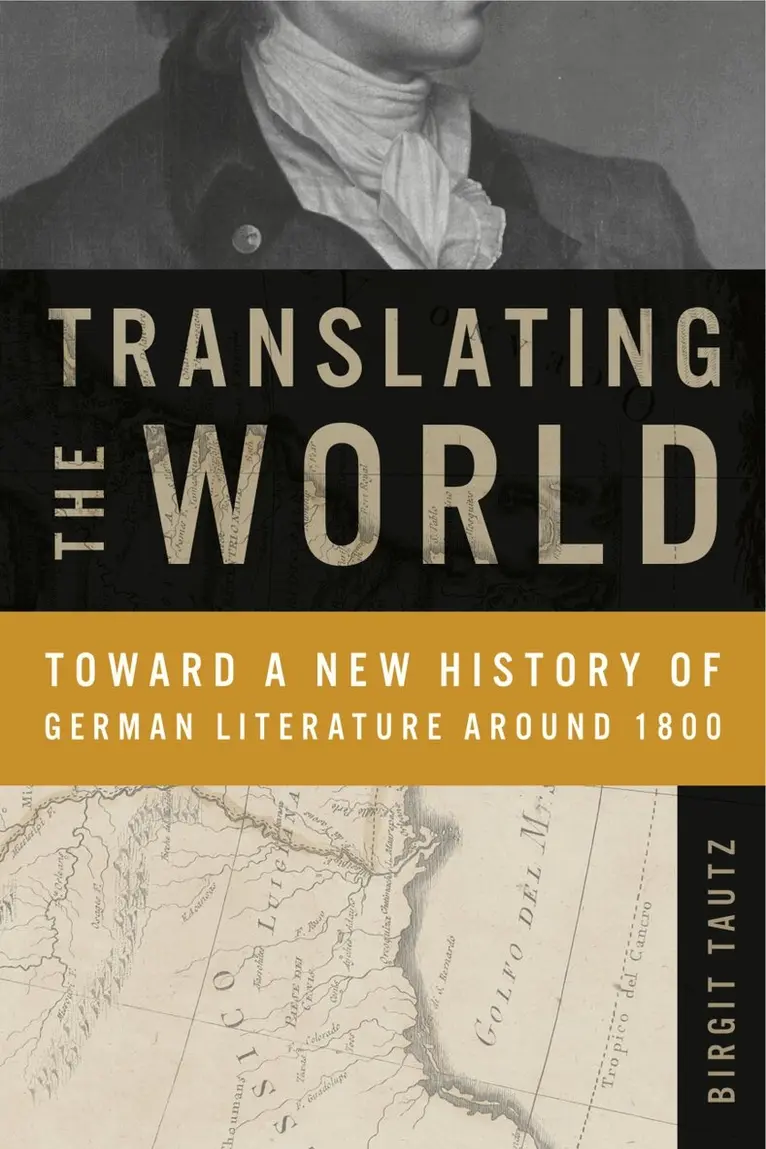
In Translating the World, Birgit Tautz provides a new narrative of German literary history in the late eighteenth and early nineteenth centuries. Departing from dominant modes of thought regarding the nexus of literary and national imagination, she examines this intersection through the lens of Germany’s emerging global networks and how they were rendered in two very different German cities: Hamburg and Weimar.German literary history has tended to employ a conceptual framework that emphasizes the nation or idealized citizenry, yet the experiences of readers in eighteenth-century German cities existed within the context of their local environments, in which daily life occurred and writers such as Lessing, Schiller, and Goethe worked. Hamburg, a flourishing literary city in the late eighteenth century, was eventually relegated to the margins of German historiography, while Weimar, then a small town with an insular worldview, would become mythologized for not only its literary history but its centrality in national German culture. By interrogating the histories of and texts associated with these cities, Tautz shows how literary styles and genres are born of local, rather than national, interaction with the world. Her examination of how texts intersect and interact reveals how they shape and transform the urban cultural landscape as they are translated and move throughout the world.A fresh, elegant exploration of literary translation, discursive shifts, and global cultural changes, Translating the World is an exciting new story of eighteenth-century German culture and its relationship to expanding global networks that will especially interest scholars of comparative literature, German studies, and literary history.
473 kr
Skickas inom 7-10 vardagar
In Translating the World, Birgit Tautz provides a new narrative of German literary history in the late eighteenth and early nineteenth centuries. Departing from dominant modes of thought regarding the nexus of literary and national imagination, she examines this intersection through the lens of Germany’s emerging global networks and how they were rendered in two very different German cities: Hamburg and Weimar.German literary history has tended to employ a conceptual framework that emphasizes the nation or idealized citizenry, yet the experiences of readers in eighteenth-century German cities existed within the context of their local environments, in which daily life occurred and writers such as Lessing, Schiller, and Goethe worked. Hamburg, a flourishing literary city in the late eighteenth century, was eventually relegated to the margins of German historiography, while Weimar, then a small town with an insular worldview, would become mythologized for not only its literary history but its centrality in national German culture. By interrogating the histories of and texts associated with these cities, Tautz shows how literary styles and genres are born of local, rather than national, interaction with the world. Her examination of how texts intersect and interact reveals how they shape and transform the urban cultural landscape as they are translated and move throughout the world.A fresh, elegant exploration of literary translation, discursive shifts, and global cultural changes, Translating the World is an exciting new story of eighteenth-century German culture and its relationship to expanding global networks that will especially interest scholars of comparative literature, German studies, and literary history.
947 kr
Skickas inom 7-10 vardagar
This year's volume is highlighted by a special section on Goethe's narrative events in addition to a range of other articles from emerging and established scholars.The Goethe Yearbook is a publication of the Goethe Society of North America, encouraging North American Goethe scholarship by publishing original English-language contributions to the understanding of Goethe and other authors of the Goethezeit while also welcoming contributions from scholars around the world. Volume 26 features a special section on Goethe's narrative events, with contributions on "Narrating (against) the Uncanny: Goethe's "Ballade" vs. Hoffmann's Der Sandmann," "The Absence of Events in Die Wahlverwandtschaften," and "Countering Catastrophe: Goethe's Novelle in the Aftershock of Kleist." This issue also showcases work presented atthe 2017 Atkins Goethe Conference (Re-Orientations around Goethe), including contributions by Eva Geulen on morphology and W. Daniel Wilson on the Goethe Society of Weimar in the Third Reich. In addition there are articles by emerging and established scholars on Klopstock, Schiller, Goethe and objects, dark green ecology, and texts of the Goethezeit and beyond through the lens of world literature. Book reviews conclude the volume.Contributors: Lisa Marie Anderson, Thomas O. Beebee, Fritz Breithaupt, Christopher Chiasson, Patrick Fortmann, Sean Franzel, Eva Geulen, Willi Goetschel, Stefan Hajduk, Samuel Heidepriem, Bryan Klausmeyer, Lea Pao, Elizabeth Powers, James Shinkle, Heather I. Sullivan, Christian P. Weber, W. Daniel Wilson, Karin A. Wurst.The Goethe Yearbook is edited, beginning with this volume, by Patricia Anne Simpson, Professor of German and Chairperson of Modern Languages at the University of Nebraska-Lincoln, and Birgit Tautz, George Taylor Files Professor of Modern Languages at Bowdoin College. Book Review Editor is Sean Franzel, Associate Professor of German at the University ofMissouri-Columbia.
947 kr
Skickas inom 7-10 vardagar
A new Forum section focuses on the impact of Digital Humanities on Goethe scholarship and on eighteenth-century German Studies, alongside articles on a diverse range of authors and topics.The Goethe Yearbook is a publication of the Goethe Society of North America, showcasing North American and international scholarship on Goethe and other authors and aspects of the Goethezeit. Volume 27 features the yearbook's first Forum, a discussion of the impact of Digital Humanities (DH) and "computational criticism" on Goethe scholarship and eighteenth-century German Studies more broadly. For this launch, invited contributors were askedto consider the canon in comparison to "the great unread" (Margaret Cohen): the vast expanse of uncanonized texts. The contributions evince approaches that go beyond the established binary of scholarly methods vs. data sciences; they also explore DH as a way of navigating the gendered fault lines of canon formation. Beyond the Forum, there are articles on Goethe's self-marketing, on several of his major works, and on pivotal topics in them (orientation, der Gang, and transgression); on nascent anthropology, on Creativity Studies, and on other eighteenth-century figures (Rahel Levin Varnhagen, Karl Phillip Moritz). A newly discovered text by August von Kotzebue, sample entries fromthe prodigious work in progress Lexikon of Philosophical Concepts, and the customary book review section round out the volume.Richard B. Apgar, Constanze Baum, Jane K. Brown, Matt Erlin, Renata Fuchs, Matthew Handelman, Katrin Henzel, Stefan Höppner, Julie Koser, James Manalad, Clark Muenzer, Maike Oergel, Andrew Piper, Mattias Pirholt, Michael Saman, Renata Schellenberg, Helmut J. Schneider, Oliver Simons, Leif Weatherby, George S. Williamson, Karin A. Wurst.Patricia Anne Simpson is Professor of German at the University of Nebraska-Lincoln. Birgit Tautz is George Taylor Files Professor of Modern Languages at Bowdoin College. Book review editor Sean Franzel is Associate Professor of German at the University of Missouri-Columbia.
1 530 kr
Skickas inom 3-6 vardagar
This volume's Forum section focuses on new directions in eighteenth-century German studies, alongside articles on a diverse range of topics concerning Goethe and the literature and arts of his age.The Goethe Yearbook is a publication of the Goethe Society of North America, showcasing North American and international scholarship on Goethe and other authors and aspects of the Goethezeit. Volume 28 features articles on several of Goethe's signature works (Xenien, Wahlverwandtschaften, Faust), unified by their innovative approaches. It also includes a Forum section seeking to prompt discussion of new directions in eighteenth-century German studies. An essay documenting Goethe's engagement with China and another on Goethe's legacy in post-WWII Argentina emphasize these new directions. Other essays highlight Goethe's inter-arts approaches (music,theater, collecting); interdisciplinary intersections of eighteenth-century literary studies with gender and social history; media theory; and renewed emphasis on materialism. The latter is the focus of a recently convened collaboration on early nineteenth-century inventories presented in this volume. The customary book review section rounds out the volume.
947 kr
Skickas inom 7-10 vardagar
Volume 29 features articles on Anton Reiser; the legacies of German romanticism; Goethe's morphology and computational analysis; Goethe commemorations in Argentina; and Goethe's Weltliteratur in the context of trade with China, along with two special sections and the book review.Volume 29 features articles on Anton Reiser; the legacies and myths of German romanticism; Goethe's morphology as antecedent to computational analysis; on Goethe commemorations in Argentina; and a reconsideration of Goethe's Weltliteratur in the context of Handelsverkehr (trade) with China. Additionally, volume 29 features two special sections. The first commemorates an anniversary, Hölderlin's 250th birthday, with work devoted to "Reading and Exhibiting," compiled by Meike Werner. The other special section, on movement and edited by Heidi Schlipphacke, further explores research featured at MLA 2021 and revisits many questions of sentimentalism, visuality, and narration that are at the core of canon formation and eighteenth-century thresholds of modernity. As always, the book review section, edited by Sean Franzel, concludes the volume.
947 kr
Skickas inom 7-10 vardagar
The Goethe Yearbook is a publication of the Goethe Society of North America, showcasing North American and international scholarship on Goethe and other authors and aspects of the late eighteenth and early nineteenth centuries. Volume 30 seeks to prompt discussion of new directions in eighteenth-century scholarship with special sections on Enlightenment legacies of race and on the robust scholarship that rethinks the eighteenth-century body beyond the human organism. Beyond the two special sections there are articles on Wieland's Alceste, several essays on sex and gender (e.g., on Goethe's Werther; on gender, genre, and authorship in La Roche and Goethe; and on continued gender bias in scholarship on the German eighteenth century), a co-authored article on Goethe's Roman elegies, and an article on performativity and gestures in Kleist. The customary book review section rounds out the volume.
German and European Cultural Histories, 1760 - 1830
Between Network and Narrative
Häftad, Engelska, 2024
1 783 kr
Skickas inom 7-10 vardagar
Additional resources for this book are available on our Manifold site, which can be accessed via https://liverpooluniversitypress.manifoldapp.org/projects/german-and-european-cultural-historiesThis volume plays on the double meaning of network in German and European Studies: configurations of people, objects, and texts as well as network analysis, the dominant Digital Humanities (DH) method featured in the book. Contributions from art history, history of the book, history, literary studies, and musicology contemplate the strengths and weakness of treating the period 1789-1810 as either continuous with or a departure from the centuries before and after by examining different facets of the longer period 1760-1830. While many chapters investigate German material, nearly all expand into other European cultures and cover important regions, protagonists, objects and constellations of bi-and multilingual life. They intersect Italian, French, and English networks and reach across the Atlantic into New England. The period’s bookends indicate a threshold or terminus for traditions, institutions, and national identities in Europe: marking the French Revolution (and its effects across the continent culminating on the Wars again Napoleon) and at times reactionary responses with delineation of national, regional, or group identities, respectively, and perhaps most pronounced in the aftermath of the Congress of Vienna (1814-15). Overall, the collection of eleven chapters, introduction, and an epilogue explores European cultural histories at the turn of the nineteenth century in a nonlinear manner, that is, by accumulating critical perspectives on people, objects, and texts that test the boundaries of narratives of transmission, organization, and cohesion that often mark scholarly evaluations of this period in European history.