Bisserka Gaydarska – författare
Visar alla böcker från författaren Bisserka Gaydarska. Handla med fri frakt och snabb leverans.
14 produkter
Megasites in Prehistoric Europe
Where Strangers and Kinsfolk Met
Av Bisserka Gaydarska, John Chapman
Häftad, 2022
317 kr
Lägg i varukorg
This is an Element about some of the largest sites known in prehistoric Europe - sites so vast that they often remain undiscussed for lack of the theoretical or methodological tools required for their understanding. Here, the authors use a relational, comparative approach to identify not only what …
Megasites in Prehistoric Europe
Where Strangers and Kinsfolk Met
Av John Chapman, Bisserka Gaydarska
E-bok, 2022
303 kr
Lägg i varukorg
This is an Element about some of the largest sites known in prehistoric Europe – sites so vast that they often remain undiscussed for lack of the theoretical or methodological tools required for their understanding. Here, the authors use a relational, comparative approach to identify not only what …
Megasites in Prehistoric Europe
Where Strangers and Kinsfolk Met
Av John Chapman, Bisserka Gaydarska
E-bok, 2022
303 kr
Lägg i varukorg
This is an Element about some of the largest sites known in prehistoric Europe – sites so vast that they often remain undiscussed for lack of the theoretical or methodological tools required for their understanding. Here, the authors use a relational, comparative approach to identify not only what …
Upper Tisza Project. Studies in Hungarian Landscape Archaeology. Book 2: Settlement Patterns in the Bodrogköz Block
The Upper Tisza Project. Studies in Hungarian Landscape Archaeology.
Av Chris Bond, David Brookshaw m. fl.
2010
1245 kr
Lägg i varukorg
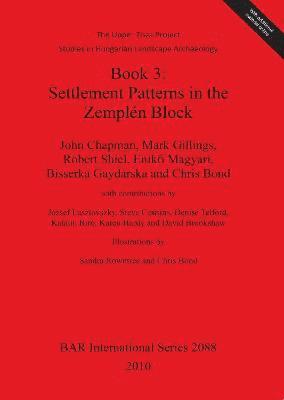
Upper Tisza Project. Studies in Hungarian Landscape Archaeology. Book 3: Settlement Patterns in the Zemplén Block
The Upper Tisza Project. Studies in Hungarian Landscape Archaeology.
Av John Chapman, Steve Cousins m. fl.
2010
455 kr
Lägg i varukorg
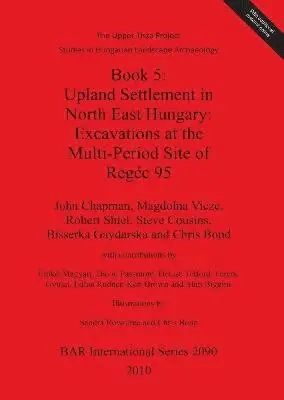
Upper Tisza Project. Studies in Hungarian Landscape Archaeology. Book 5: Upland Settlement in North East Hungary: Excavations at the Multi-Period Site
The Upper Tisza Project Studies in Hungarian Landscape Archaeology
Av Chris Bond, John Chapman m. fl.
2010
1190 kr
Lägg i varukorg
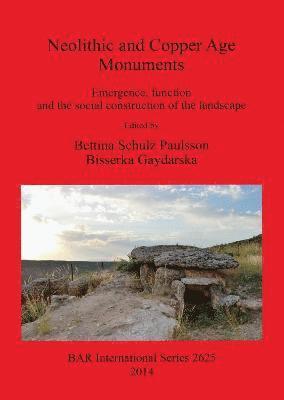
Neolithic and Copper Age Monuments
Emergence, function and the social construction of the landscape
Av Bisserka Gaydarska, Bettina Schulz Paulsson
Häftad, 2014
386 kr
Lägg i varukorg
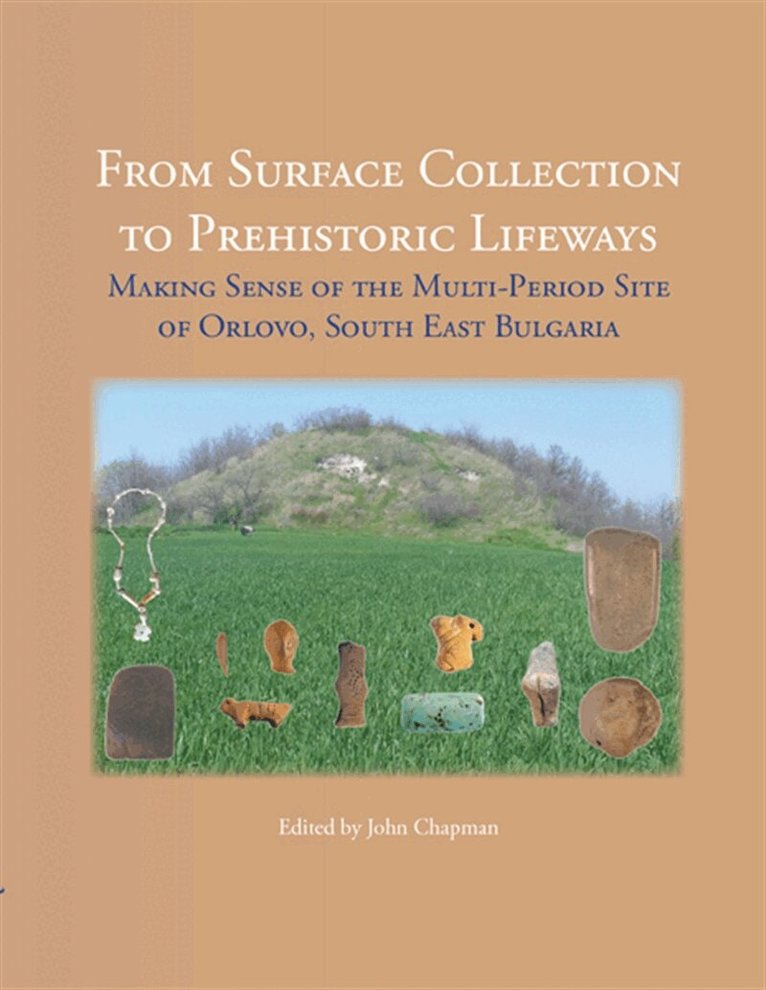
From Surface Collection to Prehistoric Lifeways
Making Sense of the Multi-Period Site of Orlovo, South East Bulgaria
Av John Chapman, Bisserka Gaydarska
E-bok, 2021
127 kr
Lägg i varukorg
The communities who lived in the Balkans between 7000 and 4000 Cal. BC have now been the focus of intensive and increasingly inter-disciplinary research for the last forty years. Dwelling between the warm, dry Mediterranean zones of the Aegean and Anatolia and the cooler and snowier Central …
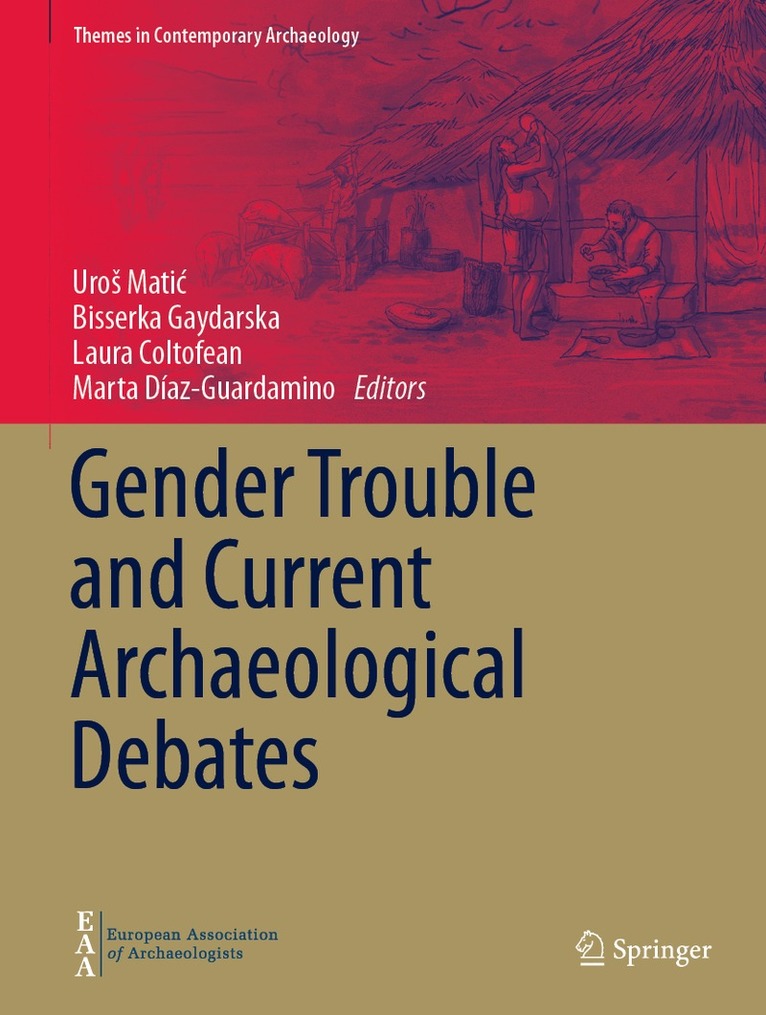
Gender Trouble and Current Archaeological Debates
Av Uroš Matić, Bisserka Gaydarska m. fl.
Inbunden, 2024
1692 kr
Lägg i varukorg
This volume challenges the status quo by addressing a selection of intensely discussed themes in contemporary archaeological practice from a gender perspective. It aims to demonstrate that gender is intrinsic to archaeology and that gender archaeology can enrich our studies, irrespective of the …
Gender Trouble and Current Archaeological Debates
Av Marta Diaz-Guardamino, Laura Coltofean m. fl.
E-bok, 2024
2113 kr
Lägg i varukorg
This volume challenges the status quo by addressing a selection of intensely discussed themes in contemporary archaeological practice from a gender perspective. It aims to demonstrate that gender is intrinsic to archaeology and that gender archaeology can enrich our studies, irrespective of the …
Gender Trouble and Current Archaeological Debates
Av Uroš Matić, Bisserka Gaydarska m. fl.
Häftad, 2025
1692 kr
Lägg i varukorg
This volume challenges the status quo by addressing a selection of intensely discussed themes in contemporary archaeological practice from a gender perspective. It aims to demonstrate that gender is intrinsic to archaeology and that gender archaeology can enrich our studies, irrespective of the …
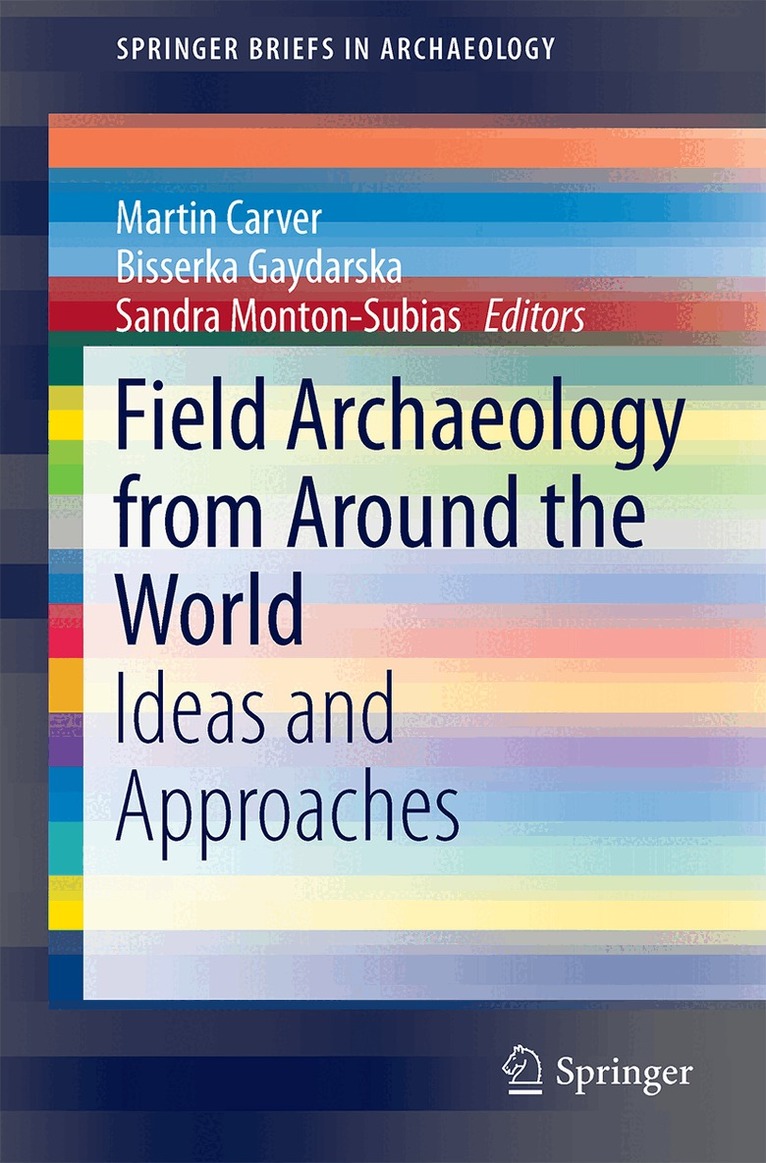
Field Archaeology from Around the World
Ideas and Approaches
Av Martin Carver, Bisserka Gaydarska m. fl.
Häftad, 2014
793 kr
Lägg i varukorg
Field practice in archaeology varies greatly throughout the world, mainly because archaeological sites survive in very different ways in different counties. Many manuals see this as a problem - to be defeated by the imposition of standardised procedures. In this book we relish the variety of field …
Field Archaeology from Around the World
Ideas and Approaches
Av Sandra Monton-Subias, Bisserka Gaydarska m. fl.
E-bok, 2014
985 kr
Lägg i varukorg
Field practice in archaeology varies greatly throughout the world, mainly because archaeological sites survive in very different ways in different counties. Many manuals see this as a problem - to be defeated by the imposition of standardised procedures. In this book we relish the variety of field …