Björn Krondorfer - Böcker
Visar alla böcker från författaren Björn Krondorfer. Handla med fri frakt och snabb leverans.
13 produkter
13 produkter
796 kr
Skickas inom 5-8 vardagar
While much has been written about the impact of the Holocaust on survivors and their children, little is known about how the Holocaust has affected the third generation of Jews and Germans—the grandchildren of those who lived during the Shoah. When these young people try to get to know one another, they find they must struggle against a heritage of hard truths and half-truths, varying family histories, and community-fostered pride and prejudices. In this book Björn Krondorfer, who grew up in Germany and now lives in the United States, analyzes the guilt, anger, embarrassment, shame, and anxiety experienced by third-generation Jews and Germans—emotions that often act as barriers to attempts to reconcile. He then describes the processes by which some of these young people have moved toward an affirmative and dynamic relationship.Krondorfer points out that relations between Jews and Germans since the war have consisted of an uneasy truce that does not address the deeply felt pain and anger of each group. He then shows how new relationships can be forged, providing detailed accounts of the group encounters he arranged between post-Shoah American Jews and Germans. He describes how the participants reacted to oral Holocaust testimonies and to public memorials to the Holocaust, the creative work of a Jewish-German modern dance group to which Krondorfer belonged, and finally the students' responses to a trip to Auschwitz, where they developed the courage necessary to trust and comfort one another. Krondorfer argues that friendships between young Jews and Germans can be fostered through creative models of communication and conflict-solving and that their road to reconciliation may become a model for other groups in conflict.
1 287 kr
Skickas inom 10-15 vardagar
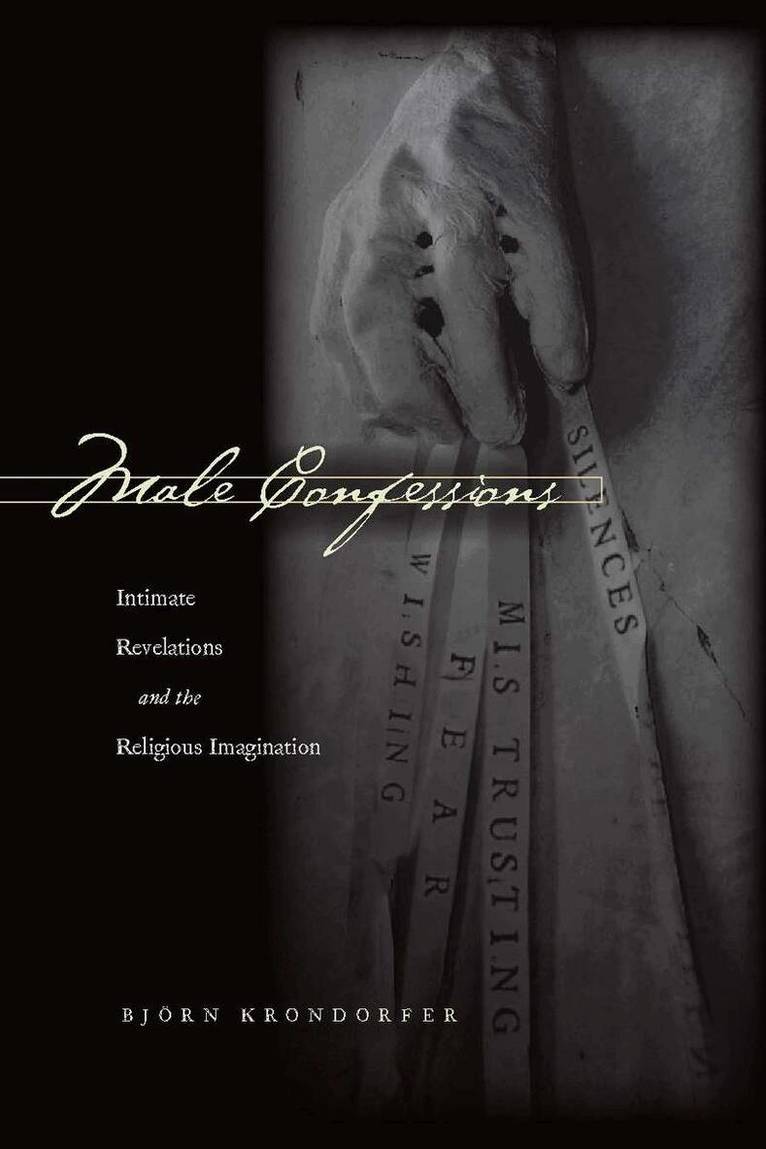
Male Confessions examines how men open their intimate lives and thoughts to the public through confessional writing. This book examines writings—by St. Augustine, a Jewish ghetto policeman, an imprisoned Nazi perpetrator, and a gay American theologian—that reflect sincere attempts at introspective and retrospective self-investigation, often triggered by some wounding or rupture and followed by a transformative experience. Krondorfer takes seriously the vulnerability exposed in male self-disclosure while offering a critique of the religious and gendered rhetoric employed in such discourse. The religious imagination, he argues, allows men to talk about their intimate, flawed, and sinful selves without having to condemn themselves or to fear self-erasure. Herein lies the greatest promise of these confessions: by baring their souls to judgment, these writers may also transcend their self-imprisonment.
309 kr
Skickas inom 7-10 vardagar
Male Confessions examines how men open their intimate lives and thoughts to the public through confessional writing. This book examines writings—by St. Augustine, a Jewish ghetto policeman, an imprisoned Nazi perpetrator, and a gay American theologian—that reflect sincere attempts at introspective and retrospective self-investigation, often triggered by some wounding or rupture and followed by a transformative experience. Krondorfer takes seriously the vulnerability exposed in male self-disclosure while offering a critique of the religious and gendered rhetoric employed in such discourse. The religious imagination, he argues, allows men to talk about their intimate, flawed, and sinful selves without having to condemn themselves or to fear self-erasure. Herein lies the greatest promise of these confessions: by baring their souls to judgment, these writers may also transcend their self-imprisonment.
566 kr
Skickas inom 3-6 vardagar
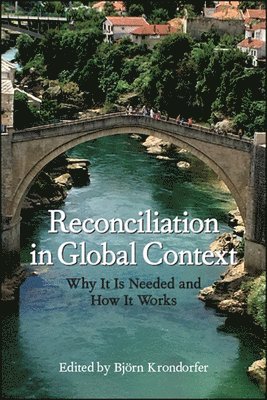
A transdisciplinary approach to reconciliation practices and policies by an international team of scholars and scholar-practitioners.When we open the newspaper, watch and listen to the news, or follow social media, we are inundated with reports on old and fresh conflict zones around the world. Less apparent, perhaps, are the many attempts at bringing former adversaries together. Reconciliation in Global Context argues for the merit of reconciliation and for the need of global conversations around this topic. The contributing scholars and scholar-practitioners-who hail from the United States, South Africa, Ireland, Israel, Zimbabwe, Germany, Palestine, Belgium, Bosnia and Herzegovina, Serbia, Switzerland, and the Netherlands-describe and analyze examples of reconciliatory practices in different national and political environments. Drawing on direct experiences with reconciliation efforts, from facilitating psychosocial intergroup workshops to critically evaluating official policies, they also reflect on the personal motivations that guide them in this field of engagement. Arranged along an arc that spans from cases describing and interpreting actual processes with groups in conflict to cases in which the conceptual merits and constraints of reconciliation are brought to the fore, the chapters ask hard questions, but also argue for a relational approach to reconciliatory practices. For, in the end, what is important is to embrace a spirit of reconciliation that avoids self-interested action and, instead, advances other-directed care.This book is freely available in an open access edition thanks to Knowledge Unlatched-an initiative that provides libraries and institutions with a centralized platform to support OA collections and from leading publishing houses and OA initiatives. Learn more at the Knowledge Unlatched website at https://www.knowledgeunlatched.org/.
1 456 kr
Skickas inom 3-6 vardagar
A transdisciplinary approach to reconciliation practices and policies by an international team of scholars and scholar-practitioners.When we open the newspaper, watch and listen to the news, or follow social media, we are inundated with reports on old and fresh conflict zones around the world. Less apparent, perhaps, are the many attempts at bringing former adversaries together. Reconciliation in Global Context argues for the merit of reconciliation and for the need of global conversations around this topic. The contributing scholars and scholar-practitioners-who hail from the United States, South Africa, Ireland, Israel, Zimbabwe, Germany, Palestine, Belgium, Bosnia and Herzegovina, Serbia, Switzerland, and the Netherlands-describe and analyze examples of reconciliatory practices in different national and political environments. Drawing on direct experiences with reconciliation efforts, from facilitating psychosocial intergroup workshops to critically evaluating official policies, they also reflect on the personal motivations that guide them in this field of engagement. Arranged along an arc that spans from cases describing and interpreting actual processes with groups in conflict to cases in which the conceptual merits and constraints of reconciliation are brought to the fore, the chapters ask hard questions, but also argue for a relational approach to reconciliatory practices. For, in the end, what is important is to embrace a spirit of reconciliation that avoids self-interested action and, instead, advances other-directed care.This book is freely available in an open access edition thanks to Knowledge Unlatched-an initiative that provides libraries and institutions with a centralized platform to support OA collections and from leading publishing houses and OA initiatives. Learn more at the Knowledge Unlatched website at https://www.knowledgeunlatched.org/.
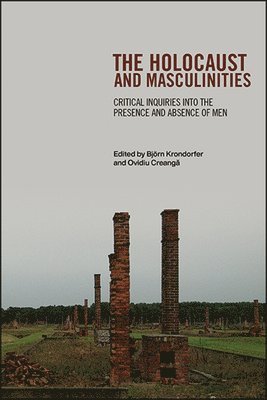
Holocaust and Masculinities
Critical Inquiries into the Presence and Absence of Men
Häftad, Engelska, 2020
583 kr
Skickas inom 3-6 vardagar
Critically assesses the experiences of men in the Holocaust.In recent decades, scholarship has turned to the role of gender in the Holocaust, but rarely has it critically investigated the experiences of men as gendered beings. Beyond the clear observation that most perpetrators of murder were male, men were also victims, survivors, bystanders, beneficiaries, accomplices, and enablers; they negotiated roles as fathers, spouses, community leaders, prisoners, soldiers, professionals, authority figures, resistors, chroniclers, or ideologues. This volume examines men's experiences during the Holocaust. Chapters first focus on the years of genocide: Jewish victims of National Socialism, Nazi soldiers, Catholic priests enlisted in the Wehrmacht, Jewish doctors in the ghettos, men from the Sonderkommando in Auschwitz, and Muselmänner in the camps. The book then moves to the postwar context: German Protestant theologians, Jewish refugees, non-Jewish Austrian men, and Jewish masculinities in the United States. The contributors articulate the male experience in the Holocaust as something obvious (the everywhere of masculinities) and yet invisible (the nowhere of masculinities), lending a new perspective on one of modernity's most infamous chapters.
Holocaust and Masculinities
Critical Inquiries into the Presence and Absence of Men
Inbunden, Engelska, 2020
1 499 kr
Skickas inom 3-6 vardagar
Critically assesses the experiences of men in the Holocaust.In recent decades, scholarship has turned to the role of gender in the Holocaust, but rarely has it critically investigated the experiences of men as gendered beings. Beyond the clear observation that most perpetrators of murder were male, men were also victims, survivors, bystanders, beneficiaries, accomplices, and enablers; they negotiated roles as fathers, spouses, community leaders, prisoners, soldiers, professionals, authority figures, resistors, chroniclers, or ideologues. This volume examines men's experiences during the Holocaust. Chapters first focus on the years of genocide: Jewish victims of National Socialism, Nazi soldiers, Catholic priests enlisted in the Wehrmacht, Jewish doctors in the ghettos, men from the Sonderkommando in Auschwitz, and Muselmänner in the camps. The book then moves to the postwar context: German Protestant theologians, Jewish refugees, non-Jewish Austrian men, and Jewish masculinities in the United States. The contributors articulate the male experience in the Holocaust as something obvious (the everywhere of masculinities) and yet invisible (the nowhere of masculinities), lending a new perspective on one of modernity's most infamous chapters.
CrossCurrents: Anti-Semitism and Islamophobia—Probing the History and Dynamics of Hate
Volume 65, Number 3, September 2015
Häftad, Engelska, 2015
207 kr
Skickas inom 10-15 vardagar
CrossCurrents connects the wisdom of the heart with the life of the mind and the experiences of the body. The journal is operated through its parent organization, the Association for Public Religion and Intellectual Life (APRIL), an interreligious network of academics, activists, artists, and community leaders seeking to engage the many ways religion meets the public. Contributions to the journal exist at the nexus of religion, education, the arts, and social justice. In the September issue of CrossCurrents: "Introduction: Anti Semitism and Islamophobia: Twins or Category Mistake?" by Bjorn Krondorfer "Sticks and Stones: The Role of Law in the Dynamics of Hate" by David Kader "Renewed Hate: The Place of Jews and Muslims in Contemporary White Power Thought" by C. Richard King "Making Enemies: The Uses and Abuses of Tainted Identities" by Alex Alvarez "Islamophobia and Anti-Semitism: Shared Prejudice or Singular Social Pathologies" by Michael Dobkowski "Classifying Muslims" by Mohamed Mosaad Abdelaziz Mohamed "Nostalgia and Memory in Jewish Muslim Encounters" by Mehnaz M. Afridi "Shifting Hierarchies of Exclusion: Colonialism, Anti-Semitism, and Islamophobia in European History" by Ethan B. Katz "Outlawing the Veil, Banning the Muslim? Restricting Religious Freedom in France" by Melanie Adrian "When the Victims are not so Innocent: Extremist Muslim Activity in Western Bloc Countries" by Khaleel Mohammed "The Nexus of Enmity: Ideology, Global Politics, and Identity in the Twenty-First Century" by Eyal Bar
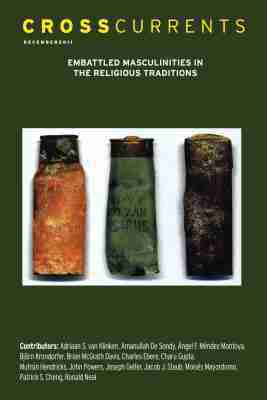
CrossCurrents: Embattled Masculinities in the Religious Traditions
Volume 61, Number 4, December 2011
Häftad, Engelska, 2011
207 kr
Skickas inom 10-15 vardagar
CrossCurrents connects the wisdom of the heart with the life of the mind and the experiences of the body. The journal is operated through its parent organization, the Association for Public Religion and Intellectual Life (APRIL), an interreligious network of academics, activists, artists, and community leaders seeking to engage the many ways religion meets the public. Contributions to the journal exist at the nexus of religion, education, the arts, and social justice. In the December 2 issue of CrossCurrents: "Editorial" by Bjorn Krondorfer RELIGION AND MASCULINITY IN GLOBAL PERSPECTIVES "Gender and Virtue in Indian Buddhism" by John Powers "Anxious Hindu Masculinities in Colonial North India: Shuddhi and Sangathan Movements" by Charu Gupta "'That's Not How We Do Things Here': American Men's Ministries in an Australasian Context" by Joseph Gelfer "St. Joachim as a Model of Catholic Manhood in Times of AIDS: A Case Study on Masculinity in an African Christian Context" by Adriaan S. van Klinken "Beating the Masculinity Game: Evidence from African Traditional Religion" by Charles Ebere "Diversity of Sexuality in Islam: Interview with Imam Muhsin Hendricks" by Muhsin Hendricks CRITICAL READINGS OF SACRED TEXTS AND THEOLOGIES "Apophatic Theology and Masculinities" by Brian McGrath Davis "'Act Like Men!' ( Cor : 3): Paul's Exhortation in Different Historical Contexts" by Moises Mayordomo "Prophecy and Masculinities: The Case of the Qur'anic Joseph" by Amanullah De Sondy "Gay Asian Masculinities and Christian Theologies" by Patrick S. Cheng "Vicissitudes of the Margins: An HIV/AIDS Theological Journey" by Angel F. Mendez Montoya "Engaging Abrahamic Masculinity: Race, Religion, and the Measure of Manhood" by Ronald Neal "First Rung" a poem by Jacob J. Staub "Appeal to Pope Benedict XVI: LGBT Christians Ask for Defense of Human Rights European Forum of LGBT Christian Groups" a letter from the editors
CrossCurrents: Strangers or Neighbors? Jewish, Muslim, and Christian Perspectives on Refugees
Volume 67, Number 3, September 2017
Häftad, Engelska, 2017
207 kr
Skickas inom 10-15 vardagar
CrossCurrents connects the wisdom of the heart with the life of the mind and the experiences of the body. The journal is operated through its parent organization, the Association for Public Religion and Intellectual Life (APRIL), an interreligious network of academics, activists, artists, and community leaders seeking to engage the many ways religion meets the public. Contributions to the journal exist at the nexus of religion, education, the arts, and social justice. In the September issue of CrossCurrents: "Introduction: Fear and Hospitality" by Bjorn Krondorfer, Guest Editor "Christian Scriptural Perspectives on Refugees" by Peter A. Pettit "An Islamic Approach to Migration and Refugees" by Zeki Saritoprak "Two Questions--Many Answers: Making Strangers Neighbors" by David Kader Intervention I: Neighbors "Familiar Strangers: The Case of Somali Immigrants in Lewiston, Maine" by Andrea Voyer "The Virtues and Limits of Hospitality: Granting Refugee Status in Islam" by Khaleel Mohammed "Helpless Refugees or the Seed of Amalek: A Cautionary Note about the Use of Judaism as a Means to Justify Political Agendas" by Gil Ribak "The Refugee Status: Political Ethics and Moral Politics" by Elena G. Procario-Foley Intervention II: Borders "Strangers and Neighbors: The Tohono O'odham and the Myth of 'Us versus Them' on the US/Mexico Border" by Robert Neustadt "Immigrants and Evangelicals: What Does the Bible Say?" by Karla R. Suomola "Searching for Refuge: Challenges in the Contemporary Muslim World" by Muhammed Shafiq "A Jewish Perspective on Ethical Issues Surrounding the Refugee Strangers" by David Patterson "Past Challenges and Future Promise in Interreligious Encounters" by Tim Crain Intervention III: Global "Refugees in an Age of Climate Change" by Alex Alvarez
1 572 kr
Skickas inom 10-15 vardagar
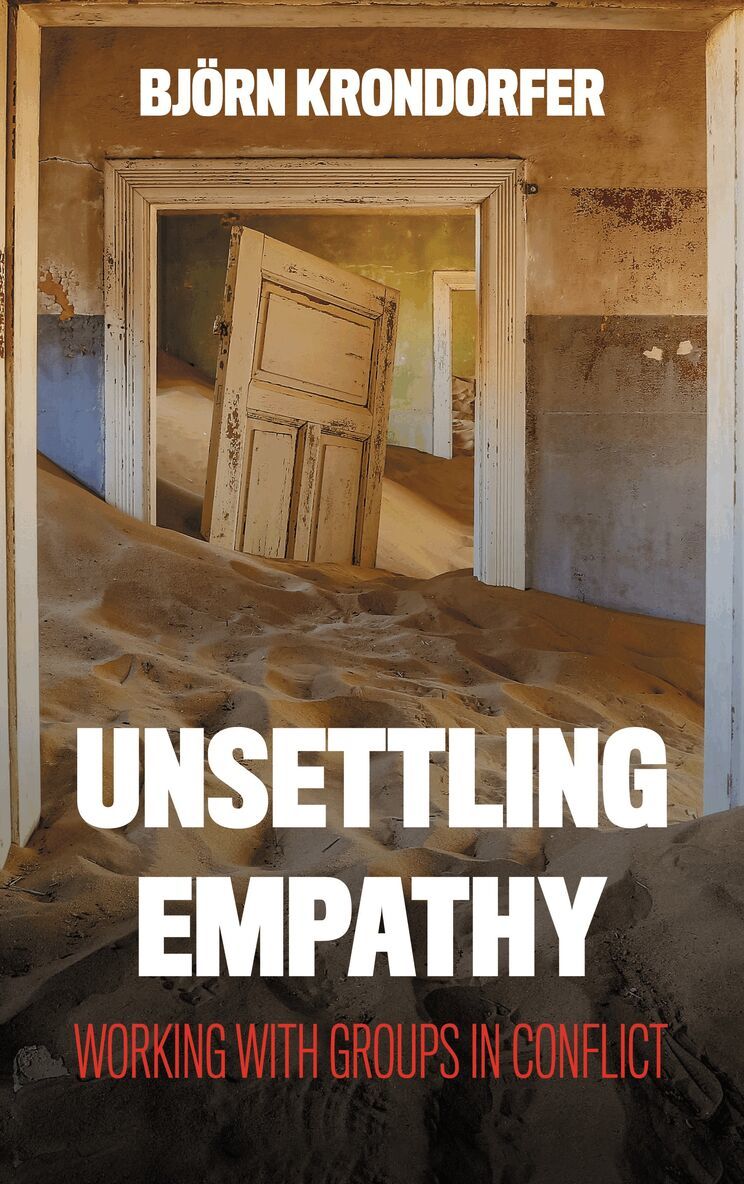
This book is an in-depth reflection and analysis on why and how unsettling empathy is a crucial component in reconciliatory processes. Located at the intersection of memory studies, reconciliation studies, and trauma studies, the book is at its core transdisciplinary, presenting a fresh perspective on how to conceive of concepts and practices when working with groups in conflict. The book Unsettling Empathy has come into being during a period of increasing cultural pessimism, where we witness the spread of populism and the rise of illiberal democracies that hark back to nationalist and ethnocentric narratives of the past. Because of this changed landscape, this book makes an important contribution to seeking fresh pathways toward an ethical practice of living together in light of past agonies and current conflicts. Within the specific context of working with groups in conflict, this book urges for an (ethical) posture of unsettling empathy. Empathy, which plays a vital role in these processes, is a complex and complicated phenomenon that is not without its critics who occasionally alert us to its dark side. The term empathy needs a qualifier to distinguish it from related phenomena such as pity, compassion, sympathy, benign paternalism, idealized identification, or voyeuristic appropriation. The word “unsettling” is just this crucial ingredient without which I would hesitate to bring empathy into our conversation.
434 kr
Skickas inom 10-15 vardagar
This book is an in-depth reflection and analysis on why and how unsettling empathy is a crucial component in reconciliatory processes. Located at the intersection of memory studies, reconciliation studies, and trauma studies, the book is at its core transdisciplinary, presenting a fresh perspective on how to conceive of concepts and practices when working with groups in conflict. The book Unsettling Empathy has come into being during a period of increasing cultural pessimism, where we witness the spread of populism and the rise of illiberal democracies that hark back to nationalist and ethnocentric narratives of the past. Because of this changed landscape, this book makes an important contribution to seeking fresh pathways toward an ethical practice of living together in light of past agonies and current conflicts. Within the specific context of working with groups in conflict, this book urges for an (ethical) posture of unsettling empathy. Empathy, which plays a vital role in these processes, is a complex and complicated phenomenon that is not without its critics who occasionally alert us to its dark side. The term empathy needs a qualifier to distinguish it from related phenomena such as pity, compassion, sympathy, benign paternalism, idealized identification, or voyeuristic appropriation. The word “unsettling” is just this crucial ingredient without which I would hesitate to bring empathy into our conversation.
445 kr
Skickas inom 5-8 vardagar