Bjørn Sletto - Böcker
Visar alla böcker från författaren Bjørn Sletto. Handla med fri frakt och snabb leverans.
2 produkter
2 produkter
1 961 kr
Skickas inom 7-10 vardagar
This pioneering book challenges dominant technocratic approaches to planning, focusing on the transformative potential of innovative, alternative, and community-centered initiatives. It outlines planning processes founded on endogenous knowledge, ontologies, and social relations that point towards decolonizing urban pedagogy and practice.With contributions from scholars and their community partners working in marginalized societies across the globe, the book presents diverse approaches to planning from transnational and transdisciplinary perspectives. Chapters draw on detailed case studies to examine a wide range of methodologies and praxes, including planning derived from Indigenous epistemologies and the role of grassroots planners. They cut across traditional categories, modes of planning, and regional divisions, rethinking dominant paradigms and highlighting the value of decolonial thinking in the field.Students and scholars in planning, urban geography, development studies and urban design will greatly benefit from the cutting-edge insights presented in this book. It is also a useful resource for planning practitioners, as well as professionals in international development agencies and NGOs working with low-income communities, particularly in the Global South.
480 kr
Skickas inom 7-10 vardagar
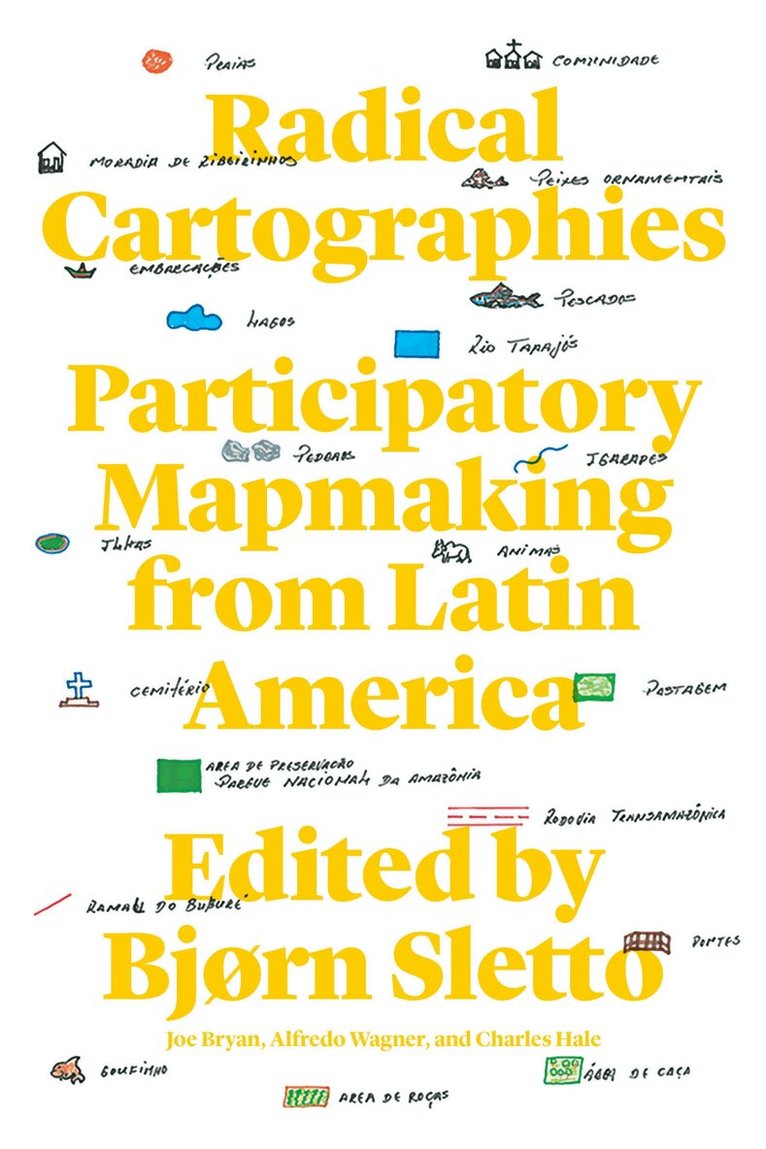
Cartography has a troubled history as a technology of power. The production and distribution of maps, often understood to be ideological representations that support the interests of their developers, have served as tools of colonization, imperialism, and global development, advancing Western notions of space and place at the expense of Indigenous peoples and other marginalized communities. But over the past two decades, these marginalized populations have increasingly turned to participatory mapping practices to develop new, innovative maps that reassert local concepts of place and space, thus harnessing the power of cartography in their struggles for justice.In twelve essays written by community leaders, activists, and scholars, Radical Cartographies critically explores the ways in which participatory mapping is being used by Indigenous, Afro-descendant, and other traditional groups in Latin America to preserve their territories and cultural identities. Through this pioneering volume, the authors fundamentally rethink the role of maps, with significant lessons for marginalized communities across the globe, and launch a unique dialogue about the radical edge of a new social cartography.