Bob Luke - Böcker
Visar alla böcker från författaren Bob Luke. Handla med fri frakt och snabb leverans.
10 produkter
10 produkter
220 kr
Skickas inom 10-15 vardagar
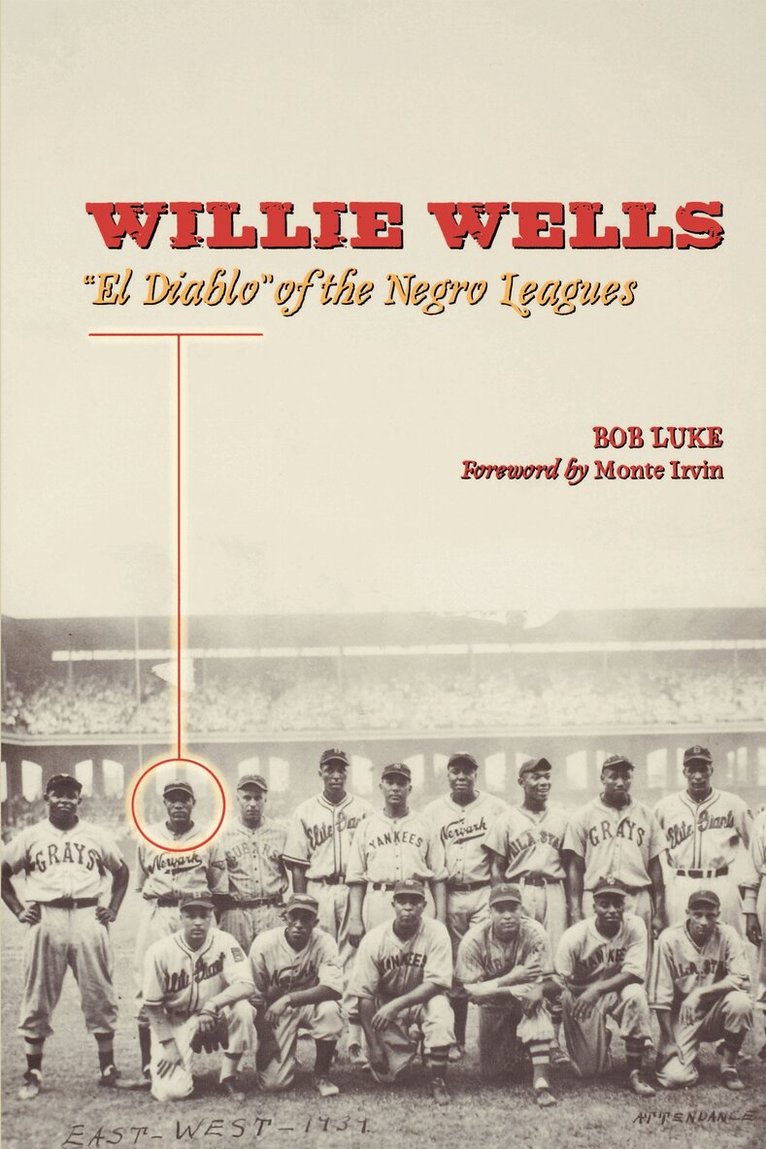
2008 - Robert Peterson Recognition AwardWillie Wells was arguably the best shortstop of his generation. As Monte Irvin, a teammate and fellow Hall of Fame player, writes in his foreword, "Wells really could do it all. He was one of the slickest fielding shortstops ever to come along. He had speed on the bases. He hit with power and consistency. He was among the most durable players I've ever known." Yet few people have heard of the feisty ballplayer nicknamed "El Diablo." Willie Wells was black, and he played long before Jackie Robinson broke baseball's color barrier. Bob Luke has sifted through the spotty statistics, interviewed Negro League players and historians, and combed the yellowed letters and newspaper accounts of Wells's life to draw the most complete portrait yet of an important baseball player. Wells's baseball career lasted thirty years and included seasons in Cuba, Puerto Rico, Mexico, and Canada. He played against white all-stars as well as Negro League greats Satchel Paige, Josh Gibson, and Buck O'Neill, among others. He was beaned so many times that he became the first modern player to wear a batting helmet. As an older player and coach, he mentored some of the first black major leaguers, including Jackie Robinson and Don Newcombe. Willie Wells truly deserved his induction into the Baseball Hall of Fame, but Bob Luke details how the lingering effects of segregation hindered black players, including those better known than Wells, long after the policy officially ended. Fortunately, Willie Wells had the talent and tenacity to take on anything-from segregation to inside fastballs-life threw at him. No wonder he needed a helmet.
377 kr
Skickas inom 5-8 vardagar
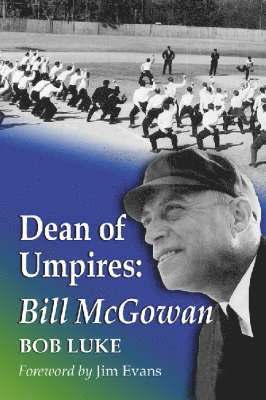
Hall of Fame umpire Bill McGowan controlled the field of play as much with his personality as with the rulebook; his respected 30-year career, including 2,532 consecutive games, was among the longest in baseball history. McGowan was the home plate umpire in the first-ever American League pennant playoff game, Cleveland versus Boston in 1948. Famous for his sense of humor, great dramatics, and wild gestures, he was known to turn a strike into a ball if he thought a player deserved a break, or to eject half a team if they annoyed him. He promoted such players as Goose Goslin, Moe Berg, Stanley "Bucky" Harris, and Jimmy Dykes; wrote articles and newspaper columns; and founded a school for umpires in College Park, Maryland, which continues today as the Harry Wendelstedt Umpire School.This richly illustrated biography gives an intimate view of this talented umpire, from his birth in 1896 and long marriage to his death from diabetes in 1954. With research including interviews with former players as well as family members, the work provides a wealth of anecdotes and insights into his profession. The textbook McGowan wrote for his students is included as an appendix.
336 kr
Tillfälligt slut
Based on interviews with former players and Baltimore residents, articles from the black press of the time, and archival documents, and illustrated with previously unpublished photographs, The Baltimore Elite Giants recounts a barrier-breaking team's successes, failures, and eventual demise.
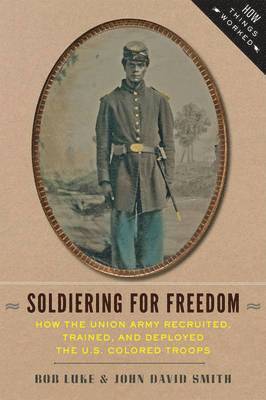
Soldiering for Freedom
How the Union Army Recruited, Trained, and Deployed the U.S. Colored Troops
Inbunden, Engelska, 2014
403 kr
Tillfälligt slut
After President Lincoln issued the final Emancipation Proclamation of January 1, 1863, Confederate slaves who could reach Union lines often made that perilous journey. A great many of the young and middle-aged among them, along with other black men in the free and border slave states, joined the Union army. These U.S. Colored Troops (USCT), as the War Department designated most black units, materially helped to win the Civil War - performing a variety of duties, fighting in some significant engagements, and proving to the Confederates that Northern manpower had practically no limits. Soldiering for Freedom explains how Lincoln's administration came to recognize the advantages of arming free blacks and former slaves and how doing so changed the purpose of the war. Bob Luke and John David Smith narrate and analyze how former slaves and free blacks found their way to recruiting centers and made the decision to muster in. As Union military forces recruited, trained, and equipped ex-slave and free black soldiers in the last two years of the Civil War, white civilian and military authorities often regarded the African American soldiers with contempt.They relegated the men of the USCT to second-class treatment compared to white volunteers. The authors show how the white commanders deployed the black troops, and how the courage of the African American soldiers gave hope for their full citizenship after the war. Including twelve evocative historical engravings and photographs, this engaging and meticulously researched book provides a fresh perspective on a fascinating topic. Appropriate for history students, scholars of African American history, or military history buffs, this compelling and informative account will provide answers to many intriguing questions about the U.S. Colored Troops, Union military strategy, and race relations during and after the tumultuous Civil War.
Soldiering for Freedom
How the Union Army Recruited, Trained, and Deployed the U.S. Colored Troops
Häftad, Engelska, 2014
208 kr
Tillfälligt slut
After President Lincoln issued the final Emancipation Proclamation of January 1, 1863, Confederate slaves who could reach Union lines often made that perilous journey. A great many of the young and middle-aged among them, along with other black men in the free and border slave states, joined the Union army. These U.S. Colored Troops (USCT), as the War Department designated most black units, materially helped to win the Civil War - performing a variety of duties, fighting in some significant engagements, and proving to the Confederates that Northern manpower had practically no limits. Soldiering for Freedom explains how Lincoln's administration came to recognize the advantages of arming free blacks and former slaves and how doing so changed the purpose of the war. Bob Luke and John David Smith narrate and analyze how former slaves and free blacks found their way to recruiting centers and made the decision to muster in. As Union military forces recruited, trained, and equipped ex-slave and free black soldiers in the last two years of the Civil War, white civilian and military authorities often regarded the African American soldiers with contempt.They relegated the men of the USCT to second-class treatment compared to white volunteers. The authors show how the white commanders deployed the black troops, and how the courage of the African American soldiers gave hope for their full citizenship after the war. Including twelve evocative historical engravings and photographs, this engaging and meticulously researched book provides a fresh perspective on a fascinating topic. Appropriate for history students, scholars of African American history, or military history buffs, this compelling and informative account will provide answers to many intriguing questions about the U.S. Colored Troops, Union military strategy, and race relations during and after the tumultuous Civil War.
355 kr
Skickas inom 5-8 vardagar
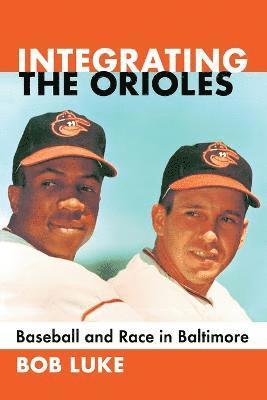
The struggle to integrate the Baltimore Orioles mirrored the fight for civil rights in Baltimore. The Orioles debuted in 1954, the same year the Supreme Court struck down public school segregation. As Baltimore experienced demonstrations, white flight and a 1968 riot, team integration came slowly. Black players--mostly outfielders--made cameo appearances as black fans stayed away in droves. The breakthrough came in 1966, with the arrival of a more enlightened owner, and African American superstar Frank Robinson. As more black players filled the roster, the Orioles dominated the American League from 1969 through much of the 1970s and into the early 1980s.Attempts to integrate the team's executive suite were less successful. While black players generally did not participate in civil rights actions, several under Robinson's leadership pushed for front office jobs for former black players. Drawing on primary sources and interviews with former executives, players and sportswriters, this book tells the story of the integration of the Orioles. The author describes how tensions between community leaders and team officials aborted negotiations to both increase black attendance and put an African American in the club's executive ranks.
377 kr
Skickas inom 5-8 vardagar
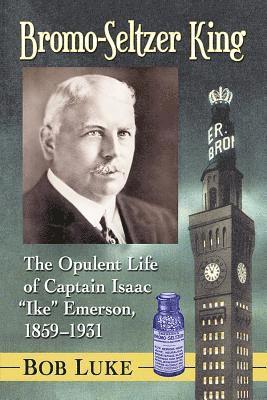
Captain Isaac "Ike" Emerson, riding high on the international success of his patent, Bromo-Seltzer, lived a storied life of opulence. This first biography of the "Bromo-Seltzer King" traces his path from North Carolina farm boy to Baltimore-based multimillionaire with a penchant for lavish entertaining.Emerson is presented as an entrepreneur, patriot, civic leader, sportsman, and philanthropist. He was a phenom in his era, and this book, drawing from archival records, newspapers of the day, and interviews with descendants, details the ups and downs of his complex and indulgent life.
427 kr
Skickas inom 5-8 vardagar
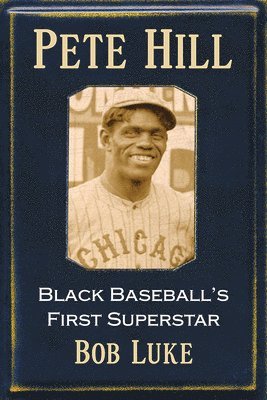
Among early 20th century baseball players, John Preston "Pete" Hill (1882-1951) was considered the equal of Babe Ruth, Ty Cobb and Tris Speaker--only skin color kept him out of the majors. A capable manager, Hill captained the Negro League's Chicago-based American Giants, led two expansion teams and retired from the sport as manager of the Baltimore Black Sox. Drawing on contemporary newspaper accounts, this first ever biography of Hill recounts the career of a neglected Hall of Famer in the context of the turbulent issues that surrounded him--segregation, women's suffrage, Prohibition and the Spanish flu.
377 kr
Skickas inom 5-8 vardagar
347 kr
Skickas inom 10-15 vardagar
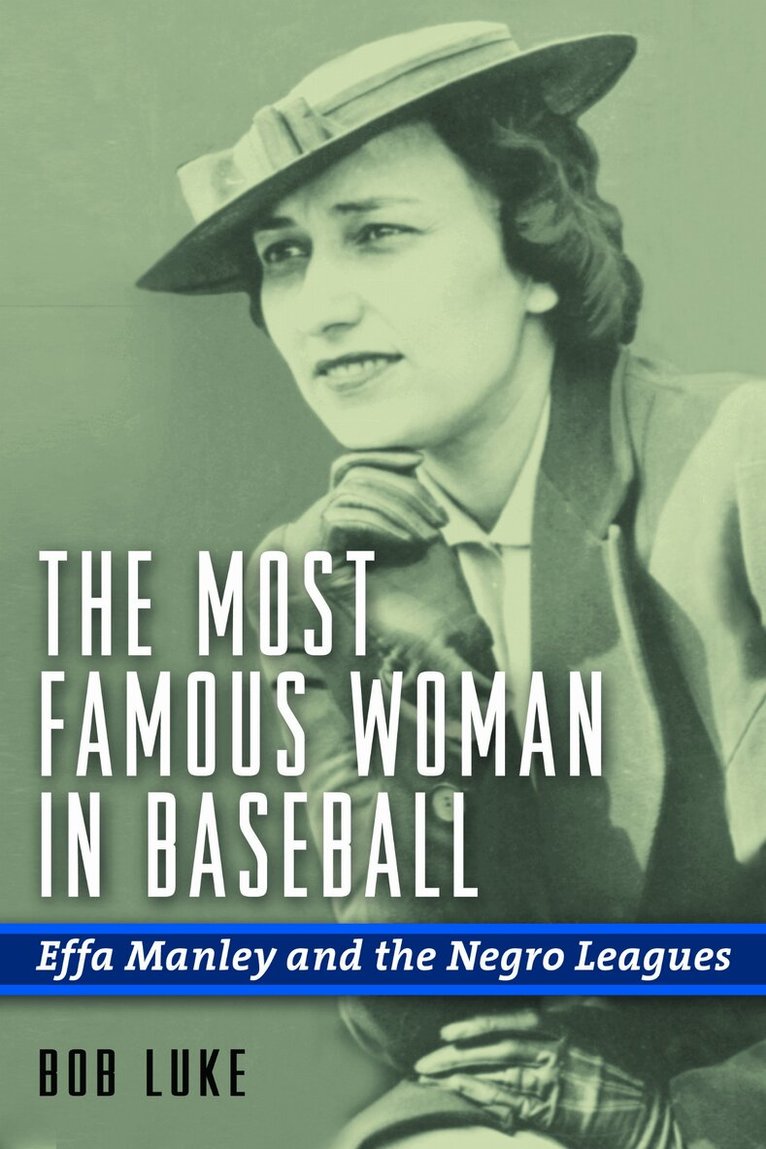
Never one to mince words, Effa Manley once wrote a letter to sportswriter Art Carter, saying that she hoped they could meet soon because "I would like to tell you a lot of things you should know about baseball." From 1936 to 1948, Manley ran the Negro league Newark Eagles that her husband, Abe, owned for roughly a decade. Because of her business acumen, commitment to her players, and larger-than-life personality, she would leave an indelible mark not only on baseball but also on American history. Attending her first owners' meeting in 1937, Manley delivered an unflattering assessment of the league, prompting Pittsburgh Crawfords owner Gus Greenlee to tell Abe, "Keep your wife at home." Abe, however, was not convinced, nor was Manley deterred. Like Greenlee, some players thought her too aggressive and inflexible. Others adored her. Regardless of their opinions, she dedicated herself to empowering them on and off the field. She meted out discipline, advice, and support in the form of raises, loans, job recommendations, and Christmas packages, and she even knocked heads with Branch Rickey, Bill Veeck, and Jackie Robinson. Not only a story of Manley's influence on the baseball world, The Most Famous Woman in Baseball vividly documents her social activism. Her life played out against the backdrop of the Jim Crow years, when discrimination forced most of Newark's blacks to live in the Third Ward, where prostitution flourished, housing was among the nation's worst, and only menial jobs were available. Manley and the Eagles gave African Americans a haven, Ruppert Stadium. She also proposed reforms at the Negro leagues' team owners' meetings, marched on picket lines, sponsored charity balls and benefit games, and collected money for the NAACP. With vision, beauty, intelligence, discipline, and an acerbic wit, Manley was a force of nature—and, as Bob Luke shows, one to be reckoned with.