Boelie Elzen - Böcker
Visar alla böcker från författaren Boelie Elzen. Handla med fri frakt och snabb leverans.
5 produkter
5 produkter
1 886 kr
Skickas inom 10-15 vardagar
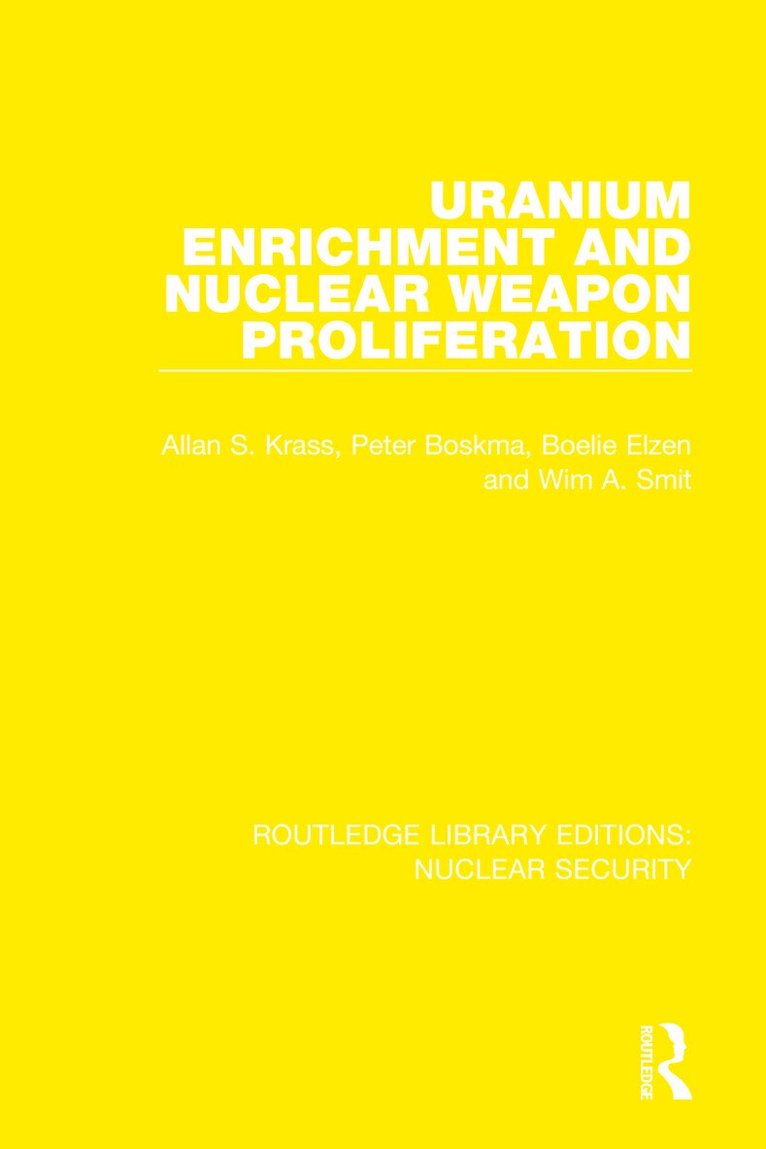
Originally published in 1983, this book presents both the technical and political information necessary to evaluate the emerging threat to world security posed by recent advances in uranium enrichment technology. Uranium enrichment has played a relatively quiet but important role in the history of efforts by a number of nations to acquire nuclear weapons and by a number of others to prevent the proliferation of nuclear weapons. For many years the uranium enrichment industry was dominated by a single method, gaseous diffusion, which was technically complex, extremely capital-intensive, and highly inefficient in its use of energy. As long as this remained true, only the richest and most technically advanced nations could afford to pursue the enrichment route to weapon acquisition.But during the 1970s this situation changed dramatically. Several new and far more accessible enrichment techniques were developed, stimulated largely by the anticipation of a rapidly growing demand for enrichment services by the world-wide nuclear power industry. This proliferation of new techniques, coupled with the subsequent contraction of the commercial market for enriched uranium, has created a situation in which uranium enrichment technology might well become the most important contributor to further nuclear weapon proliferation.Some of the issues addressed in this book are: A technical analysis of the most important enrichment techniques in a form that is relevant to analysis of proliferation risks; A detailed projection of the world demand for uranium enrichment services; A summary and critique of present institutional non-proliferation arrangements in the world enrichment industry, and An identification of the states most likely to pursue the enrichment route to acquisition of nuclear weapons.
508 kr
Skickas inom 10-15 vardagar
Originally published in 1983, this book presents both the technical and political information necessary to evaluate the emerging threat to world security posed by recent advances in uranium enrichment technology. Uranium enrichment has played a relatively quiet but important role in the history of efforts by a number of nations to acquire nuclear weapons and by a number of others to prevent the proliferation of nuclear weapons. For many years the uranium enrichment industry was dominated by a single method, gaseous diffusion, which was technically complex, extremely capital-intensive, and highly inefficient in its use of energy. As long as this remained true, only the richest and most technically advanced nations could afford to pursue the enrichment route to weapon acquisition.But during the 1970s this situation changed dramatically. Several new and far more accessible enrichment techniques were developed, stimulated largely by the anticipation of a rapidly growing demand for enrichment services by the world-wide nuclear power industry. This proliferation of new techniques, coupled with the subsequent contraction of the commercial market for enriched uranium, has created a situation in which uranium enrichment technology might well become the most important contributor to further nuclear weapon proliferation.Some of the issues addressed in this book are: A technical analysis of the most important enrichment techniques in a form that is relevant to analysis of proliferation risks; A detailed projection of the world demand for uranium enrichment services; A summary and critique of present institutional non-proliferation arrangements in the world enrichment industry, and An identification of the states most likely to pursue the enrichment route to acquisition of nuclear weapons.
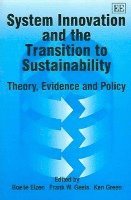
System Innovation and the Transition to Sustainability
Theory, Evidence and Policy
Inbunden, Engelska, 2004
2 153 kr
Skickas inom 7-10 vardagar
Modern societies face several structural problems such as transport congestion and greenhouse gas emissions due to the widespread use of fossil fuels. To address these important societal problems and achieve sustainability in the broad sense, major transformations are required, but this poses an enormous challenge given the complexity of the processes involved. Such transformations are called 'transitions' or 'system innovations' and involve changes in a variety of elements, including technology, regulation, user practices and markets, cultural meaning and infrastructure.This book considers two main questions: how do system innovations or transitions come about and how can they be influenced by different actors, in particular by governments. The authors identify the theories which can be used to conceptualise the dynamics of system innovations and discuss the weaknesses in these theories. They also look at the lessons which can be learned from historical examples of transitions, and highlight the instruments and policy tools which can be used to stimulate future system innovations towards sustainability. The expert contributors address these questions using insights from a variety of different disciplines including innovation studies, evolutionary economics, the sociology of technology, environmental analysis and governance studies. The book concludes with an extensive summary of the results and practical suggestions for future research. This important new volume offers an interdisciplinary assessment of how and why system innovations occur. It will engage and inform academics and researchers interested in transitions towards sustainability, and will also be highly relevant for policymakers concerned with environmental issues, structural change and radical innovation.
691 kr
Skickas inom 7-10 vardagar
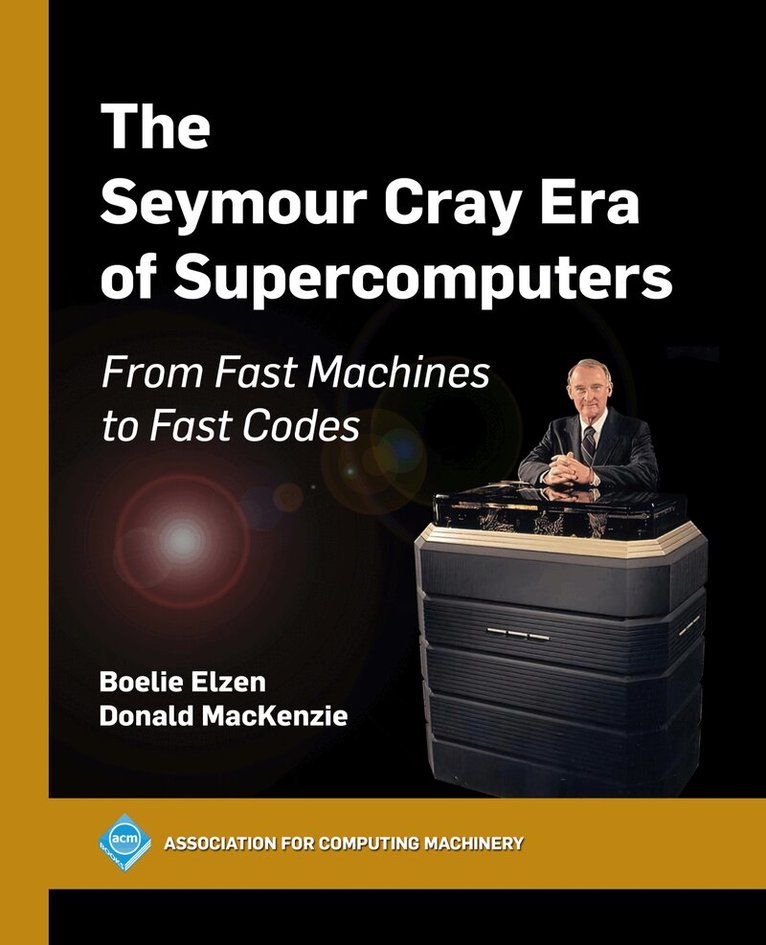
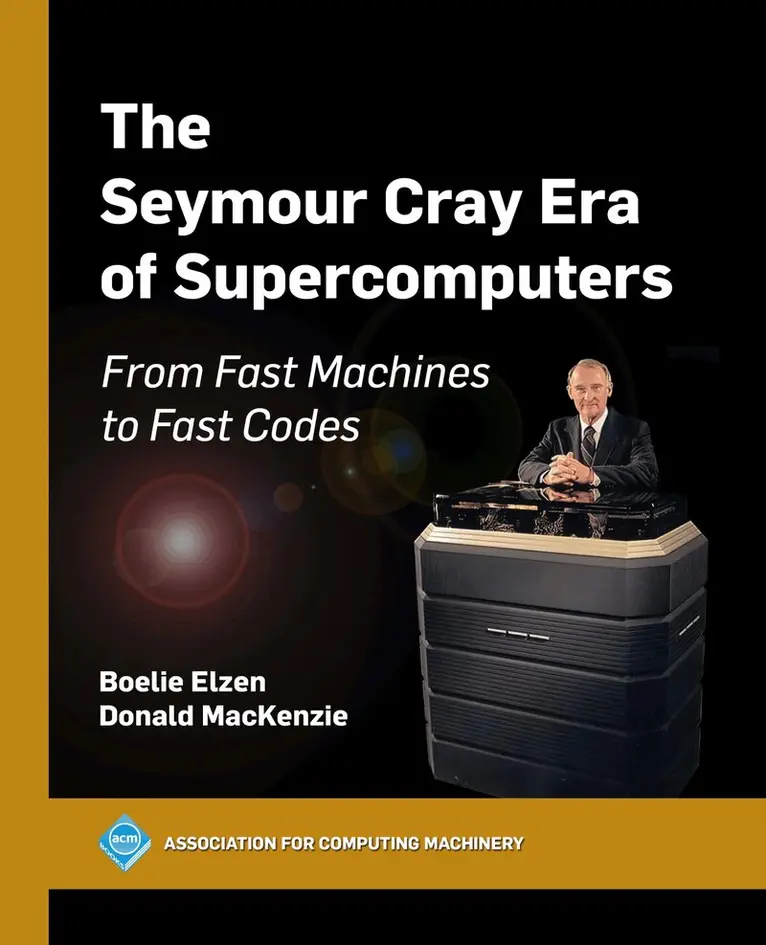
This book describes the development and use of supercomputers in the period 1960 - 1996, a time that can be called the Seymour Cray Era. For more than three decades, Cray's computer designs were seen as the yardstick against which all other efforts were measured. Initially, this yardstick was sheer computing speed. However, the supercomputer world gradually became more complex and other factors became equally important.The initial development of supercomputers was commissioned and financed by the Los Alamos and Lawrence Livermore National Laboratories, which had huge computational needs in connection with nuclear weapons development. The computers designed by Cray satisfied those needs, while these computers were also sold to a few dozen other big research organizations and weather agencies. From the 98 s, a variety of companies started to compete with the Cray designs by offering supercomputers that used a new architectural approach, MPP: massively parallel processing. This new architecture, based on using tens of thousands of relatively simple microprocessors, subsequently began to dominate high-performance computing and marked the end of the Seymour Cray Era.This book is important reading for anyone working in the area of high-performance computing, providing essential historical context for the work of a legendary pioneer and the computers he became famous for designing. It will also be valuable to students of computing history and, more generally, to readers interested in the history of science and technology. For advanced students, the book illustrates how innovation in its very essence is a socio-technical process: not just a matter of developing the "best technology," but also of making appropriate choices concerning the interaction of human and technical factors in product design.
480 kr
Skickas inom 7-10 vardagar
This book describes the development and use of supercomputers in the period 1960 - 1996, a time that can be called the Seymour Cray Era. For more than three decades, Cray's computer designs were seen as the yardstick against which all other efforts were measured. Initially, this yardstick was sheer computing speed. However, the supercomputer world gradually became more complex and other factors became equally important.The initial development of supercomputers was commissioned and financed by the Los Alamos and Lawrence Livermore National Laboratories, which had huge computational needs in connection with nuclear weapons development. The computers designed by Cray satisfied those needs, while these computers were also sold to a few dozen other big research organizations and weather agencies. From the 98 s, a variety of companies started to compete with the Cray designs by offering supercomputers that used a new architectural approach, MPP: massively parallel processing. This new architecture, based on using tens of thousands of relatively simple microprocessors, subsequently began to dominate high-performance computing and marked the end of the Seymour Cray Era.This book is important reading for anyone working in the area of high-performance computing, providing essential historical context for the work of a legendary pioneer and the computers he became famous for designing. It will also be valuable to students of computing history and, more generally, to readers interested in the history of science and technology. For advanced students, the book illustrates how innovation in its very essence is a socio-technical process: not just a matter of developing the "best technology," but also of making appropriate choices concerning the interaction of human and technical factors in product design.