Boyd White - Böcker
Visar alla böcker från författaren Boyd White. Handla med fri frakt och snabb leverans.
11 produkter
11 produkter
230 kr
Skickas inom 5-8 vardagar
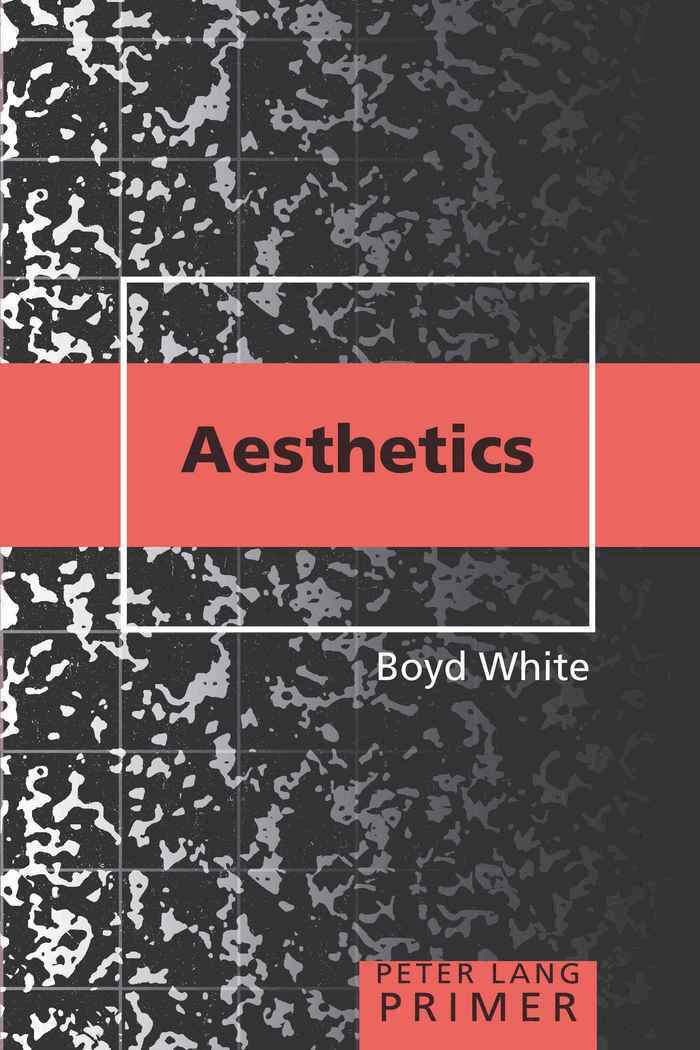
The Aesthetics Primer is intended for anyone interested in the topic of aesthetics and how it can influence directions in education. The text is suitable for university courses that address aesthetics specifically, but also art education, values education, philosophy of education, and qualitative research methods. While examples are frequently taken from art, the primer is applicable beyond the discipline of aesthetic education. The text approaches its topic from two directions. First, there is a theoretical and philosophical section, providing a historical context for the term «aesthetics». It then provides a practical application, describing a research protocol that examines how participants respond to, record, and reflect on their aesthetic encounters. These activities result in a merging of aesthetic responses and, in the examples provided, art criticism. The implication is that the exercise could be extended to include other educational disciplinary foci as well. The research clearly indicates emerging patterns of self- and social awareness that result from subjects’ participation.
457 kr
Skickas inom 5-8 vardagar
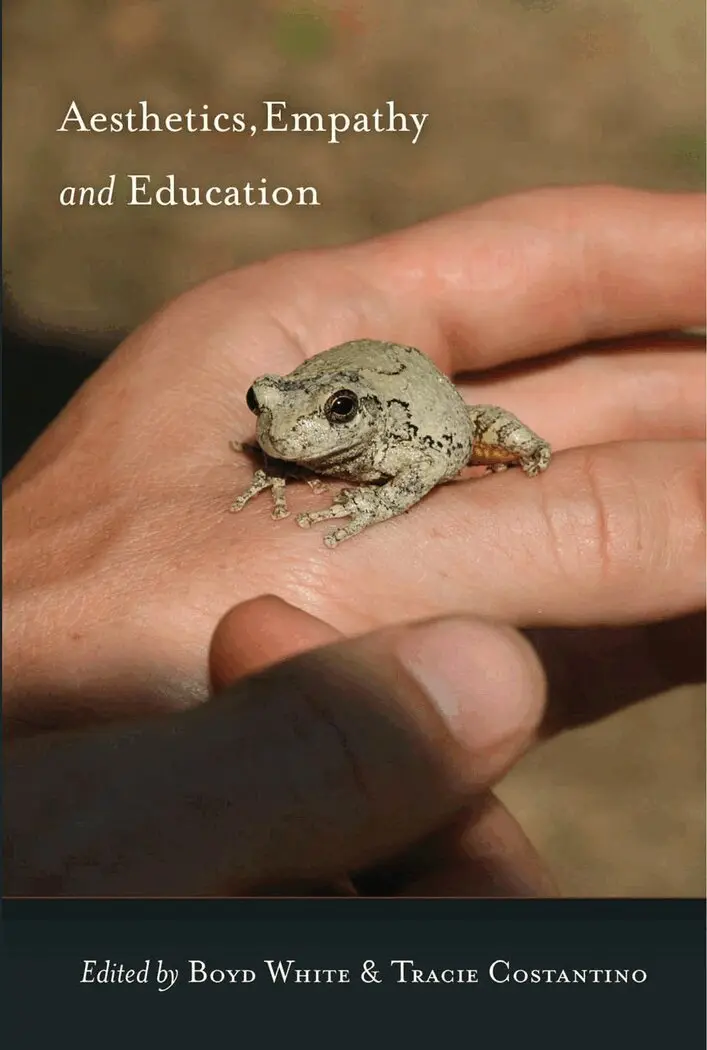
«Empathy must be part of education because knowledge without it is incomplete» (Swanger, Essays in Aesthetic Education, 1990).Aesthetics, Empathy and Education pursues Swanger’s assertion in myriad ways. The text is divided into four sections. The first addresses research methodology from widely differing perspectives. The second section scrutinizes research again, this time addressing the self as the research subject. The third section takes a more specifically philosophical approach to the topic, challenging some underlying assumptions about education and empathy. Finally, the fourth section looks at classroom practice. Aesthetics, Empathy and Education is essential reading for pre-service teachers, graduate students and instructors.
1 636 kr
Skickas inom 5-8 vardagar
«Empathy must be part of education because knowledge without it is incomplete» (Swanger, Essays in Aesthetic Education, 1990).Aesthetics, Empathy and Education pursues Swanger’s assertion in myriad ways. The text is divided into four sections. The first addresses research methodology from widely differing perspectives. The second section scrutinizes research again, this time addressing the self as the research subject. The third section takes a more specifically philosophical approach to the topic, challenging some underlying assumptions about education and empathy. Finally, the fourth section looks at classroom practice. Aesthetics, Empathy and Education is essential reading for pre-service teachers, graduate students and instructors.
496 kr
Skickas inom 5-8 vardagar
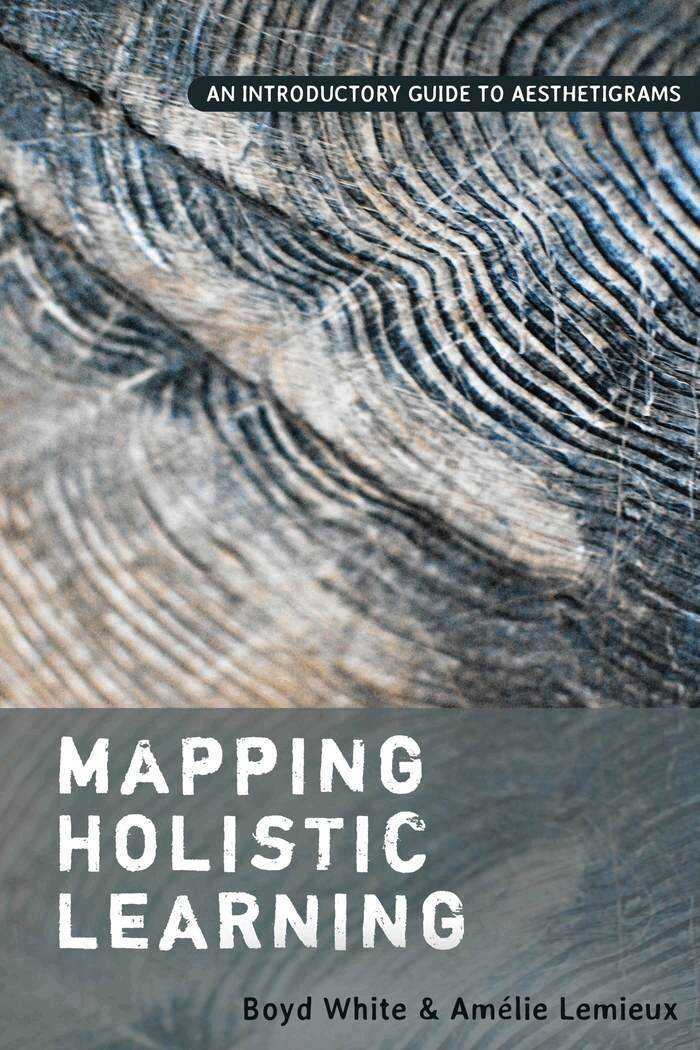
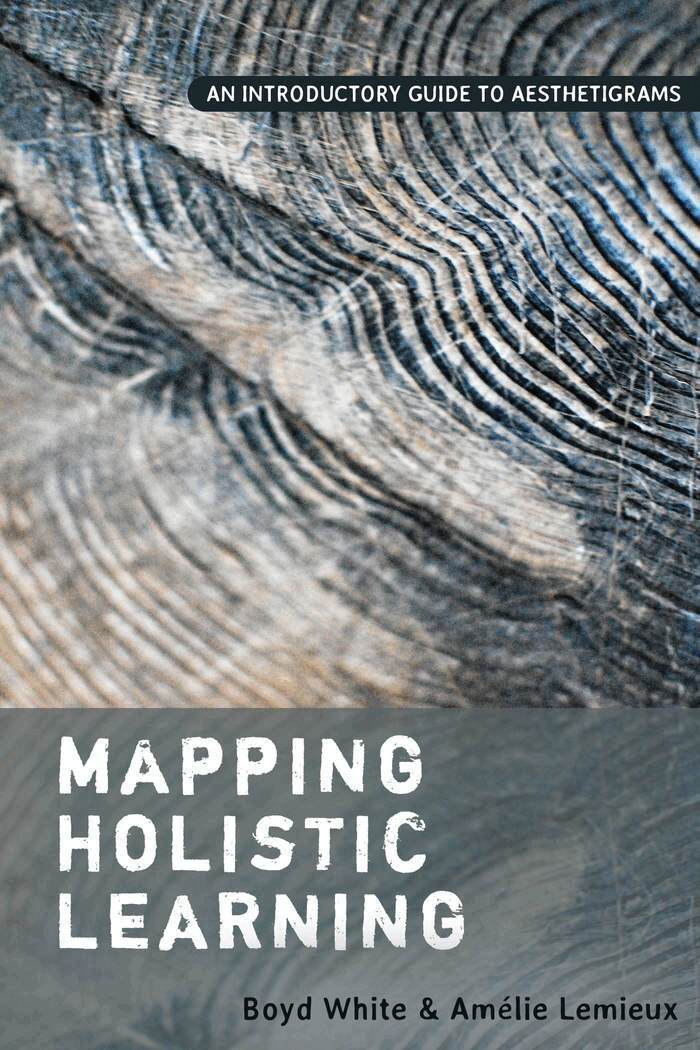
Mapping Holistic Learning: An Introductory Guide to Aesthetigrams introduces the concept of aesthetigrams. These are participant-produced visual maps of aesthetic engagement. The map-making strategy was originally developed by one of the authors, Boyd White, to assist him in understanding what his university-level students were experiencing as they interacted with artworks. Such interactions are, after all, private, individualistic, and fleeting. How can a teacher foster student/teacher dialogue that might lead to enhanced engagement, much less do research, without a concrete record of such engagement? Aesthetigrams provide that record.Recently, the strategy has been adapted to other fields of study—the teaching of literature, and philosophy for children, as well as the writing of poetry. Boyd White and Amélie Lemieux are persuaded that the strategy could be expanded into other disciplines. For example, might it not be useful for a teacher to know what a student is feeling and thinking as she struggles with a mathematical concept? Mapping Holistic Learning is divided into three sections. Chapter 1 addresses the theoretical framework that underpins the authors’ research. The second section, Chapters 2 to 5, provides examples of aesthetigram usage within the formal education environment, in art and literature classrooms. The third section, Chapters 6 and 7, introduces two recent experiments in informal settings—one in an adult poetry workshop, the other in a philosophy-for-children workshop. It is not necessary to follow the book in chronological order. Readers are invited to attend to the chapters that most closely address their individual interests.
1 011 kr
Skickas inom 5-8 vardagar
Mapping Holistic Learning: An Introductory Guide to Aesthetigrams introduces the concept of aesthetigrams. These are participant-produced visual maps of aesthetic engagement. The map-making strategy was originally developed by one of the authors, Boyd White, to assist him in understanding what his university-level students were experiencing as they interacted with artworks. Such interactions are, after all, private, individualistic, and fleeting. How can a teacher foster student/teacher dialogue that might lead to enhanced engagement, much less do research, without a concrete record of such engagement? Aesthetigrams provide that record.Recently, the strategy has been adapted to other fields of study—the teaching of literature, and philosophy for children, as well as the writing of poetry. Boyd White and Amélie Lemieux are persuaded that the strategy could be expanded into other disciplines. For example, might it not be useful for a teacher to know what a student is feeling and thinking as she struggles with a mathematical concept? Mapping Holistic Learning is divided into three sections. Chapter 1 addresses the theoretical framework that underpins the authors’ research. The second section, Chapters 2 to 5, provides examples of aesthetigram usage within the formal education environment, in art and literature classrooms. The third section, Chapters 6 and 7, introduces two recent experiments in informal settings—one in an adult poetry workshop, the other in a philosophy-for-children workshop. It is not necessary to follow the book in chronological order. Readers are invited to attend to the chapters that most closely address their individual interests.
576 kr
Skickas inom 5-8 vardagar
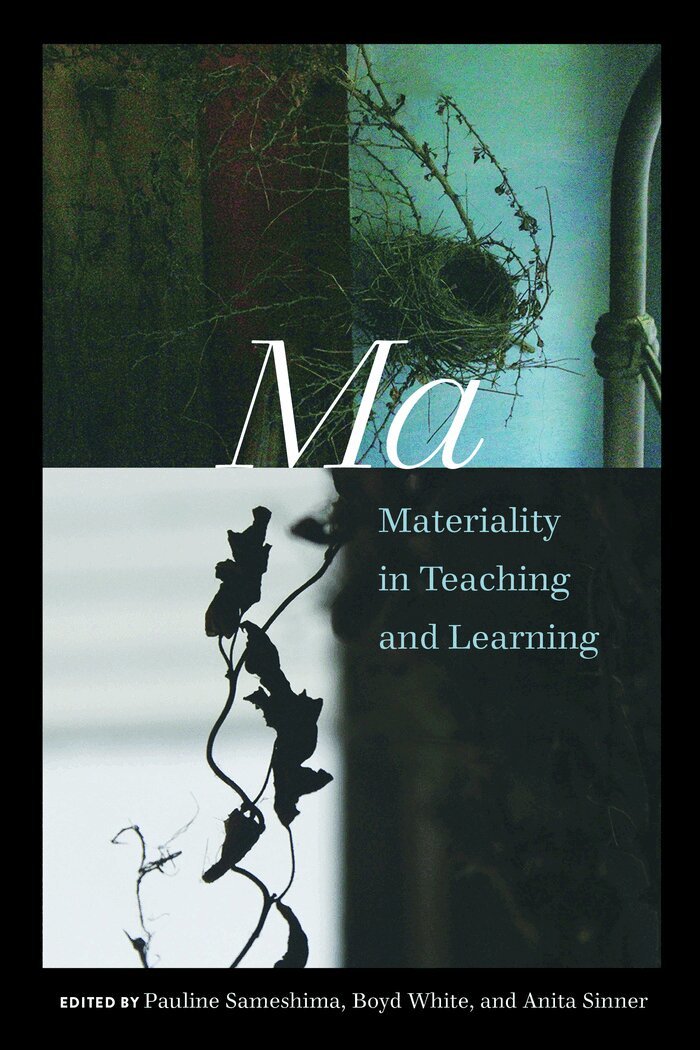
Ma is a curriculum. The Japanese concept of ma refers to the interval between two markers. Ma is somatically constructed by a deliberate, attentive consciousness to what simultaneously is expressed, repressed, or suppressed between two structures. In a dialectic exploration, the spaces between—private/public, teacher/student, old/new, self/other, among others—are probed in ways that contribute to the significant research in teaching and learning that has been undertaken in the last few decades.Material culture is the study of belief systems, behaviours, and perceptions through artefacts and physical objects and is central to the socialization of human beings into culture. The analysis of cultural materials offers sites for concretizing the self and the self in context. New materiality challenges assumptions and clichés and allows for possibilities not yet imagined, perhaps even inconceivable possibilities. New materiality approaches accept that matter itself has agency. As such, this book investigates the intersections at the core of ma, engagements wherein the investigations create something new, in order to demonstrate the layers of the teaching and learning self.Interpretations of the concept of ma articulate new definitions to improve the conditions, practices, products, and pedagogies of being a teacher/learner in the twenty-first century. Ma is a site for epistemological understandings, threshold learnings, and self and curriculum becomings.
1 484 kr
Skickas inom 5-8 vardagar
Ma is a curriculum. The Japanese concept of ma refers to the interval between two markers. Ma is somatically constructed by a deliberate, attentive consciousness to what simultaneously is expressed, repressed, or suppressed between two structures. In a dialectic exploration, the spaces between—private/public, teacher/student, old/new, self/other, among others—are probed in ways that contribute to the significant research in teaching and learning that has been undertaken in the last few decades.Material culture is the study of belief systems, behaviours, and perceptions through artefacts and physical objects and is central to the socialization of human beings into culture. The analysis of cultural materials offers sites for concretizing the self and the self in context. New materiality challenges assumptions and clichés and allows for possibilities not yet imagined, perhaps even inconceivable possibilities. New materiality approaches accept that matter itself has agency. As such, this book investigates the intersections at the core of ma, engagements wherein the investigations create something new, in order to demonstrate the layers of the teaching and learning self.Interpretations of the concept of ma articulate new definitions to improve the conditions, practices, products, and pedagogies of being a teacher/learner in the twenty-first century. Ma is a site for epistemological understandings, threshold learnings, and self and curriculum becomings.
598 kr
Skickas inom 5-8 vardagar
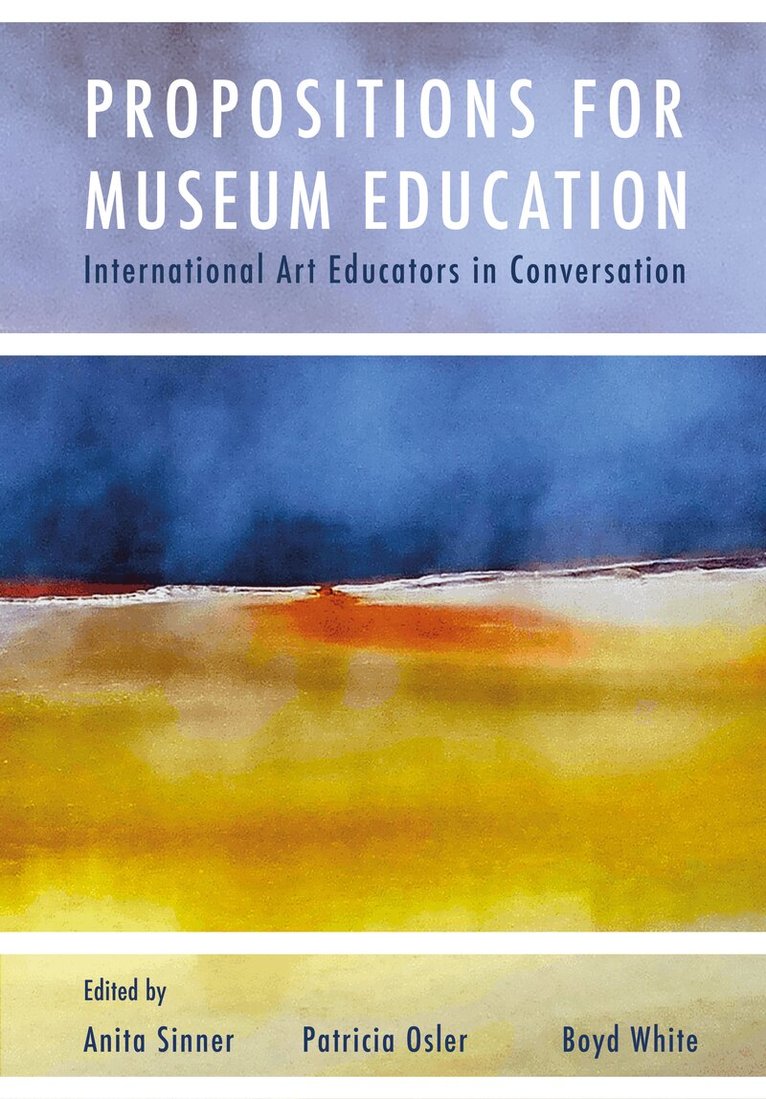
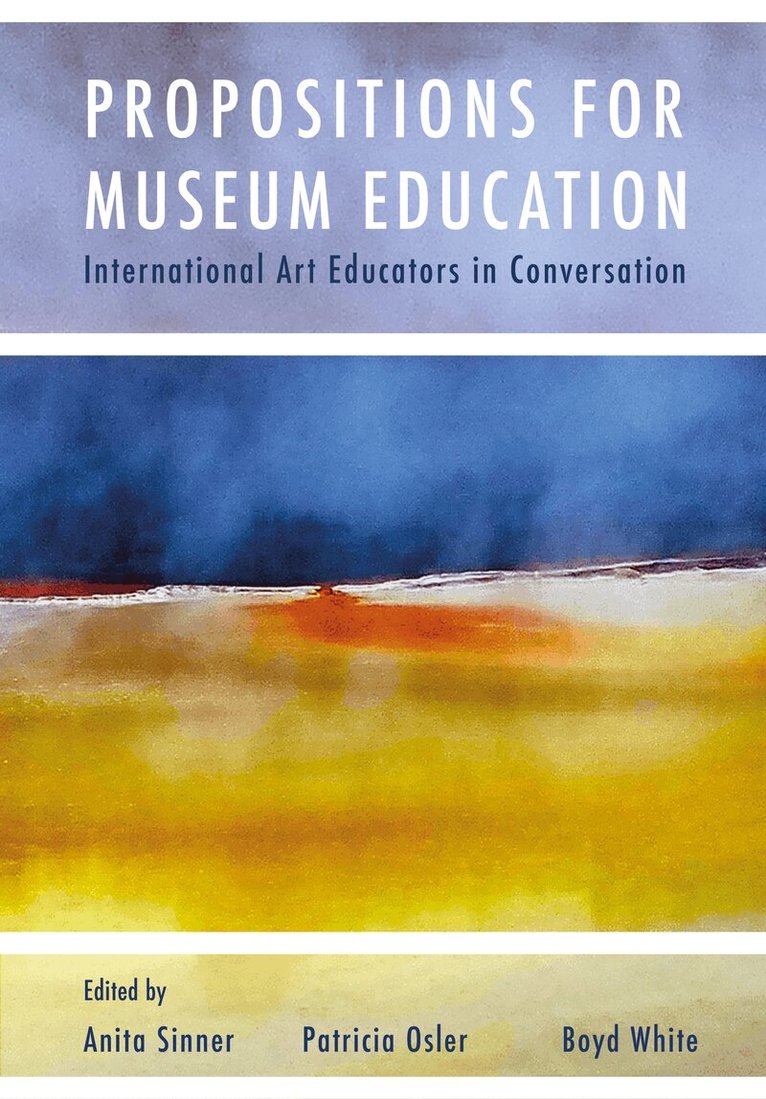
From the perspective of art educators, museum education is shifting to a new paradigm, which this collection showcases and marks as threshold moments of change underway internationally. The goal in drawing together international perspectives is to facilitate deeper thinking, making and doing practices central to museum engagement across global, local and glocal contexts.Museums as cultural brokers facilitate public pedagogies, and the dispositions and practices offered in 33 chapters from 19 countries articulate how and why collections enact responsibility in public exchange,leading cultural discourses of empowerment in new ways. Organized into five sections, a wide range of topics and arts-based modes of inquiry imagine new possibilities concerning theory-practice, sustainability of educational partnerships and communities of practice with, in and through artwork scholarship. Chapters diverse in issues, art forms and museum orientations are well-situated within museum studies, enlarging discussions with trans-topographies (transdisciplinary, transnational, translocal and more) as critical directions for art educators.Authors impart collective diversity through richly textured exposés, first-person accounts, essays and visual essays that enfold cultural activism, sustainable practices and experimental teaching and learning alongside transformative exhibitions, all while questioning – Who is a learner? What is a museum? Whose art is missing?
Propositions for Museum Education
International Art Educators in Conversation
Inbunden, Engelska, 2024
1 572 kr
Skickas inom 5-8 vardagar
From the perspective of art educators, museum education is shifting to a new paradigm, which this collection showcases and marks as threshold moments of change underway internationally. The goal in drawing together international perspectives is to facilitate deeper thinking, making and doing practices central to museum engagement across global, local and glocal contexts.Museums as cultural brokers facilitate public pedagogies, and the dispositions and practices offered in 33 chapters from 19 countries articulate how and why collections enact responsibility in public exchange,leading cultural discourses of empowerment in new ways. Organized into five sections, a wide range of topics and arts-based modes of inquiry imagine new possibilities concerning theory-practice, sustainability of educational partnerships and communities of practice with, in and through artwork scholarship. Chapters diverse in issues, art forms and museum orientations are well-situated within museum studies, enlarging discussions with trans-topographies (transdisciplinary, transnational, translocal and more) as critical directions for art educators.Authors impart collective diversity through richly textured exposés, first-person accounts, essays and visual essays that enfold cultural activism, sustainable practices and experimental teaching and learning alongside transformative exhibitions, all while questioning – Who is a learner? What is a museum? Whose art is missing?
1 442 kr
Skickas inom 5-8 vardagar
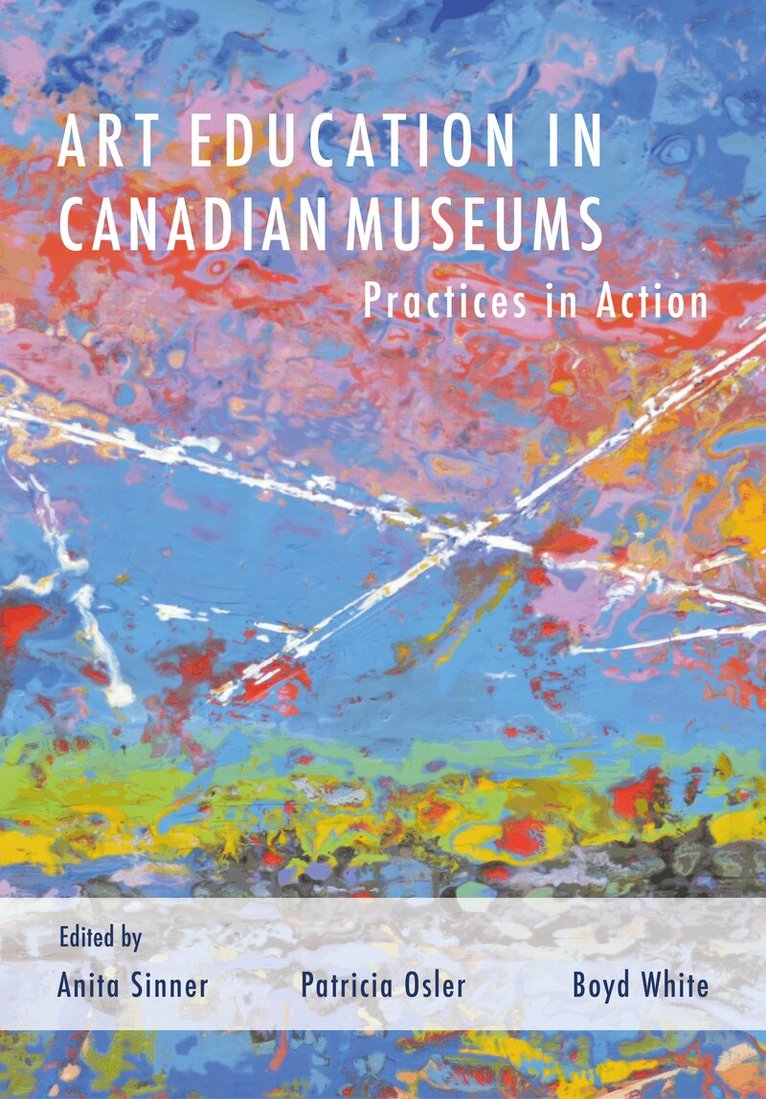
This collection considers how Canadian art educators are engaging with a new range of approaches to museum education, and why educators are responding to 21st century challenges in ways that are unique to Canada.Organized into three sections, this collection reconceptualizes museums to consider accessibility, differences in lived experiences, and how practices create impactful change. With the overarching concept of relationality between art museums and interdisciplinary perspectives, authors consider methodological, philosophical, experiential and aesthetic forms of inquiry in regional museum contexts from coast-to-coast-to-coast that bring forward innovative theoretical standpoints with practice-based projects in museums, articulating how museums are shifting, and why museums are evolving as sites that mediate different and multiple knowledges for the future. Informed by social justice perspectives, and as catalysts for public scholarship, each chapter is passionate in addressing the mobilization of equity, diversity and inclusivity (EDI) in relation to practices in the field.By weaving the learning potential of interacting with artworks more fully within situated and localized social and cultural communities, the authors present a distinct socio-political discourse at the heart of teaching and learning. Rupturing preconceived ideas and sedimentary models, they suggest a discourse of living futures is already upon us in museums and in art education.
467 kr
Skickas
This collection considers how Canadian art educators are engaging with a new range of approaches to museum education, and why educators are responding to 21st century challenges in ways that are unique to Canada.Organized into three sections, this collection reconceptualizes museums to consider accessibility, differences in lived experiences, and how practices create impactful change. With the overarching concept of relationality between art museums and interdisciplinary perspectives, authors consider methodological, philosophical, experiential and aesthetic forms of inquiry in regional museum contexts from coast-to-coast-to-coast that bring forward innovative theoretical standpoints with practice-based projects in museums, articulating how museums are shifting, and why museums are evolving as sites that mediate different and multiple knowledges for the future. Informed by social justice perspectives, and as catalysts for public scholarship, each chapter is passionate in addressing the mobilization of equity, diversity and inclusivity (EDI) in relation to practices in the field.By weaving the learning potential of interacting with artworks more fully within situated and localized social and cultural communities, the authors present a distinct socio-political discourse at the heart of teaching and learning. Rupturing preconceived ideas and sedimentary models, they suggest a discourse of living futures is already upon us in museums and in art education.