Brian B. Schmidt - Böcker
Visar alla böcker från författaren Brian B. Schmidt. Handla med fri frakt och snabb leverans.
5 produkter
5 produkter
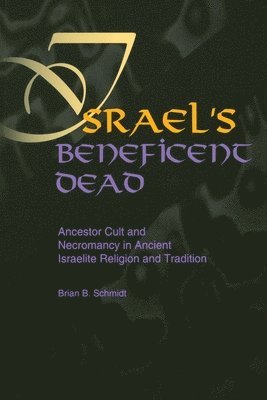
Israel's Beneficent Dead
Ancestor Cult and Necromancy in Ancient Israelite Religion and Tradition
Häftad, Engelska, 1996
781 kr
Skickas inom 5-8 vardagar
Did the ancient Israelites perform rituals expressive of the belief in the supernaturalbeneficent power of the dead? Contrary to long held notions of primitive society and the euhemeristic origin of the divine, various factors indicate that the ancestor cult, that is, ancestor veneration or worship, was not observed in the Iron Age Levant. The Israelites did not adopt an ancient Canaanite ancestor cult that became the object of biblical scorn. Yet, a variety of mortuary rituals and cults were performed in Levantine society; mourning and funerary rites and longer-term rituals such as the care for the dead and commemoration. Rituals and monuments in or at burial sites, and especially the recitation of the deceased's name, recounted the dead’s lived lives for familial survivors. They served broader social functions as well; e.g., to legitimate primogeniture and to reinforce a community’s social collectivity. Another ritual complex from the domain of divination, namely necromancy, might have expressed the Israelite dead’s beneficent powers. Yet, was this power to reveal knowledge that of the dead or was it a power conveyed through the dead, but that remained attributable to another supranatural being of non-human origin? Contemporary Assyrian necromancers utilized the ghost as a conduit through which divine knowledge was revealed to ascertain the future and so Judah's king Manasseh, a loyal Assyrian vassal, emulated these new Assyrian imperial forms of prognostication. As a de-legitimating rhetorical strategy, necromancy was then integrated into biblical traditions about the more distant past and attributed fictive Canaanite origins (Deut 18). In its final literary setting, necromancy was depicted as the Achille's heel of the nation's first royal dynasty, that of the Saulides (1 Sam 28), and more tellingly, its second, that of the Davidides (2 Kgs 21:6; 23:24).
Del 22 - Ancient Israel and Its Literature
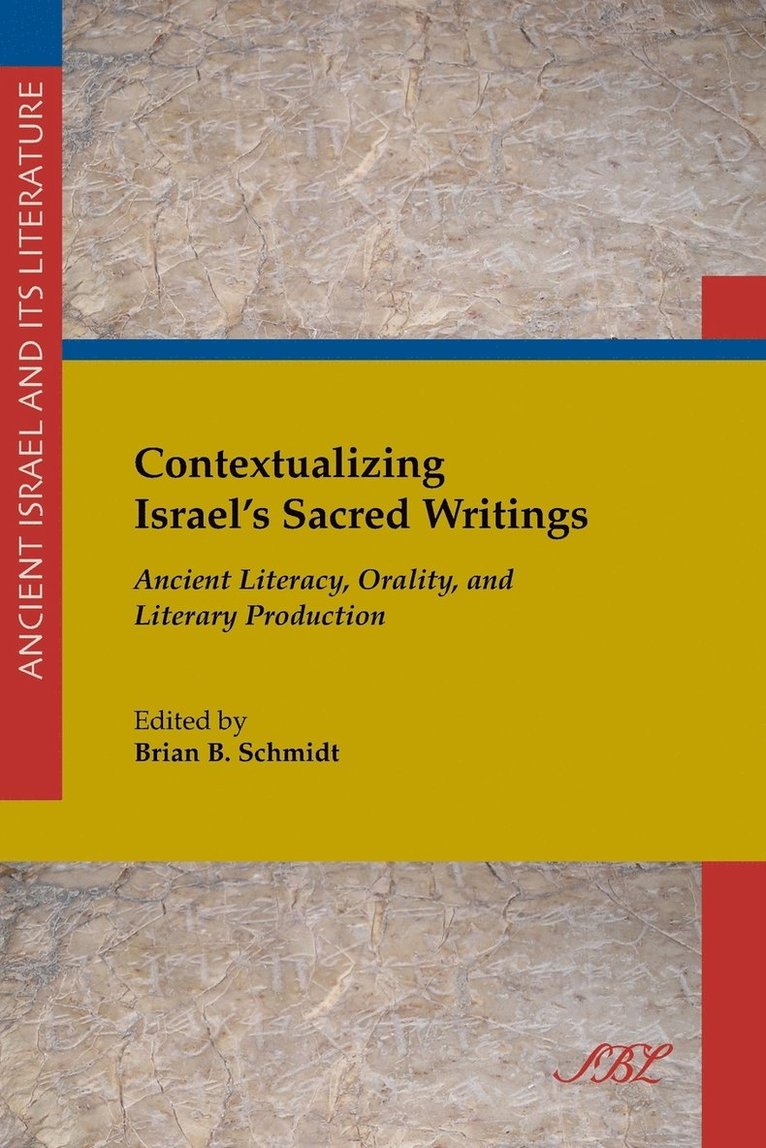
Contextualizing Israel's Sacred Writings
Ancient Literacy, Orality, and Literary Production
Häftad, Engelska, 2015
543 kr
Skickas inom 5-8 vardagar
Del 22 - Ancient Israel and Its Literature
Contextualizing Israel's Sacred Writings
Ancient Literacy, Orality, and Literary Production
Inbunden, Engelska, 2015
452 kr
Skickas
Del 11 - Forschungen zum Alten Testament
Israel's Beneficent Dead
Ancestor Cult and Necromancy in Ancient Israelite Religion and Tradition
Inbunden, Engelska, 1994
1 685 kr
Skickas inom 5-8 vardagar
Did the ancient Israelites perform rituals expressive of the belief in the supernatural beneficent power of the dead? Contrary to long held notions of primitive society and the euhemeristic origin of the divine, various factors indicate that the ancestor cult, that is, ancestor veneration or worship, was not observed in the Iron Age Levant. The Israelites did not adopt an ancient Canaanite ancestor cult that became the object of biblical scorn. Yet, a variety of mortuary rituals and cults were performed in Levantine society; mourning and funerary rites and longer-term rituals such as the care for the dead and commemoration. Rituals and monuments in or at burial sites, and especially the recitation of the deceased's name, recounted the dead's lived lives for familial survivors. They served broader social functions as well; e.g., to legitimate primogeniture and to reinforce a community's social collectivity. Another ritual complex from the domain of divination, namely necromancy, might have expressed the Israelite dead's beneficent powers. Yet, was this power to reveal knowledge that of the dead or was it a power conveyed through the dead, but that remained attributable to another supranatural being of non-human origin? Contemporary Assyrian necromancers utilized the ghost as a conduit through which divine knowledge was revealed to ascertain the future and so Judah's king Manasseh, a loyal Assyrian vassal, emulated these new Assyrian imperial forms of prognostication. As a de-legitimating rhetorical strategy, necromancy was then integrated into biblical traditions about the more distant past and attributed fictive Canaanite origins (Deut 18). In its final literary setting, necromancy was depicted as the Achille's heel of the nation's first royal dynasty, that of the Saulides (1 Sam 28), and more tellingly, its second, that of the Davidides (2 Kgs. 21:6; 23:24).
Del 105 - Forschungen zum Alten Testament
The Materiality of Power
Explorations in the Social History of Ancient Israelite Magic
Inbunden, Engelska, 2016
1 883 kr
Skickas inom 5-8 vardagar
Brian B. Schmidt präsentiert fünf Fallstudien, in denen architektonische Räume, Artefakte, Inschriften und biblische Handschriften die Existenz eines kraftvollen daimonischen Reichs im späten vorexilischen Israel bestätigen, zusammen mit einem rudimentären Pandämonium, das spätere dämonologische Konstrukte ahnen ließ. Die materiellen und die epigraphischen Daten aus Kuntillet Ajrud, Ketef Hinnom und Khirbet el-Qom, in Verbindung mit den Textzeugnissen aus Dtn 32 und 1 Sam 28, zeigen, dass Mitglieder dieses Pandämoniums verheerenden Schaden unter den Lebenden und den Toten anrichteten. Die gleichen Daten belegen, dass es auch ein ausgleichendes, apotropäisches Reich gab - ein Reich, über das JHWH und seine Aschera, dargestellt als die zwei international anerkannten Schutzgottheiten Bes und Beset, gemeinsam herrschten und in welchem Ascherah als JHWHs Mittlerin diente. Darüber hinaus vermitteln verschiedene andere materielle Medien wie Amulette und gravierte Segenssprüche, welche entworfen wurden, um die apotropäische Macht auszudrücken, das Entgegenwirken dieses Reichs.