Brian Danoff - Böcker
Visar alla böcker från författaren Brian Danoff. Handla med fri frakt och snabb leverans.
5 produkter
5 produkter
1 572 kr
Skickas inom 10-15 vardagar
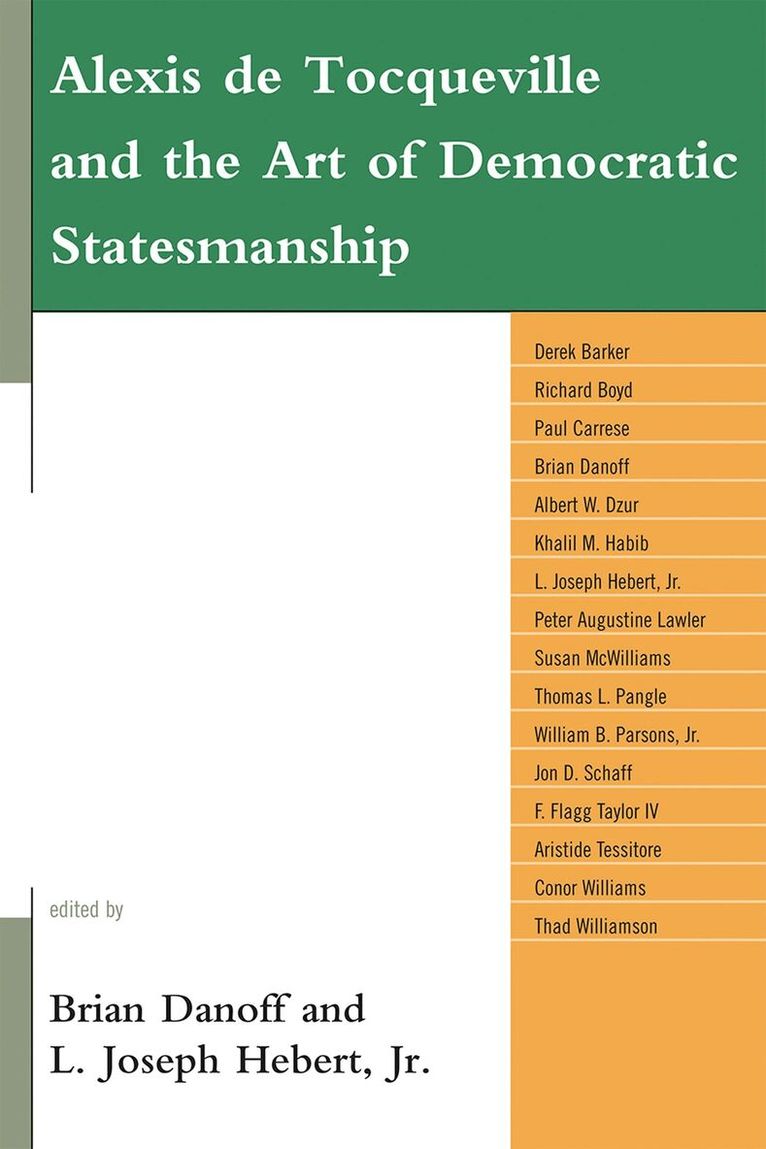
In 1835, Alexis de Tocqueville famously called for 'a new political science' that could address the problems and possibilities of a 'world itself quite new.' For Tocqueville, the democratic world needed not just a new political science but also new arts of statesmanship and leadership. In this volume, Brian Danoff and L. Joseph Hebert, Jr., have brought together a diverse set of essays revealing that Tocqueville's understanding of democratic statesmanship remains highly relevant today. The first chapter of the book is a new translation of Tocqueville's 1852 address to the Academy of Moral and Political Sciences, in which Tocqueville offers a profound exploration of the relationship between theory and practice, and between statesmanship and political philosophy. Subsequent chapters explore the relationship between Tocqueville's ideas on statesmanship, on the one hand, and the ideas of Plato, Aristotle, Machiavelli, Montesquieu, the Puritans, the Framers of the U.S. Constitution, Oakeshott, Willa Cather, and the Second Vatican Council, on the other. Timely and provocative, these essays show the relevance of Tocqueville's theory of statesmanship for thinking about such contemporary issues as the effects of NGOs on civic life, the powers of the American presidency, the place of the jury in a democratic polity, the role of religion in public life, the future of democracy in Europe, and the proper balance between liberalism and realism in foreign policy.
675 kr
Skickas inom 10-15 vardagar
In 1835, Alexis de Tocqueville famously called for 'a new political science' that could address the problems and possibilities of a 'world itself quite new.' For Tocqueville, the democratic world needed not just a new political science but also new arts of statesmanship and leadership. In this volume, Brian Danoff and L. Joseph Hebert, Jr., have brought together a diverse set of essays revealing that Tocqueville's understanding of democratic statesmanship remains highly relevant today. The first chapter of the book is a new translation of Tocqueville's 1852 address to the Academy of Moral and Political Sciences, in which Tocqueville offers a profound exploration of the relationship between theory and practice, and between statesmanship and political philosophy. Subsequent chapters explore the relationship between Tocqueville's ideas on statesmanship, on the one hand, and the ideas of Plato, Aristotle, Machiavelli, Montesquieu, the Puritans, the Framers of the U.S. Constitution, Oakeshott, Willa Cather, and the Second Vatican Council, on the other. Timely and provocative, these essays show the relevance of Tocqueville's theory of statesmanship for thinking about such contemporary issues as the effects of NGOs on civic life, the powers of the American presidency, the place of the jury in a democratic polity, the role of religion in public life, the future of democracy in Europe, and the proper balance between liberalism and realism in foreign policy.
1 027 kr
Tillfälligt slut
Revisionist analysis of the role of strong leadership in democracies, drawing primarily upon the work of Alexis de Tocqueville.Do strong leaders inevitably undermine democracies? Drawing upon the insights of Alexis de Tocqueville, Brian Danoff offers a compelling, revisionist analysis of the role of leadership in democratic societies. Rather than focusing on effectiveness or character to assess the quality of leaders in democracies, Tocqueville suggests that great democratic leaders are those who educate, elevate, and empower their fellow citizens; certain types of leadership enhance rather than diminish self-rule. Danoff then enriches and expands Tocqueville's perspective through the ideas of American theorists and statesmen such as Woodrow Wilson, Abraham Lincoln, and the Antifederalists. Timely and necessary, this book sheds new light on both Tocqueville and on the role of leadership in American democracy.
372 kr
Tillfälligt slut
Revisionist analysis of the role of strong leadership in democracies, drawing primarily upon the work of Alexis de Tocqueville.Do strong leaders inevitably undermine democracies? Drawing upon the insights of Alexis de Tocqueville, Brian Danoff offers a compelling, revisionist analysis of the role of leadership in democratic societies. Rather than focusing on effectiveness or character to assess the quality of leaders in democracies, Tocqueville suggests that great democratic leaders are those who educate, elevate, and empower their fellow citizens; certain types of leadership enhance rather than diminish self-rule. Danoff then enriches and expands Tocqueville's perspective through the ideas of American theorists and statesmen such as Woodrow Wilson, Abraham Lincoln, and the Antifederalists. Timely and necessary, this book sheds new light on both Tocqueville and on the role of leadership in American democracy.
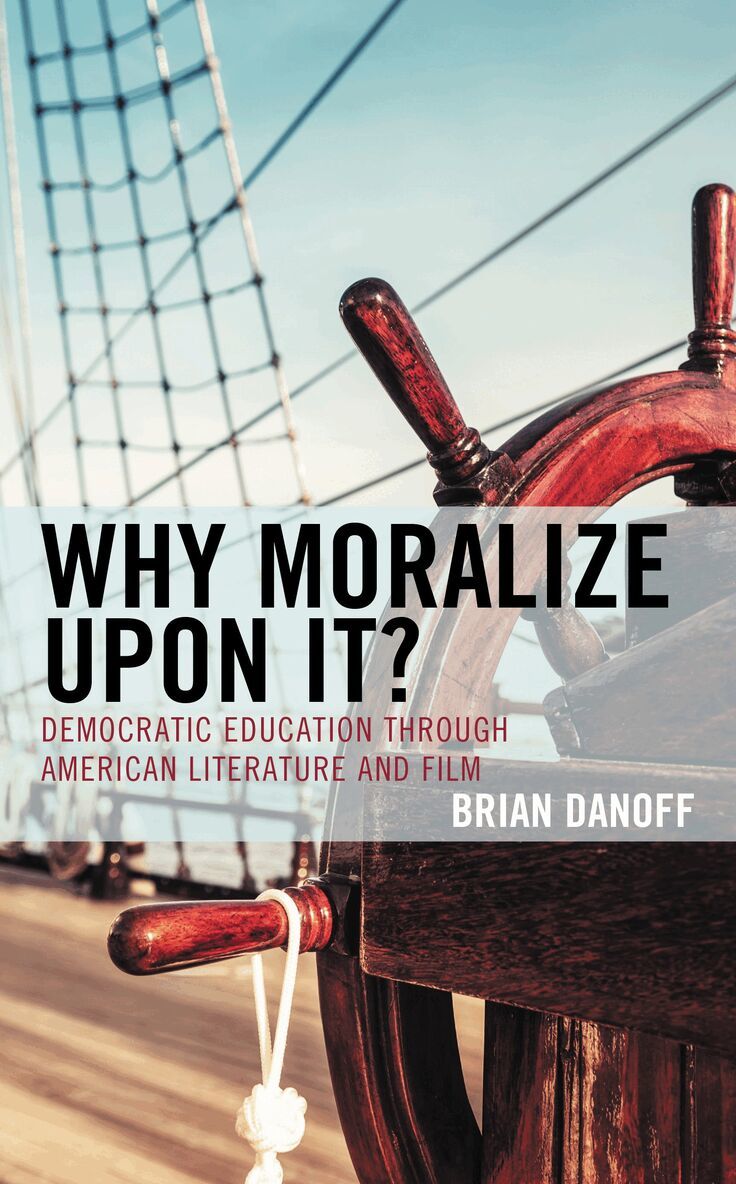
Why Moralize upon It?
Democratic Education through American Literature and Film
Inbunden, Engelska, 2020
1 314 kr
Skickas inom 10-15 vardagar
Franklin Delano Roosevelt famously declared that “the greatest duty of a statesman is to educate." The central claim of Why Moralize upon It? is that it is not only statesmen who can help educate a democratic citizenry, but also novelists and filmmakers. This book’s title is drawn from Melville’s “Benito Cereno.” Near the end of this novella, after he has put down a rebellion of enslaved Africans, the American captain Amasa Delano claims that “the past is passed,” and thus there is no need to “moralize upon it.”Melville suggests, though, that it is crucial for Americans to critically examine American history and American political institutions; otherwise, they may be blind to the existence of injustices which will ultimately undermine democracy. Danoff argues that novels and films play a crucial role in helping democratic citizens undertake the kind of moral reflection that they must engage in if they are to not only preserve their political community, but also render it “forever worthy of the saving,” as Abraham Lincoln put it. Contending that some of the most profound American thinking about the nature of democratic leadership has come through novels more so than treatises or essays, Danoff argues that the works of fiction examined in this book explore difficult questions rather than provide any easy answers. Because these works have an ambiguous, nuanced, and tragic outlook, they teach citizen-readers how to think through the moral complexities of the political issues on which they must render judgment. The rich and multi-faceted democratic education that citizens glean from outstanding works of fiction is particularly necessary at a time when the media-landscape is often dominated by superficial “viral moments,” “sound-bites,” and social media posts. Moreover, given that we today live in an era of sharp political polarization in which partisans often demonize one another, it is especially valuable for Americans to be exposed to literary and cinematic works of art which remind us that none of us have a monopoly on virtue, and that all of us inhabit what Melville called “the common continent of men.”