Brian H. Luckman – författare
Visar alla böcker från författaren Brian H. Luckman. Handla med fri frakt och snabb leverans.
4 produkter
4 produkter
Inbunden, Engelska, 2008
706 kr
Skickas inom 5-8 vardagar
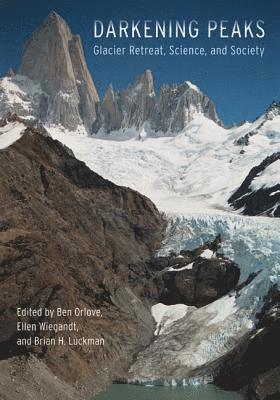
Looking up at mountains, people now see bare, dark rock where white snow and ice once stood - dramatic evidence of the accelerating pace of glacier retreat due to climate change. This groundbreaking work is the first to provide an integrated, multidisciplinary, global exploration of the scientific, social, and economic dimensions of this phenomenon. Bringing together contributors from five continents, "Darkening Peaks" discusses the ways that scientists have observed and modeled glaciers, tells how climate change is altering their size and distribution, and looks closely at their effect on human life.
Inbunden, Engelska, 2010
2 138 kr
Skickas inom 10-15 vardagar
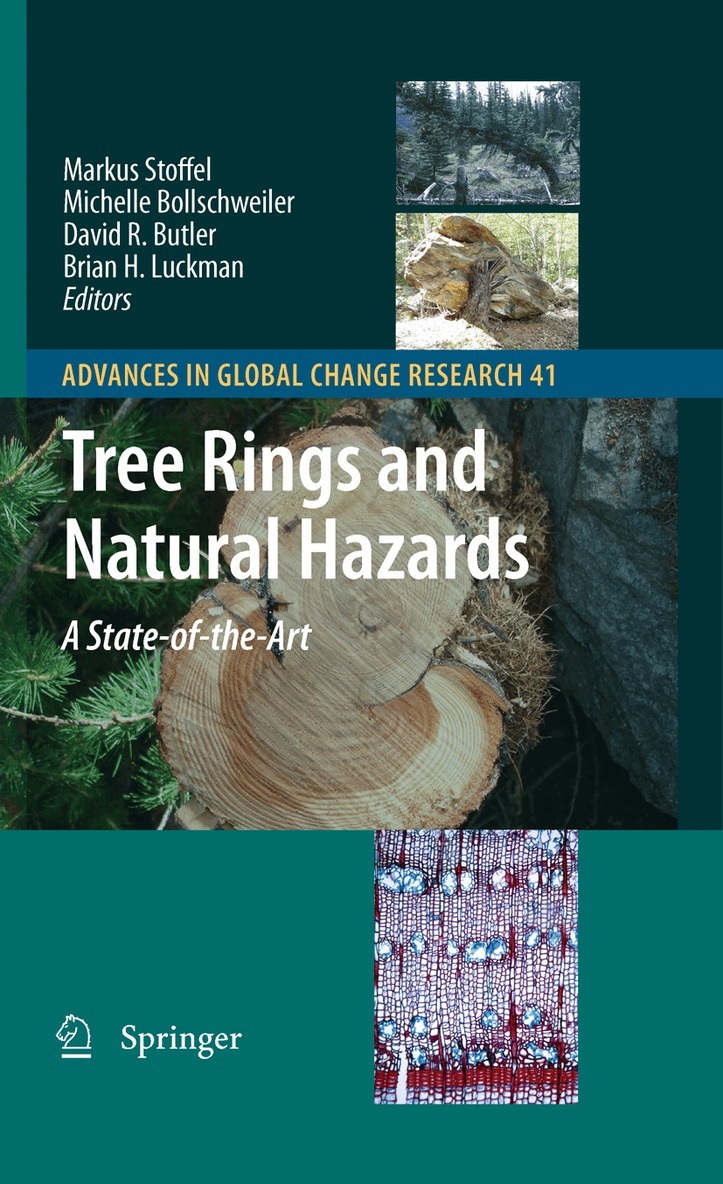
Dendrogeomorphology Beginnings and Futures: A Personal Reminiscence My early forays into dendrogeomorphology occurred long before I even knew what that word meant. I was working as a young geoscientist in the 1960s and early 1970s on a problem with slope movements and deformed vegetation. At the same time, unknown to me, Jouko Alestalo in Finland was doing something similar. Both of us had seen that trees which produced annual growth rings were reacting to g- morphic processes resulting in changes in their internal and external growth p- terns. Dendroclimatology was an already well established field, but the reactions of trees to other environmental processes were far less well understood in the 1960s. It was Alestalo (1971) who first used the term, dendrogeomorphology. In the early 1970s, I could see that active slope-movement processes were affecting the growth of trees in diverse ways at certain localities. I wanted to learn more about those processes and try to extract a long-term chronology of movement from the highly diverse ring patterns.
E-bok
PDF, Engelska, 20102 741 kr
Läs direkt efter köp
Dendrogeomorphology Beginnings and Futures: A Personal Reminiscence My early forays into dendrogeomorphology occurred long before I even knew what that word meant. I was working as a young geoscientist in the 1960s and early 1970s on a problem with slope movements and deformed vegetation. At the same time, unknown to me, Jouko Alestalo in Finland was doing something similar. Both of us had seen that trees which produced annual growth rings were reacting to g- morphic processes resulting in changes in their internal and external growth p- terns. Dendroclimatology was an already well established field, but the reactions of trees to other environmental processes were far less well understood in the 1960s. It was Alestalo (1971) who first used the term, dendrogeomorphology. In the early 1970s, I could see that active slope-movement processes were affecting the growth of trees in diverse ways at certain localities. I wanted to learn more about those processes and try to extract a long-term chronology of movement from the highly diverse ring patterns.
Del 41 - Advances in Global Change Research
Tree Rings and Natural Hazards
A State-of-Art
Häftad, Engelska, 2012
2 138 kr
Skickas inom 10-15 vardagar
Dendrogeomorphology Beginnings and Futures: A Personal Reminiscence My early forays into dendrogeomorphology occurred long before I even knew what that word meant. I was working as a young geoscientist in the 1960s and early 1970s on a problem with slope movements and deformed vegetation. At the same time, unknown to me, Jouko Alestalo in Finland was doing something similar. Both of us had seen that trees which produced annual growth rings were reacting to g- morphic processes resulting in changes in their internal and external growth p- terns. Dendroclimatology was an already well established field, but the reactions of trees to other environmental processes were far less well understood in the 1960s. It was Alestalo (1971) who first used the term, dendrogeomorphology. In the early 1970s, I could see that active slope-movement processes were affecting the growth of trees in diverse ways at certain localities. I wanted to learn more about those processes and try to extract a long-term chronology of movement from the highly diverse ring patterns.