Brian Lennon - Böcker
Visar alla böcker från författaren Brian Lennon. Handla med fri frakt och snabb leverans.
5 produkter
5 produkter
427 kr
Skickas inom 10-15 vardagar
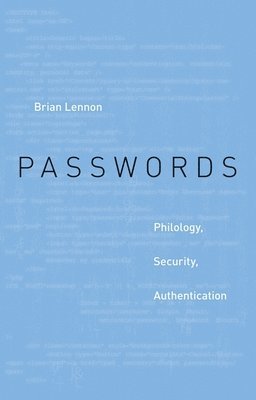
Cryptology, the mathematical and technical science of ciphers and codes, and philology, the humanistic study of natural or human languages, are typically understood as separate domains of activity. But Brian Lennon contends that these two domains, both concerned with authentication of text, should be viewed as contiguous. He argues that computing’s humanistic applications are as historically important as its mathematical and technical ones. What is more, these humanistic uses, no less than cryptological ones, are marked and constrained by the priorities of security and military institutions devoted to fighting wars and decoding intelligence.Lennon’s history encompasses the first documented techniques for the statistical analysis of text, early experiments in mechanized literary analysis, electromechanical and electronic code-breaking and machine translation, early literary data processing, the computational philology of late twentieth-century humanities computing, and early twenty-first-century digital humanities. Throughout, Passwords makes clear the continuity between cryptology and philology, showing how the same practices flourish in literary study and in conditions of war.Lennon emphasizes the convergence of cryptology and philology in the modern digital password. Like philologists, hackers use computational methods to break open the secrets coded in text. One of their preferred tools is the dictionary, that preeminent product of the philologist’s scholarly labor, which supplies the raw material for computational processing of natural language. Thus does the historic overlap of cryptology and philology persist in an artifact of computing—passwords—that many of us use every day.
330 kr
Skickas inom 10-15 vardagar
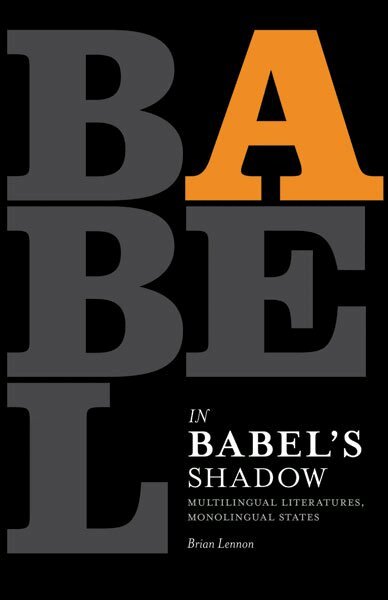
Multilingual literature defies simple translation. Beginning with this insight, Brian Lennon examines the resistance multilingual literature offers to book publication itself. In readings of G. V. Desani’s All about H. Hatterr, Anthony Burgess’s A Clockwork Orange, Christine Brooke-Rose’s Between, Eva Hoffman’s Lost in Translation, Emine Sevgi Özdamar’s Mutterzunge, and Orhan Pamuk’s Istanbul, among other works, Lennon shows how nationalized literary print culture inverts the values of a transnational age, reminding us that works of literature are, above all, objects in motion. Looking closely at the limit of both multilingual literary expression and the literary journalism, criticism, and scholarship that comments on multilingual work, In Babel’s Shadow presents a critical reflection on the fate of literature in a world gripped by the crisis of globalization.
326 kr
Skickas inom 3-6 vardagar
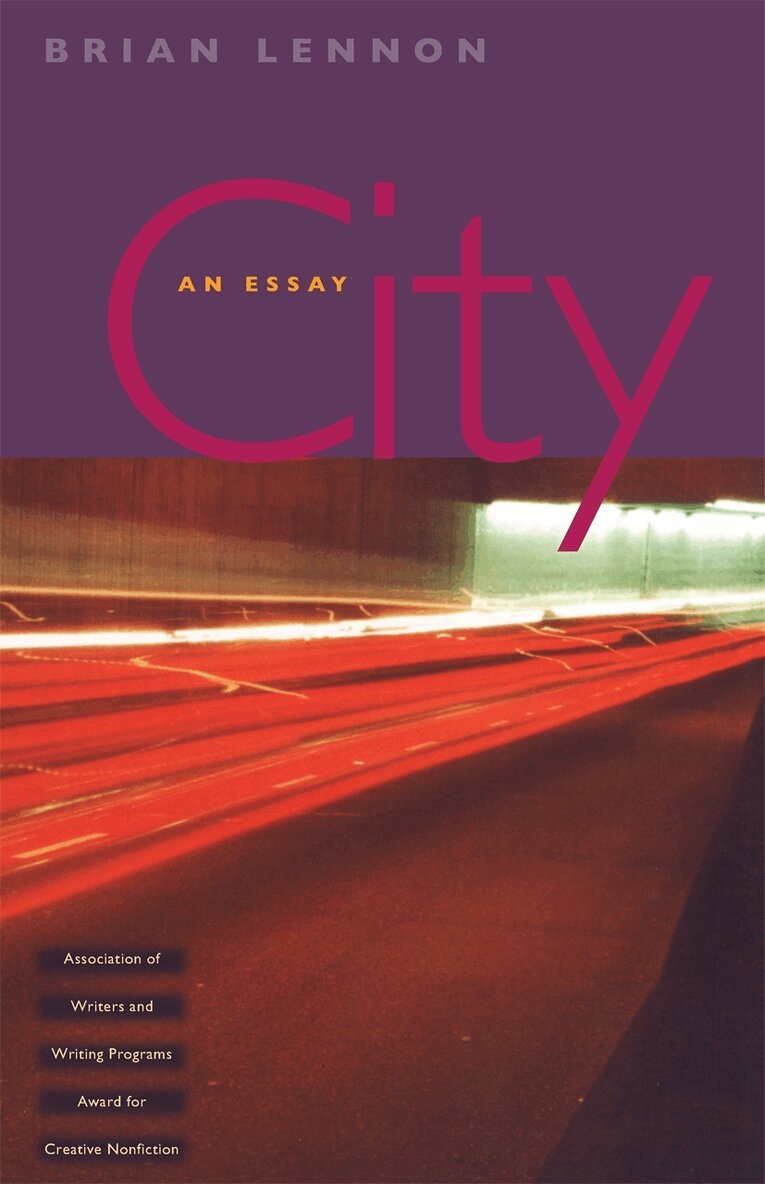
How do we come to know a place, and in seeking to know it do we make it foreign from ourselves? Do we tackle it from other perspectives—the excavator, the traveler, the observant witness? Can we know a place without the blur of our identity, or does the attempt to extricate ourselves from the external lead only deeper? Brian Lennon seeks such knowledge in this rare and revolutionary work that blends poetry with narrative, ethnography with autobiography, and philosophy with literature. City: An Essay begins and ends with meditations on place, the first an unusual and intriguing excavation of the underground depths and history of New York City and the conclusion a travelogue of Italy that reads like snapshots. But place comes to reside somewhere within the landscape of the imagination.Though classified as creative nonfiction, City is an open genre piece that reads with the rhythm and beauty of poetry. Despite its sometimes philosophical core, occasionally pausing to ponder Kierkegaardian dilemmas, it maintains linguistic grace and self-reflexivity. City is a unique and unmatched experimental work by an emerging and sophisticated writer who is paving exciting new aesthetic and theoretical roads.
1 059 kr
Skickas inom 7-10 vardagar
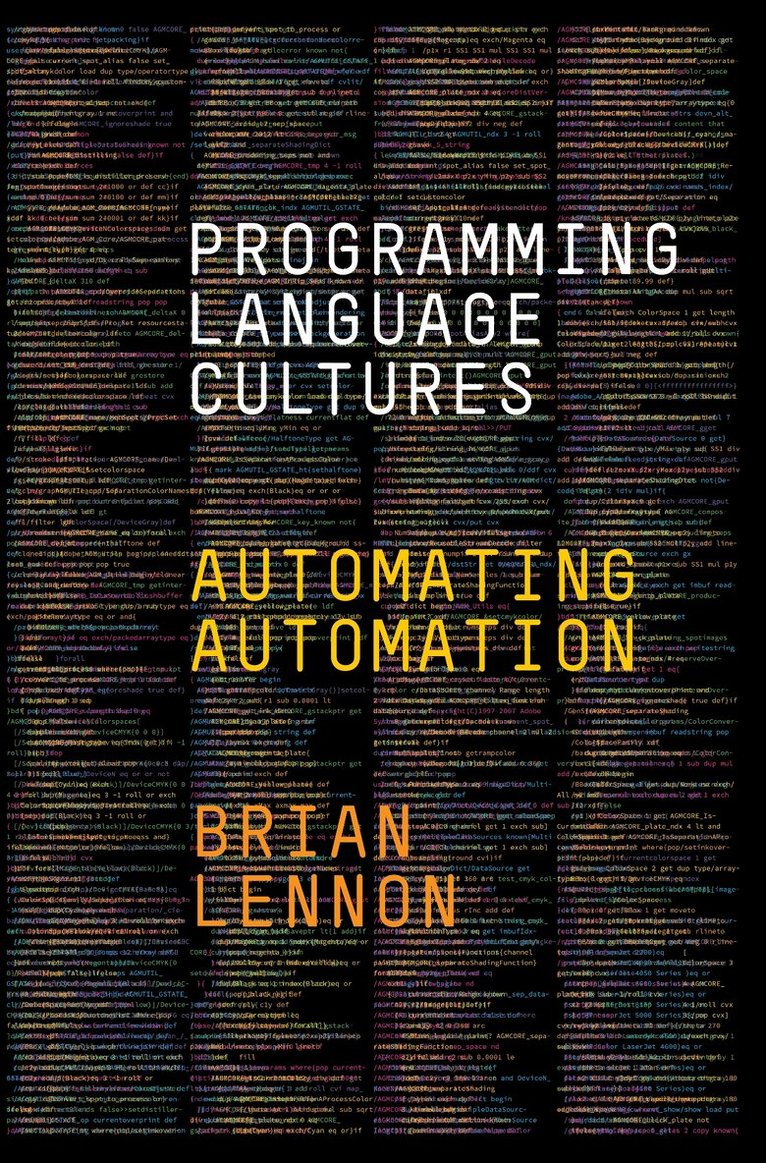
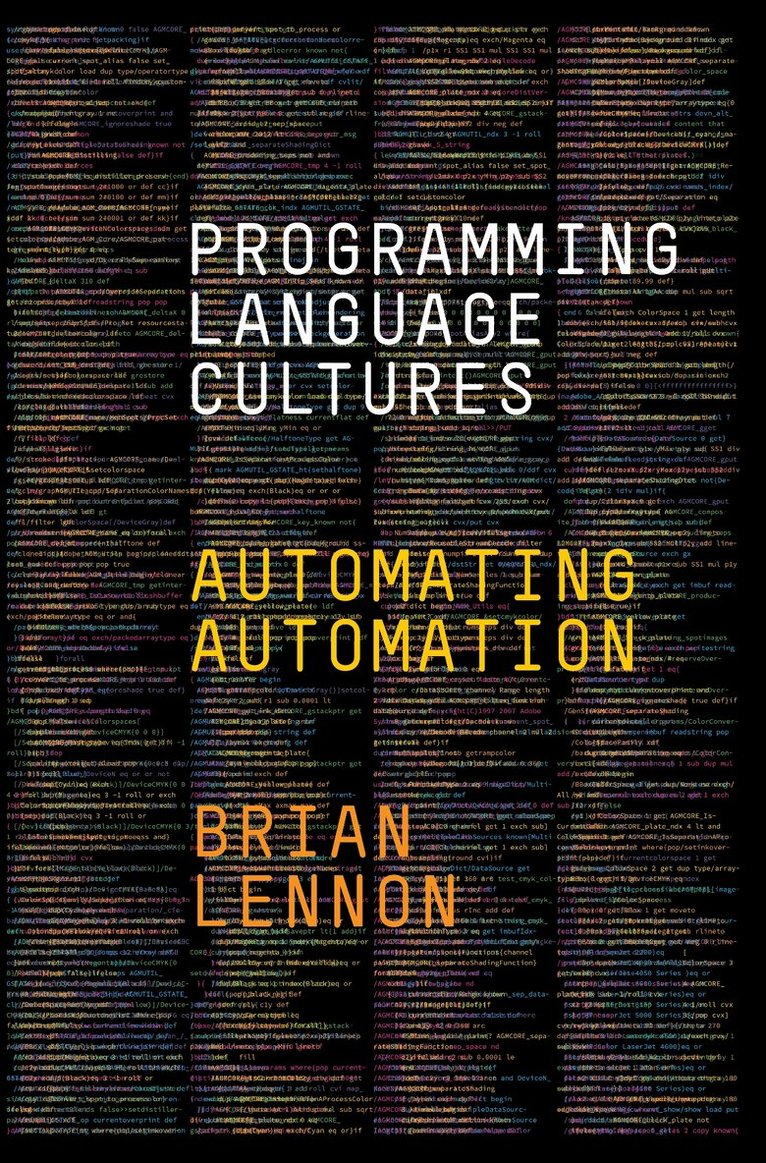
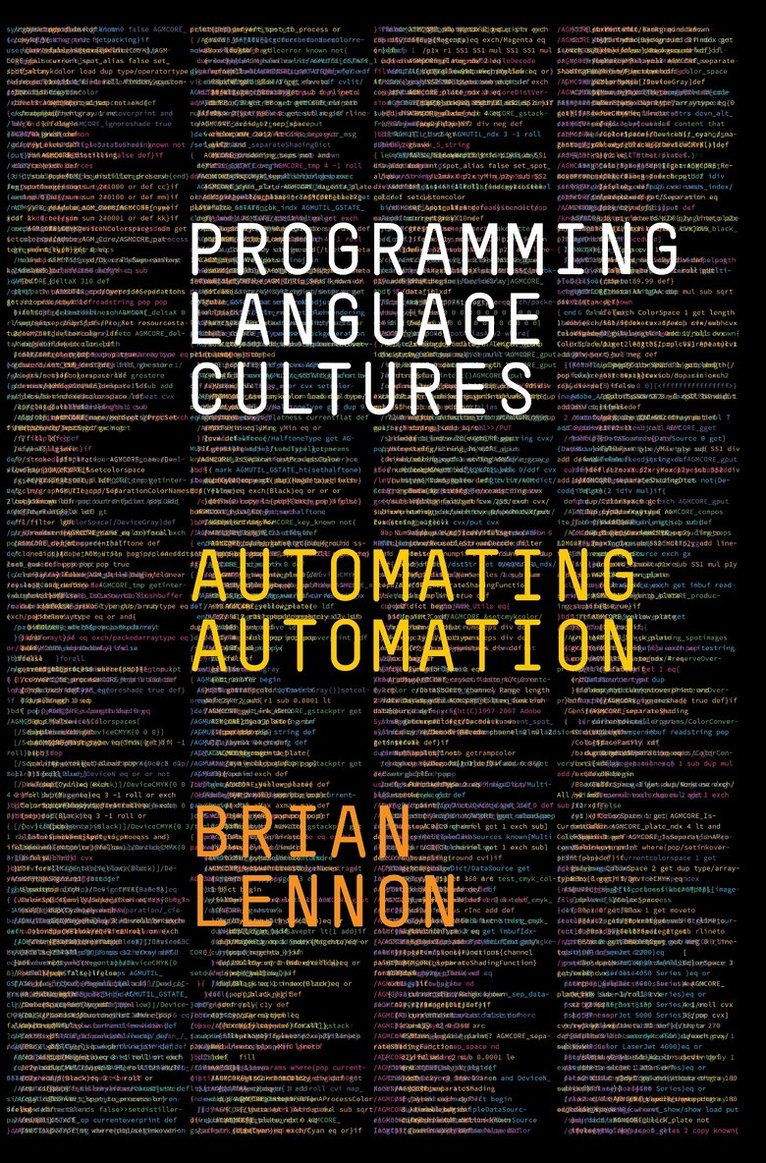
In this book, Brian Lennon demonstrates the power of a philological approach to the history of programming languages and their usage cultures. In chapters focused on specific programming languages such as SNOBOL and JavaScript, as well as on code comments, metasyntactic variables, the very early history of programming, and the concept of DevOps, Lennon emphasizes the histories of programming languages in their individual specificities over their abstract formal or structural characteristics, viewing them as carriers and sometimes shapers of specific cultural histories. The book's philological approach to programming languages presents a natural, sensible, and rigorous way for researchers trained in the humanities to perform research on computing in a way that draws on their own expertise.Combining programming knowledge with a humanistic analysis of the social and historical dimensions of computing, Lennon offers researchers in literary studies, STS, media and digital studies, and technical fields the first technically rigorous approach to studying programming languages from a humanities-based perspective.
257 kr
Skickas inom 7-10 vardagar
In this book, Brian Lennon demonstrates the power of a philological approach to the history of programming languages and their usage cultures. In chapters focused on specific programming languages such as SNOBOL and JavaScript, as well as on code comments, metasyntactic variables, the very early history of programming, and the concept of DevOps, Lennon emphasizes the histories of programming languages in their individual specificities over their abstract formal or structural characteristics, viewing them as carriers and sometimes shapers of specific cultural histories. The book's philological approach to programming languages presents a natural, sensible, and rigorous way for researchers trained in the humanities to perform research on computing in a way that draws on their own expertise.Combining programming knowledge with a humanistic analysis of the social and historical dimensions of computing, Lennon offers researchers in literary studies, STS, media and digital studies, and technical fields the first technically rigorous approach to studying programming languages from a humanities-based perspective.