Brian W. Jones - Böcker
Visar alla böcker från författaren Brian W. Jones. Handla med fri frakt och snabb leverans.
2 produkter
2 produkter
376 kr
Skickas inom 10-15 vardagar
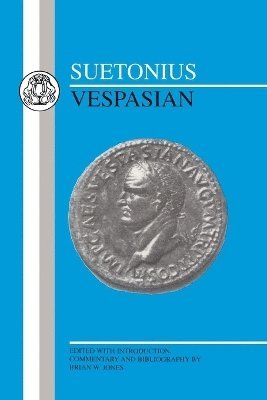
The emperor Vespasian (AD69-79) is universally regarded as one of the better Roman emperors. Coming to the throne after the demise of Nero and the bitterness of a year-long civil war, he restored the empire's finances and inaugurated a period of peace and prosperity. Tacitus, Pliny and Josephus had a high regard for Vespasian, portraying him as an astute commander and an excellent emperor. In comparison with the comments of these contemporary or near-contemporary writers, Suetonius' biography, produced some fifty years after the emperor's death, is quite detailed. He too admired Vespasian. For him, Vespasian was a very shrewd administrator, who liked to be seen as having the common touch and as an ex-soldier with a ribald sense of humour. These and other aspects of his character are revealed in a series of anecdotes, always amusing and always opposite. This edition (the first since 1930) offers a newly revised text with a general introduction and detailed commentary. Comparison is continually drawn between Vespasian and other accounts of the reign, especially that of Dio Cassius, the only other substantial account but written a century after that of Suetonius.
376 kr
Skickas inom 10-15 vardagar
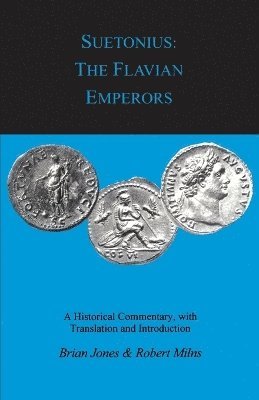
Nero's suicide in AD 68 was followed by a disastrous civil war that left the empire in a parlous state and saw the demise, in quick succession, of another three emperors (Galba, Otho and Vitellius). Normality returned with Vespasian and his sons, Titus and Domitian who ruled from 69 to 96. They changed the face of Rome, with massive public works such as the Flavian amphitheatre (later called the Colosseum) and the palace-complex on the Palatine, which provided much-needed employment whilst at the same time enhancing the city's status as the capital of the Mediterranean. The most detailed account of the new dynasty and its achievements is provided by Suetonius. What he has to say about these three Flavians constitutes the best source we have for the period. This edition of the three "Lives" includes a new translation, a general introduction to Suetonius and a detailed commentary that concentrates on the social and political history behind each life.