Brigitte Obermayr – författare
Visar alla böcker från författaren Brigitte Obermayr. Handla med fri frakt och snabb leverans.
12 produkter
Wiener Slawistischer Almanach Band 87/2021
Av Ilja Kukuj, Riccardo Nicolosi m. fl.
Häftad, 2022
1248 kr
Lägg i varukorg
Der Band enthält zwei thematische Blöcke zu Osip Mandel’štam und Andrej Platonov sowie Aufsätze über die russischsprachige Literatur des 19. und des 20. Jhd. (Nikolaj Gogol’, Vladimir Nabokov, Dichter der OBERIU). Des Weiteren sind Beiträge zur Pragmatik der literarischen Motive und Lexikographie …
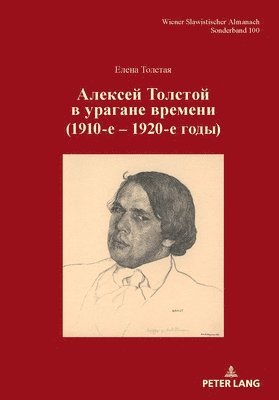
Aлексей Tолстой в урагане времени
(1910-е - 1920-е годы)
Av Helena Tolstoy, Ilja Kukuj m. fl.
Inbunden, 2022
891 kr
Lägg i varukorg
Врезультате переворота в российской филологии, произошедшего 1980-е – 2000-е годы, в литературу вновь вошли не только сотни ранее запретных и несправедливо вычеркнутых имен, но и целые периоды творчества официозных советских писателей, представшие в новом свете. Настоящая монография «Алексей …
Wiener Slawistischer Almanach Band 88/2022
Av Ilja Kukuj, Riccardo Nicolosi m. fl.
Häftad, 2023
999 kr
Lägg i varukorg
Der Band enthält 17 Beiträge zur slawistischen Lexikografie, die aus der Warschauer Tagung Vocabulum et Vocabularium 17: «Wspólczesne problemy leksykografii» im Mai 2021 hervorgegangen sind. Des Weiteren enthalten sind drei russische Beiträge zu Somatismen in der Phraseologie, zur poetischen …
Wiener Slawistischer Almanach Band 89/2022
Av Ilja Kukuj, Riccardo Nicolosi m. fl.
Häftad, 2023
863 kr
Lägg i varukorg
Band 89 des Wiener Slawistischen Almanachs enthält vor allem zwei thematische Blöcke, die sowohl slawische Kulturen selbst als auch ihre Rezeption auf einer Metaebene umfassen. Zum einen sind dies mehrsprachige Materialien der Tagung «Periodicals in the Slavic World. Contemporary and Historical …
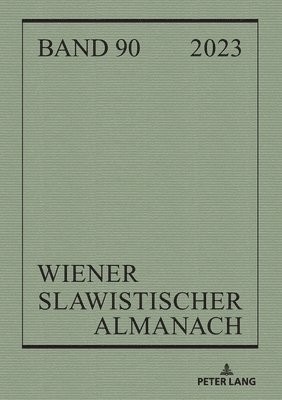
Wiener Slawistischer Almanach Band 90/2023
Av Ilja Kukuj, Riccardo Nicolosi m. fl.
Häftad, 2024
969 kr
Lägg i varukorg
Band 90 des Wiener Slawistischen Almanachs enthält zwei thematische Blöcke, der erste über den russischen Nihilismus des 19. Jhds («Russian ‹Nihilism› as a Literary Project», hrsg. von Aleksandr Korchinskij und Kirill Zubkov) und der zweite über die Nostalgie als kulturwissenschaftliche …
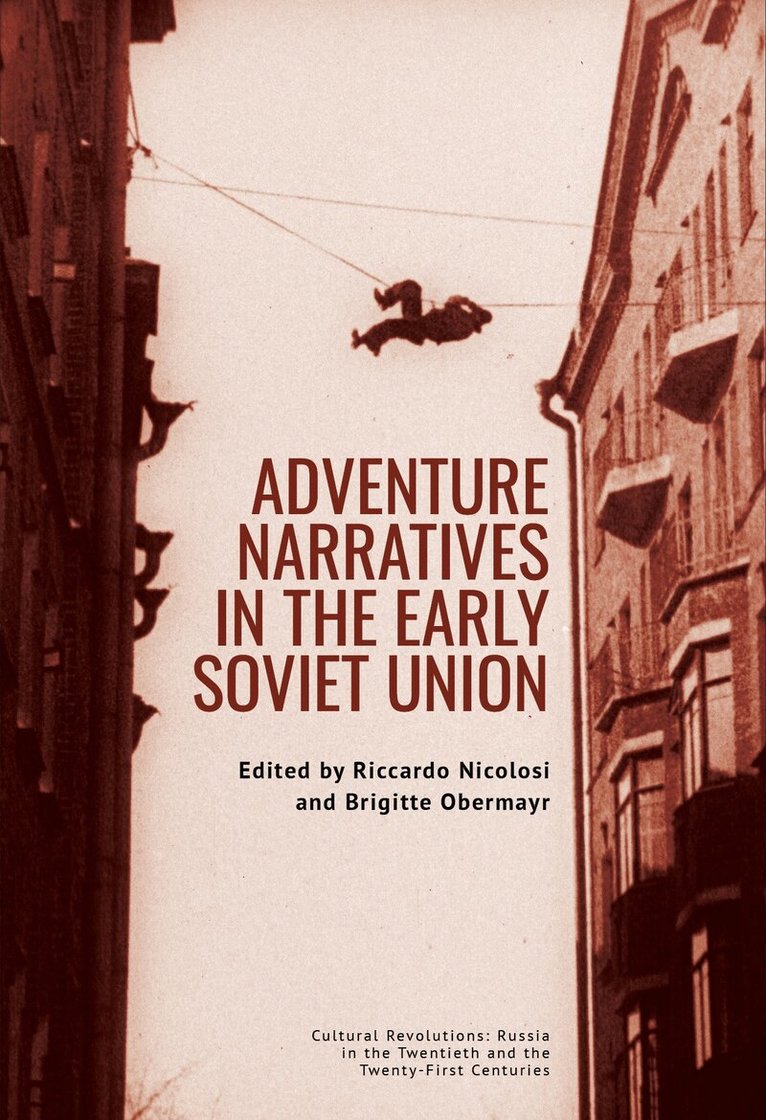
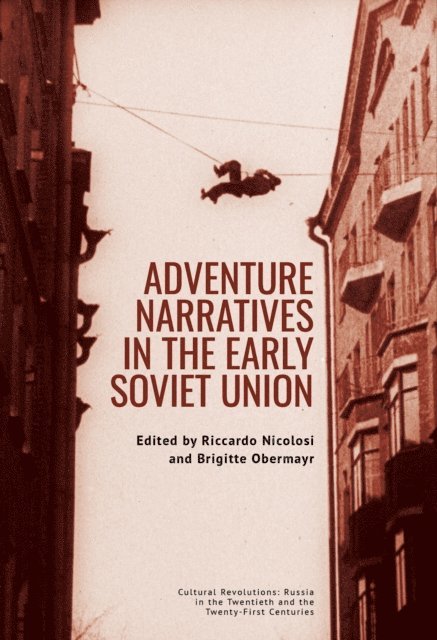
Adventure Narratives in the Early Soviet Union
Av Riccardo Nicolosi, Brigitte Obermayr
Inbunden, 2024
1533 kr
Lägg i varukorg
In the early 1920s, Soviet writers and literary theorists were convinced that adventure fiction held the key to developing a new kind of narrative. The call for a "Russian Stevenson" (Lev Lunts) profoundly impacted the theory of prose and different notions of the literary hero. It also led …
Adventure Narratives in the Early Soviet Union
Av Brigitte Obermayr, Riccardo Nicolosi
E-bok, 2024
2845 kr
Lägg i varukorg
In the early 1920s, Soviet writers and literary theorists were convinced that adventure fiction held the key to developing a new kind of narrative. The call for a "Russian Stevenson" (Lev Lunts) profoundly impacted the theory of prose and different notions of the literary hero. It also led …
Adventure Narratives in the Early Soviet Union
Av Brigitte Obermayr, Riccardo Nicolosi
E-bok, 2024
2208 kr
Lägg i varukorg
In the early 1920s, Soviet writers and literary theorists were convinced that adventure fiction held the key to developing a new kind of narrative. The call for a "Russian Stevenson" (Lev Lunts) profoundly impacted the theory of prose and different notions of the literary hero. It also led …
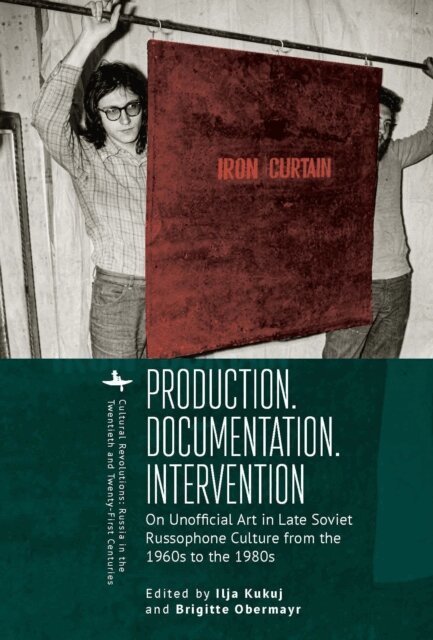
Production. Documentation. Intervention
On Unofficial Art in Late Soviet Russophone Culture from the 1960s to the 1980s
Av Ilja Kukuj, Brigitte Obermayr
Inbunden, 2026
1622 kr
Lägg i varukorg
This volume examines the artistic world of late Soviet unofficial art—the work that happened outside official channels, invisible to the general public—and asks what it actually took to make and sustain that world. It focuses on three interconnected concerns: how art was produced, how it was …
Production. Documentation. Intervention
On Unofficial Art in Late Soviet Russophone Culture from the 1960s to the 1980s
Av Brigitte Obermayr, Ilja Kukuj
E-bok, 2026
2275 kr
Lägg i varukorg
This volume examines the artistic world of late Soviet unofficial artthe work that happened outside official channels, invisible to the general publicand asks what it actually took to make and sustain that world. It focuses on three interconnected concerns: how art was produced, how it was …
Production. Documentation. Intervention
On Unofficial Art in Late Soviet Russophone Culture from the 1960s to the 1980s
Av Brigitte Obermayr, Ilja Kukuj
E-bok, 2026
2275 kr
Lägg i varukorg
This volume examines the artistic world of late Soviet unofficial artthe work that happened outside official channels, invisible to the general publicand asks what it actually took to make and sustain that world. It focuses on three interconnected concerns: how art was produced, how it was …