
Brigitte Rath – författare
Visar alla böcker från författaren Brigitte Rath. Handla med fri frakt och snabb leverans.
2 produkter
2 produkter
Del 1 - Fiction and Reality
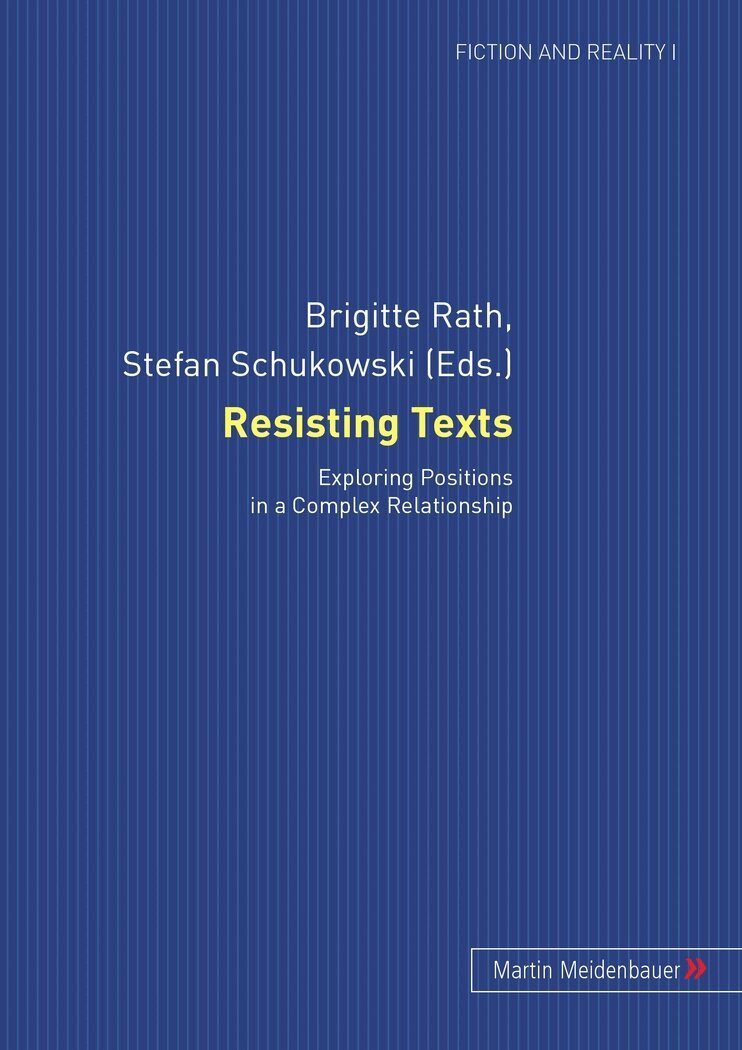
Resisting Texts
Exploring Positions in a Complex Relationship
Häftad, Engelska, 2011
783 kr
Skickas inom 5-8 vardagar
Resisting Texts offers twelve studies that analyse the complex dynamics of textual resistance, exploring fiction’s fundamental potential to resist against realities – and the way reality may resist against fictions. Grouped into four sections, the articles (1) focus on how fictional texts resist the dynamics of history by consciously rewriting it; (2) explore how texts resist the readers’ desire to witness an authentic act of origin and instead perform the past’s resistance against recovery; (3) describe cultural institutions and their rhetoric of resistance against mainstream views that nevertheless has potential for productive resistance go unused; and (4) offer new approaches to literary texts that are usually read as resisting a specific ideology but can be shown to resist in a more complex way. The ‘resisting texts’ in these studies include works by Thomas Bernhard, António Botto, Daniil Charms, Allen Ginsberg, Toni Morrison, Octavio Paz, W.G. Sebald, and Virginia Woolf.
E-bok
PDF, Engelska, 2020273 kr
Läs direkt efter köp
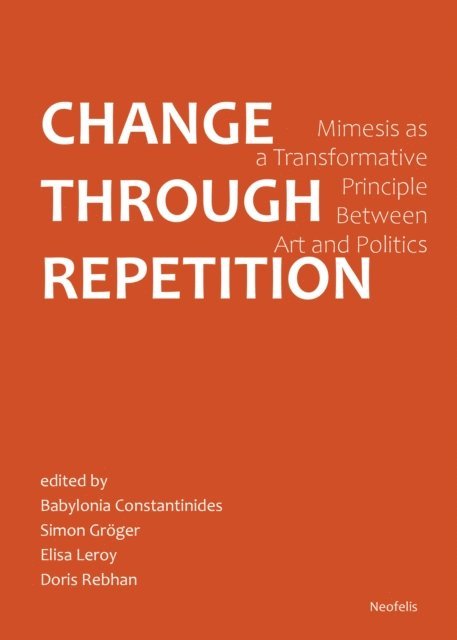
Art and politics are related through repetition. Both realms are structured by practices of repetition and share a common room of sens(e)uality – aesthetics in the emphatic sense of the word. It is the aesthetics and practices of repetition that reveal the relation between both realms. This volume proposes to explore aesthetic and cultural phenomena that effect change in the non-aesthetical realm, not so much in spite, but precisely because of their being ''mere'' repetitions.Repetition shapes art works through procedures and processes of reproduction, copying, depiction, or reenactment. As representation of the world, mimetic art''s relationship to the political and social world can be conceived as repetition. When can mimetic works of art nonetheless become a trigger, participant in or vehicle for political and social transformation? How do mimetic practices as diverse as those of the Research Institute Forensic Architecture, the theater of Milo Rau, video installations with found footage from social media and the fictional NSK State address and change regimes of visibility? How can practices such as performative gender constitution and propaganda, which (ostensibly) affirm regimes of visibility, be understood as processes of change through repetition? How do commemorative cultures and practices of documentation interrelate? How is historical reality produced through mimesis with a view to an imaginary political future?By exploring works of art from a wide range of historical periods, places, media and contexts – from the political thought hidden in Hegel''s Aesthetics through Hélène Cixous''s practice of writing difference(s), from contemporary applied theater through the Gezi Park Uprising in 2013, and from installations of fictional national museums through to the artistic commemoration of assassinated political activists in Iran – all contributions in this volume attempt to show how a concept of change through repetition can help redefine the relationship between art and politics and to enlighten us on the transformative potential of repetition in ''political art''.