Brooke Williams – författare
Visar alla böcker från författaren Brooke Williams. Handla med fri frakt och snabb leverans.
8 produkter
8 produkter
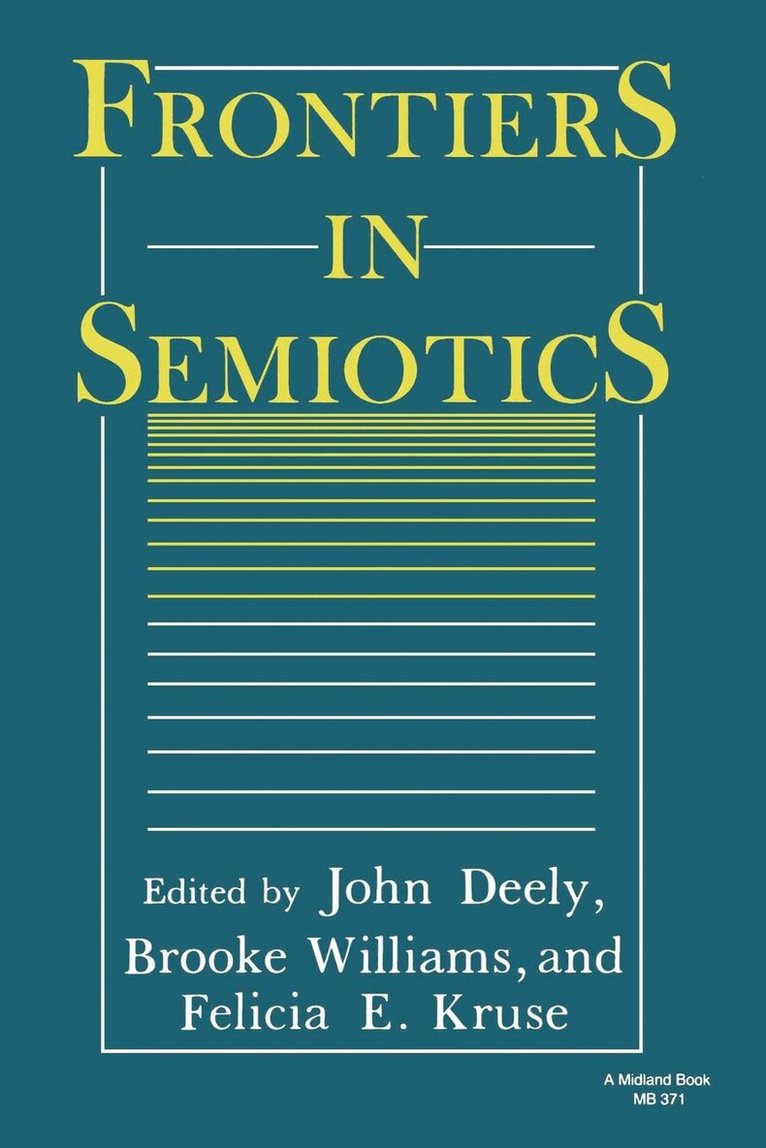
Häftad, Engelska, 1986
217 kr
Skickas inom 10-15 vardagar
Semiotics is rapidly establishing itself as one of the most fruitful and exciting fields of intellectual inquiry. Literary scholars, philosophers, social scientists, and students of linguistics and communication are all finding something of value in the various insights and approaches to knowledge that are included within the general field of semiotics. This significant new collection contains some of the most important contemporary work by modern pioneers in the field together with a few formative statements from earlier thinkers such as John Locke and Jacques Maritain. The volume covers in five parts the nature of semiotics, semiotic systems, various developing themes, traditional concerns of semiotics, and future directions.
Häftad, Engelska, 2013
159 kr
Skickas inom 5-8 vardagar
Häftad, Engelska, 2013
209 kr
Skickas inom 5-8 vardagar
E-bok
Engelska, 2017166 kr
Läs direkt efter köp
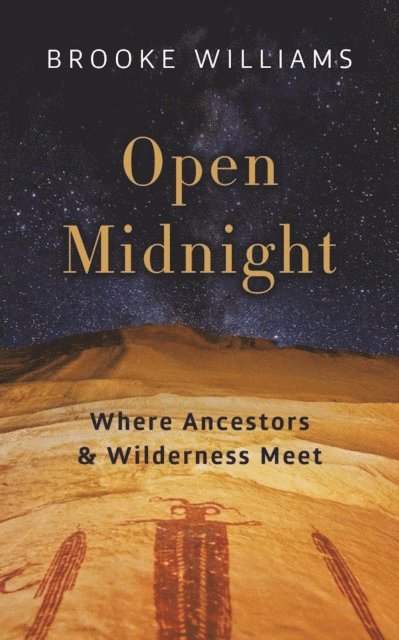
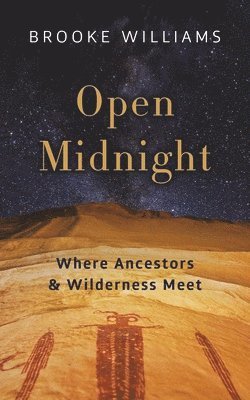
Open Midnight weaves two parallel stories about the great wilderness—Brooke Williams’s year alone with his dog ground truthing wilderness maps of southern Utah, and that of his great-great-great-grandfather, who in 1863 made his way with a group of Mormons from England across the wilderness almost to Utah, dying a week short. The book is also about two levels of history—personal, as represented by William Williams, and collective, as represented by Charles Darwin, who lived in Shrewsbury, England, at about the same time as Williams.As Brooke Williams begins researching the story of his oldest known ancestor, he realizes that he has few facts. He wonders if a handful of dates can tell the story of a life, writing, “If those points were stars in the sky, we would connect them to make a constellation, which is what I’ve made with his life by creating the parts missing from his story.” Thus William Williams becomes a kind of spiritual guide, a shamanlike consciousness that accompanies the author on his wilderness and life journeys, and that appears at pivotal points when the author is required to choose a certain course.The mysterious presence of his ancestor inspires the author to create imagined scenes in which Williams meets Darwin in Shrewsbury, sowing something central in the DNA that eventually passes to Brooke Williams, whose life has been devoted to nature and wilderness.Brooke Williams’s inventive and vivid prose pushes boundaries and investigates new ways toward knowledge and experience, inviting readers to think unconventionally about how we experience reality, spirituality, and the wild. The author draws on Jungian psychology to relate how our consciousness of the wild is culturally embedded in our psyche, and how a deep connection to the wild can promote emotional and psychological well-being.Williams''s narrative goes beyond a call for conservation, but in the vein of writers like Joanna Macy, Bill Plotkin, David Abram, the author argues passionately for the importance of wildness is to the human soul. Reading Williams''s inspired prose provides a measure of hope for protecting the beautiful places that we all need to thrive. Open Midnight is grounded in the present by Williams’s descriptions of the Utah lands he explores. He beautifully evokes the feeling of being solitary in the wild, at home in the deepest sense, in the presence of the sublime. In doing so, he conveys what Gary Snyder calls “a practice of the wild” more completely than any other work.Williams also relates an insider’s view of negotiations about wilderness protection. As an advocate working for the Southern Utah Wilderness Alliance, he represents a minority in meetings designed to open wilderness lands to roads and hunting. He portrays the mindset of the majority of Utah’s citizens, who argue passionately for their rights to use their lands however they wish.The phrase “open midnight,” as Williams sees it, evokes the time between dusk and dawn, between where we’ve been and where we’re going, and the unconscious where all possibilities are hidden.
E-bok
Engelska, 2014117 kr
Läs direkt efter köp
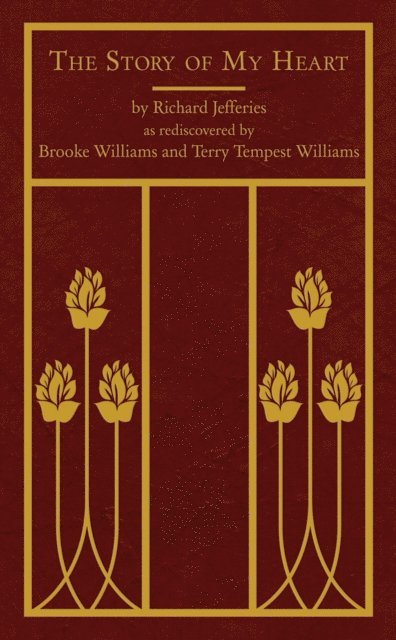
"[Terry and Brooke]''s quest to understand Jefferies'' ideas of a ''soul-life'' has brought the British writer''s ideas alive…"—THE SALT LAKE TRIBUNE"…an oustanding new book…a first–rate tribute to an author who now has been rescued from obscurity."—THE UTAH REVIEW"…a small volume that packs a punch."—THE DURANGO HERALD"The couple converses with Jefferies in the book as if with a new friend…Jefferies'' prescient call for solitude in nature has proven itself worth fresh consideration."—ALBUQUERQUE WEEKLY ALIBI"What makes The Story of My Heart such an enjoyable find is the context that Terry and Brooke provide with their own commentary."—JACKSON HOLE NEWS & GUIDE"The Williamses anchor Jefferies'' profound inquiry to our churning world and illuminate their own passionate quests for truth and understanding."—BOOKLIST, starred review"Brooke and Terry give a sense of cohesion to Jefferies''s writing, and leave readers with much to ponder about our own chaotic, fast–paced, work–obsessed world."—PUBLISHERS WEEKLYWhile browsing a Stonington, Maine, bookstore, Brooke Williams and Terry Tempest Williams discovered a rare copy of an exquisite autobiography by nineteenth-century British nature writer Richard Jefferies, who develops his understanding of a "soul-life" while wandering the wild countryside of Wiltshire, England. Brooke and Terry, like John Fowles, Henry Miller, and Rachel Carson before, were inspired by the prescient words of this visionary writer, who describes ineffable feelings of being at one with nature. In an introduction and essays set alongside Jefferies'' writing, the Williams share their personal pilgrimage to Wiltshire to understand this man of "cosmic consciousness" and how their exploration of Jefferies deepened their own relationship while illuminating dilemmas of modernity, the intrinsic need for wildness, and what it means to be human in the twenty-first century.Terry Tempest Williams is the author of fourteen books including Refuge: An Unnatural History of Family and Place and When Women Were Birds. Recipient of numerous fellowships and awards, she teaches at Dartmouth and the University of Utah where she is the Annie Clark Tanner scholar in the environmental humanities graduate program. Her work has been anthologized and translated worldwide.Brooke Williams has spent thirty years advocating for wildness, most recently with the Southern Utah Wilderness Alliance and as executive director of the Murie Center in Moose, Wyoming. He is the author of four books including Halflives: Reconciling Work and Wildness, and dozens of articles. Brooke and Terry have been married since 1975. They live with their dogs in Jackson, Wyoming, and Castle Valley, Utah.Praise for Terry Tempest Williams’ When Women Were Birds"Williams displays a Whitmanesque embrace of the world and its contradictions…As the pages accumulate, her voice grows in majesty and power until it become a full-fledged aria." —San Francisco ChroniclePraise for Brooke Williams’ Halflives: Reconciling Work and Wildness“…a compact yet breathtaking treatise.” —Publishers Weekly
Häftad, Engelska, 2025
167 kr
Skickas
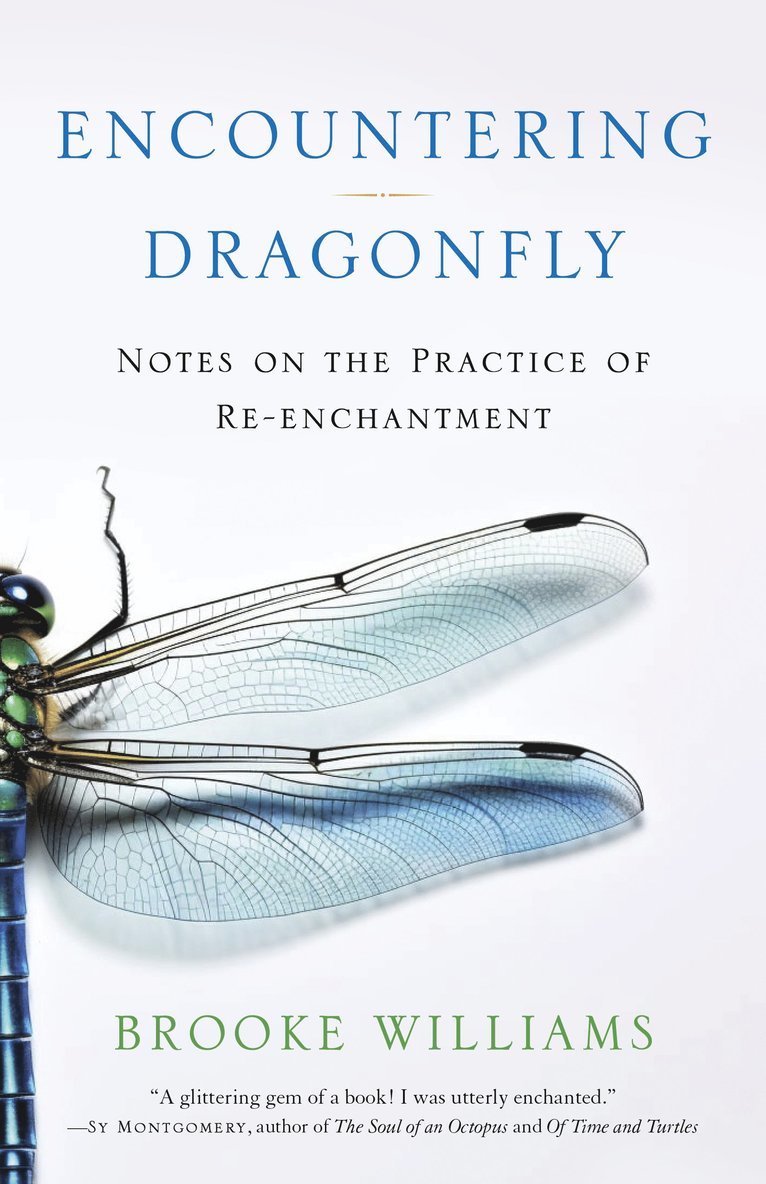
"A glittering gem of a book!"—Sy Montgomery, author of The Soul of an OctopusFollowing dragonflies into the territory between nature and the human psycheTwo decades ago, naturalist and environmental writer Brooke Williams had a powerful dream about a dragonfly, a dream that cracked open his world by giving rise to a steady stream of dragonfly encounters in his waking life.In the years since, he has delved deeply into the fascinating biology and natural history of dragonflies and made pilgrimages to see them (he now has 38 species on his life list) while also exploring their symbolic meaning and cross-cultural significance.Encountering Dragonfly is his account—related in a series of odonate encounters—of being drawn into a different kind of relationship with the natural world. By opening himself to the personal and mytho-poetic meanings of dragonfly, and patiently courting an understanding of these creatures that is built upon, but also transcends, a naturalist’s observation, Brooke has come to believe in the importance of ‘re-enchantment.’Throughout much of human history, we lived in an enchanted world in which myth and magic, ritual, stories, and spirits informed every aspect of our lives, defining the relationships between psyche, Earth and cosmos. The enchantment ended with the Enlightenment and modernity, when reason and scientific discovery explained away the magic, commencing a commodification of nature that has only intensified ever since.Brooke’s personal re-enchantment has required of him a faith that material, biological reality isn’t the only reality; it recognizes symbols and archetypes as remnants of a different understanding, which may—as perhaps they always have—play a role in our long-term survival.In many cultures, the dragonfly carries messages between the inner and outer world. For Brooke Williams the message of the dragonfly is to ask questions about synchronicity, awe and the collective unconscious, and how to engage with a world increasingly out of balance. What are the implications of following a path toward greater enchantment? In a time where the stakes have never been higher, nor the political and biological imperatives of climate change and environmental degradation more urgent, can we afford to choose such a path? Perhaps more to the point, can we afford not to?
Häftad, Engelska, 2024
178 kr
Skickas inom 5-8 vardagar
Häftad, Engelska, 2017
156 kr
Tillfälligt slut
Open Midnight weaves two parallel stories about the great wilderness--Brooke Williams's year alone with his dog ground truthing wilderness maps of southern Utah, and that of his great-great-great-grandfather, who in 1863 made his way with a group of Mormons from England across the wilderness almost to Utah, dying a week short. The book is also about two levels of history--personal, as represented by William Williams, and collective, as represented by Charles Darwin, who lived in Shrewsbury, England, at about the same time as Williams. As Brooke Williams begins researching the story of his oldest known ancestor, he realizes that he has few facts. He wonders if a handful of dates can tell the story of a life, writing, "If those points were stars in the sky, we would connect them to make a constellation, which is what I've made with his life by creating the parts missing from his story." Thus William Williams becomes a kind of spiritual guide, a shamanlike consciousness that accompanies the author on his wilderness and life journeys, and that appears at pivotal points when the author is required to choose a certain course.The mysterious presence of his ancestor inspires the author to create imagined scenes in which Williams meets Darwin in Shrewsbury, sowing something central in the DNA that eventually passes to Brooke Williams, whose life has been devoted to nature and wilderness. Brooke Williams's inventive and vivid prose pushes boundaries and investigates new ways toward knowledge and experience, inviting readers to think unconventionally about how we experience reality, spirituality, and the wild. The author draws on Jungian psychology to relate how our consciousness of the wild is culturally embedded in our psyche, and how a deep connection to the wild can promote emotional and psychological well-being. Williams's narrative goes beyond a call for conservation, but in the vein of writers like Joanna Macy, Bill Plotkin, David Abram, the author argues passionately for the importance of wildness is to the human soul. Reading Williams's inspired prose provides a measure of hope for protecting the beautiful places that we all need to thrive. Open Midnight is grounded in the present by Williams's descriptions of the Utah lands he explores.He beautifully evokes the feeling of being solitary in the wild, at home in the deepest sense, in the presence of the sublime. In doing so, he conveys what Gary Snyder calls "a practice of the wild" more completely than any other work. Williams also relates an insider's view of negotiations about wilderness protection. As an advocate working for the Southern Utah Wilderness Alliance, he represents a minority in meetings designed to open wilderness lands to roads and hunting. He portrays the mindset of the majority of Utah's citizens, who argue passionately for their rights to use their lands however they wish. The phrase "open midnight," as Williams sees it, evokes the time between dusk and dawn, between where we've been and where we're going, and the unconscious where all possibilities are hidden.