Bryan Gibson – författare
Visar alla böcker från författaren Bryan Gibson. Handla med fri frakt och snabb leverans.
37 produkter
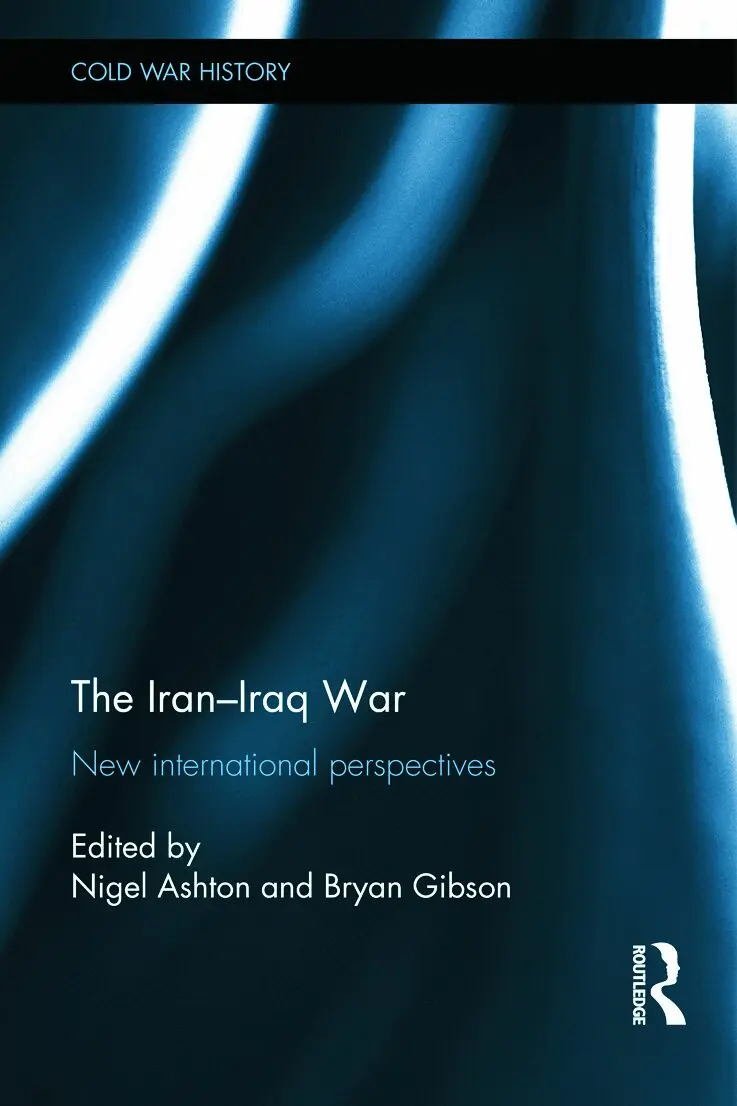
Iran-Iraq War
New International Perspectives
Inbunden, 2012
2590 kr
Lägg i varukorg
This volume offers a wide-ranging examination of the Iran–Iraq War (1980–88), featuring fresh regional and international perspectives derived from recently available new archival material.Three decades ago Iran and Iraq became embroiled in a devastating eight-year war which served to re-define the …
Iran-Iraq War
New International Perspectives
E-bok, 2013
864 kr
Lägg i varukorg
This volume offers a wide-ranging examination of the Iran–Iraq War (1980–88), featuring fresh regional and international perspectives derived from recently available new archival material. Three decades ago Iran and Iraq became embroiled in a devastating eight-year war which served to re-define …
Iran-Iraq War
New International Perspectives
E-bok, 2013
864 kr
Lägg i varukorg
This volume offers a wide-ranging examination of the Iran–Iraq War (1980–88), featuring fresh regional and international perspectives derived from recently available new archival material. Three decades ago Iran and Iraq became embroiled in a devastating eight-year war which served to re-define …
Iran-Iraq War
New International Perspectives
Häftad, 2014
773 kr
Lägg i varukorg
This volume offers a wide-ranging examination of the Iran–Iraq War (1980–88), featuring fresh regional and international perspectives derived from recently available new archival material.Three decades ago Iran and Iraq became embroiled in a devastating eight-year war which served to re-define the …
Analysis of Albert Hourani's A History of the Arab Peoples
Av Bryan Gibson, Brown
E-bok, 2017
125 kr
Lägg i varukorg
Few works of history make as well-structured a case for the importance of studying continuity, rather than change, than Albert Hourani''s A History of the Arab Peoples . Hourani’s work had three major aims: to refute the idea that Arab society stagnated between 1000 and 1800; to study the period …
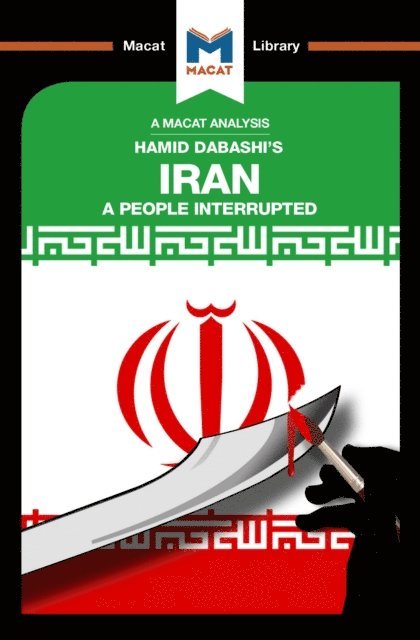
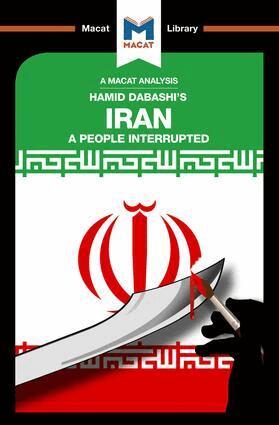
Analysis of Hamid Dabashi's Iran
A People Interrupted
Av Bryan Gibson
E-bok, 2017
140 kr
Lägg i varukorg
Hamid Dabashi’s 2007 Iran: A People Interrupted is simultaneously subtle, passionate, polarizing and polemical. A concise account of Iranian history from the early 19th-century onward, Dabashi’s book uses his incisive analytical skills as a basis for creating a persuasive argument against the views …
Analysis of Henry Kissinger's World Order
Reflections on the Character of Nations and the Course of History
Av Bryan Gibson
E-bok, 2017
140 kr
Lägg i varukorg
Henry Kissinger’s 2014 book World Order: Reflections on the Character of Nations and the Course of History not only offers a summary of thinking developed throughout a long and highly influential career–it is also an intervention in international relations theory by one of the most famous statesmen …
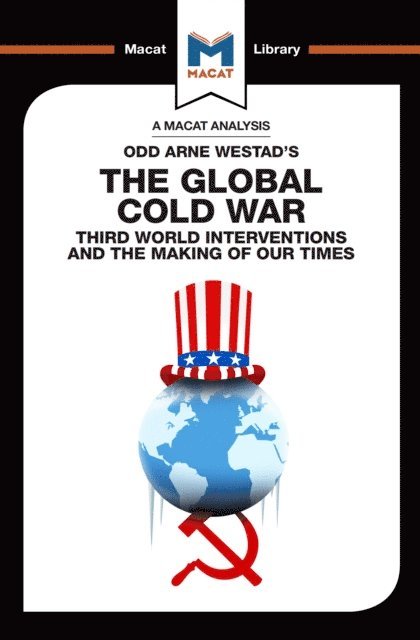
Analysis of Odd Arne Westad's The Global Cold War
Third World Interventions and the Making of our Times
Av Bryan Gibson, Patrick Glenn
E-bok, 2017
140 kr
Lägg i varukorg
For those who lived through the Cold War period, and for many of the historians who study it, it seemed self-evident that the critical incidents that determined its course took place in the northern hemisphere, specifically in the face-off between NATO and the Warsaw Pact in Europe. In this view, …
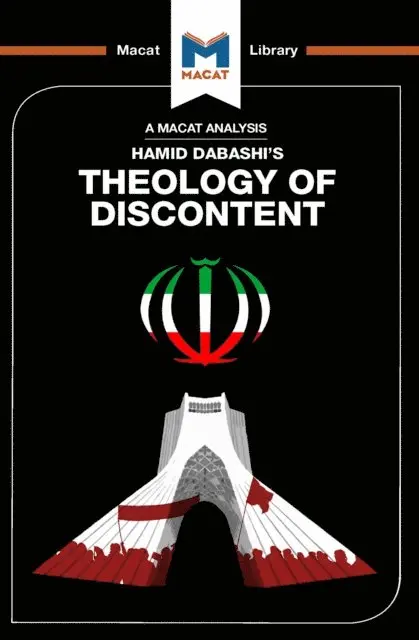
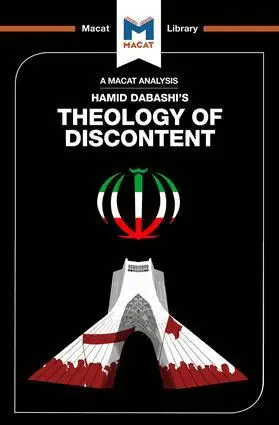
Analysis of Hamid Dabashi's Theology of Discontent
The Ideological Foundation of the Islamic Revolution in Iran
Av Bryan Gibson, Magdalena C. Delgado
E-bok, 2017
140 kr
Lägg i varukorg
Hamid Dabashi’s 1997 work Theology of Discontent reveals a creative thinker capable not only of understanding how an argument is built, but also of redefining old issues in new ways. The Iranian Revolution of 1978–9 was front-page news in the West, and in some ways remains so today. Though it was …
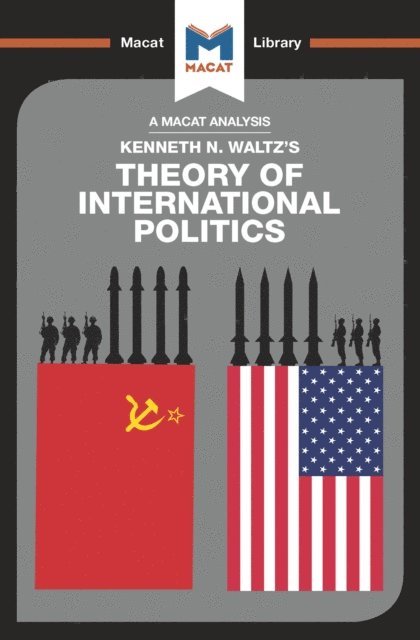
Analysis of Kenneth Waltz's Theory of International Politics
E-bok, 2017
137 kr
Lägg i varukorg
Kenneth Waltz’s 1979 Theory of International Politics is credited with bringing about a “scientific revolution” in the study of international relations – bringing the field into a new era of systematic study. The book is also a lesson in reasoning carefully and critically. Good reasoning is …
Analysis of Albert Hourani's A History of the Arab Peoples
Av Bryan Gibson, Brown
E-bok, 2017
122 kr
Lägg i varukorg
Few works of history make as well-structured a case for the importance of studying continuity, rather than change, than Albert Hourani''s A History of the Arab Peoples . Hourani’s work had three major aims: to refute the idea that Arab society stagnated between 1000 and 1800; to study the period …
Analysis of Hamid Dabashi's Iran
A People Interrupted
Av Bryan Gibson
E-bok, 2017
140 kr
Lägg i varukorg
Hamid Dabashi’s 2007 Iran: A People Interrupted is simultaneously subtle, passionate, polarizing and polemical. A concise account of Iranian history from the early 19th-century onward, Dabashi’s book uses his incisive analytical skills as a basis for creating a persuasive argument against the views …
Analysis of Henry Kissinger's World Order
Reflections on the Character of Nations and the Course of History
Av Bryan Gibson
E-bok, 2017
135 kr
Lägg i varukorg
Henry Kissinger’s 2014 book World Order: Reflections on the Character of Nations and the Course of History not only offers a summary of thinking developed throughout a long and highly influential career–it is also an intervention in international relations theory by one of the most famous statesmen …
Analysis of Odd Arne Westad's The Global Cold War
Third World Interventions and the Making of our Times
Av Bryan Gibson, Patrick Glenn
E-bok, 2017
140 kr
Lägg i varukorg
For those who lived through the Cold War period, and for many of the historians who study it, it seemed self-evident that the critical incidents that determined its course took place in the northern hemisphere, specifically in the face-off between NATO and the Warsaw Pact in Europe. In this view, …
Analysis of Hamid Dabashi's Theology of Discontent
The Ideological Foundation of the Islamic Revolution in Iran
Av Bryan Gibson, Magdalena C. Delgado
E-bok, 2017
140 kr
Lägg i varukorg
Hamid Dabashi’s 1997 work Theology of Discontent reveals a creative thinker capable not only of understanding how an argument is built, but also of redefining old issues in new ways. The Iranian Revolution of 1978–9 was front-page news in the West, and in some ways remains so today. Though it was …
Analysis of Kenneth Waltz's Theory of International Politics
E-bok, 2017
140 kr
Lägg i varukorg
Kenneth Waltz’s 1979 Theory of International Politics is credited with bringing about a “scientific revolution” in the study of international relations – bringing the field into a new era of systematic study. The book is also a lesson in reasoning carefully and critically. Good reasoning is …
Beaver Bridge Park
Av Bryan Gibson, Lynda Russell Gibson
E-bok, 2017
59 kr
Lägg i varukorg
Dad, Mom, Teachers, and Mentors, God designed you to be Drum Major for right; and a Corrective Coach against wrong. Assuring that your children receive understanding is my familys vision and gift blessed by God for his glory and kingdom. Beaver Bridge teaches: do not focus on what the world thinks …
Criminal Justice System
An Introduction
Av Bryan Gibson, Paul Cavadino
Häftad, 2008
336 kr
Lägg i varukorg
A comprehensive and accessible overview of the Criminal Justice System, its framework, institutions, practitioners and working methods that will be of interest to any reader seeking an up-to-date description of this important and historic sphere of public affairs. An informative, practical handbook …
New Ministry of Justice
An Introduction
Av Bryan Gibson
Häftad, 2008
336 kr
Lägg i varukorg
This timely publication explains the duties and responsibilities of the Ministry of Justice created in 2007. The New Ministry of Justice provides an accessible introduction but with sufficient detail for the more critical reader seeking to understand both the historic and modern-day role of this …
New Home Office
An Introduction
Av Bryan Gibson, David Faulkner
Häftad, 2008
336 kr
Lägg i varukorg
This timely publication explains the duties and responsibilities of the Home Office following its reorganization in 2007. The New Home Office provides an accessible introduction but with sufficient detail for the more critical reader seeking to understand both the historic and modern-day role of …
Magistrates' Court
An Introduction
Av Bryan Gibson, Michael Watkins
Häftad, 2009
336 kr
Lägg i varukorg
The Magistrates' Court: An Introduction is a simple speedy summary. This fully revised Fifth Edition* takes account of the wide scale changes which have affected the work of Justices of the Peace and their courts in recent years. A unique handbook Consistently rated excellent by reviewers …
Criminal Justice
A Beginner's Guide
Av Bryan Gibson
Häftad, 2014
189 kr
Lägg i varukorg
The most straightforward overview available. Covers the entire criminal justice system. A 'no frills' explanation for beginners. This basic guide sets out the main components of the criminal justice system in an accessible way. Intended as a starting point for readers coming to the subject for the …
Legend of St Yves
Law, Justice and Mediation
Av Bryan Gibson
Häftad, 2014
163 kr
Lägg i varukorg
In this informative account, Bryan Gibson places St Yves - born Erwan Helouri - on a par with Robin Hood, Jessie James and Ned Kelly in terms of their appeal to various national psyches - and up there alongside Joan of Arc and Bernadette of Lourdes as regards his native France. But whilst …
Analysis of Albert Hourani's A History of the Arab Peoples
Av Brown, Bryan Gibson
Häftad, 2017
102 kr
Lägg i varukorg
Few works of history make as well-structured a case for the importance of studying continuity, rather than change, than Albert Hourani's A History of the Arab Peoples. Hourani’s work had three major aims: to refute the idea that Arab society stagnated between 1000 and 1800; to study the period …
Analysis of Hamid Dabashi's Theology of Discontent
The Ideological Foundation of the Islamic Revolution in Iran
Av Magdalena C. Delgado, Bryan Gibson
Häftad, 2017
99 kr
Lägg i varukorg
Hamid Dabashi’s 1997 work Theology of Discontent reveals a creative thinker capable not only of understanding how an argument is built, but also of redefining old issues in new ways. The Iranian Revolution of 1978–9 was front-page news in the West, and in some ways remains so today. Though it was …
Analysis of Hamid Dabashi's Iran
A People Interrupted
Av Bryan Gibson
Häftad, 2017
99 kr
Lägg i varukorg
Hamid Dabashi’s 2007 Iran: A People Interrupted is simultaneously subtle, passionate, polarizing and polemical. A concise account of Iranian history from the early 19th-century onward, Dabashi’s book uses his incisive analytical skills as a basis for creating a persuasive argument against the views …