B.W. Hancock – författare
Visar alla böcker från författaren B.W. Hancock. Handla med fri frakt och snabb leverans.
4 produkter
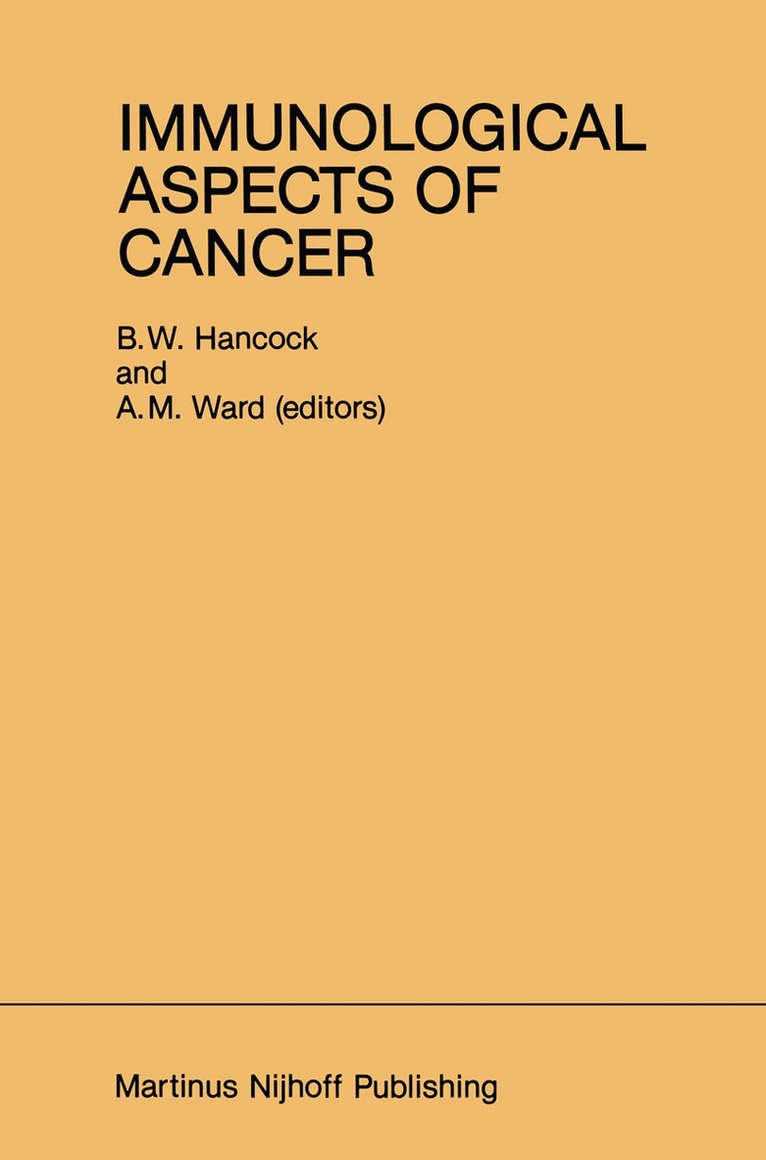
Immunological Aspects of Cancer
Häftad, 2011
569 kr
Lägg i varukorg
Many books have been written about cancer immunology. However, the subject is still in its infancy regarding full understanding of the complex mechanisms and interactions involved and their relevance to the clinical situation. Exciting developments are being seen in the fields of research, …
Immunological Aspects of Cancer
E-bok, 2012
739 kr
Lägg i varukorg
Many books have been written about cancer immunology. However, the subject is still in its infancy regarding full understanding of the complex mechanisms and interactions involved and their relevance to the clinical situation. Exciting developments are being seen in the fields of research, …
Assessment of Tumour Response
Av B.W. Hancock
E-bok, 2012
732 kr
Lägg i varukorg
The assessment of tumour response after treatment is one of the most important challenges in Oncology and the picture is so often complicated by the effects of therapy itself. Clinical assessment is still by far the most important method of assessment at our disposal but there is increasing …
Assessment of Tumour Response
Av B.W. Hancock
Häftad, 2011
569 kr
Lägg i varukorg
The assessment of tumour response after treatment is one of the most important challenges in Oncology and the picture is so often complicated by the effects of therapy itself. Clinical assessment is still by far the most important method of assessment at our disposal but there is increasing …