Byron Gangnes - Böcker
Visar alla böcker från författaren Byron Gangnes. Handla med fri frakt och snabb leverans.
3 produkter
3 produkter
2 258 kr
Skickas inom 5-8 vardagar
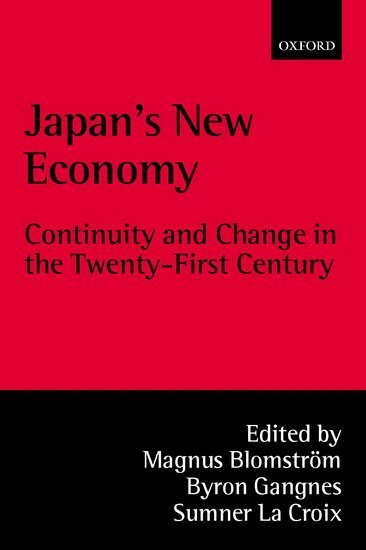
Japan's economy stumbled in the 1990s. After four decades of rapid growth that transformed Japan into a wealthy country at the world's technological frontier, the last decade brought prolonged economic stagnation. The rapid run-up in asset prices in the late 1980s, followed by their collapse in the early 1990s, left a debt overhang that paralyzed the banking sector. Policy reforms were initially half-hearted, and businesses were slow to restructure as the global economy changed. The lagging economy has seemed impervious to aggressive fiscal stimulus measures and is still plagued by ongoing price deflation. Japan's struggle has called into question the ability of the country's economic institutions - originally designed to support factor accumulation and rapid development - to adapt to the new economic environment of the 21st century. Yet Japan's economy is already changing. Driven by an aging population, rapid technological change, and increasing global competition, the country's public and private institutions are being slowly reshaped. This volume explores the forces that will drive structural and institutional change in three areas over the next decade: the macroeconomy, the organization of industry, and the global economic and political environment. Economists, demographers, and Japan specialists examine key aspects of the economy that will be transformed in coming years, including population and savings, the public pension system, labor markets, financial reforms, deregulation of service industries, productivity performance, foreign investment, trade, and the impact of an emerging China. The volume fills an important gap in the existing economic literature. While much has been written about Japan's pre-1990s institutions and economic performance, this volume is unique in its forward-looking orientation - trying to understand not only the institutional and structural changes that have already reshaped Japan in the 1990s, but to identify the critical trends and institutional changes that will mould Japan's new economy over the next decade.
1 092 kr
Skickas inom 5-8 vardagar
Japan's economy stumbled in the 1990s. After four decades of rapid growth that transformed Japan into a wealthy country at the world's technological frontier, the last decade brought prolonged economic stagnation. The rapid run-up in asset prices in the late 1980s, followed by their collapse in the early 1990s, left a debt overhang that paralyzed the banking sector. Policy reforms were initially half-hearted, and businesses were slow to restructure as the global economy changed. The lagging economy has seemed impervious to aggressive fiscal stimulus measures and is still plagued by ongoing price deflation. Japan's struggle has called into question the ability of the country's economic institutions - originally designed to support factor accumulation and rapid development - to adapt to the new economic environment of the 21st century.Yet Japan's economy is already changing. Driven by an aging population, rapid technological change, and increasing global competition, the country's public and private institutions are being slowly reshaped. This volume explores the forces that will drive structural and institutional change in three areas over the next decade: the macroeconomy, the organization of industry, and the global economic and political environment. Economists, demographers, and Japan specialists examine key aspects of the economy that will be transformed in coming years, including population and savings, the public pension system, labor markets, financial reforms, deregulation of service industries, productivity performance, foreign investment, trade, and the impact of an emerging China. The volume fills an important gap in the existing economic literature. While much has been written about Japan's pre-1990s institutions and economic performance, this volume is unique in its forward-looking orientation - trying to understand not only the institutional and structural changes that have already reshaped Japan in the 1990s, but to identify the critical trends and institutional changes that will mould Japan's new economy over the next decade.
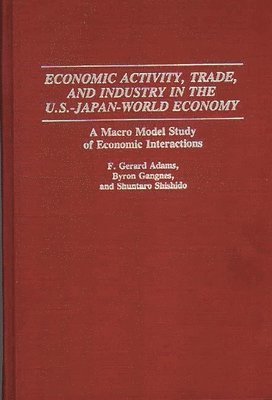
Economic Activity, Trade, and Industry in the U.S.--Japan-World Economy
A Macro Model Study of Economic Interactions
Inbunden, Engelska, 1993
1 039 kr
Skickas inom 10-15 vardagar
This study quantifies the relationships between the economies of the Unites States and Japan on an industrially disaggregated basis. It links two large-scale econometric models of the U.S. and Japan in the framework of the world model system (Project LINK). These models are useful not only for forecasts and aggregate policy studies, but also for detailed investigation of industrial changes and trade policy on sectoral output employment, trade balance, and inflation in both countries. The interactions with other parts of the world are also taken into account. Applications to policy changes and exchange rate variations illustrate the potential of the model system and provide a powerful insight into the operation of two closely integrated economies.A pioneering effort to link quantitatively the relationships between the economies of the United States and Japan, this volume will be of interest to economists and policymakers here and abroad.