Magnus Blomström - Böcker
Visar alla böcker från författaren Magnus Blomström. Handla med fri frakt och snabb leverans.
6 produkter
6 produkter
2 258 kr
Skickas inom 5-8 vardagar
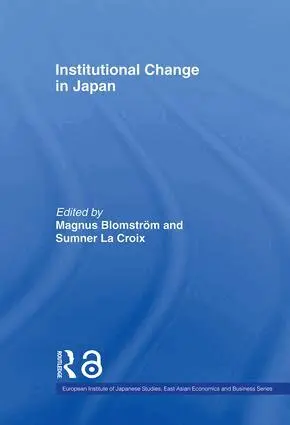
Japan's economy stumbled in the 1990s. After four decades of rapid growth that transformed Japan into a wealthy country at the world's technological frontier, the last decade brought prolonged economic stagnation. The rapid run-up in asset prices in the late 1980s, followed by their collapse in the early 1990s, left a debt overhang that paralyzed the banking sector. Policy reforms were initially half-hearted, and businesses were slow to restructure as the global economy changed. The lagging economy has seemed impervious to aggressive fiscal stimulus measures and is still plagued by ongoing price deflation. Japan's struggle has called into question the ability of the country's economic institutions - originally designed to support factor accumulation and rapid development - to adapt to the new economic environment of the 21st century. Yet Japan's economy is already changing. Driven by an aging population, rapid technological change, and increasing global competition, the country's public and private institutions are being slowly reshaped. This volume explores the forces that will drive structural and institutional change in three areas over the next decade: the macroeconomy, the organization of industry, and the global economic and political environment. Economists, demographers, and Japan specialists examine key aspects of the economy that will be transformed in coming years, including population and savings, the public pension system, labor markets, financial reforms, deregulation of service industries, productivity performance, foreign investment, trade, and the impact of an emerging China. The volume fills an important gap in the existing economic literature. While much has been written about Japan's pre-1990s institutions and economic performance, this volume is unique in its forward-looking orientation - trying to understand not only the institutional and structural changes that have already reshaped Japan in the 1990s, but to identify the critical trends and institutional changes that will mould Japan's new economy over the next decade.
1 092 kr
Skickas inom 5-8 vardagar
Japan's economy stumbled in the 1990s. After four decades of rapid growth that transformed Japan into a wealthy country at the world's technological frontier, the last decade brought prolonged economic stagnation. The rapid run-up in asset prices in the late 1980s, followed by their collapse in the early 1990s, left a debt overhang that paralyzed the banking sector. Policy reforms were initially half-hearted, and businesses were slow to restructure as the global economy changed. The lagging economy has seemed impervious to aggressive fiscal stimulus measures and is still plagued by ongoing price deflation. Japan's struggle has called into question the ability of the country's economic institutions - originally designed to support factor accumulation and rapid development - to adapt to the new economic environment of the 21st century.Yet Japan's economy is already changing. Driven by an aging population, rapid technological change, and increasing global competition, the country's public and private institutions are being slowly reshaped. This volume explores the forces that will drive structural and institutional change in three areas over the next decade: the macroeconomy, the organization of industry, and the global economic and political environment. Economists, demographers, and Japan specialists examine key aspects of the economy that will be transformed in coming years, including population and savings, the public pension system, labor markets, financial reforms, deregulation of service industries, productivity performance, foreign investment, trade, and the impact of an emerging China. The volume fills an important gap in the existing economic literature. While much has been written about Japan's pre-1990s institutions and economic performance, this volume is unique in its forward-looking orientation - trying to understand not only the institutional and structural changes that have already reshaped Japan in the 1990s, but to identify the critical trends and institutional changes that will mould Japan's new economy over the next decade.
1 473 kr
Skickas inom 10-15 vardagar
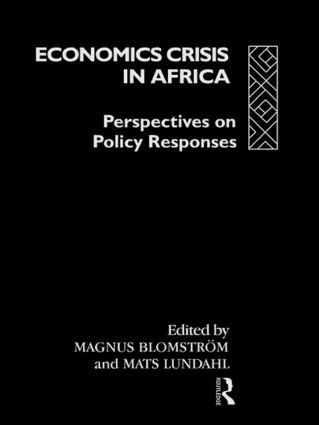
While the pitiful images of famine victims generally emanate from the very poorest countries in Sub-Saharan Africa, the entire region faces an intense economic crisis. Why is this area in a state of near-permanent crisis and perhaps more importantly, what can be done about it? In Economic Crisis in Africa the authors use country studies to examine how this situation has come about. The book is divided into four parts: Part I presents an overall perspective of the African Crisis and its management; Part II addresses the problems of the external sector; Part III discusses the crises and structural adjustment from a microperspective; and finally, Part IV examines changes in economic systems which took place during the 1980s. At a time when famine again threatens the area, this work offers a valuable insight into a highly complex and critical situation.
2 222 kr
Skickas inom 10-15 vardagar
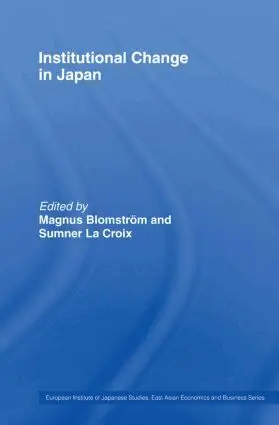
This is a new analysis of recent changes in important Japanese institutions. It addresses the origin, development, and recent adaptation of core institutions, including financial institutions, corporate governance, lifetime employment, and the amakudari system.After four decades of rapid economic growth in Japan, the 1990s saw the country enter a prolonged period of economic stagnation. Policy reforms were initially half-hearted, and businesses were slow to restructure as the global economy changed. The lagging economy has been impervious to aggressive fiscal stimulus measures and has been plagued by ongoing price deflation for years. Japan’s struggle has called into question the ability of the country’s economic institutions, originally designed to support factor accumulation and rapid development, to adapt to the new economic environment of the twenty-first century.This book discusses both historical and international comparisons including Meiji Japan, and recent economic and financial reforms in Korea, Scandinavia, Switzerland, and New Zealand, placing the current institutional changes in perspective. The contributors argue that, contrary to conventional wisdom that Japanese institutions have remained relatively rigid, there has been significant institutional change over the last decade.
671 kr
Skickas inom 10-15 vardagar
This is a new analysis of recent changes in important Japanese institutions. It addresses the origin, development, and recent adaptation of core institutions, including financial institutions, corporate governance, lifetime employment, and the amakudari system.After four decades of rapid economic growth in Japan, the 1990s saw the country enter a prolonged period of economic stagnation. Policy reforms were initially half-hearted, and businesses were slow to restructure as the global economy changed. The lagging economy has been impervious to aggressive fiscal stimulus measures and has been plagued by ongoing price deflation for years. Japan’s struggle has called into question the ability of the country’s economic institutions, originally designed to support factor accumulation and rapid development, to adapt to the new economic environment of the twenty-first century.This book discusses both historical and international comparisons including Meiji Japan, and recent economic and financial reforms in Korea, Scandinavia, Switzerland, and New Zealand, placing the current institutional changes in perspective. The contributors argue that, contrary to conventional wisdom that Japanese institutions have remained relatively rigid, there has been significant institutional change over the last decade.
250 kr
Skickas inom 7-10 vardagar