Carina L. Johnson – författare
Visar alla böcker från författaren Carina L. Johnson. Handla med fri frakt och snabb leverans.
5 produkter
Cultural Hierarchy in Sixteenth-Century Europe
The Ottomans and Mexicans
Inbunden, 2011
1677 kr
Lägg i varukorg
This book argues that sixteenth-century European encounters with the newly discovered Mexicans (in the Aztec Empire) and the newly dominant Ottoman Empire can only be understood in relation to the cultural and intellectual changes wrought by the Reformation. Carina L. Johnson chronicles the …
Cultural Hierarchy in Sixteenth-Century Europe
The Ottomans and Mexicans
Häftad, 2014
738 kr
Lägg i varukorg
This book argues that sixteenth-century European encounters with the newly discovered Mexicans (in the Aztec Empire) and the newly dominant Ottoman Empire can only be understood in relation to the cultural and intellectual changes wrought by the Reformation. Carina L. Johnson chronicles the …
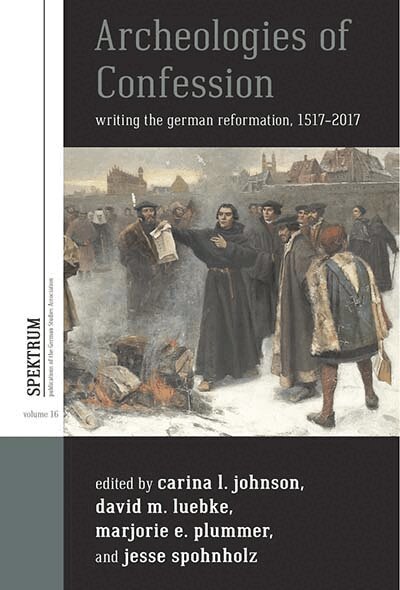
Archeologies of Confession
Writing the German Reformation, 1517-2017
Av Carina L. Johnson, David M. Luebke m. fl.
Inbunden, 2017
1880 kr
Lägg i varukorg
Modern religious identities are rooted in collective memories that are constantly made and remade across generations. How do these mutations of memory distort our picture of historical change and the ways that historical actors perceive it? Can one give voice to those whom history has forgotten? …
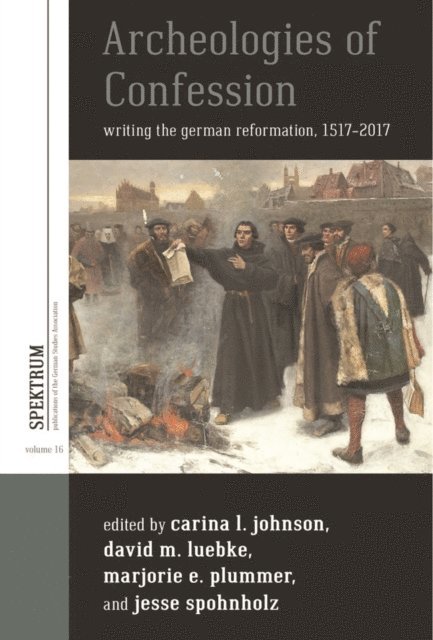
Archeologies of Confession
Writing the German Reformation, 1517-2017
Av Jesse Spohnholz, <a>Marjorie Elizabeth Plummer</a> m. fl.
E-bok, 2017
326 kr
Lägg i varukorg
Modern religious identities are rooted in collective memories that are constantly made and remade across generations. How do these mutations of memory distort our picture of historical change and the ways that historical actors perceive it? Can one give voice to those whom history has forgotten? …
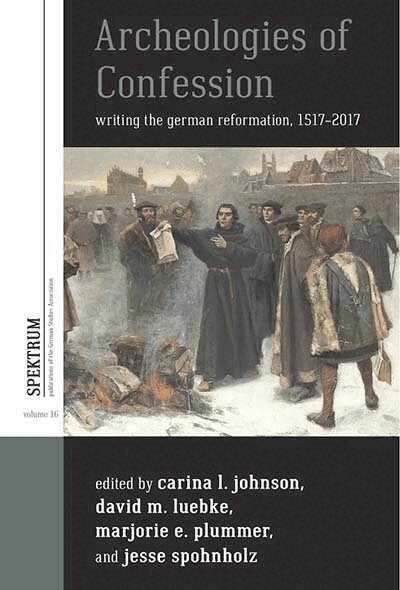
Archeologies of Confession
Writing the German Reformation, 1517-2017
Av Carina L. Johnson, David M. Luebke m. fl.
Häftad, 2019
527 kr
Lägg i varukorg
Modern religious identities are rooted in collective memories that are constantly made and remade across generations. How do these mutations of memory distort our picture of historical change and the ways that historical actors perceive it? Can one give voice to those whom history has forgotten? …