Carine M. Mardorossian - Böcker
Visar alla böcker från författaren Carine M. Mardorossian. Handla med fri frakt och snabb leverans.
3 produkter
3 produkter
370 kr
Skickas inom 5-8 vardagar
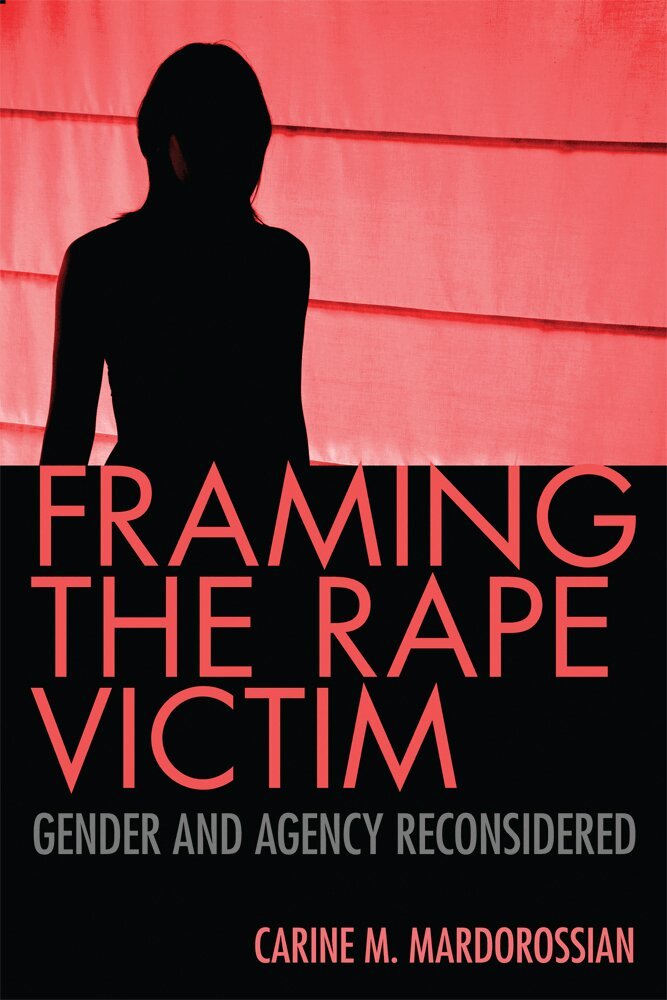
Winner of the 2016 Nonfiction Category from The Authors' ZoneIn recent years, members of legal, law enforcement, media and academic circles have portrayed rape as a special kind of crime distinct from other forms of violence. In Framing the Rape Victim, Carine M. Mardorossian argues that this differential treatment of rape has exacerbated the ghettoizing of sexual violence along gendered lines and has repeatedly led to women’s being accused of triggering, if not causing, rape through immodest behavior, comportment, passivity, or weakness.Contesting the notion that rape is the result of deviant behaviors of victims or perpetrators, Mardorossian argues that rape saturates our culture and defines masculinity’s relation to femininity, both of which are structural positions rather than biologically derived ones. Using diverse examples throughout, Mardorossian draws from Hollywood film and popular culture to contemporary women’s fiction and hospitalized birth emphasizing that the position of dominant masculinity can be occupied by men, women, or institutions, while structural femininity is a position that may define and subordinate men, minorities, and other marginalized groups just as effectively as it does women. Highlighting the legacies of the politically correct debates of the 1990s and the terrorist attacks of 9/11, the book illustrates how the framing of the term “victim” has played a fundamental role in constructing notions of agency that valorize autonomy and support exclusionary, especially masculine, models of American selfhood.The gendering of rape, including by well-meaning, sometimes feminist, voices that claim to have victims’ best interests at heart, ultimately obscures its true role in our culture. Both a critical analysis and a call to action, Framing the Rape Victim shows that rape is not a special interest issue that pertains just to women but a pervasive one that affects our society as a whole.
1 391 kr
Skickas inom 5-8 vardagar
Winner of the 2016 Nonfiction Category from The Authors' ZoneIn recent years, members of legal, law enforcement, media and academic circles have portrayed rape as a special kind of crime distinct from other forms of violence. In Framing the Rape Victim, Carine M. Mardorossian argues that this differential treatment of rape has exacerbated the ghettoizing of sexual violence along gendered lines and has repeatedly led to women’s being accused of triggering, if not causing, rape through immodest behavior, comportment, passivity, or weakness.Contesting the notion that rape is the result of deviant behaviors of victims or perpetrators, Mardorossian argues that rape saturates our culture and defines masculinity’s relation to femininity, both of which are structural positions rather than biologically derived ones. Using diverse examples throughout, Mardorossian draws from Hollywood film and popular culture to contemporary women’s fiction and hospitalized birth emphasizing that the position of dominant masculinity can be occupied by men, women, or institutions, while structural femininity is a position that may define and subordinate men, minorities, and other marginalized groups just as effectively as it does women. Highlighting the legacies of the politically correct debates of the 1990s and the terrorist attacks of 9/11, the book illustrates how the framing of the term “victim” has played a fundamental role in constructing notions of agency that valorize autonomy and support exclusionary, especially masculine, models of American selfhood.The gendering of rape, including by well-meaning, sometimes feminist, voices that claim to have victims’ best interests at heart, ultimately obscures its true role in our culture. Both a critical analysis and a call to action, Framing the Rape Victim shows that rape is not a special interest issue that pertains just to women but a pervasive one that affects our society as a whole.
787 kr
Skickas inom 10-15 vardagar
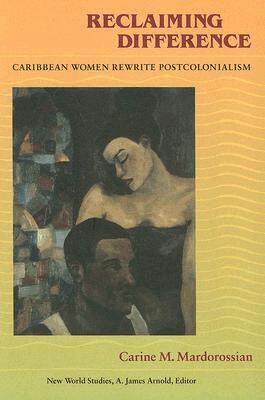
In ""Reclaiming Difference"", Carine Mardorossian examines the novels of four women writers - Jean Rhys (Dominica/UK), Maryse Conde (Guadeloupe/USA), Edwidge Danticat (Haiti/USA), and Julia Alvarez (Dominican Republic/USA) - who have radically reformulated the meanings of the national, geographical, sexual, and racial concepts through which postcolonial studies has long been representing difference. Coming from the anglophone, francophone, and hispanophone Caribbean, these writers all stage and identify with transcultural experiences that undermine the usual classification of literary texts in terms of national and regional literatures. By doing so they challenge the idea that racial and cultural identities function as stable points of reference in our unstable world. Focusing on the transformations that have taken place in postcolonial studies since the field has turned to theory, Mardorossian shows not only how these writers make use of the styles of creolization and hybridity that have dominated Caribbean and postcolonial studies in recent years but also how they distinguish themselves from the movement's leading figures by offering new articulations of the ties that link race and nation to gender and class. By extending the notion of hybridity away from racial and cultural differences in isolation from each other to a set of interdependent and criss-crossing categories, these writers challenge our simpler, normative, figurations and call for a fundamental recasting of the field's foundational terms. For scholars in postcolonial studies, Caribbean studies, literary feminist studies, and studies in comparative literature, ""Reclaiming Difference"" represents a new phase in postcolonial studies that calls for a fundamental rethinking of the field's terminology and assumptions.