Carla C. Johnson – författare
3 838 kr
Skickas inom 10-15 vardagar
1 553 kr
Skickas inom 10-15 vardagar
679 kr
Skickas inom 10-15 vardagar
2 090 kr
Skickas inom 10-15 vardagar
1 813 kr
Läs direkt efter köp
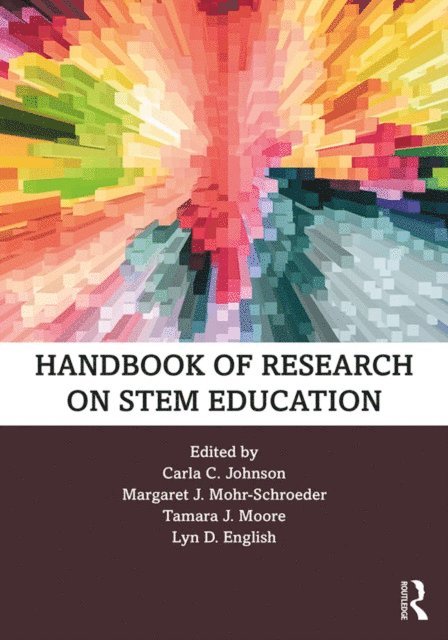
The Handbook of Research on STEM Education represents a groundbreaking and comprehensive synthesis of research and presentation of policy within the realm of science, technology, engineering, and mathematics (STEM) education. What distinguishes this Handbook from others is the nature of integration of the disciplines that is the founding premise for the work – all chapters in this book speak directly to the integration of STEM, rather than discussion of research within the individual content areas.
The Handbook of Research on STEM Education explores the most pressing areas of STEM within an international context. Divided into six sections, the authors cover topics including: the nature of STEM, STEM learning, STEM pedagogy, curriculum and assessment, critical issues in STEM, STEM teacher education, and STEM policy and reform. The Handbook utilizes the lens of equity and access by focusing on STEM literacy, early childhood STEM, learners with disabilities, informal STEM, socio-scientific issues, race-related factors, gender equity, cultural-relevancy, and parental involvement. Additionally, discussion of STEM education policy in a variety of countries is included, as well as a focus on engaging business/industry and teachers in advocacy for STEM education.
The Handbook’s 37 chapters provide a deep and meaningful landscape of the implementation of STEM over the past two decades. As such, the findings that are presented within provide the reader with clear directions for future research into effective practice and supports for integrated STEM, which are grounded in the literature to date.
1 813 kr
Läs direkt efter köp
The Handbook of Research on STEM Education represents a groundbreaking and comprehensive synthesis of research and presentation of policy within the realm of science, technology, engineering, and mathematics (STEM) education. What distinguishes this Handbook from others is the nature of integration of the disciplines that is the founding premise for the work – all chapters in this book speak directly to the integration of STEM, rather than discussion of research within the individual content areas.
The Handbook of Research on STEM Education explores the most pressing areas of STEM within an international context. Divided into six sections, the authors cover topics including: the nature of STEM, STEM learning, STEM pedagogy, curriculum and assessment, critical issues in STEM, STEM teacher education, and STEM policy and reform. The Handbook utilizes the lens of equity and access by focusing on STEM literacy, early childhood STEM, learners with disabilities, informal STEM, socio-scientific issues, race-related factors, gender equity, cultural-relevancy, and parental involvement. Additionally, discussion of STEM education policy in a variety of countries is included, as well as a focus on engaging business/industry and teachers in advocacy for STEM education.
The Handbook’s 37 chapters provide a deep and meaningful landscape of the implementation of STEM over the past two decades. As such, the findings that are presented within provide the reader with clear directions for future research into effective practice and supports for integrated STEM, which are grounded in the literature to date.
763 kr
Läs direkt efter köp
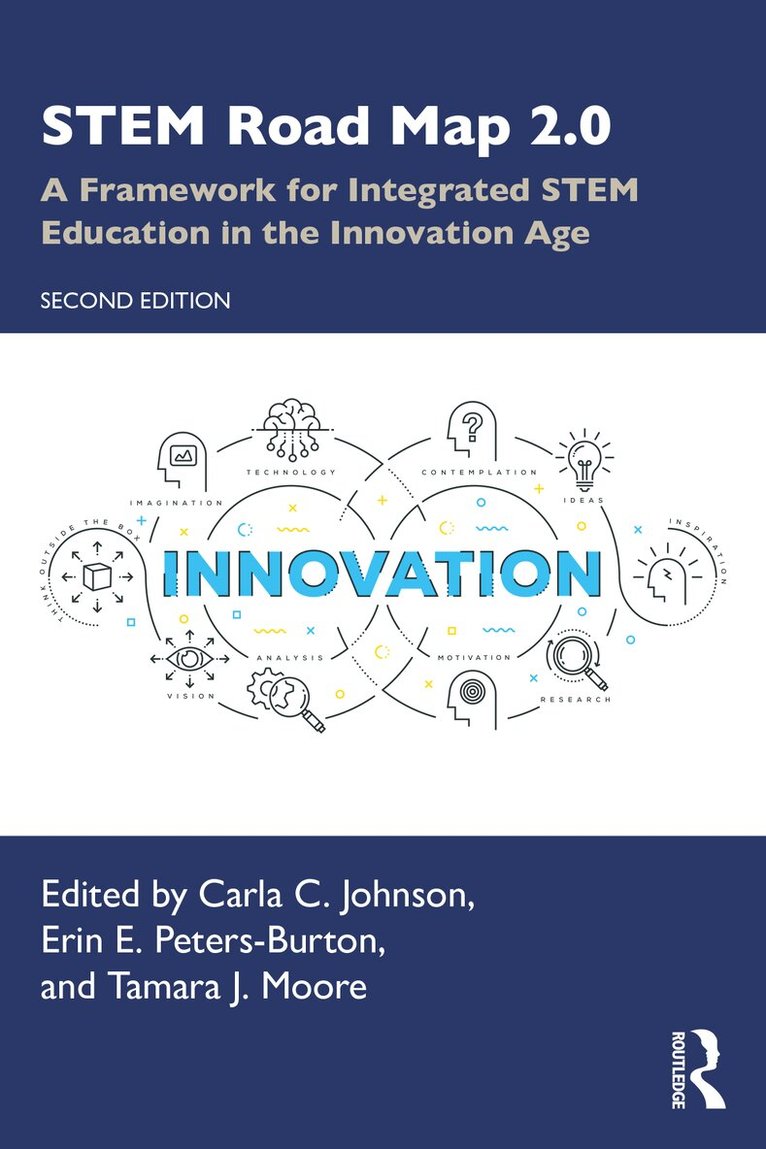
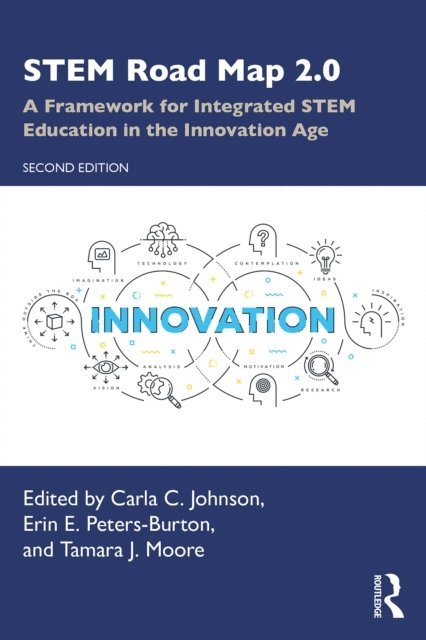
Featuring a team of over thirty STEM education professionals from across the United States, the updated and revised edition of this landmark book provides an integrated STEM curriculum encompassing the entire K-12 spectrum, with complete grade-level learning based on a spiraled approach to building conceptual understanding.
Taking into account the last five years of evolution in STEM education, the second edition includes an increased focus on computer science, computational thinking, mathematics, and the arts, as well as cultural relevance and addressing the needs of diverse learners and underrepresented students. Divided into three main parts – Conceptualizing STEM, STEM Curriculum Maps, and Building Capacity for STEM – each section is designed to build common understandings of integrated STEM, provide rich curriculum maps for implementing integrated STEM at the classroom level, and offer supports to enable systemic transformation to an integrated STEM approach.
Written for teachers, policymakers, and administrators, this second edition is fully updated to account for the needs of K-12 learners in the innovation age. STEM Road Map 2.0 enables educators to implement integrated STEM learning into their classroom without the need for extensive resources, empowering educators and supporting students.
763 kr
Läs direkt efter köp
Featuring a team of over thirty STEM education professionals from across the United States, the updated and revised edition of this landmark book provides an integrated STEM curriculum encompassing the entire K-12 spectrum, with complete grade-level learning based on a spiraled approach to building conceptual understanding.
Taking into account the last five years of evolution in STEM education, the second edition includes an increased focus on computer science, computational thinking, mathematics, and the arts, as well as cultural relevance and addressing the needs of diverse learners and underrepresented students. Divided into three main parts – Conceptualizing STEM, STEM Curriculum Maps, and Building Capacity for STEM – each section is designed to build common understandings of integrated STEM, provide rich curriculum maps for implementing integrated STEM at the classroom level, and offer supports to enable systemic transformation to an integrated STEM approach.
Written for teachers, policymakers, and administrators, this second edition is fully updated to account for the needs of K-12 learners in the innovation age. STEM Road Map 2.0 enables educators to implement integrated STEM learning into their classroom without the need for extensive resources, empowering educators and supporting students.
373 kr
Läs direkt efter köp
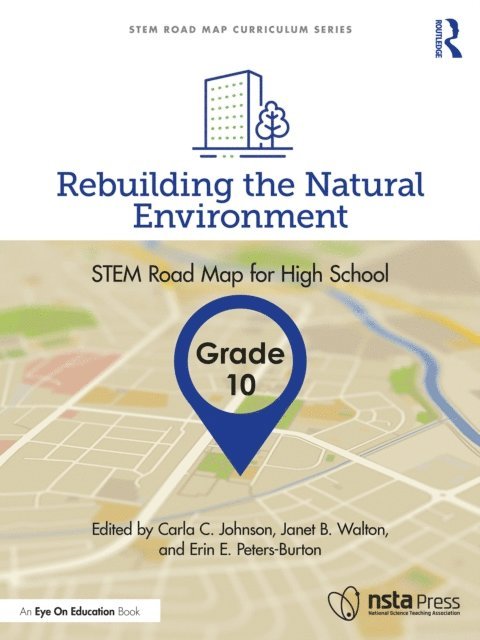
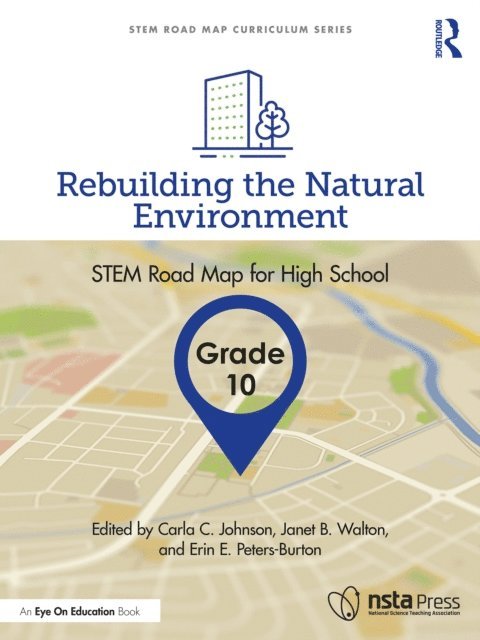
What if you could challenge your tenth graders to think about how innovation can make the world a better place for humans, while finding ways to sustain progress and conserve resources? With this volume in the STEM Road Map Curriculum Series, you can!
Rebuilding the Natural Environment outlines a journey that will steer your students toward authentic problem solving while grounding them in integrated STEM disciplines. Like the other volumes in the series, this book is designed to meet the growing need to infuse real-world learning into K–12 classrooms.
This interdisciplinary, four-lesson module uses project- and problem-based learning to help students connect their existing knowledge about energy production and its effects on the natural environment to create innovations in renewable sources of energy based on research evidence. Working in teams, students will design an innovative way to meet society’s energy needs and develop a pitch to market their innovation, focusing on how the innovation will optimize human experiences while being mindful of the natural environment. To support this goal, students will do the following:
• Understand several forms of renewable, sustainable energy sources.
• Apply their understanding of how alternators are used to generate electricity in lab experiments, as well as explain how tools such as windmills and dams are used to operate them.
• Describe how electricity is generated in photovoltaic cells.
• Calculate the amount of electricity consumed by several household items and consider this consumption when determining the average monthly energy consumption of households around the world in comparison to U.S. households.
• Understand how fossil fuels have been used in the production of electricity and the impact they have had on the world’s economy, humans’ quality of life, and the earth.
• Identify several hindrances to the creation of new energy sources as well as ideas to counter them.
• List several factors that can be used to motivate people from all walks of life to use renewable and sustainable energies.
• Create a fictional company that uses renewable energies.
The STEM Road Map Curriculum Series is anchored in the Next Generation Science Standards, the Common Core State Standards, and the Framework for 21st Century Learning. In-depth and flexible, Rebuilding the Natural Environment can be used as a whole unit or in part to meet the needs of districts, schools, and teachers who are charting a course toward an integrated STEM approach.
454 kr
Läs direkt efter köp
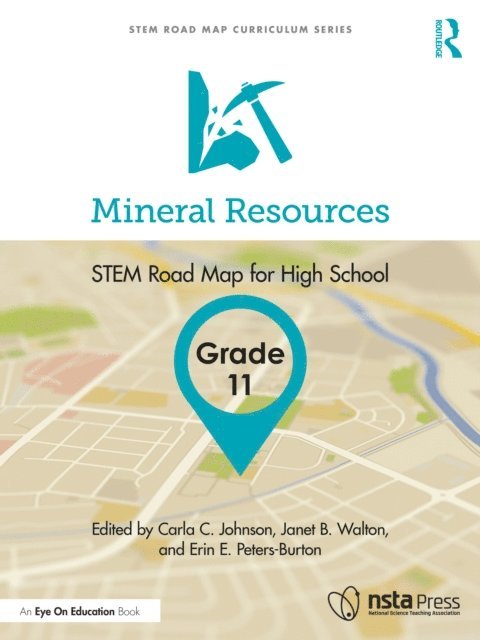
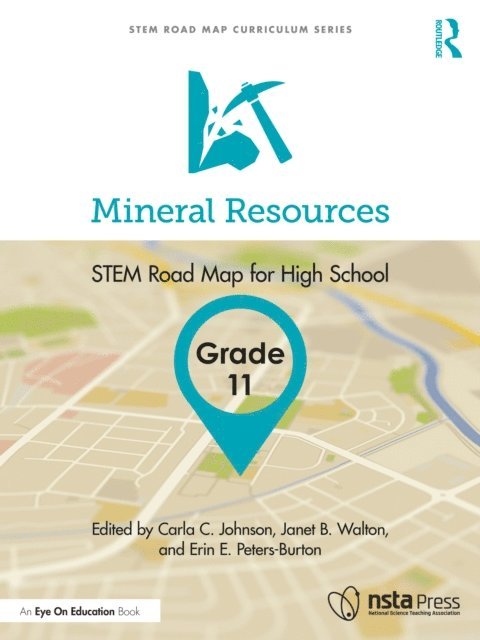
What if you could challenge your eleventh graders to come up with a design solution for developing, managing, and utilizing mineral resources? With this volume in the STEM Road Map Curriculum Series, you can!
Mineral Resources outlines a journey that will steer your students toward authentic problem solving while grounding them in integrated STEM disciplines. Like the other volumes in the series, this book is designed to meet the growing need to infuse real-world learning into K–12 classrooms.
This interdisciplinary, three-lesson module uses project- and problem-based learning to help students develop an in-depth understanding of mineral resources by researching the utility and impact of particular mineral resources on society. Working in teams, students will locate quantitative and qualitative data on mineral resources and discern the reliability of the information, then use their data to write an opinion article and develop a website to convince readers of the effectiveness of a particular design solution for developing, managing, and utilizing mineral resources. To support this goal, students will do the following:
Explain how mineral resources are located and used in various ways in society.
Explain why mineral resources are important to society.
Critically evaluate quantitative and qualitative data about mineral resources.
Write an opinion article demonstrating their knowledge about competing design solutions for extracting mineral resources.
The STEM Road Map Curriculum Series is anchored in the Next Generation Science Standards, the Common Core State Standards, and the Framework for 21st Century Learning. In-depth and flexible, Mineral Resources can be used as a whole unit or in part to meet the needs of districts, schools, and teachers who are charting a course toward an integrated STEM approach.
442 kr
Läs direkt efter köp
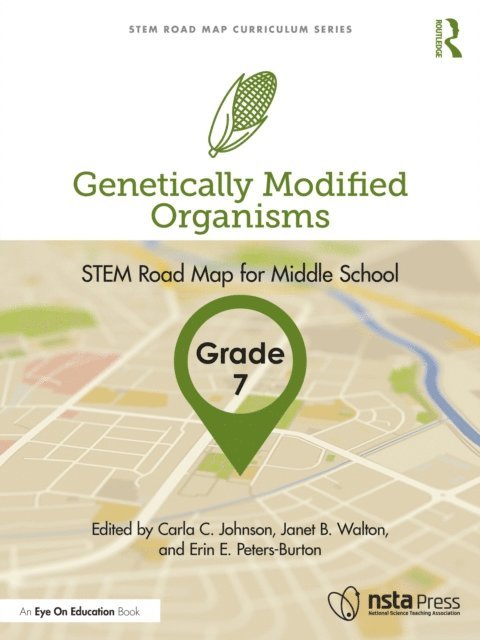
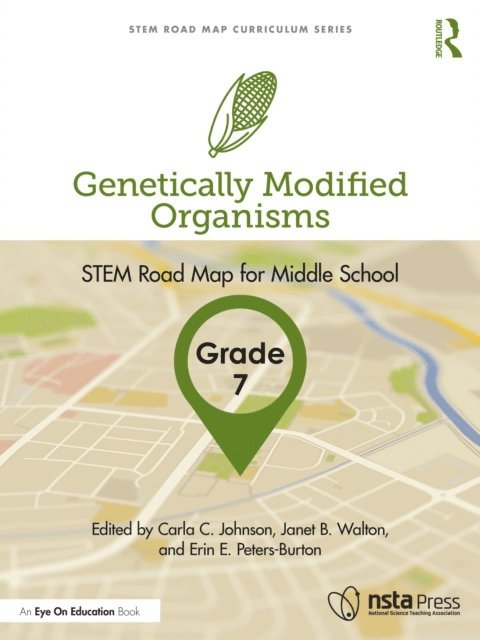
What if you could challenge your seventh graders to become informed citizens by analyzing real-world implications of GMOs? With this volume in the STEM Road Map Curriculum Series, you can!
Genetically Modified Organisms outlines a journey that will steer your students toward authentic problem solving while grounding them in integrated STEM disciplines. Like the other volumes in the series, this book is designed to meet the growing need to infuse real-world learning into K–12 classrooms.
This interdisciplinary, five-lesson module uses project- and problem-based learning to help students investigate the opportunities and challenges of GMO production and consumption. Working in teams, students will create a documentary communicating the health, social, and economic aspects of GMO production and consumption. To support this goal, students will do the following:
• Use the Internet and other sources to build knowledge of an issue, and recognize and value stakeholders and their viewpoints in an issue.
• Explore the relationship among local, state, and federal legislation related to GMOs.
• Understand the role of cost-benefit analysis in making informed economic decisions.
• Develop skills to evaluate arguments, create and communicate individual understanding and perspectives.
• Gain a deeper understanding that structure and function are related by examining plants and how the environment and genetics influences structure.
• Gain a better understanding of what tools humans have developed to genetically alter organisms for human benefit.
The STEM Road Map Curriculum Series is anchored in the Next Generation Science Standards, the Common Core State Standards, and the Framework for 21st Century Learning. In-depth and flexible, Genetically Modified Organisms can be used as a whole unit or in part to meet the needs of districts, schools, and teachers who are charting a course toward an integrated STEM approach.
373 kr
Läs direkt efter köp
What if you could challenge your tenth graders to think about how innovation can make the world a better place for humans, while finding ways to sustain progress and conserve resources? With this volume in the STEM Road Map Curriculum Series, you can!
Rebuilding the Natural Environment outlines a journey that will steer your students toward authentic problem solving while grounding them in integrated STEM disciplines. Like the other volumes in the series, this book is designed to meet the growing need to infuse real-world learning into K–12 classrooms.
This interdisciplinary, four-lesson module uses project- and problem-based learning to help students connect their existing knowledge about energy production and its effects on the natural environment to create innovations in renewable sources of energy based on research evidence. Working in teams, students will design an innovative way to meet society’s energy needs and develop a pitch to market their innovation, focusing on how the innovation will optimize human experiences while being mindful of the natural environment. To support this goal, students will do the following:
• Understand several forms of renewable, sustainable energy sources.
• Apply their understanding of how alternators are used to generate electricity in lab experiments, as well as explain how tools such as windmills and dams are used to operate them.
• Describe how electricity is generated in photovoltaic cells.
• Calculate the amount of electricity consumed by several household items and consider this consumption when determining the average monthly energy consumption of households around the world in comparison to U.S. households.
• Understand how fossil fuels have been used in the production of electricity and the impact they have had on the world’s economy, humans’ quality of life, and the earth.
• Identify several hindrances to the creation of new energy sources as well as ideas to counter them.
• List several factors that can be used to motivate people from all walks of life to use renewable and sustainable energies.
• Create a fictional company that uses renewable energies.
The STEM Road Map Curriculum Series is anchored in the Next Generation Science Standards, the Common Core State Standards, and the Framework for 21st Century Learning. In-depth and flexible, Rebuilding the Natural Environment can be used as a whole unit or in part to meet the needs of districts, schools, and teachers who are charting a course toward an integrated STEM approach.
454 kr
Läs direkt efter köp
What if you could challenge your eleventh graders to come up with a design solution for developing, managing, and utilizing mineral resources? With this volume in the STEM Road Map Curriculum Series, you can!
Mineral Resources outlines a journey that will steer your students toward authentic problem solving while grounding them in integrated STEM disciplines. Like the other volumes in the series, this book is designed to meet the growing need to infuse real-world learning into K–12 classrooms.
This interdisciplinary, three-lesson module uses project- and problem-based learning to help students develop an in-depth understanding of mineral resources by researching the utility and impact of particular mineral resources on society. Working in teams, students will locate quantitative and qualitative data on mineral resources and discern the reliability of the information, then use their data to write an opinion article and develop a website to convince readers of the effectiveness of a particular design solution for developing, managing, and utilizing mineral resources. To support this goal, students will do the following:
Explain how mineral resources are located and used in various ways in society.
Explain why mineral resources are important to society.
Critically evaluate quantitative and qualitative data about mineral resources.
Write an opinion article demonstrating their knowledge about competing design solutions for extracting mineral resources.
The STEM Road Map Curriculum Series is anchored in the Next Generation Science Standards, the Common Core State Standards, and the Framework for 21st Century Learning. In-depth and flexible, Mineral Resources can be used as a whole unit or in part to meet the needs of districts, schools, and teachers who are charting a course toward an integrated STEM approach.
442 kr
Läs direkt efter köp
What if you could challenge your seventh graders to become informed citizens by analyzing real-world implications of GMOs? With this volume in the STEM Road Map Curriculum Series, you can!
Genetically Modified Organisms outlines a journey that will steer your students toward authentic problem solving while grounding them in integrated STEM disciplines. Like the other volumes in the series, this book is designed to meet the growing need to infuse real-world learning into K–12 classrooms.
This interdisciplinary, five-lesson module uses project- and problem-based learning to help students investigate the opportunities and challenges of GMO production and consumption. Working in teams, students will create a documentary communicating the health, social, and economic aspects of GMO production and consumption. To support this goal, students will do the following:
• Use the Internet and other sources to build knowledge of an issue, and recognize and value stakeholders and their viewpoints in an issue.
• Explore the relationship among local, state, and federal legislation related to GMOs.
• Understand the role of cost-benefit analysis in making informed economic decisions.
• Develop skills to evaluate arguments, create and communicate individual understanding and perspectives.
• Gain a deeper understanding that structure and function are related by examining plants and how the environment and genetics influences structure.
• Gain a better understanding of what tools humans have developed to genetically alter organisms for human benefit.
The STEM Road Map Curriculum Series is anchored in the Next Generation Science Standards, the Common Core State Standards, and the Framework for 21st Century Learning. In-depth and flexible, Genetically Modified Organisms can be used as a whole unit or in part to meet the needs of districts, schools, and teachers who are charting a course toward an integrated STEM approach.
454 kr
Läs direkt efter köp
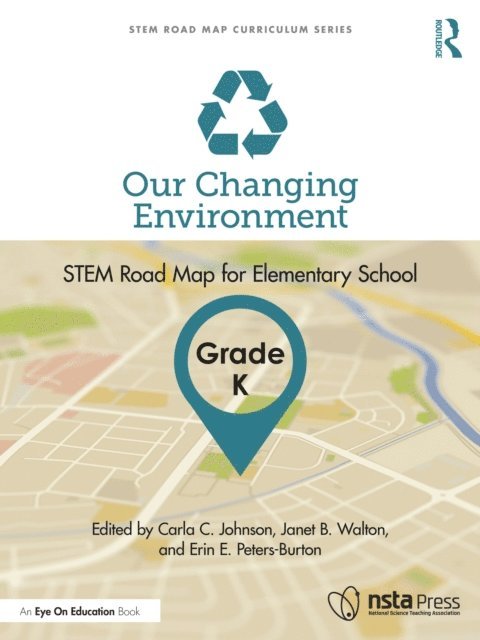
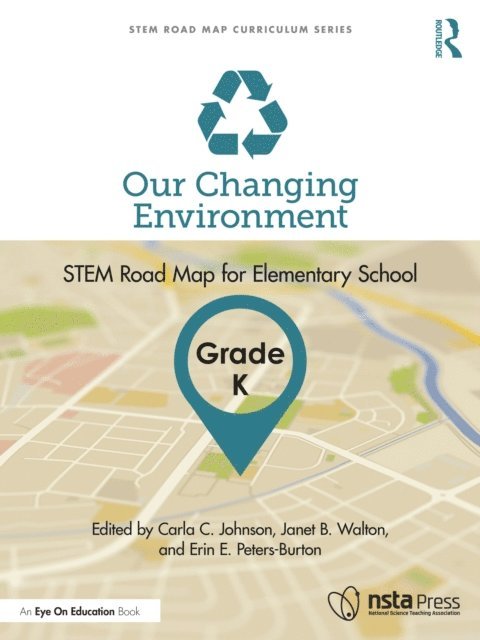
What if you could challenge your kindergartners to come up with a way to reduce human impact on the environment? With this volume in the STEM Road Map Curriculum Series, you can!
Our Changing Environment outlines a journey that will steer your students toward authentic problem solving while grounding them in integrated STEM disciplines. Like the other volumes in the series, this book is designed to meet the growing need to infuse real-world learning into K–12 classrooms.
This interdisciplinary, three-lesson module uses project- and problem-based learning to help students investigate the environment around them, with a focus on ways that humans can impact the environment. Working in teams, students will investigate various types of human impact on the environment (including pollution, littering, and habitat destruction), will participate in a classroom recycling program, and will explore the engineering design process as they devise ways to repurpose waste materials. To support this goal, students will do the following:
Identify human impacts on the environment.
Identify technological advances and tools that scientists use to learn about the changing environment, and use technology to gather data.
Explain, discuss, and express concepts about the environment through development and design of a publication to report their scientific findings about the environment around the school.
Chart and understand local weather patterns, and make connections between weather conditions and their observations of the environment.
Identify and demonstrate recycling practices, including sorting materials and tracking amounts of materials recycled, and participate in a class recycling program.
The STEM Road Map Curriculum Series is anchored in the Next Generation Science Standards, the Common Core State Standards, and the Framework for 21st Century Learning. In-depth and flexible, Our Changing Environment can be used as a whole unit or in part to meet the needs of districts, schools, and teachers who are charting a course toward an integrated STEM approach.
454 kr
Läs direkt efter köp
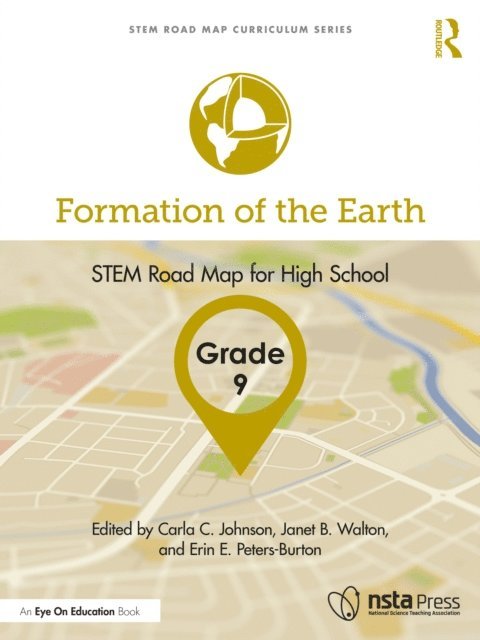
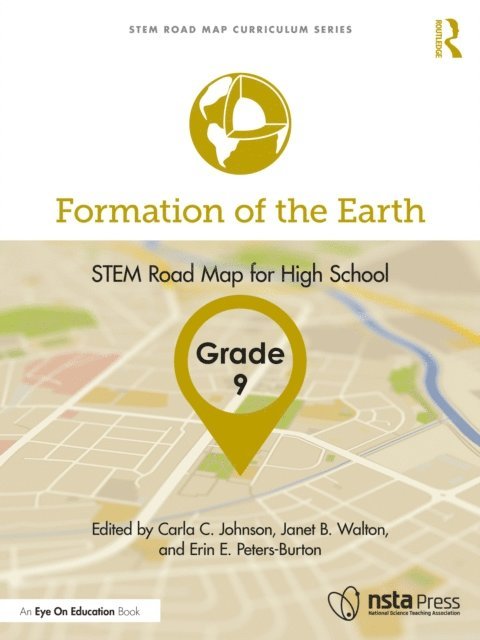
What if you could challenge your ninth graders to use geologic theory and standards of measurement to explore different epochs and time periods of the Earth’s formation? With this volume in the STEM Road Map Curriculum Series, you can!
Formation of the Earth outlines a journey that will steer your students toward authentic problem solving while grounding them in integrated STEM disciplines. Like the other volumes in the series, this book is designed to meet the growing need to infuse real-world learning into K–12 classrooms.
This interdisciplinary, three-lesson module uses project- and problem-based learning to help students investigate how Earth science professionals gather information and develop theories about the formation of the Earth and the processes taking place since the proliferation of humans. Working in teams, students will work to identify, define and describe the attributes scientists use to delineate Earth’s eras, periods, and epochs, in order to determine the appropriate boundary event to define the Anthropocene Epoch, and will develop a publication-ready textbook entry for an Earth science textbook. To support this goal, students will do the following:
• Identify, define, and describe attributes of eras, periods, and epochs which have marked geologic time in Earth’s history.
• Evaluate various possible index layers and boundary events that mark the beginning of the Anthropocene Epoch to determine which is most appropriate when labeling the current epoch in Earth’s history.
• Design and present a multimedia presentation to share with textbook publishers regarding information on the Anthropocene Epoch, to include in a secondary-level Earth science textbook.
• Create a publication-ready textbook entry describing the Anthropocene Epoch.
The STEM Road Map Curriculum Series is anchored in the Next Generation Science Standards, the Common Core State Standards, and the Framework for 21st Century Learning. In-depth and flexible, Formation of the Earth can be used as a whole unit or in part to meet the needs of districts, schools, and teachers who are charting a course toward an integrated STEM approach.
454 kr
Läs direkt efter köp
What if you could challenge your kindergartners to come up with a way to reduce human impact on the environment? With this volume in the STEM Road Map Curriculum Series, you can!
Our Changing Environment outlines a journey that will steer your students toward authentic problem solving while grounding them in integrated STEM disciplines. Like the other volumes in the series, this book is designed to meet the growing need to infuse real-world learning into K–12 classrooms.
This interdisciplinary, three-lesson module uses project- and problem-based learning to help students investigate the environment around them, with a focus on ways that humans can impact the environment. Working in teams, students will investigate various types of human impact on the environment (including pollution, littering, and habitat destruction), will participate in a classroom recycling program, and will explore the engineering design process as they devise ways to repurpose waste materials. To support this goal, students will do the following:
Identify human impacts on the environment.
Identify technological advances and tools that scientists use to learn about the changing environment, and use technology to gather data.
Explain, discuss, and express concepts about the environment through development and design of a publication to report their scientific findings about the environment around the school.
Chart and understand local weather patterns, and make connections between weather conditions and their observations of the environment.
Identify and demonstrate recycling practices, including sorting materials and tracking amounts of materials recycled, and participate in a class recycling program.
The STEM Road Map Curriculum Series is anchored in the Next Generation Science Standards, the Common Core State Standards, and the Framework for 21st Century Learning. In-depth and flexible, Our Changing Environment can be used as a whole unit or in part to meet the needs of districts, schools, and teachers who are charting a course toward an integrated STEM approach.
454 kr
Läs direkt efter köp
What if you could challenge your ninth graders to use geologic theory and standards of measurement to explore different epochs and time periods of the Earth’s formation? With this volume in the STEM Road Map Curriculum Series, you can!
Formation of the Earth outlines a journey that will steer your students toward authentic problem solving while grounding them in integrated STEM disciplines. Like the other volumes in the series, this book is designed to meet the growing need to infuse real-world learning into K–12 classrooms.
This interdisciplinary, three-lesson module uses project- and problem-based learning to help students investigate how Earth science professionals gather information and develop theories about the formation of the Earth and the processes taking place since the proliferation of humans. Working in teams, students will work to identify, define and describe the attributes scientists use to delineate Earth’s eras, periods, and epochs, in order to determine the appropriate boundary event to define the Anthropocene Epoch, and will develop a publication-ready textbook entry for an Earth science textbook. To support this goal, students will do the following:
• Identify, define, and describe attributes of eras, periods, and epochs which have marked geologic time in Earth’s history.
• Evaluate various possible index layers and boundary events that mark the beginning of the Anthropocene Epoch to determine which is most appropriate when labeling the current epoch in Earth’s history.
• Design and present a multimedia presentation to share with textbook publishers regarding information on the Anthropocene Epoch, to include in a secondary-level Earth science textbook.
• Create a publication-ready textbook entry describing the Anthropocene Epoch.
The STEM Road Map Curriculum Series is anchored in the Next Generation Science Standards, the Common Core State Standards, and the Framework for 21st Century Learning. In-depth and flexible, Formation of the Earth can be used as a whole unit or in part to meet the needs of districts, schools, and teachers who are charting a course toward an integrated STEM approach.
426 kr
Läs direkt efter köp
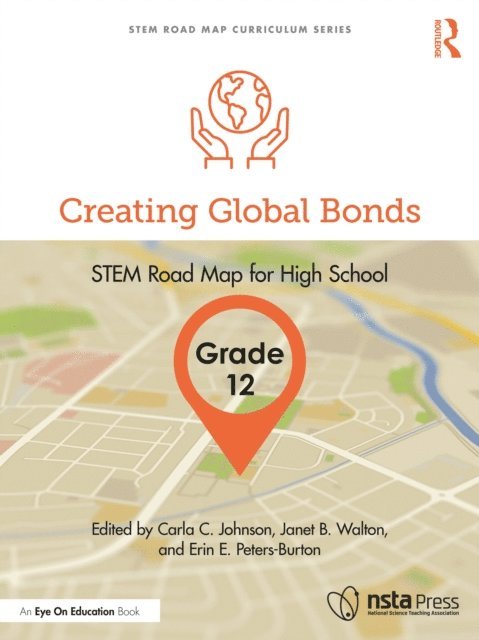
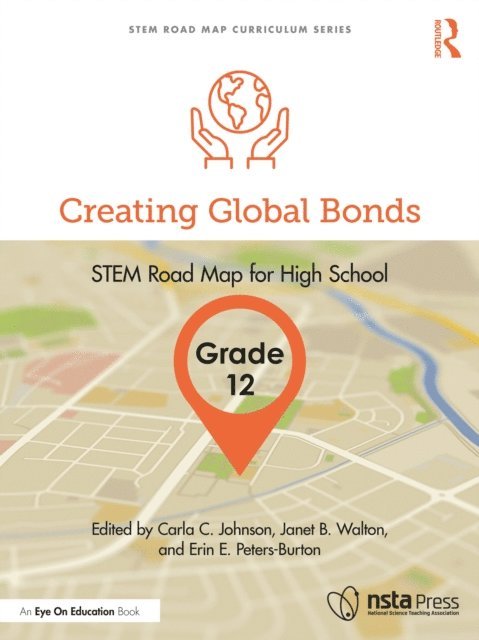
What if you could challenge your twelfth-grade students to explore energy consumption and climate change in their own communities, and connect that information with other communities around the world? With this volume in the STEM Road Map Curriculum Series, you can!
Creating Global Bonds outlines a journey that will steer your students toward authentic problem solving while grounding them in integrated STEM disciplines. Like the other volumes in the series, this book is designed to meet the growing need to infuse real-world learning into K–12 classrooms.
This interdisciplinary, three-lesson module uses project- and problem-based learning to help students create an action plan to address issues of energy consumption and climate change, exploring the topic at both local and global levels. Students will gather data on energy consumption and climate change in their communities, partnering with international students to undertake problem-solving activities that examine issues that are both common and unique to each community.
To support this goal, students will do the following:
Identify modes and trends in energy consumption in their communities and regions Analyze how those patterns of energy consumption impact climate change Partner with students internationally to coordinate efforts to synthesize energy consumption data and discern connections across contexts, taking the form of an international blog Design and present an action plan to address issues of energy consumption and climate change, ultimately delivering a white paper and interactive web-based presentation on local and international issues of energy consumption and climate changeThe STEM Road Map Curriculum Series is anchored in the Next Generation Science Standards, the Common Core State Standards, and the Framework for 21st Century Learning. In-depth and flexible, Creating Global Bonds can be used as a whole unit or in part to meet the needs of districts, schools, and teachers who are charting a course toward an integrated STEM approach.
410 kr
Läs direkt efter köp
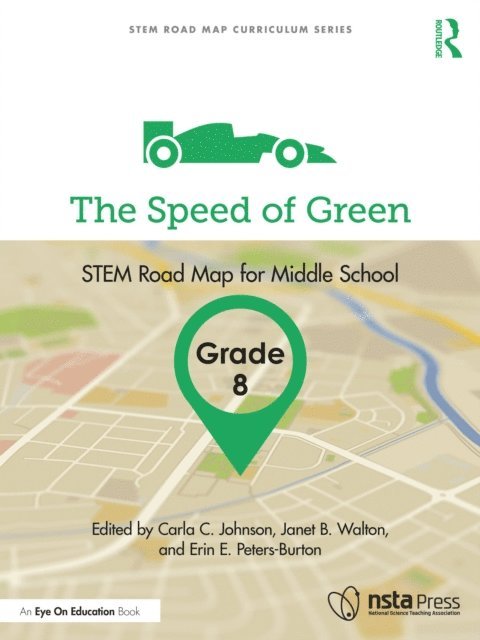
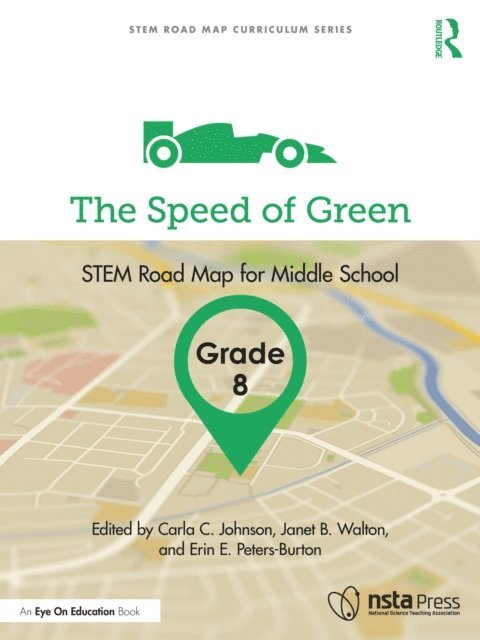
What if you could challenge your eighth graders to design a racing vehicle with minimum environmental impact, while exploring the role of renewable and non-renewable energy sources? With this volume in the STEM Road Map Curriculum Series, you can!
The Speed of Green outlines a journey that will steer your students toward authentic problem solving while grounding them in integrated STEM disciplines. Like the other volumes in the series, this book is designed to meet the growing need to infuse real-world learning into K–12 classrooms.
This interdisciplinary, eight-lesson module uses project- and problem-based learning to help students explore the potential role of renewable and non-renewable energy sources in transportation, with an emphasis on the auto industry. Using their understanding of the engineering design process (EDP), scientific concepts, and environmental conservation considerations, student teams will develop a plan for a competitive automobile racing team to fuel its vehicle with minimal environmental impact. To support this goal, students will do the following:
Identify finite energy resources and distinguish between these and renewable energy sources, and identify implications of the use of those fuel sources on the environment Conduct life cycle analyses (LCAs) of various fuel sources and apply the results to make decisions about the effects of various fuel sources Identify several ways that carbon-based fuels have impacted the U.S. economy and foreign relations Identify the effects of human activities on the biosphere with an emphasis on the effects of the widespread use of carbon-based fuels Apply the engineering design process (EDP) to solve a problem, and design and build a small-scale electric vehicle Synthesize their learning and working collaboratively by creating and presenting a plan for a race team that minimizes its environmental impact Create an engaging presentation incorporating oral presentations and visual displays to present projects to an audience of peers, teachers, and industry professionals.The STEM Road Map Curriculum Series is anchored in the Next Generation Science Standards, the Common Core State Standards, and the Framework for 21st Century Learning. In-depth and flexible, The Speed of Green can be used as a whole unit or in part to meet the needs of districts, schools, and teachers who are charting a course toward an integrated STEM approach.
422 kr
Läs direkt efter köp
What if you could challenge your twelfth-grade students to explore energy consumption and climate change in their own communities, and connect that information with other communities around the world? With this volume in the STEM Road Map Curriculum Series, you can!
Creating Global Bonds outlines a journey that will steer your students toward authentic problem solving while grounding them in integrated STEM disciplines. Like the other volumes in the series, this book is designed to meet the growing need to infuse real-world learning into K–12 classrooms.
This interdisciplinary, three-lesson module uses project- and problem-based learning to help students create an action plan to address issues of energy consumption and climate change, exploring the topic at both local and global levels. Students will gather data on energy consumption and climate change in their communities, partnering with international students to undertake problem-solving activities that examine issues that are both common and unique to each community.
To support this goal, students will do the following:
Identify modes and trends in energy consumption in their communities and regions Analyze how those patterns of energy consumption impact climate change Partner with students internationally to coordinate efforts to synthesize energy consumption data and discern connections across contexts, taking the form of an international blog Design and present an action plan to address issues of energy consumption and climate change, ultimately delivering a white paper and interactive web-based presentation on local and international issues of energy consumption and climate changeThe STEM Road Map Curriculum Series is anchored in the Next Generation Science Standards, the Common Core State Standards, and the Framework for 21st Century Learning. In-depth and flexible, Creating Global Bonds can be used as a whole unit or in part to meet the needs of districts, schools, and teachers who are charting a course toward an integrated STEM approach.
410 kr
Läs direkt efter köp
What if you could challenge your eighth graders to design a racing vehicle with minimum environmental impact, while exploring the role of renewable and non-renewable energy sources? With this volume in the STEM Road Map Curriculum Series, you can!
The Speed of Green outlines a journey that will steer your students toward authentic problem solving while grounding them in integrated STEM disciplines. Like the other volumes in the series, this book is designed to meet the growing need to infuse real-world learning into K–12 classrooms.
This interdisciplinary, eight-lesson module uses project- and problem-based learning to help students explore the potential role of renewable and non-renewable energy sources in transportation, with an emphasis on the auto industry. Using their understanding of the engineering design process (EDP), scientific concepts, and environmental conservation considerations, student teams will develop a plan for a competitive automobile racing team to fuel its vehicle with minimal environmental impact. To support this goal, students will do the following:
Identify finite energy resources and distinguish between these and renewable energy sources, and identify implications of the use of those fuel sources on the environment Conduct life cycle analyses (LCAs) of various fuel sources and apply the results to make decisions about the effects of various fuel sources Identify several ways that carbon-based fuels have impacted the U.S. economy and foreign relations Identify the effects of human activities on the biosphere with an emphasis on the effects of the widespread use of carbon-based fuels Apply the engineering design process (EDP) to solve a problem, and design and build a small-scale electric vehicle Synthesize their learning and working collaboratively by creating and presenting a plan for a race team that minimizes its environmental impact Create an engaging presentation incorporating oral presentations and visual displays to present projects to an audience of peers, teachers, and industry professionals.The STEM Road Map Curriculum Series is anchored in the Next Generation Science Standards, the Common Core State Standards, and the Framework for 21st Century Learning. In-depth and flexible, The Speed of Green can be used as a whole unit or in part to meet the needs of districts, schools, and teachers who are charting a course toward an integrated STEM approach.
438 kr
Läs direkt efter köp
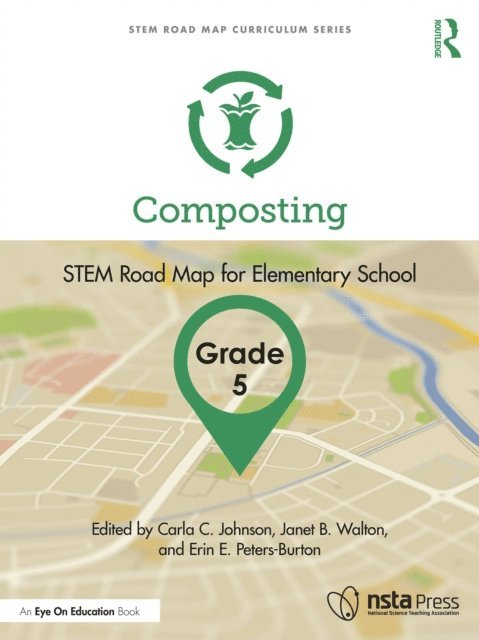
What if you could challenge your fifth-grade students to investigate the role of composting in solid waste management? With this volume in the STEM Road Map Curriculum Series, you can! Composting outlines a journey that will steer your students toward authentic problem solving while grounding them in integrated STEM disciplines. Like the other volumes in the series, this book is designed to meet the growing need to infuse real-world learning into K–12 classrooms.
This interdisciplinary, four-lesson module uses project- and problem-based learning to help students use the engineering design process (EDP) to design and create prototypes of compost systems and build a full-scale composting system for school use. Students will synthesize their learning about biotic and abiotic factors, decomposition, and engineering design as they learn about various types of compost systems, create their own portable compost bins, and create materials for a composting publicity campaign at their school.
To support this goal, students will do the following:
Identify and explain interdependent relationships in ecosystems Compare and contrast several ecosystems Describe how compost systems are designed and constructed and apply this understanding to creating prototypes of various compost systems Understand the concept of scale and apply this understanding to create scaled models of compost systems Apply their understanding of composting, compost systems, and the EDP to create a full-scale compost system for the school Measure various characteristics of compostThe STEM Road Map Curriculum Series is anchored in the Next Generation Science Standards, the Common Core State Standards, and the Framework for 21st Century Learning. In-depth and flexible, Composting can be used as a whole unit or in part to meet the needs of districts, schools, and teachers who are charting a course toward an integrated STEM approach.
438 kr
Läs direkt efter köp
What if you could challenge your fifth-grade students to investigate the role of composting in solid waste management? With this volume in the STEM Road Map Curriculum Series, you can! Composting outlines a journey that will steer your students toward authentic problem solving while grounding them in integrated STEM disciplines. Like the other volumes in the series, this book is designed to meet the growing need to infuse real-world learning into K–12 classrooms.
This interdisciplinary, four-lesson module uses project- and problem-based learning to help students use the engineering design process (EDP) to design and create prototypes of compost systems and build a full-scale composting system for school use. Students will synthesize their learning about biotic and abiotic factors, decomposition, and engineering design as they learn about various types of compost systems, create their own portable compost bins, and create materials for a composting publicity campaign at their school.
To support this goal, students will do the following:
Identify and explain interdependent relationships in ecosystems Compare and contrast several ecosystems Describe how compost systems are designed and constructed and apply this understanding to creating prototypes of various compost systems Understand the concept of scale and apply this understanding to create scaled models of compost systems Apply their understanding of composting, compost systems, and the EDP to create a full-scale compost system for the school Measure various characteristics of compostThe STEM Road Map Curriculum Series is anchored in the Next Generation Science Standards, the Common Core State Standards, and the Framework for 21st Century Learning. In-depth and flexible, Composting can be used as a whole unit or in part to meet the needs of districts, schools, and teachers who are charting a course toward an integrated STEM approach.
426 kr
Läs direkt efter köp
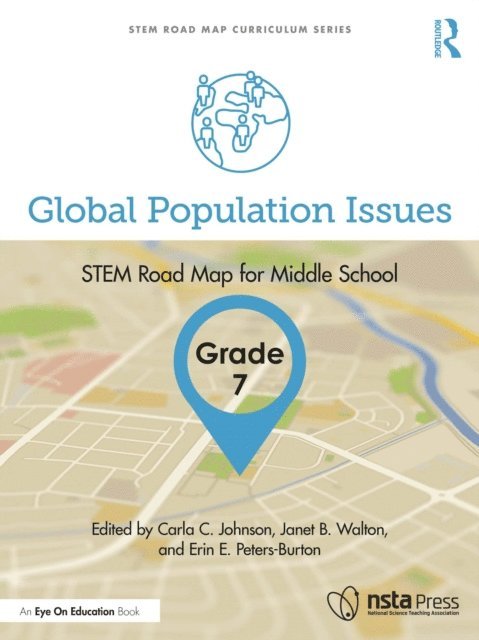
What if you could challenge your seventh-grade students to explore mathematical principles as well as global population issues as they consider population density? With this volume in the STEM Road Map Curriculum Series, you can!
Global Population Issues outlines a journey that will steer your students toward authentic problem solving while grounding them in integrated STEM disciplines. Like the other volumes in the series, this book is designed to meet the growing need to infuse real-world learning into K–12 classrooms.
This interdisciplinary, four-lesson module uses project- and problem-based learning to help students to devise a model for counting populations of a given species on Earth and develop a formal presentation of their models for consideration by a panel of experts. Students will examine species’ ecosystems, explore global populations with an economic and geographical lens, take on the role of an urban planner to develop a megacity that incorporates what they have researched and learned about the consequences of population density and overpopulation, and share literature relevant to their applied species model.
To support this goal, students will do the following:
Explore how to gather information about a population and make valid generalizations and inferences from this information Utilize mathematical practices to complete mathematical explorations Explore the impact of population density on humans and the environment Communicate learning and experiences about population density and its influence on humans and the environment through various forms of writing, speaking, and analyzing non-fiction text Explore the historical, social, geographical, and economic factors related to population densityThe STEM Road Map Curriculum Series is anchored in the Next Generation Science Standards, the Common Core State Standards, and the Framework for 21st Century Learning. In-depth and flexible, Global Population Issues can be used as a whole unit or in part to meet the needs of districts, schools, and teachers who are charting a course toward an integrated STEM approach.
430 kr
Läs direkt efter köp
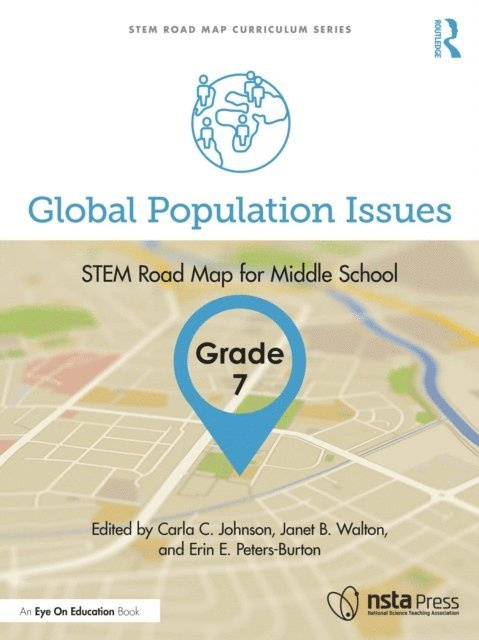
What if you could challenge your seventh-grade students to explore mathematical principles as well as global population issues as they consider population density? With this volume in the STEM Road Map Curriculum Series, you can!
Global Population Issues outlines a journey that will steer your students toward authentic problem solving while grounding them in integrated STEM disciplines. Like the other volumes in the series, this book is designed to meet the growing need to infuse real-world learning into K–12 classrooms.
This interdisciplinary, four-lesson module uses project- and problem-based learning to help students to devise a model for counting populations of a given species on Earth and develop a formal presentation of their models for consideration by a panel of experts. Students will examine species’ ecosystems, explore global populations with an economic and geographical lens, take on the role of an urban planner to develop a megacity that incorporates what they have researched and learned about the consequences of population density and overpopulation, and share literature relevant to their applied species model.
To support this goal, students will do the following:
Explore how to gather information about a population and make valid generalizations and inferences from this information Utilize mathematical practices to complete mathematical explorations Explore the impact of population density on humans and the environment Communicate learning and experiences about population density and its influence on humans and the environment through various forms of writing, speaking, and analyzing non-fiction text Explore the historical, social, geographical, and economic factors related to population densityThe STEM Road Map Curriculum Series is anchored in the Next Generation Science Standards, the Common Core State Standards, and the Framework for 21st Century Learning. In-depth and flexible, Global Population Issues can be used as a whole unit or in part to meet the needs of districts, schools, and teachers who are charting a course toward an integrated STEM approach.
426 kr
Läs direkt efter köp
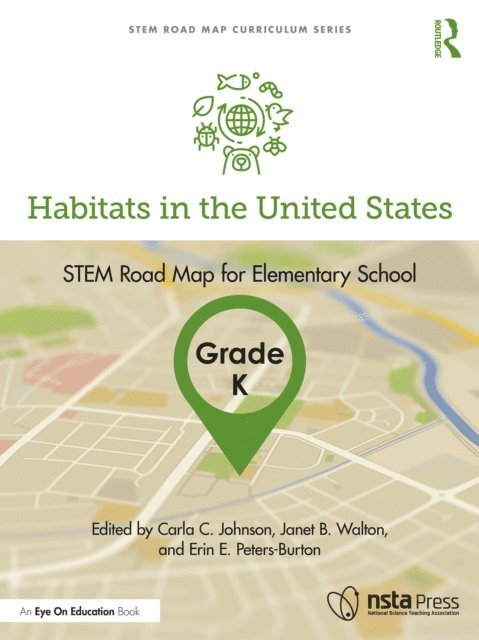
What if you could challenge your kindergarten students to compare their local habitats with other habitats in the United States? With this volume in the STEM Road Map Curriculum Series, you can! Habitats in the United States outlines a journey that will steer your students toward authentic problem solving while grounding them in integrated STEM disciplines. Like the other volumes in the series, this book is designed to meet the growing need to infuse real-world learning into K–12 classrooms.
This interdisciplinary, three-lesson module uses project- and problem-based learning to help students look at their own neighborhood, city, state, and beyond to learn about the geography and habitats of various regions of the United States. Students will gather information on habitats and their similarities and differences based on weather, climate, and the animals, plants, and people residing there, to develop a reference manual for local zoo officials reorganizing their animal displays.
To support this goal, students will do the following:
Explain that there are different types of habitats in different parts of the U.S. Explain how various habitats sustain animals and plants Identify climatic characteristics of several habitats Apply their knowledge of habitats to develop a reference guide about habitats in the U.S. Utilize technology to gather research information and communicate Identify technological advances and tools that scientists use to learn about sustainable systems Design and construct models of habitats Understand local weather patterns and make connections among weather patterns and plant and animal life where they liveThe STEM Road Map Curriculum Series is anchored in the Next Generation Science Standards, the Common Core State Standards, and the Framework for 21st Century Learning. In-depth and flexible, Habitats in the United States can be used as a whole unit or in part to meet the needs of districts, schools, and teachers who are charting a course toward an integrated STEM approach.
430 kr
Läs direkt efter köp
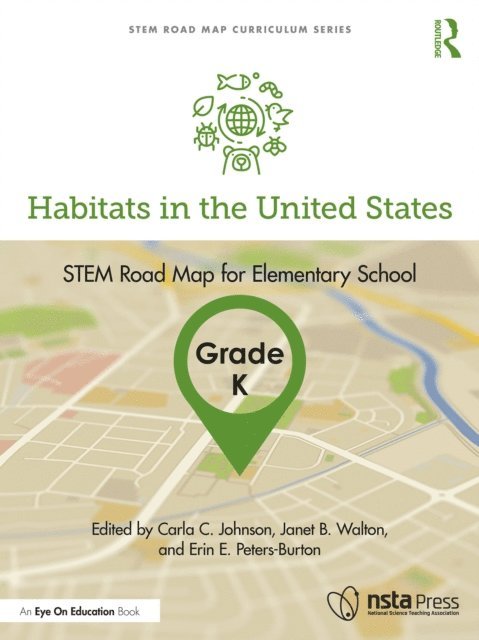
What if you could challenge your kindergarten students to compare their local habitats with other habitats in the United States? With this volume in the STEM Road Map Curriculum Series, you can! Habitats in the United States outlines a journey that will steer your students toward authentic problem solving while grounding them in integrated STEM disciplines. Like the other volumes in the series, this book is designed to meet the growing need to infuse real-world learning into K–12 classrooms.
This interdisciplinary, three-lesson module uses project- and problem-based learning to help students look at their own neighborhood, city, state, and beyond to learn about the geography and habitats of various regions of the United States. Students will gather information on habitats and their similarities and differences based on weather, climate, and the animals, plants, and people residing there, to develop a reference manual for local zoo officials reorganizing their animal displays.
To support this goal, students will do the following:
Explain that there are different types of habitats in different parts of the U.S. Explain how various habitats sustain animals and plants Identify climatic characteristics of several habitats Apply their knowledge of habitats to develop a reference guide about habitats in the U.S. Utilize technology to gather research information and communicate Identify technological advances and tools that scientists use to learn about sustainable systems Design and construct models of habitats Understand local weather patterns and make connections among weather patterns and plant and animal life where they liveThe STEM Road Map Curriculum Series is anchored in the Next Generation Science Standards, the Common Core State Standards, and the Framework for 21st Century Learning. In-depth and flexible, Habitats in the United States can be used as a whole unit or in part to meet the needs of districts, schools, and teachers who are charting a course toward an integrated STEM approach.
426 kr
Läs direkt efter köp
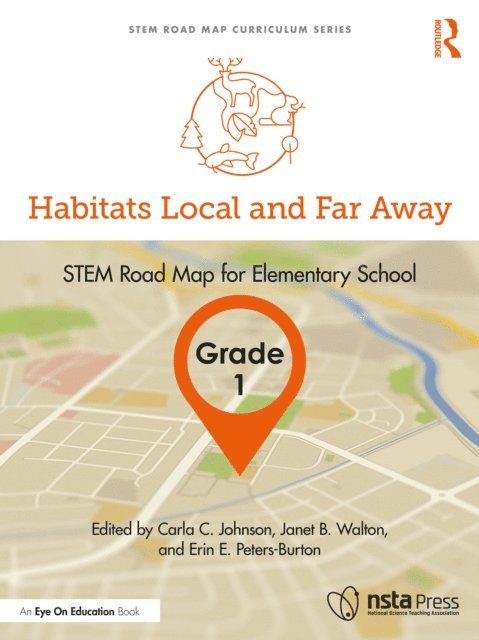
What if you could challenge your first graders to imagine saving an endangered species, learning about different global habitats along the way? With this volume in the STEM Road Map Curriculum Series, you can! Habitats Local and Far Away outlines a journey that will steer your students toward authentic problem solving while grounding them in integrated STEM disciplines. Like the other volumes in the series, this book is designed to meet the growing need to infuse real-world learning into K–12 classrooms.
This interdisciplinary, four-lesson module uses project- and problem-based learning to help students develop an action plan to encourage preservation of an endangered species. Students will work in teams to describe the habitat characteristics of a species outside their home region, explain why the species is endangered, and offer solutions about how humans might be able to support this species’ survival. In developing their plan, they will act as explorers of species locally and around the world, learning about climate, plant and animal inhabitants, and key factors affecting habitat vitality or decline.
To support this goal, students will do the following:
Explain that there are various types of habitats that vary with geographical location around the world Identify several habitats in the U.S. and globally Explain how various habitats meet animals’ basic needs Identify climatic characteristics of several habitats Identify humans as species that live within and in interaction with various habitats Identify technological advances and tools that scientists use to learn about habitats and endangered species Design and construct models to demonstrate understanding of features of various habitats (local and global) and endangered species Apply their knowledge of habitat characteristics, interdependence in ecosystems, and endangered species to develop an action plan to help preserve their selected endangered speciesThe STEM Road Map Curriculum Series is anchored in the Next Generation Science Standards, the Common Core State Standards, and the Framework for 21st Century Learning. In-depth and flexible, Habitats Local and Far Away can be used as a whole unit or in part to meet the needs of districts, schools, and teachers who are charting a course toward an integrated STEM approach.
426 kr
Läs direkt efter köp
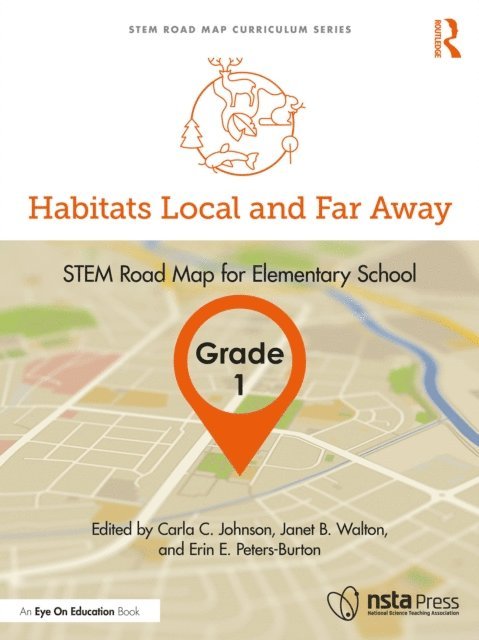
What if you could challenge your first graders to imagine saving an endangered species, learning about different global habitats along the way? With this volume in the STEM Road Map Curriculum Series, you can! Habitats Local and Far Away outlines a journey that will steer your students toward authentic problem solving while grounding them in integrated STEM disciplines. Like the other volumes in the series, this book is designed to meet the growing need to infuse real-world learning into K–12 classrooms.
This interdisciplinary, four-lesson module uses project- and problem-based learning to help students develop an action plan to encourage preservation of an endangered species. Students will work in teams to describe the habitat characteristics of a species outside their home region, explain why the species is endangered, and offer solutions about how humans might be able to support this species’ survival. In developing their plan, they will act as explorers of species locally and around the world, learning about climate, plant and animal inhabitants, and key factors affecting habitat vitality or decline.
To support this goal, students will do the following:
Explain that there are various types of habitats that vary with geographical location around the world Identify several habitats in the U.S. and globally Explain how various habitats meet animals’ basic needs Identify climatic characteristics of several habitats Identify humans as species that live within and in interaction with various habitats Identify technological advances and tools that scientists use to learn about habitats and endangered species Design and construct models to demonstrate understanding of features of various habitats (local and global) and endangered species Apply their knowledge of habitat characteristics, interdependence in ecosystems, and endangered species to develop an action plan to help preserve their selected endangered speciesThe STEM Road Map Curriculum Series is anchored in the Next Generation Science Standards, the Common Core State Standards, and the Framework for 21st Century Learning. In-depth and flexible, Habitats Local and Far Away can be used as a whole unit or in part to meet the needs of districts, schools, and teachers who are charting a course toward an integrated STEM approach.