Lyn D. English - Böcker
Visar alla böcker från författaren Lyn D. English. Handla med fri frakt och snabb leverans.
16 produkter
16 produkter
3 753 kr
Skickas inom 10-15 vardagar
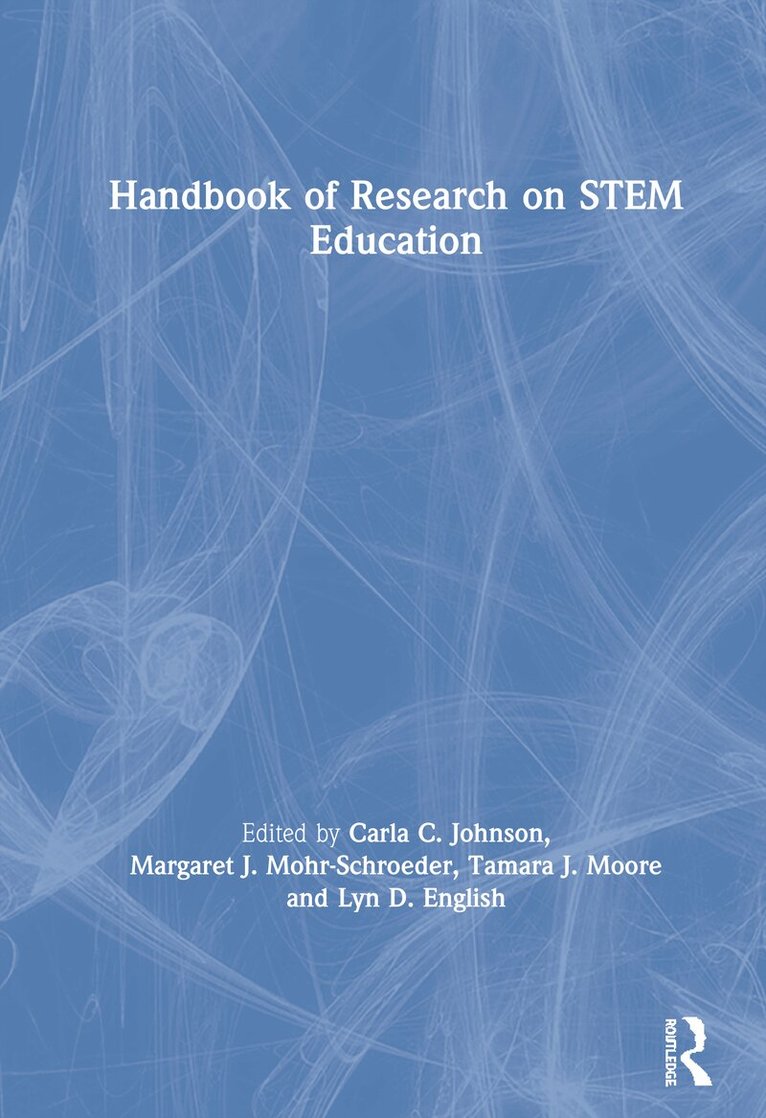
The Handbook of Research on STEM Education represents a groundbreaking and comprehensive synthesis of research and presentation of policy within the realm of science, technology, engineering, and mathematics (STEM) education. What distinguishes this Handbook from others is the nature of integration of the disciplines that is the founding premise for the work – all chapters in this book speak directly to the integration of STEM, rather than discussion of research within the individual content areas. The Handbook of Research on STEM Education explores the most pressing areas of STEM within an international context. Divided into six sections, the authors cover topics including: the nature of STEM, STEM learning, STEM pedagogy, curriculum and assessment, critical issues in STEM, STEM teacher education, and STEM policy and reform. The Handbook utilizes the lens of equity and access by focusing on STEM literacy, early childhood STEM, learners with disabilities, informal STEM, socio-scientific issues, race-related factors, gender equity, cultural-relevancy, and parental involvement. Additionally, discussion of STEM education policy in a variety of countries is included, as well as a focus on engaging business/industry and teachers in advocacy for STEM education. The Handbook’s 37 chapters provide a deep and meaningful landscape of the implementation of STEM over the past two decades. As such, the findings that are presented within provide the reader with clear directions for future research into effective practice and supports for integrated STEM, which are grounded in the literature to date.
1 518 kr
Skickas inom 10-15 vardagar
The Handbook of Research on STEM Education represents a groundbreaking and comprehensive synthesis of research and presentation of policy within the realm of science, technology, engineering, and mathematics (STEM) education. What distinguishes this Handbook from others is the nature of integration of the disciplines that is the founding premise for the work – all chapters in this book speak directly to the integration of STEM, rather than discussion of research within the individual content areas. The Handbook of Research on STEM Education explores the most pressing areas of STEM within an international context. Divided into six sections, the authors cover topics including: the nature of STEM, STEM learning, STEM pedagogy, curriculum and assessment, critical issues in STEM, STEM teacher education, and STEM policy and reform. The Handbook utilizes the lens of equity and access by focusing on STEM literacy, early childhood STEM, learners with disabilities, informal STEM, socio-scientific issues, race-related factors, gender equity, cultural-relevancy, and parental involvement. Additionally, discussion of STEM education policy in a variety of countries is included, as well as a focus on engaging business/industry and teachers in advocacy for STEM education. The Handbook’s 37 chapters provide a deep and meaningful landscape of the implementation of STEM over the past two decades. As such, the findings that are presented within provide the reader with clear directions for future research into effective practice and supports for integrated STEM, which are grounded in the literature to date.
4 673 kr
Skickas inom 10-15 vardagar
This third edition of the Handbook of International Research in Mathematics Education provides a comprehensive overview of the most recent theoretical and practical developments in the field of mathematics education. Authored by an array of internationally recognized scholars and edited by Lyn English and David Kirshner, this collection brings together overviews and advances in mathematics education research spanning established and emerging topics, diverse workplace and school environments, and globally representative research priorities. New perspectives are presented on a range of critical topics including embodied learning, the theory-practice divide, new developments in the early years, educating future mathematics education professors, problem solving in a 21st century curriculum, culture and mathematics learning, complex systems, critical analysis of design-based research, multimodal technologies, and e-textbooks. Comprised of 12 revised and 17 new chapters, this edition extends the Handbook’s original themes for international research in mathematics education and remains in the process a definitive resource for the field.
1 765 kr
Skickas inom 10-15 vardagar
This third edition of the Handbook of International Research in Mathematics Education provides a comprehensive overview of the most recent theoretical and practical developments in the field of mathematics education. Authored by an array of internationally recognized scholars and edited by Lyn English and David Kirshner, this collection brings together overviews and advances in mathematics education research spanning established and emerging topics, diverse workplace and school environments, and globally representative research priorities. New perspectives are presented on a range of critical topics including embodied learning, the theory-practice divide, new developments in the early years, educating future mathematics education professors, problem solving in a 21st century curriculum, culture and mathematics learning, complex systems, critical analysis of design-based research, multimodal technologies, and e-textbooks. Comprised of 12 revised and 17 new chapters, this edition extends the Handbook’s original themes for international research in mathematics education and remains in the process a definitive resource for the field.
2 044 kr
Skickas inom 10-15 vardagar
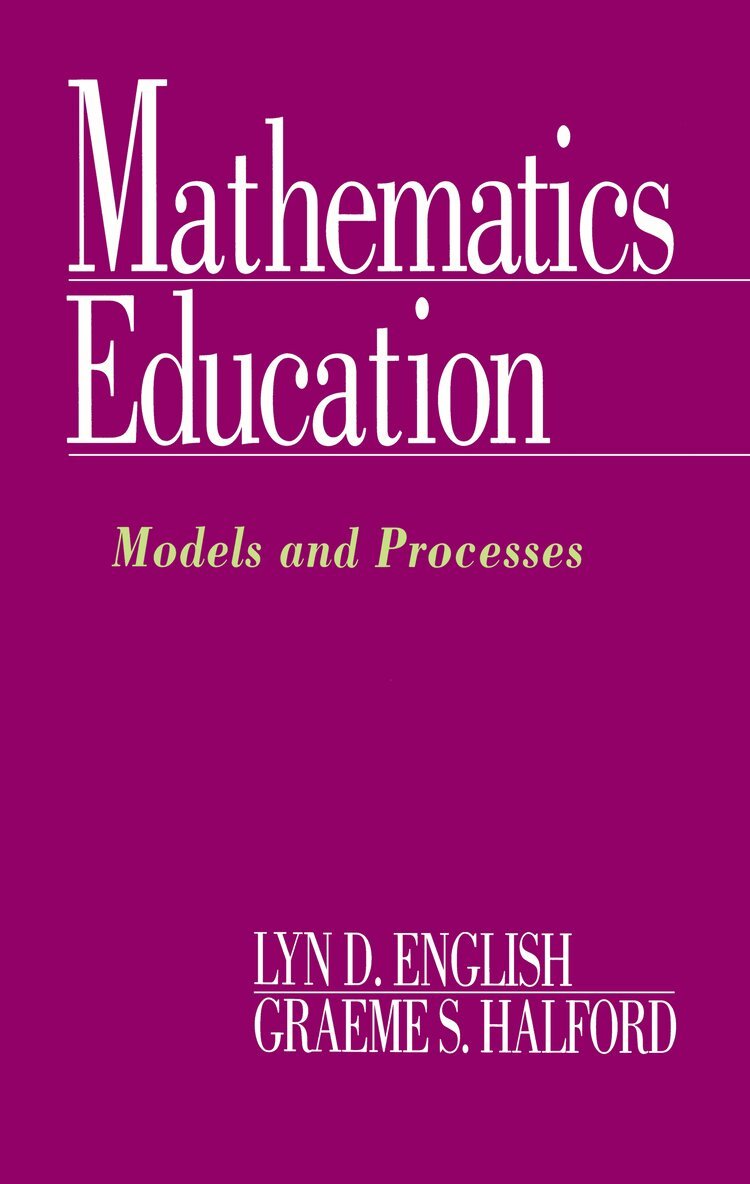
To define better techniques of mathematics education, this book combines a knowledge of cognitive science with mathematics curriculum theory and research. The concept of the human reasoning process has been changed fundamentally by cognitive science in the last two decades. The role of memory retrieval, domain-specific and domain-general skills, analogy, and mental models is better understood now than previously. The authors believe that cognitive science provides the most accurate account thus far of the actual processes that people use in mathematics and offers the best potential for genuine increases in efficiency. As such, they suggest that a cognitive science approach enables constructivist ideas to be analyzed and further developed in the search for greater understanding of children's mathematical learning. Not simply an application of cognitive science, however, this book provides a new perspective on mathematics education by examining the nature of mathematical concepts and processes, how and why they are taught, why certain approaches appear more effective than others, and how children might be assisted to become more mathematically powerful. The authors use recent theories of analogy and knowledge representation -- combined with research on teaching practice -- to find ways of helping children form links and correspondences between different concepts, so as to overcome problems associated with fragmented knowledge. In so doing, they have capitalized on new insights into the values and limitations of using concrete teaching aids which can be analyzed in terms of analogy theory. In addition to addressing the role of understanding, the authors have analyzed skill acquisition models in terms of their implications for the development of mathematical competence. They place strong emphasis on the development of students' mathematical reasoning and problem solving skills to promote flexible use of knowledge. The book further demonstrates how children have a number of general problem solving skills at their disposal which they can apply independently to the solution of novel problems, resulting in the enhancement of their mathematical knowledge.
703 kr
Skickas inom 10-15 vardagar
To define better techniques of mathematics education, this book combines a knowledge of cognitive science with mathematics curriculum theory and research. The concept of the human reasoning process has been changed fundamentally by cognitive science in the last two decades. The role of memory retrieval, domain-specific and domain-general skills, analogy, and mental models is better understood now than previously. The authors believe that cognitive science provides the most accurate account thus far of the actual processes that people use in mathematics and offers the best potential for genuine increases in efficiency. As such, they suggest that a cognitive science approach enables constructivist ideas to be analyzed and further developed in the search for greater understanding of children's mathematical learning. Not simply an application of cognitive science, however, this book provides a new perspective on mathematics education by examining the nature of mathematical concepts and processes, how and why they are taught, why certain approaches appear more effective than others, and how children might be assisted to become more mathematically powerful. The authors use recent theories of analogy and knowledge representation -- combined with research on teaching practice -- to find ways of helping children form links and correspondences between different concepts, so as to overcome problems associated with fragmented knowledge. In so doing, they have capitalized on new insights into the values and limitations of using concrete teaching aids which can be analyzed in terms of analogy theory. In addition to addressing the role of understanding, the authors have analyzed skill acquisition models in terms of their implications for the development of mathematical competence. They place strong emphasis on the development of students' mathematical reasoning and problem solving skills to promote flexible use of knowledge. The book further demonstrates how children have a number of general problem solving skills at their disposal which they can apply independently to the solution of novel problems, resulting in the enhancement of their mathematical knowledge.
2 103 kr
Skickas inom 10-15 vardagar
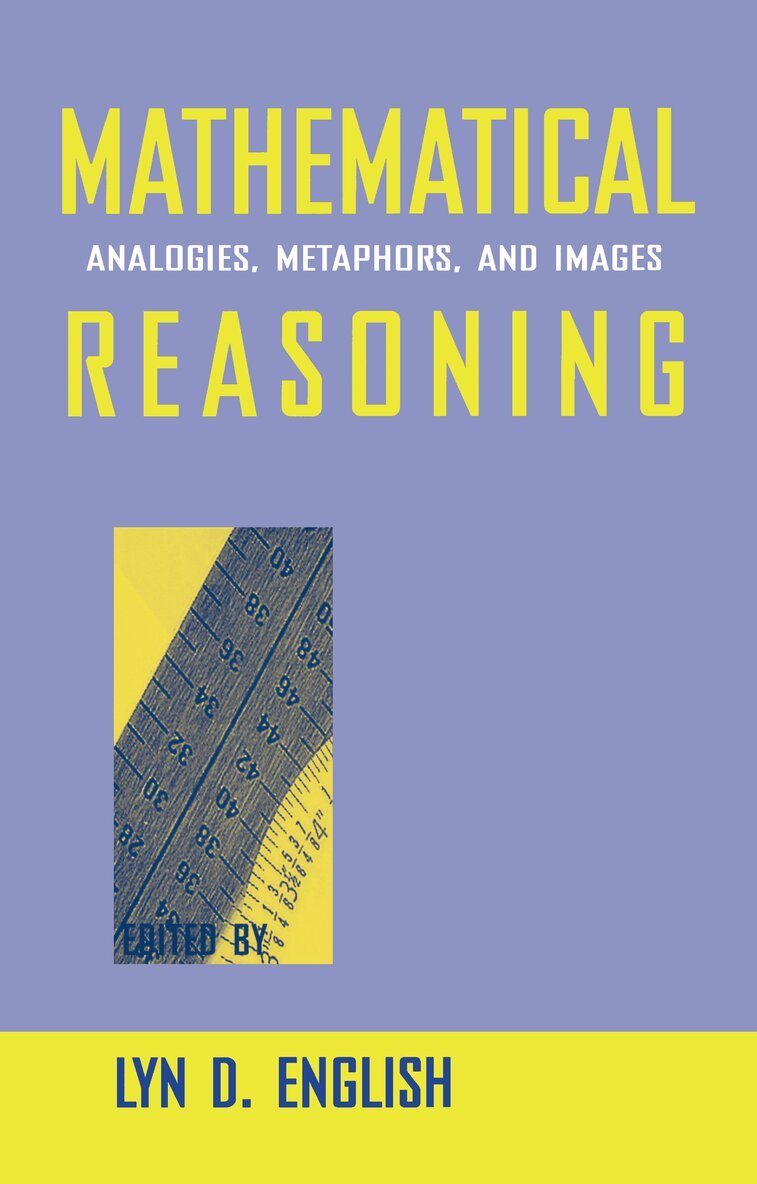
How we reason with mathematical ideas continues to be a fascinating and challenging topic of research--particularly with the rapid and diverse developments in the field of cognitive science that have taken place in recent years. Because it draws on multiple disciplines, including psychology, philosophy, computer science, linguistics, and anthropology, cognitive science provides rich scope for addressing issues that are at the core of mathematical learning. Drawing upon the interdisciplinary nature of cognitive science, this book presents a broadened perspective on mathematics and mathematical reasoning. It represents a move away from the traditional notion of reasoning as "abstract" and "disembodied", to the contemporary view that it is "embodied" and "imaginative." From this perspective, mathematical reasoning involves reasoning with structures that emerge from our bodily experiences as we interact with the environment; these structures extend beyond finitary propositional representations. Mathematical reasoning is imaginative in the sense that it utilizes a number of powerful, illuminating devices that structure these concrete experiences and transform them into models for abstract thought. These "thinking tools"--analogy, metaphor, metonymy, and imagery--play an important role in mathematical reasoning, as the chapters in this book demonstrate, yet their potential for enhancing learning in the domain has received little recognition. This book is an attempt to fill this void. Drawing upon backgrounds in mathematics education, educational psychology, philosophy, linguistics, and cognitive science, the chapter authors provide a rich and comprehensive analysis of mathematical reasoning. New and exciting perspectives are presented on the nature of mathematics (e.g., "mind-based mathematics"), on the array of powerful cognitive tools for reasoning (e.g., "analogy and metaphor"), and on the different ways these tools can facilitate mathematical reasoning. Examples are drawn from the reasoning of the preschool child to that of the adult learner.
845 kr
Skickas inom 10-15 vardagar
How we reason with mathematical ideas continues to be a fascinating and challenging topic of research--particularly with the rapid and diverse developments in the field of cognitive science that have taken place in recent years. Because it draws on multiple disciplines, including psychology, philosophy, computer science, linguistics, and anthropology, cognitive science provides rich scope for addressing issues that are at the core of mathematical learning. Drawing upon the interdisciplinary nature of cognitive science, this book presents a broadened perspective on mathematics and mathematical reasoning. It represents a move away from the traditional notion of reasoning as "abstract" and "disembodied", to the contemporary view that it is "embodied" and "imaginative." From this perspective, mathematical reasoning involves reasoning with structures that emerge from our bodily experiences as we interact with the environment; these structures extend beyond finitary propositional representations. Mathematical reasoning is imaginative in the sense that it utilizes a number of powerful, illuminating devices that structure these concrete experiences and transform them into models for abstract thought. These "thinking tools"--analogy, metaphor, metonymy, and imagery--play an important role in mathematical reasoning, as the chapters in this book demonstrate, yet their potential for enhancing learning in the domain has received little recognition. This book is an attempt to fill this void. Drawing upon backgrounds in mathematics education, educational psychology, philosophy, linguistics, and cognitive science, the chapter authors provide a rich and comprehensive analysis of mathematical reasoning. New and exciting perspectives are presented on the nature of mathematics (e.g., "mind-based mathematics"), on the array of powerful cognitive tools for reasoning (e.g., "analogy and metaphor"), and on the different ways these tools can facilitate mathematical reasoning. Examples are drawn from the reasoning of the preschool child to that of the adult learner.
2 044 kr
Skickas inom 10-15 vardagar
Mathematical and Analogical Reasoning of Young Learners provides foundational knowledge of the nature, development, and assessment of mathematical and analogical reasoning in young children. Reasoning is fundamental to understanding mathematics and is identified as one of the 10 key standards for school mathematics for the new millennium. The book draws on longitudinal and cross-cultural studies, conducted in the United States and Australia, of children's reasoning development as they progressed from preschool through the end of second grade. The multifaceted analysis of young children's development of mathematical and analogical reasoning focuses on individual learners, their learning environments, and the interaction between the two. The multidisciplinary team of authors present multiple perspectives and multiple methodologies, and provide valuable information on organizing and sustaining interdisciplinary and cross-cultural inquiry. Key issues addressed include: *the relationship between mathematical and analogical reasoning; *how changes in children's reasoning relate to the implicit instruction they receive in their classrooms; *analyses of the participating teachers' knowledge, beliefs, and practices with respect to mathematical and analogical reasoning of young learners; and *ways in which we might promote development of mathematical and analogical reasoning in young children. This volume is highly relevant for mathematics educators, researchers in mathematics education, educational psychologists, early childhood teachers, and others interested in mathematical development of young children, in particular, the development of their reasoning processes.
532 kr
Skickas inom 10-15 vardagar
Mathematical and Analogical Reasoning of Young Learners provides foundational knowledge of the nature, development, and assessment of mathematical and analogical reasoning in young children. Reasoning is fundamental to understanding mathematics and is identified as one of the 10 key standards for school mathematics for the new millennium. The book draws on longitudinal and cross-cultural studies, conducted in the United States and Australia, of children's reasoning development as they progressed from preschool through the end of second grade. The multifaceted analysis of young children's development of mathematical and analogical reasoning focuses on individual learners, their learning environments, and the interaction between the two. The multidisciplinary team of authors present multiple perspectives and multiple methodologies, and provide valuable information on organizing and sustaining interdisciplinary and cross-cultural inquiry. Key issues addressed include: *the relationship between mathematical and analogical reasoning; *how changes in children's reasoning relate to the implicit instruction they receive in their classrooms; *analyses of the participating teachers' knowledge, beliefs, and practices with respect to mathematical and analogical reasoning of young learners; and *ways in which we might promote development of mathematical and analogical reasoning in young children. This volume is highly relevant for mathematics educators, researchers in mathematics education, educational psychologists, early childhood teachers, and others interested in mathematical development of young children, in particular, the development of their reasoning processes.
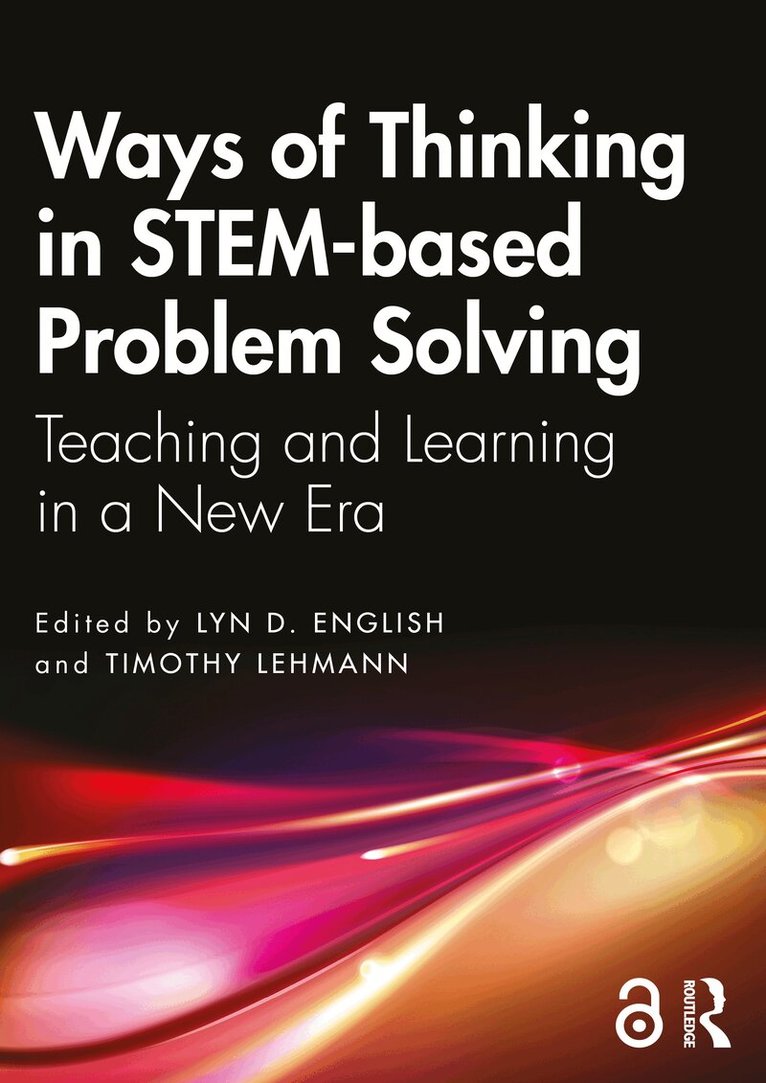
Ways of Thinking in STEM-based Problem Solving
Teaching and Learning in a New Era
Häftad, Engelska, 2024
532 kr
Skickas inom 10-15 vardagar
Taking a future-oriented approach, this book addresses students’ ways of thinking in STEM-based problem solving. It provides a rich set of chapters that explore how we can advance important thinking skills in STEM education for K-12 students. STEM education is essential to understanding and solving many of the world’s major challenges. However, the kind of interdisciplinary modes of thinking required to tackle such unforeseen problems is lacking in most STEM education delivery. This book examines the various ways of thinking that can be applied to effective STEM-based problem solving across K-12 education. These include design and design-based thinking, systems thinking and modeling, critical thinking, innovative and adaptive thinking, intuition in problem solving, and computational and algorithmic thinking. Across the chapters, the authors’ interdisciplinary perspectives give further depth to understanding how students learn and apply their thinking to solve STEM-based problems. The book also provides guidance on how to assess ways of thinking in STEM education, to ensure educators can recognize students’ progress and development.Bringing together a team of international experts, this book is essential reading for pre-service teachers, teacher educators, and researchers in STEM education.Chapter 2 of this book is freely available as a downloadable Open Access PDF at http://www.taylorfrancis.com under a Creative Commons Attribution-Non Commercial-No Derivatives (CC-BY-NC-ND) 4.0 license.
Ways of Thinking in STEM-based Problem Solving
Teaching and Learning in a New Era
Inbunden, Engelska, 2024
1 913 kr
Skickas inom 10-15 vardagar
Taking a future-oriented approach, this book addresses students’ ways of thinking in STEM-based problem solving. It provides a rich set of chapters that explore how we can advance important thinking skills in STEM education for K-12 students. STEM education is essential to understanding and solving many of the world’s major challenges. However, the kind of interdisciplinary modes of thinking required to tackle such unforeseen problems is lacking in most STEM education delivery. This book examines the various ways of thinking that can be applied to effective STEM-based problem solving across K-12 education. These include design and design-based thinking, systems thinking and modeling, critical thinking, innovative and adaptive thinking, intuition in problem solving, and computational and algorithmic thinking. Across the chapters, the authors’ interdisciplinary perspectives give further depth to understanding how students learn and apply their thinking to solve STEM-based problems. The book also provides guidance on how to assess ways of thinking in STEM education, to ensure educators can recognize students’ progress and development.Bringing together a team of international experts, this book is essential reading for pre-service teachers, teacher educators, and researchers in STEM education.Chapter 2 of this book is freely available as a downloadable Open Access PDF at http://www.taylorfrancis.com under a Creative Commons Attribution-Non Commercial-No Derivatives (CC-BY-NC-ND) 4.0 license.
1 548 kr
Skickas inom 10-15 vardagar
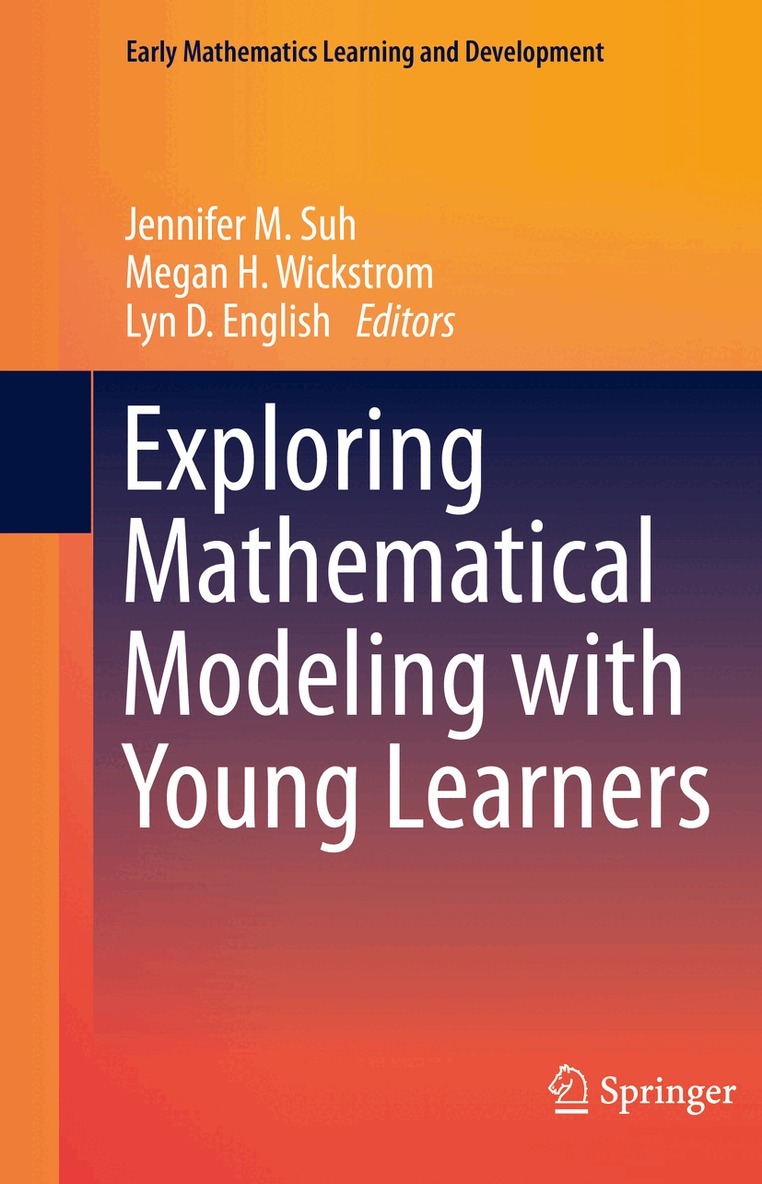
This book conceptualizes the nature of mathematical modeling in the early grades from both teaching and learning perspectives. Mathematical modeling provides a unique opportunity to engage elementary students in the creative process of mathematizing their world.A diverse community of internationally known researchers and practitioners share studies that advance the field with respect to the following themes: The Nature of Mathematical Modeling in the Early GradesContent Knowledge and Pedagogy for Mathematical ModelingStudent Experiences as ModelersTeacher Education and Professional Development in ModelingExperts in the field provide commentaries that extend and connect ideas presented across chapters. This book is an invaluable resource in illustrating what all young children can achieve with mathematical modeling and how we can support teachers and families in this important work.
1 342 kr
Skickas inom 10-15 vardagar
This book conceptualizes the nature of mathematical modeling in the early grades from both teaching and learning perspectives. Mathematical modeling provides a unique opportunity to engage elementary students in the creative process of mathematizing their world.A diverse community of internationally known researchers and practitioners share studies that advance the field with respect to the following themes: The Nature of Mathematical Modeling in the Early GradesContent Knowledge and Pedagogy for Mathematical ModelingStudent Experiences as ModelersTeacher Education and Professional Development in ModelingExperts in the field provide commentaries that extend and connect ideas presented across chapters. This book is an invaluable resource in illustrating what all young children can achieve with mathematical modeling and how we can support teachers and families in this important work.
1 034 kr
Skickas inom 10-15 vardagar
This book emanated primarily from concerns that the mathematical capabilities of young children continue to receive inadequate attention in both the research and instructional arenas.
1 034 kr
Skickas inom 10-15 vardagar
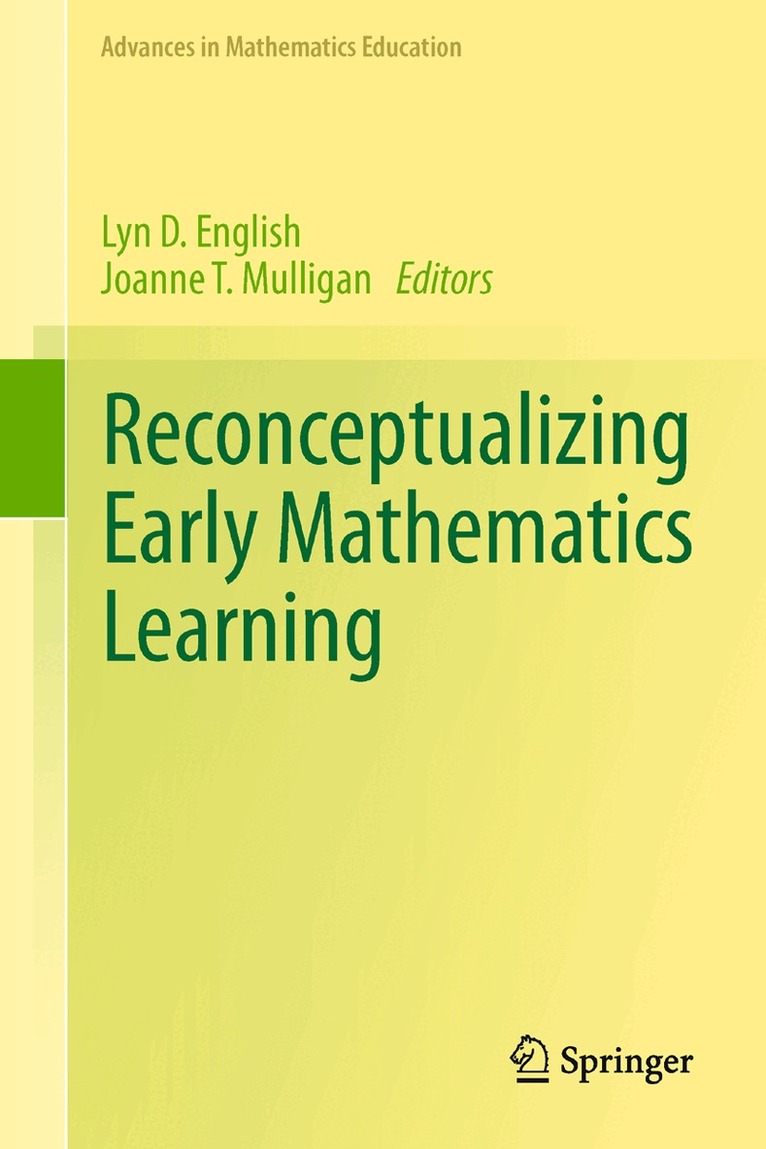
This book emanated primarily from concerns that the mathematical capabilities of young children continue to receive inadequate attention in both the research and instructional arenas. Research over many years has revealed that young children have sophisticated mathematical minds and a natural eagerness to engage in a range of mathematical activities. As the chapters in this book attest, current research is showing that young children are developing complex mathematical knowledge and abstract reasoning a good deal earlier than previously thought. A range of studies in prior to school and early school settings indicate that young learners do possess cognitive capacities which, with appropriately designed and implemented learning experiences, can enable forms of reasoning not typically seen in the early years. Although there is a large and coherent body of research on individual content domains such as counting and arithmetic, there have been remarkably few studies that have attempted to describe characteristics of structural development in young students’ mathematics. Collectively, the chapters highlight the importance of providing more exciting, relevant, and challenging 21st century mathematics learning for our young students. The chapters provide a broad scope in their topics and approaches to advancing young children’s mathematical learning. They incorporate studies that highlight the importance of pattern and structure across the curriculum, studies that target particular content such as statistics, early algebra, and beginning number, and studies that consider how technology and other tools can facilitate early mathematical development. Reconceptualising the professional learning of teachers in promoting young children’s mathematics, including a consideration of the role of play, is also addressed.