Graeme S. Halford - Böcker
Visar alla böcker från författaren Graeme S. Halford. Handla med fri frakt och snabb leverans.
6 produkter
6 produkter
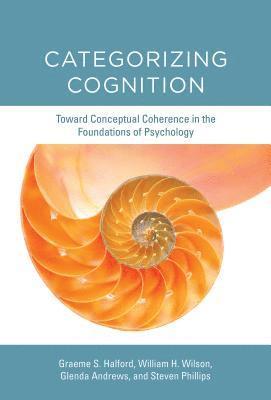
Categorizing Cognition
Toward Conceptual Coherence in the Foundations of Psychology
Inbunden, Engelska, 2014
182 kr
Tillfälligt slut
1 148 kr
Tillfälligt slut
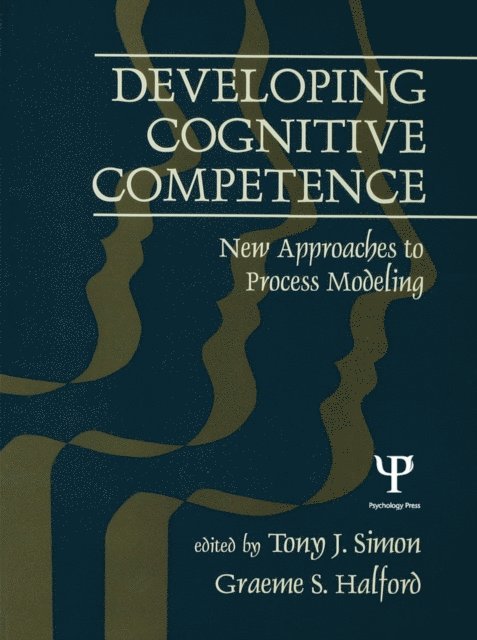
Although computational modeling is now a widespread technique in cognitive science and in psychology, relatively little work in developmental psychology has used this technique. The approach is not entirely new, as a small group of researchers has attempted to create computational accounts of cognitive developmental phenomena since the inception of the technique. It should seem obvious that transition mechanisms -- or how the system progresses from one level of competence to the next -- ought to be the central question for investigation in cognitive developmental psychology. Yet, if one scans the literature of modern developmental studies, it appears that the question has been all but ignored. However, only recently have advances in computational technology enabled the researcher access to fully self-modifying computer languages capable of simulating cognitive change. By the beginning of the 1990s, increasing numbers of researchers in the cognitive sciences were of the opinion that the tools of mathematical modeling and computer simulation make theorizing about transition mechanisms both practical and beneficial -- by using both traditional symbolic computational systems and parallel distributed processing or connectionist approaches. Computational models make it possible to define the processes that lead to a system being transformed under environmental influence from one level of competence observed in children to the next most sophisticated level. By coding computational models into simulations of actual cognitive change, they become tangible entities that are accessible to systematic study. Unfortunately, little of what has been produced has been published in journals or books where many professionals would easily find them. Feeling that developmental psychologists should be exposed to this relatively new approach, a symposium was organized at the biennial meeting of the Society for Research in Child Development. The "cost of entry" was that speakers had to have a running computational model of a documented cognitive transition. Inspired by that conference, this volume is the first collection where each content chapter presents a fully implemented, self-modifying simulation of some aspect of cognitive development. Previous collections have tended to discuss general approaches -- less than fully implemented models -- or non self-modifying models. Along with introductory and review chapters, this volume presents a set of truly "developmental" computational models -- a collection that can inform the interested researcher as well as form the basis for graduate-level courses.
2 029 kr
Skickas inom 10-15 vardagar
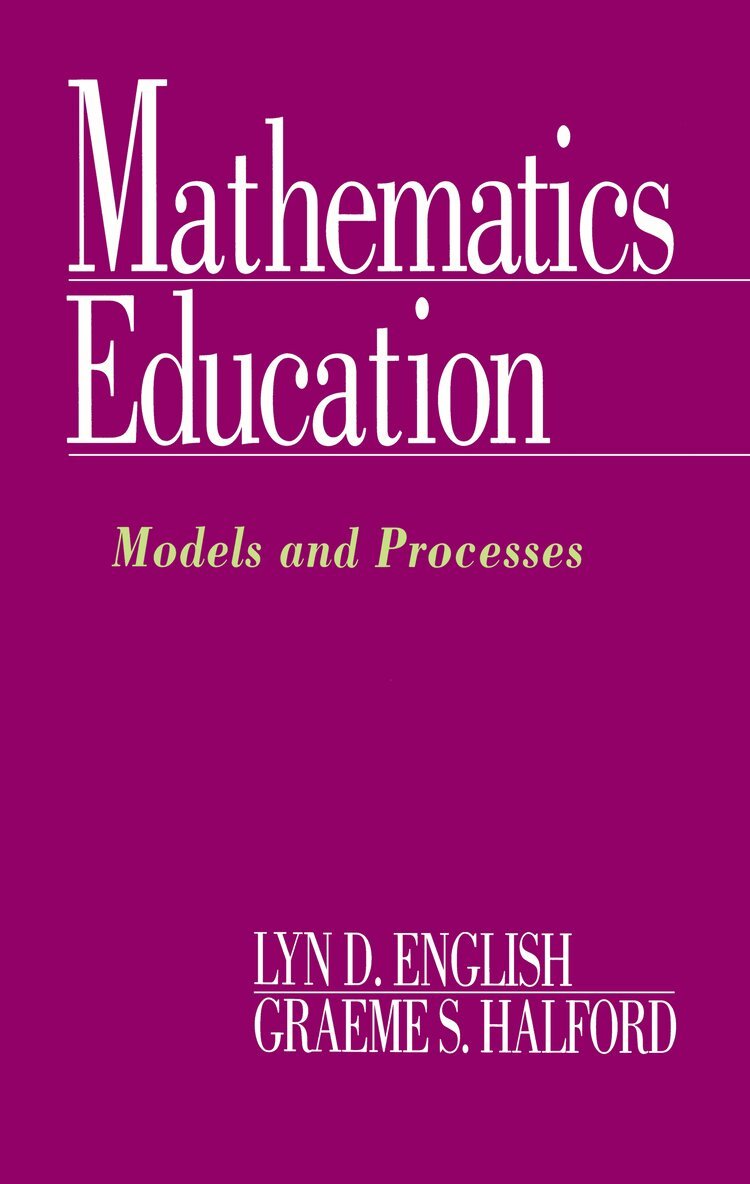
To define better techniques of mathematics education, this book combines a knowledge of cognitive science with mathematics curriculum theory and research. The concept of the human reasoning process has been changed fundamentally by cognitive science in the last two decades. The role of memory retrieval, domain-specific and domain-general skills, analogy, and mental models is better understood now than previously. The authors believe that cognitive science provides the most accurate account thus far of the actual processes that people use in mathematics and offers the best potential for genuine increases in efficiency. As such, they suggest that a cognitive science approach enables constructivist ideas to be analyzed and further developed in the search for greater understanding of children's mathematical learning. Not simply an application of cognitive science, however, this book provides a new perspective on mathematics education by examining the nature of mathematical concepts and processes, how and why they are taught, why certain approaches appear more effective than others, and how children might be assisted to become more mathematically powerful. The authors use recent theories of analogy and knowledge representation -- combined with research on teaching practice -- to find ways of helping children form links and correspondences between different concepts, so as to overcome problems associated with fragmented knowledge. In so doing, they have capitalized on new insights into the values and limitations of using concrete teaching aids which can be analyzed in terms of analogy theory. In addition to addressing the role of understanding, the authors have analyzed skill acquisition models in terms of their implications for the development of mathematical competence. They place strong emphasis on the development of students' mathematical reasoning and problem solving skills to promote flexible use of knowledge. The book further demonstrates how children have a number of general problem solving skills at their disposal which they can apply independently to the solution of novel problems, resulting in the enhancement of their mathematical knowledge.
705 kr
Skickas inom 10-15 vardagar
To define better techniques of mathematics education, this book combines a knowledge of cognitive science with mathematics curriculum theory and research. The concept of the human reasoning process has been changed fundamentally by cognitive science in the last two decades. The role of memory retrieval, domain-specific and domain-general skills, analogy, and mental models is better understood now than previously. The authors believe that cognitive science provides the most accurate account thus far of the actual processes that people use in mathematics and offers the best potential for genuine increases in efficiency. As such, they suggest that a cognitive science approach enables constructivist ideas to be analyzed and further developed in the search for greater understanding of children's mathematical learning. Not simply an application of cognitive science, however, this book provides a new perspective on mathematics education by examining the nature of mathematical concepts and processes, how and why they are taught, why certain approaches appear more effective than others, and how children might be assisted to become more mathematically powerful. The authors use recent theories of analogy and knowledge representation -- combined with research on teaching practice -- to find ways of helping children form links and correspondences between different concepts, so as to overcome problems associated with fragmented knowledge. In so doing, they have capitalized on new insights into the values and limitations of using concrete teaching aids which can be analyzed in terms of analogy theory. In addition to addressing the role of understanding, the authors have analyzed skill acquisition models in terms of their implications for the development of mathematical competence. They place strong emphasis on the development of students' mathematical reasoning and problem solving skills to promote flexible use of knowledge. The book further demonstrates how children have a number of general problem solving skills at their disposal which they can apply independently to the solution of novel problems, resulting in the enhancement of their mathematical knowledge.
635 kr
Tillfälligt slut
Although computational modeling is now a widespread technique in cognitive science and in psychology, relatively little work in developmental psychology has used this technique. The approach is not entirely new, as a small group of researchers has attempted to create computational accounts of cognitive developmental phenomena since the inception of the technique. It should seem obvious that transition mechanisms -- or how the system progresses from one level of competence to the next -- ought to be the central question for investigation in cognitive developmental psychology. Yet, if one scans the literature of modern developmental studies, it appears that the question has been all but ignored. However, only recently have advances in computational technology enabled the researcher access to fully self-modifying computer languages capable of simulating cognitive change. By the beginning of the 1990s, increasing numbers of researchers in the cognitive sciences were of the opinion that the tools of mathematical modeling and computer simulation make theorizing about transition mechanisms both practical and beneficial -- by using both traditional symbolic computational systems and parallel distributed processing or connectionist approaches. Computational models make it possible to define the processes that lead to a system being transformed under environmental influence from one level of competence observed in children to the next most sophisticated level. By coding computational models into simulations of actual cognitive change, they become tangible entities that are accessible to systematic study. Unfortunately, little of what has been produced has been published in journals or books where many professionals would easily find them. Feeling that developmental psychologists should be exposed to this relatively new approach, a symposium was organized at the biennial meeting of the Society for Research in Child Development. The "cost of entry" was that speakers had to have a running computational model of a documented cognitive transition. Inspired by that conference, this volume is the first collection where each content chapter presents a fully implemented, self-modifying simulation of some aspect of cognitive development. Previous collections have tended to discuss general approaches -- less than fully implemented models -- or non self-modifying models. Along with introductory and review chapters, this volume presents a set of truly "developmental" computational models -- a collection that can inform the interested researcher as well as form the basis for graduate-level courses.
2 029 kr
Skickas inom 10-15 vardagar
This work argues that cognitive development is experience driven, and processes entailed in acquiring information about the world are analyzed based on recent models of learning and induction. The way information is represented and accessed when performing cognitive tasks is considered paying particular attention to the implications of Parallel Distributed Processing (PDP) models for cognitive development. The first half of the book contains analyses of human reasoning processes (drawing on PDP models of analogy), development of strategies, and task complexity -- all based on aspects of PDP representations. It is proposed that PDP representations become more differentiated with age, so more vectors can be processed in parallel, with the result that structures of greater complexity can be processed. This model gives an account of previously unexplained difficulties in children's reasoning, including some which were influential in stage theories. The second half of the book examines processes entailed in some representative cognitive developmental tasks, including transitive inference, deductive inference (categorical syllogisms), hypothesis testing, learning set acquisition, acquisition and transfer of relational structures, humor, hierarchical classification and inclusion, understanding of quantity, arithmetic word problems, algebra, conservation, mechanics, and the concept of mind. Process accounts of tasks are emphasized, based on applications of recent developments in cognitive science.