Carlos Pascual – författare
Visar alla böcker från författaren Carlos Pascual. Handla med fri frakt och snabb leverans.
11 produkter
11 produkter
E-bok
PDF, Engelska, 2009380 kr
Läs direkt efter köp
""The aim of the Managing Global Insecurity project is to launch a reform effort of the global security system in 2009. That task is both ambitious and urgent.... The time to act is now.""from the Foreword by Javier SolanaThe twenty-first century will be defined by security threats unconstrained by bordersfrom economic instability, climate change, and nuclear proliferation to conflict, poverty, terrorism, and disease. The greatest test of global leadership will be building partnerships and institutions for cooperation that can meet the challenge. Power and Responsibility describes how American leadership can rebuild international order to promote global security and prosperity for today's transnational world. Power & Responsibility establishes a new foundation for international security: ""responsible sovereignty,"" or the notion that sovereignty entails obligations and duties toward other states as well as one's own citizens. Governments must cooperate across borders to safeguard common resources and tackle common threats.Power & Responsibility argues that in order to advance its own interests, the United States must learn to govern in an interdependent world, exercise leadership through cooperation, and create new institutions with today's traditional and emerging powers. The result of a collaborative project on Managing Global Insecurity, the book also reflects the MGI project's global dialogueextensive consultations in the United States and in regions around the world as well as discussions with the MGI project's Advisory Group, composed of prominent U.S. and international figures. ""The 2008 financial crisis has brought our global interconnectedness close to home. But economic insecurity is just one concern. Power and Responsibility provides a road map for building effective policies and legitimate global institutions to tackle today's suite of transnational challenges.""Kemal Dervis, administrator, UN Develo
E-bok
PDF, Engelska, 2010321 kr
Läs direkt efter köp
Energy security has become a top priority issue for the United States and countries around the globe, but what does the term ""energy security"" really mean? For many it is assuring the safe supply and transport of energy as a matter of national security. For others it is developing and moving toward sustainable and low-carbon energy sources to avoid environmental catastrophe, while still others prioritize affordability and abundance of supply. The demand for energy has ramifications in every part of the globefrom growing demand in Asia, to the pursuit of reserves in Latin America and Africa, to the increased clout of energy-producing states such as Russia and Iran. Yet the fact remains that the vast majority of global energy production still comes from fossil fuels, and it will take a thorough understanding of the interrelationships of complex challengesfinite supply, environmental concerns, political and religious conflict, and economic volatilityto develop policies that will lead to true energy security. In E nergy Security, Brookings scholars present a realistic, cross-disciplinary look at the American and global quests for energy security within the context of these geopolitical, economic, and environmental challenges. For example, political analysts Pietro Nivola and Erin Carter wrap their arms around just what is means to be ""energy independent"" and whether that is an advisable or even feasible goal. Suzanne Maloney addresses ""Energy Security in the Persian Gulf: Opportunities and Challenges,"" while economist Jason Bordoff and energy analyst Bryan Mignone trace the links between climate policies and energy-access policies. Carlos Pascual and his colleagues examine delicate geopolitical issues. Assuring long-term energy security remains one of the industrialized world's most pressing priorities, but steps in that direction have been controversial and often dangerous, and results thus far have been tenuous. In this insightful volume, Brookings assesses exactly what we're talking about, what it means in several contexts, and where we go from here.
Häftad, Engelska, 2010
361 kr
Skickas inom 10-15 vardagar
Today the United States has little leverage to promote change in Cuba. Indeed, Cuba enjoys normal relations with virtually every country in the world, and American attempts to isolate the Cuban government have served only to elevate its symbolic predicament as an ""underdog"" in the international arena. A new policy of engagement toward Cuba is long overdue. From the IntroductionAs longtime U.S. diplomats Vicki Huddleston and Carlos Pascual make painfully clear in their introduction, the United States is long overdue in rethinking its policy toward Cuba. This is a propitious time for such an undertakingthe combination of change within Cuba and in the Cuban American community creates the most significant opening for a reassessment of U.S. policy since Fidel Castro took control in 1959. To that end, Huddleston and Pascual convened opinion leaders in the Cuban American community, leading scholars, and international diplomats from diverse backgrounds and political orientations to seek common ground on U.S. policy toward Cuba. This pithy yet authoritative analysis is the result.In the quest for ideas that would support the emergence of a peaceful, prosperous, and democratic Cubaone in which the Cuban people shape their political and economic futurethe authors conducted a series of simulations to identify the critical factors that the U.S. government should consider as it reformulates its Cuba policies. The advisers' wide-ranging expertise was applied to a series of hypothetical scenarios in which participants tested how different U.S. policy responses would affect a political transition in Cuba.By modeling and analyzing the decisionmaking processes of the various strategic actors and stakeholders, the simulations identified factors that might influence the success or failure of specific policy options. They then projected how key actors such as the Cuban hierarchy, civil society, and the international and Cuban American communities might act and react to internal and external events that would logically be expected to occur in the near future.The lessons drawn from these simulations led to the unanimous conclusion that the United States should adopt a proactive policy of critical and constructive engagement toward Cuba.
Häftad, Engelska, 2010
361 kr
Skickas inom 10-15 vardagar
Former Brookings Senior Fellow Susan E. Rice spearheads an investigation of the connections between poverty and fragile states and the implications for American security. Coedited by Rice and former Brookings colleagues Corinne Graff and Carlos Pascual, Confronting Poverty is a timely reminder that alleviating global poverty and shoring up weak states are not only humanitarian and economic imperatives, but key components of a more balanced and sustainable U.S. national security strategy.Rice elucidates the relationship between poverty, state weakness, and transnational security threats, and Graff and Pascual offer policy recommendations. The book's overarching conclusions highlight the need to invest in poverty alleviation and capacity building in weak states in order to break the vicious cycle of poverty, fragility, and transnational threats.Confronting Poverty grows out of a project on global poverty and U.S. national security that Rice directed at Brookings from 2002 through January 2009, before she became U.S. permanent representative to the United Nations.
E-bok
PDF, Engelska, 2010380 kr
Läs direkt efter köp
Today the United States has little leverage to promote change in Cuba. Indeed, Cuba enjoys normal relations with virtually every country in the world, and American attempts to isolate the Cuban government have served only to elevate its symbolic predicament as an ""underdog"" in the international arena. A new policy of engagement toward Cuba is long overdue. From the IntroductionAs longtime U.S. diplomats Vicki Huddleston and Carlos Pascual make painfully clear in their introduction, the United States is long overdue in rethinking its policy toward Cuba. This is a propitious time for such an undertakingthe combination of change within Cuba and in the Cuban American community creates the most significant opening for a reassessment of U.S. policy since Fidel Castro took control in 1959. To that end, Huddleston and Pascual convened opinion leaders in the Cuban American community, leading scholars, and international diplomats from diverse backgrounds and political orientations to seek common ground on U.S. policy toward Cuba. This pithy yet authoritative analysis is the result.In the quest for ideas that would support the emergence of a peaceful, prosperous, and democratic Cubaone in which the Cuban people shape their political and economic futurethe authors conducted a series of simulations to identify the critical factors that the U.S. government should consider as it reformulates its Cuba policies. The advisers' wide-ranging expertise was applied to a series of hypothetical scenarios in which participants tested how different U.S. policy responses would affect a political transition in Cuba.By modeling and analyzing the decisionmaking processes of the various strategic actors and stakeholders, the simulations identified factors that might influence the success or failure of specific policy options. They then projected how key actors such as the Cuban hierarchy, civil society, and the international and Cuban American communities might act and react to internal and external events that would logically be expected to occur in the near future.The lessons drawn from these simulations led to the unanimous conclusion that the United States should adopt a proactive policy of critical and constructive engagement toward Cuba.
E-bok
PDF, Engelska, 2010380 kr
Läs direkt efter köp
Former Brookings Senior Fellow Susan E. Rice spearheads an investigation of the connections between poverty and fragile states and the implications for American security. Coedited by Rice and former Brookings colleagues Corinne Graff and Carlos Pascual, Confronting Poverty is a timely reminder that alleviating global poverty and shoring up weak states are not only humanitarian and economic imperatives, but key components of a more balanced and sustainable U.S. national security strategy.Rice elucidates the relationship between poverty, state weakness, and transnational security threats, and Graff and Pascual offer policy recommendations. The book's overarching conclusions highlight the need to invest in poverty alleviation and capacity building in weak states in order to break the vicious cycle of poverty, fragility, and transnational threats.Confronting Poverty grows out of a project on global poverty and U.S. national security that Rice directed at Brookings from 2002 through January 2009, before she became U.S. permanent representative to the United Nations.
Häftad, Engelska, 2010
361 kr
Skickas inom 10-15 vardagar
""The aim of the Managing Global Insecurity project is to launch a reform effort of the global security system in 2009. That task is both ambitious and urgent.... The time to act is now.""from the Foreword by Javier SolanaThe twenty-first century will be defined by security threats unconstrained by bordersfrom economic instability, climate change, and nuclear proliferation to conflict, poverty, terrorism, and disease. The greatest test of global leadership will be building partnerships and institutions for cooperation that can meet the challenge. Power and Responsibility describes how American leadership can rebuild international order to promote global security and prosperity for today's transnational world. Power & Responsibility establishes a new foundation for international security: ""responsible sovereignty,"" or the notion that sovereignty entails obligations and duties toward other states as well as one's own citizens. Governments must cooperate across borders to safeguard common resources and tackle common threats.Power & Responsibility argues that in order to advance its own interests, the United States must learn to govern in an interdependent world, exercise leadership through cooperation, and create new institutions with today's traditional and emerging powers. The result of a collaborative project on Managing Global Insecurity, the book also reflects the MGI project's global dialogueextensive consultations in the United States and in regions around the world as well as discussions with the MGI project's Advisory Group, composed of prominent U.S. and international figures.""The 2008 financial crisis has brought our global interconnectedness close to home. But economic insecurity is just one concern. Power and Responsibility provides a road map for building effective policies and legitimate global institutions to tackle today's suite of transnational challenges.""Kemal Dervis, administrator, UN Develo
Häftad, Engelska, 2009
306 kr
Skickas inom 10-15 vardagar
Energy security has become a top priority issue for the United States and countries around the globe, but what does the term ""energy security"" really mean? For many it is assuring the safe supply and transport of energy as a matter of national security. For others it is developing and moving toward sustainable and low-carbon energy sources to avoid environmental catastrophe, while still others prioritize affordability and abundance of supply. The demand for energy has ramifications in every part of the globefrom growing demand in Asia, to the pursuit of reserves in Latin America and Africa, to the increased clout of energy-producing states such as Russia and Iran. Yet the fact remains that the vast majority of global energy production still comes from fossil fuels, and it will take a thorough understanding of the interrelationships of complex challengesfinite supply, environmental concerns, political and religious conflict, and economic volatilityto develop policies that will lead to true energy security. In E nergy Security, Brookings scholars present a realistic, cross-disciplinary look at the American and global quests for energy security within the context of these geopolitical, economic, and environmental challenges. For example, political analysts Pietro Nivola and Erin Carter wrap their arms around just what is means to be ""energy independent"" and whether that is an advisable or even feasible goal. Suzanne Maloney addresses ""Energy Security in the Persian Gulf: Opportunities and Challenges,"" while economist Jason Bordoff and energy analyst Bryan Mignone trace the links between climate policies and energy-access policies. Carlos Pascual and his colleagues examine delicate geopolitical issues. Assuring long-term energy security remains one of the industrialized world's most pressing priorities, but steps in that direction have been controversial and often dangerous, and results thus far have been tenuous. In this insightful volume, Brookings assesses exactly what we're talking about, what it means in several contexts, and where we go from here.
Häftad, Spanska, 2024
268 kr
Skickas inom 3-6 vardagar
E-bok
Spanska, 202353 kr
Läs direkt efter köp
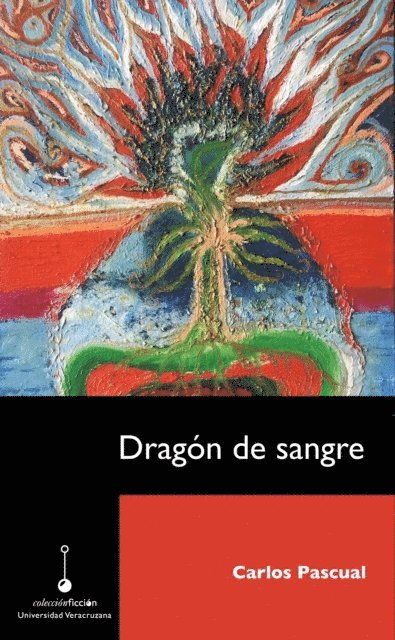
Dragón de sangre, obra ganadora del Premio Nacional de Dramaturgia Emilio Carballido, 2022, retoma uno de los hechos más crueles y vergonzosos de nuestra historia: la matanza de ciudadanos chinos en Torreón, en el año de 1911, a manos de las fuerzas revolucionarias maderistas. Pero su autor, curtido no sólo en la experiencia dramatúrgica sino también en el trabajo de la investigación histórica, va mucho más allá del hecho en sí y profundiza en la xenofobia, en el miedo secular a "los otros" y en el origen de los mayores crímenes que la humanidad puede cometer: el racismo.Con gran destreza técnica, Pascual pone el dedo en la llaga y a través de la farsa y el humor descarnado, nos obliga a mirar nuestra realidad en el espejo: México es un país profundamente racista y en su nacionalismo extremo, ha buscado eliminar siempre cualquier influencia extranjera considerando al otro como "un extraño enemigo".Pero al margen de la tesis de la obra, dragón de sangre se convierte en una avalancha de acontecimientos, en un torbellino de tragedias particulares, de abandonos, risas amargas y nostálgica belleza. Es también una triste historia de amor y es, según los miembros del jurado que la premiaron, "una pieza de gran teatro épico. De ese gran teatro que ya no se escribe y del que la escena nacional está tan necesitada".
E-bok
Spanska, 201784 kr
Läs direkt efter köp
El relato de viajes más antiguo en nuestro país del que se tiene noticia fue escrito por una mujer. Lo habría redactado en el siglo IV una dama gallega llamada Egeria en forma de cartas dirigidas a sus amigas. Aún hoy, lo que se conserva de este fatigoso viaje de peregrinación a Tierra Santa no ha perdido ni la frescura ni el valor testimonial que supuso tan largo periplo en las postrimerías del Imperio Romano, vivido y relatado desde la perspectiva de una mujer singular, curiosa y decidida. A través de la Vía Domitia, la autora recorre Constantinopla y los escenarios bíblicos de Jerusalén, Egipto, el Sinaí y Mesopotamia, tomando nota e interesándose por todo lo que ve. Carlos Pascual se ocupa de la traducción de esas cartas, así como de la introducción, notas y bibliografía de esta Peregrinatio o Itinerarium, un texto redactado en el siglo IV, copiado en el siglo XI por un monje de la abadía de Montecasino y recuperado felizmente a finales del siglo XIX.