Bruce D. Jones - Böcker
Visar alla böcker från författaren Bruce D. Jones. Handla med fri frakt och snabb leverans.
7 produkter
7 produkter
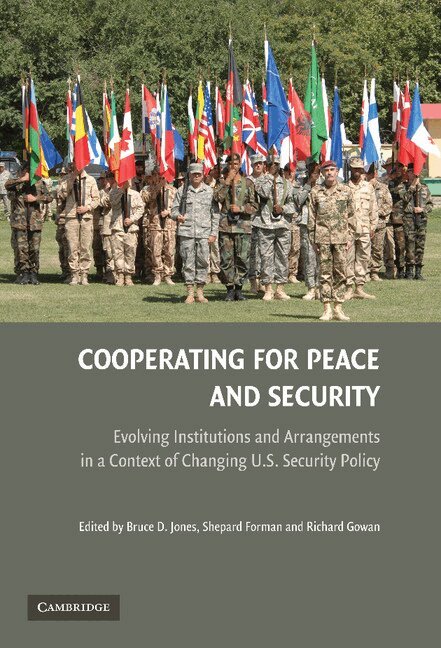
Cooperating for Peace and Security
Evolving Institutions and Arrangements in a Context of Changing U.S. Security Policy
Inbunden, Engelska, 2009
1 339 kr
Skickas inom 7-10 vardagar
Cooperating for Peace and Security attempts to understand - more than fifteen years after the end of the Cold War, seven years after 9/11, and in the aftermath of the failure of the United Nations (UN) reform initiative - the relationship between US security interests and the factors that drove the evolution of multilateral security arrangements from 1989 to the present. Chapters cover a range of topics - including the UN, US multilateral cooperation, the North Atlantic Treaty Organization (NATO), nuclear nonproliferation, European and African security institutions, conflict mediation, counterterrorism initiatives, international justice and humanitarian cooperation - examining why certain changes have taken place and the factors that have driven them and evaluating whether they have led to a more effective international system and what this means for facing future challenges.
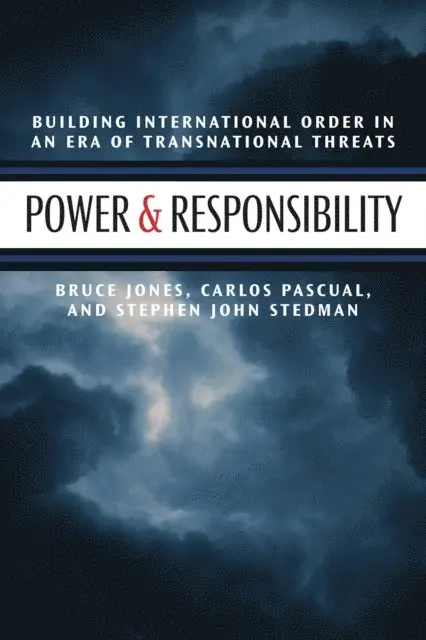
Power and Responsibility
Building International Order in an Era of Transnational Threats
Häftad, Engelska, 2010
354 kr
Skickas inom 10-15 vardagar
""The aim of the Managing Global Insecurity project is to launch a reform effort of the global security system in 2009. That task is both ambitious and urgent.... The time to act is now.""from the Foreword by Javier SolanaThe twenty-first century will be defined by security threats unconstrained by bordersfrom economic instability, climate change, and nuclear proliferation to conflict, poverty, terrorism, and disease. The greatest test of global leadership will be building partnerships and institutions for cooperation that can meet the challenge. Power and Responsibility describes how American leadership can rebuild international order to promote global security and prosperity for today's transnational world. Power & Responsibility establishes a new foundation for international security: ""responsible sovereignty,"" or the notion that sovereignty entails obligations and duties toward other states as well as one's own citizens. Governments must cooperate across borders to safeguard common resources and tackle common threats.Power & Responsibility argues that in order to advance its own interests, the United States must learn to govern in an interdependent world, exercise leadership through cooperation, and create new institutions with today's traditional and emerging powers. The result of a collaborative project on Managing Global Insecurity, the book also reflects the MGI project's global dialogueextensive consultations in the United States and in regions around the world as well as discussions with the MGI project's Advisory Group, composed of prominent U.S. and international figures.""The 2008 financial crisis has brought our global interconnectedness close to home. But economic insecurity is just one concern. Power and Responsibility provides a road map for building effective policies and legitimate global institutions to tackle today's suite of transnational challenges.""Kemal Dervis, administrator, UN Develo
502 kr
Skickas inom 10-15 vardagar
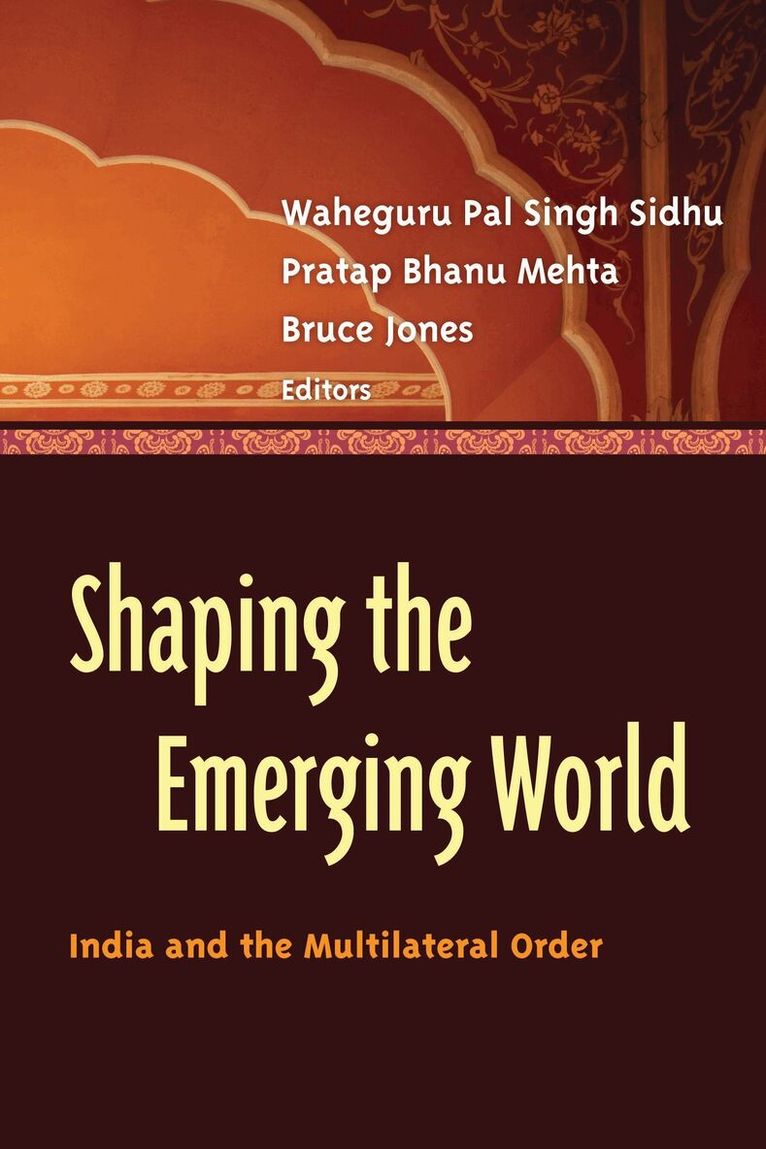
India faces a defining period. Its status as a global power is not only recognized but increasingly institutionalized, even as geopolitical shifts create both opportunities and challenges. With critical interests in almost every multilateral regime and vital stakes in emerging ones, India has no choice but to influence the evolving multilateral order. If India seeks to affect the multilateral order, how will it do so? In the past, it had little choice but to be content with rule takingadhering to existing international norms and institutions. Will it now focus on rule breakingchallenging the present order primarily for effect and seeking greater accommodation in existing institutions? Or will it focus on rule shapingcontributing in partnership with others to shape emerging norms and regimes, particularly on energy, food, climate, oceans, and cyber security? And how do India's troubled neighborhood, complex domestic politics, and limited capacity inhibit its rule-shaping ability?Despite limitations, India increasingly has the ideas, people, and tools to shape the global orderin the words of Jawaharlal Nehru, ""not wholly or in full measure, but very substantially."" Will India emerge as one of the shapers of the emerging international order? This volume seeks to answer that question.
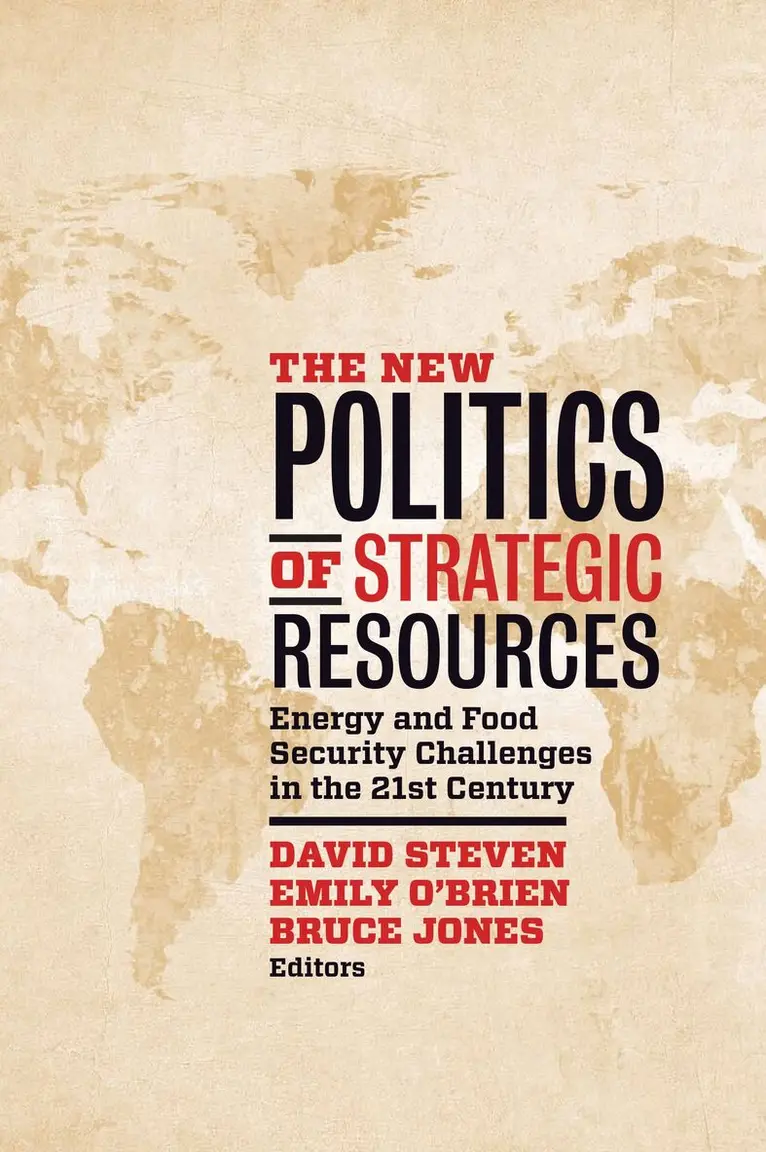
New Politics of Strategic Resources
Energy and Food Security Challenges in the 21st Century
Häftad, Engelska, 2014
434 kr
Skickas inom 10-15 vardagar
Since 2008, energy and food marketsthose most fundamental to human existencehave remained in turmoil. Resource scarcity has had a much bigger global impact in recent years than has been predicted, with ongoing volatility a sign that the world is only part-way through navigating a treacherous transition in the way it uses resources. Scarcity, and perceptions of scarcity, increase political risks, while geopolitical turmoil exacerbates shortages and complicates the search for solutions.The New Politics of Strategic Resources examines the political dimensions of strategic resource challenges at the domestic and international levels. For better or worse, energy and food markets are shaped by perceptions of national interest and do not behave as traditional market goods. So while markets are an essential part of any response to tighter resource supplies, governments also will play a key role. David Steven, Emily O'Brien, Bruce Jones, and their colleagues discuss what those roles are and what they should be.The architecture for coordinating multilateral responses to these dynamics has fallen short, raising questions about the effective international management of these issues. Politics impede here too, as the major powers must negotiate political and security trade-offs to cooperate on the design of more robust international regimes and mechanisms for resource security and the provision of global public goods.This timely volume includes chapters on major powers (United States, India, China) and key suppliers (Russia, Saudi Arabia). The contributors also address thematic topics, such as the interaction between oil and state fragility; the changing political dynamics of climate change; and the politics of resource subsidies.
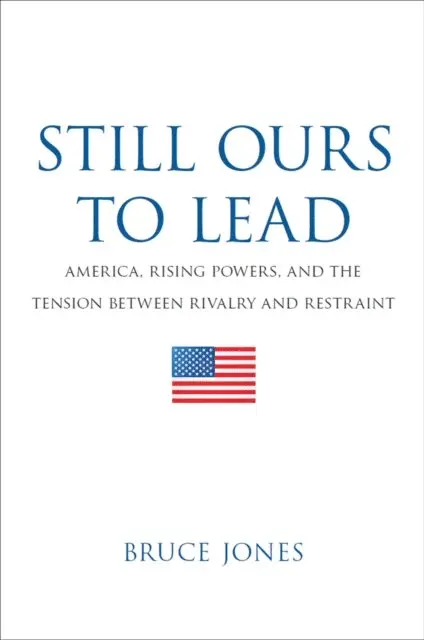
Still Ours to Lead
America, Rising Powers, and the Tension between Rivalry and Restraint
Häftad, Engelska, 2014
287 kr
Skickas inom 10-15 vardagar
Is the United States still a ""superpower""? How are the rising powers establishing themselves in international politics and security? What is the future of global stability?For over a decade, Bruce Jones has had a front-row seat as the emerging powersprincipally China, India, and Brazil, but also Turkey, Indonesia, Korea, and othersthrust themselves onto the global stage. From Delhi to Doha to Beijing to Brasilia, he's met with the politicians, diplomats, business leaders, and scholars of those powers as they craft their strategies for rising influenceand with senior American officials as they forge their response.In Still Ours to Lead, Jones tells a nuanced story of American leadership. He artfully examines the tension between the impulse to rival the United States and the incentives for restraint and cooperation among the rising powers. That balance of rivalry and restraint provides the United States with a continued ability to solve problems and to manage crises at roughly the same rate as when American dominance was unquestioned. Maintaining the balance is central to the question of whether we will live in a stable or unstable system in the period to come. But it just so happens that this challenge plays to America's unique strengthits unparalleled ability to pull together broad and disparate coalitions for action. To succeed, America must adapt its leadership to new realities.
274 kr
Skickas inom 10-15 vardagar
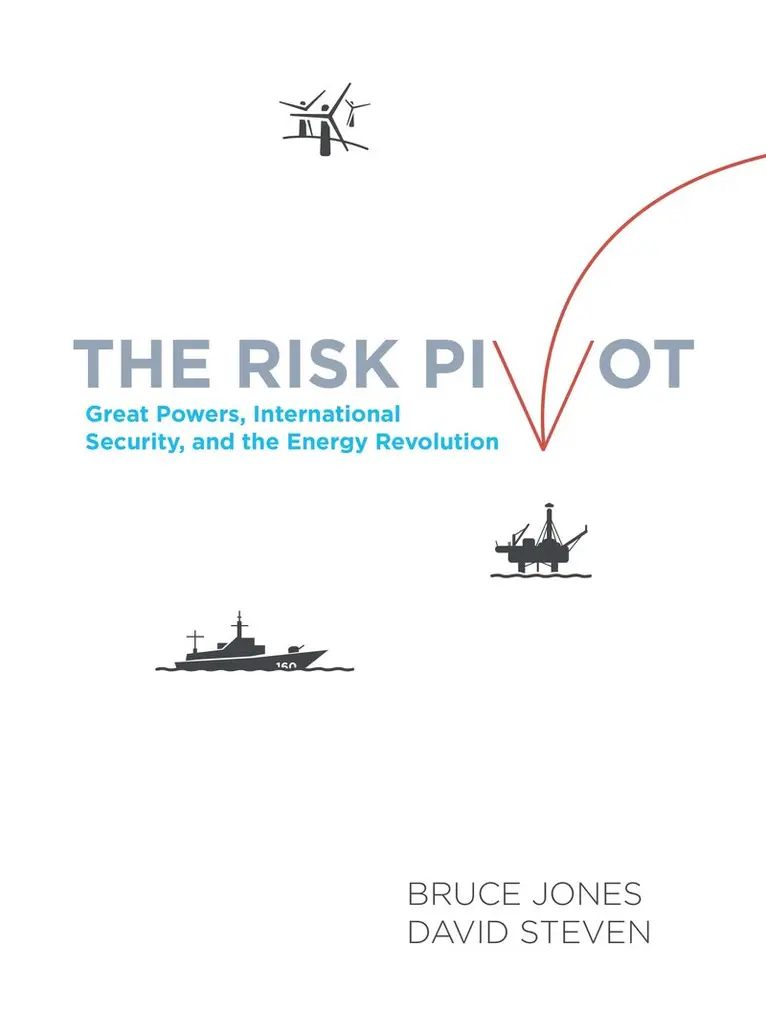
The last decade has seen a revolution in global energy. First, we saw explosive growth in demand from Asia's rising powers, which fueled fears about scarcity and conflict. But we've also seen an American revolution in technology and markets, resulting in a dramatic increase in sup-ply. This is strengthening America's hand in the worldbut it's not without complications. There are major security consequences of these shifts. Among the most consequential are China and India, Asia's emerging giants, which are increasingly exposed to political risks associated with energy risks, as well as the energy flows, pivoting to Asia. Meanwhile the great powers struggle to balance their need for fossil fuels with a mounting effort to tackle climate change. The top powers, and the United States above all, face a stra-tegic choice: whether to use energy as a weapon of geopolitics, or as a tool of a stable order.CONTENTSIntroduction1. The President and the KingKey Messages of the Book2. The Energy RevolutionsA PrimerGeopolitics in FluxThe Players3. ChoicesScenarios, and the Choice the Powers Confront4. Rough Seas AheadThe Great Powers' Search for Energy SecurityGlobalization and ComplexityThe Problems5. Transition in the Gulf6. The Turbulent Middle7. Fragile States8. The Russian Problem9. Connectionsfrom Pipelines to PoliticsGovernanceThe Partners10. An Emerging System of Global Energy Governance11. Leadership Choices
Cooperating for Peace and Security
Evolving Institutions and Arrangements in a Context of Changing U.S. Security Policy
Häftad, Engelska, 2012
455 kr
Skickas inom 7-10 vardagar
Cooperating for Peace and Security attempts to understand - more than fifteen years after the end of the Cold War, seven years after 9/11, and in the aftermath of the failure of the United Nations (UN) reform initiative - the relationship between US security interests and the factors that drove the evolution of multilateral security arrangements from 1989 to the present. Chapters cover a range of topics - including the UN, US multilateral cooperation, the North Atlantic Treaty Organization (NATO), nuclear nonproliferation, European and African security institutions, conflict mediation, counterterrorism initiatives, international justice and humanitarian cooperation - examining why certain changes have taken place and the factors that have driven them and evaluating whether they have led to a more effective international system and what this means for facing future challenges.