Carol Graham – författare
Visar alla böcker från författaren Carol Graham. Handla med fri frakt och snabb leverans.
19 produkter
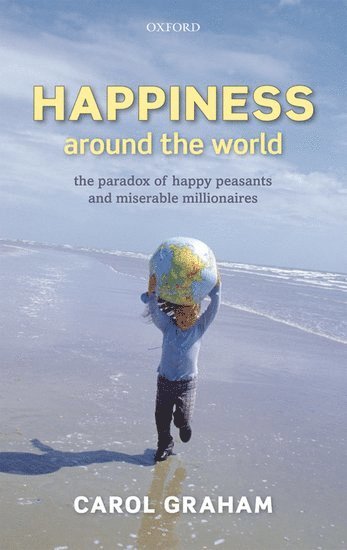
Happiness Around the World
The paradox of happy peasants and miserable millionaires
Av Carol Graham
E-bok, 2009
489 kr
Lägg i varukorg
For centuries the pursuit of happiness was the preserve of either the philosopher or the voluptuary and took second place to the basic need to survive on the one hand, and the pressure to conform to social conventions and morality on the other. More recently there is a burgeoning interest in the …
Happiness Around the World
The paradox of happy peasants and miserable millionaires
Av Carol Graham
E-bok, 2009
408 kr
Lägg i varukorg
For centuries the pursuit of happiness was the preserve of either the philosopher or the voluptuary and took second place to the basic need to survive on the one hand, and the pressure to conform to social conventions and morality on the other. More recently there is a burgeoning interest in the …
Happiness Around the World
The paradox of happy peasants and miserable millionaires
Av Carol Graham
Häftad, 2012
653 kr
Lägg i varukorg
For centuries the pursuit of happiness was the preserve of either the philosopher or the voluptuary and took second place to the basic need to survive on the one hand, and the pressure to conform to social conventions and morality on the other. More recently there is a burgeoning interest in the …
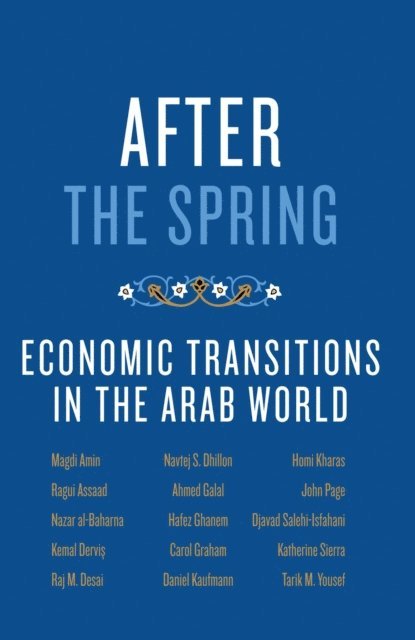
After the Spring
Economic Transitions in the Arab World
Av Magdi Amin, Ragui Assaad m. fl.
Inbunden, 2012
871 kr
Lägg i varukorg
The Arab Spring constitutes perhaps the most far-reaching political and economic transition since the end of communism in Europe. For too long, the economic aspirations of the people in the region, especially young people, have been ignored by leaders in Arab countries and abroad. Competing views …
After the Spring
Economic Transitions in the Arab World
Av Daniel Kaufmann, Carol Graham m. fl.
E-bok, 2012
554 kr
Lägg i varukorg
This volume examines the economic problems of Arab countries following the Arab Spring. The authors argue that reforms need to accomplish four objectives: more opportunities for youth, modernization of the state, creation of a competitive private economy, and integration of Arab countries with the …
After the Spring
Economic Transitions in the Arab World
Av Daniel Kaufmann, Carol Graham m. fl.
E-bok, 2012
554 kr
Lägg i varukorg
This volume examines the economic problems of Arab countries following the Arab Spring. The authors argue that reforms need to accomplish four objectives: more opportunities for youth, modernization of the state, creation of a competitive private economy, and integration of Arab countries with the …
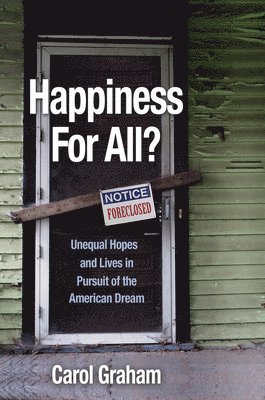
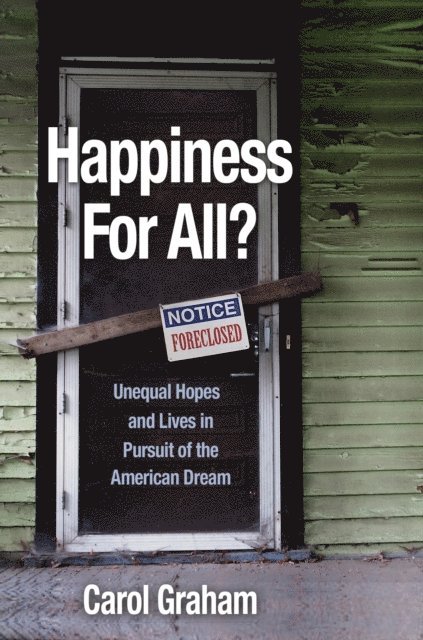
Happiness for All?
Unequal Hopes and Lives in Pursuit of the American Dream
Av Carol Graham
Inbunden, 2017
378 kr
Lägg i varukorg
How the optimism gap between rich and poor is creating an increasingly divided society The Declaration of Independence states that all people are endowed with certain unalienable rights, and that among these is the pursuit of happiness. But is happiness available equally to everyone in America …
Happiness for All?
Unequal Hopes and Lives in Pursuit of the American Dream
Av Carol Graham
Häftad, 2020
229 kr
Lägg i varukorg
How the optimism gap between rich and poor is creating an increasingly divided societyThe Declaration of Independence states that all people are endowed with certain unalienable rights. Among them is the pursuit of happiness. But is happiness available equally to everyone in America? How about …
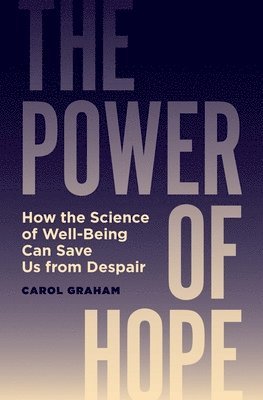
Power of Hope
How the Science of Well-Being Can Save Us from Despair
Av Carol Graham
Inbunden, 2023
321 kr
Lägg i varukorg
Why hope matters as a metric of economic and social well-beingIn a society marked by extreme inequality of income and opportunity, why should economists care about how people feel? The truth is that feelings of well-being are critical metrics that predict future life outcomes. In this timely and …
Power of Hope
How the Science of Well-Being Can Save Us from Despair
Av Carol Graham
E-bok, 2023
305 kr
Lägg i varukorg
Why hope matters as a metric of economic and social well-being In a society marked by extreme inequality of income and opportunity, why should economists care about how people feel? The truth is that feelings of well-being are critical metrics that predict future life outcomes. In this timely and …
Power of Hope
How the Science of Well-Being Can Save Us from Despair
Av Carol Graham
Häftad, 2026
244 kr
Lägg i varukorg
Why hope matters as a metric of economic and social well-beingIn a society marked by extreme inequality of income and opportunity, why should economists care about how people feel? The truth is that feelings of well-being are critical metrics that predict future life outcomes. In this timely and …
Pursuit of Happiness
Toward an Economy of Well-Being
Av Carol Graham
E-bok, 2011
305 kr
Lägg i varukorg
In The Pursuit of Happiness, the latest addition to the Brookings FOCUS series, Carol Graham explores what we know about the determinants of happiness, across and within countries at different stages of development. She then takes a look at just what we can do with that new knowledge and clearly …
Pursuit of Happiness
An Economy of Well-Being
Av Carol Graham
E-bok, 2012
312 kr
Lägg i varukorg
In The Pursuit of Happiness , renowned economist Carol Graham explores what we know about the determinants of happiness and clearly presents both the promise and the potential pitfalls of injecting the ""economics of happiness"" into public policymaking. While the book spotlights the innovative …
Tiny Little Cracks
Powerful Poems for Your Pocket Collection: Bird's Eye View
Av Carol Graham
Inbunden, 2021
263 kr
Lägg i varukorg
Happiness for All?
Unequal Hopes and Lives in Pursuit of the American Dream
Av Carol Graham
E-bok, 2017
305 kr
Lägg i varukorg
How the optimism gap between rich and poor is creating an increasingly divided society The Declaration of Independence states that all people are endowed with certain unalienable rights, and that among these is the pursuit of happiness. But is happiness available equally to everyone in America …
Pray the Answer, Not the Problem
Av Carol Graham
E-bok, 2023
128 kr
Lägg i varukorg
Does God really care about your prayer requests? Millions ask that question. Each of these real-life stories highlights miracles as a result of a specific way to pray. Your own prayer life will be transformed as you discover: •How to know God''s will in your life •The prayers that unlock heaven …