Carolee Schneemann - Böcker
Visar alla böcker från författaren Carolee Schneemann. Handla med fri frakt och snabb leverans.
4 produkter
4 produkter
315 kr
Skickas inom 7-10 vardagar
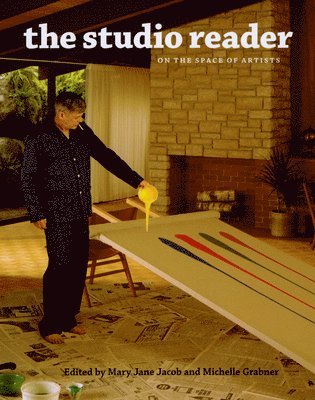
The image of a tortured genius working in near isolation has long dominated our conceptions of the artist's studio. Examples are abound: think Jackson Pollock dripping resin on a cicada carcass in his shed in the Hamptons. But times have changed; ever since Andy Warhol declared his art space a 'factory', artists have begun to envision themselves as the leaders of production teams, and their sense of what it means to be in the studio has altered just as dramatically as their practices. "The Studio Reader" pulls back the curtain from the art world to reveal the real activities behind artistic production. What does it mean to be in the studio? What is the space of the studio in the artist's practice? How do studios help artists envision their agency and, beyond that, their own lives? This forward-thinking anthology features an all-star array of contributors, ranging from Svetlana Alpers, Bruce Nauman, and Robert Storr to Daniel Buren, Carolee Schneemann, and Buzz Spector, each of whom locates the studio both spatially and conceptually - at the center of an art world that careens across institutions, markets, and disciplines.A companion for anyone engaged with the spectacular sites of art at its making, "The Studio Reader" reconsiders this crucial space as an actual way of being that illuminates our understanding of both artists and the world they inhabit.
285 kr
Tillfälligt slut
270 kr
Tillfälligt slut
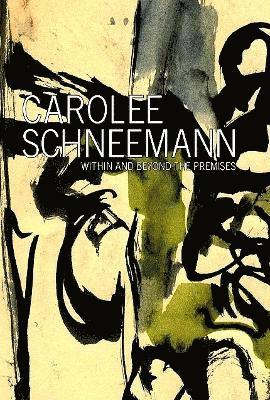
Over forty works spanning the career of pioneering painter, filmmaker, writer, and performance/installation artist Carolee Schneemann.Over forty works spanning the career of pioneering painter, filmmaker, writer, and performance/installation artist Carolee Schneemann are featured in this edition of the Dorsky Museum's Hudson Valley Masters exhibition series. Schneemann's multidisciplinary, deeply personal investigations explore the incomprehensibly complex dynamics between mind and body. As Brian Wallace states in his introduction, "What distinguishes Schneemann's investigations-and what characterizes the varied and interconnected works that constitute them-is their insistent challenge to powerful cultural mechanisms that perpetuate (and rely upon) this mind-body split. These mechanisms include epistemological positions that value thought over the senses... [and] also involve related positions-in ethics and aesthetics-that favor the visual and the abstract over the physical and personal and involve the gender-b(i)ased notions of psychology, behavior, and history that waves of feminisms have sought to describe and challenge."
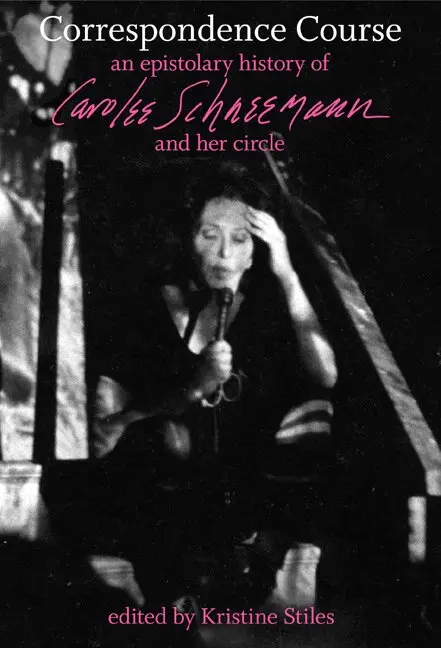
Correspondence Course
An Epistolary History of Carolee Schneemann and Her Circle
Häftad, Engelska, 2010
481 kr
Skickas inom 7-10 vardagar
Creator of such acclaimed works as the performance Meat Joy and the film Fuses, for decades the artist Carolee Schneemann has saved the letters she has written and received. Much of this correspondence is published here for the first time, providing an epistolary history of Schneemann and other figures central to the international avant-garde of happenings, Fluxus, performance, and conceptual art. Schneemann corresponded for more than forty years with such figures as the composer James Tenney, the filmmaker Stan Brakhage, the artist Dick Higgins, the dancer and filmmaker Yvonne Rainer, the poet Clayton Eshleman, and the psychiatrist Joseph Berke. Her “tribe,” as she called it, altered the conditions under which art is made and the form in which it is presented, shifting emphasis from the private creation of unique objects to direct engagement with the public in ephemeral performances and in expanded, nontraditional forms of music, film, dance, theater, and literature. Kristine Stiles selected, edited, annotated, and wrote the introduction to the letters, assembling them so that readers can follow the development of Schneemann’s art, thought, and private and public relationships. The correspondence chronicles a history of energy and invention, joy and sorrow, and charged personal and artistic struggles. It sheds light on the internecine aesthetic politics and mundane activities that constitute the exasperating vicissitudes of making art, building an artistic reputation, and negotiating an industry as unpredictable and demanding as the art world in the mid- to late twentieth century.