Caroline Fowler - Böcker
Visar alla böcker från författaren Caroline Fowler. Handla med fri frakt och snabb leverans.
8 produkter
8 produkter
421 kr
Skickas inom 7-10 vardagar
The untold story of how paper revolutionized art making during the Renaissance, exploring how it shaped broader concepts of authorship, memory, and the transmission of ideas over the course of three centuriesIn the late medieval and Renaissance period, paper transformed society—not only through its role in the invention of print but also in the way it influenced artistic production. The Art of Paper tells the history of this medium in the context of the artist’s workshop from the thirteenth century, when it was imported to Europe from Africa, to the sixteenth century, when European paper was exported to the colonies of New Spain. In this pathbreaking work, Caroline Fowler approaches the topic culturally rather than technically, deftly exploring the way paper shaped concepts of authorship, preservation, and the transmission of ideas during this period. This book both tells a transcultural history of paper from the Cairo Genizah to the Mesoamerican manuscript and examines how paper became “Europeanized” through the various mechanisms of the watermark, colonization, and the philosophy of John Locke. Ultimately, Fowler demonstrates how paper—as refuse and rags transformed into white surface—informed the works for which it was used, as well as artists’ thinking more broadly, across the early modern world.
283 kr
Skickas inom 7-10 vardagar
A global reconsideration and broadening of the definition of art conservation through the lenses of theory, ethics, culture, and historyThought-provoking and timely, this volume challenges inherited thinking on art conservation practice and purposefully reconsiders the definition of the field. Scholars from around the world discuss topics including the conservation of global painting practices, cold storage and digitization, conservation within institutions, and the decolonization of art conservation. The authors seek to broaden the scope of conservation practice and challenge the boundaries that set it apart from art history and art making. They thoughtfully consider the implications of conservation beyond museum walls. This volume in the esteemed Clark Studies in the Visual Arts maintains the series’s tradition of providing a nuanced reckoning with vital themes in the field.Distributed for the Clark Art Institute
283 kr
Skickas inom 7-10 vardagar
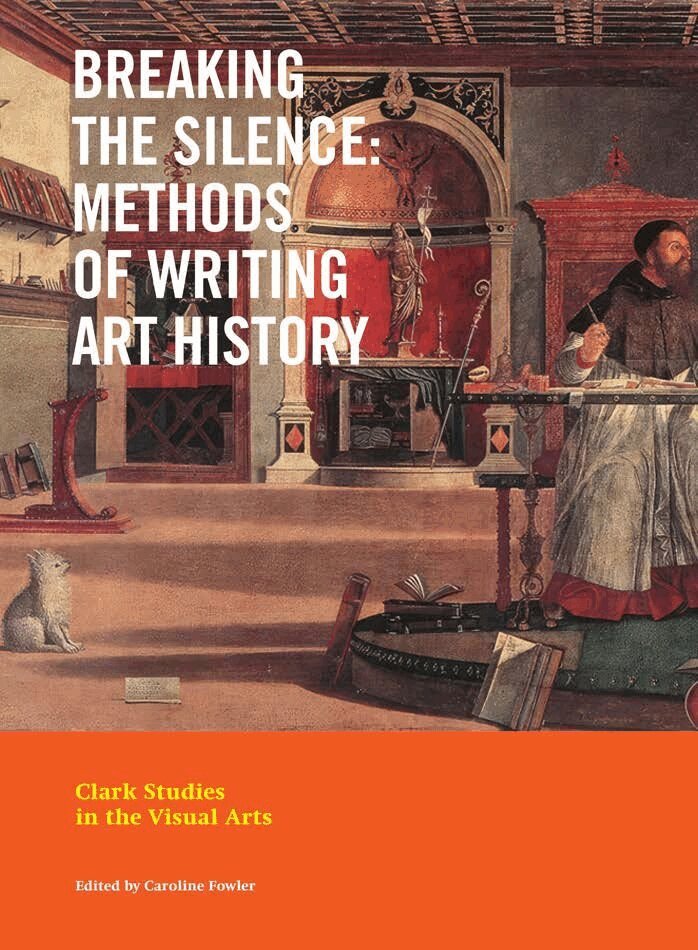
A collection of essays that think with, against, and beside the intellectual questions that have engaged Michael Ann Holly throughout her storied career American scholar Michael Ann Holly (b. 1944) has devoted a decades-long career to the historiography and theory of art history. Some of the ideas with which she has grappled include the impossible material presence and experience of loss that drives the discipline of art history; the role of writing in art history and the never-ceasing tension language and objects; and melancholy, loss, and historical inquiry. For this exciting volume, more than a dozen of the top art historians working today were invited to think creatively about writing art history while engaging in intellectual conversation with Holly. The book’s essays offer new and unsettling questions rather than tacitly reproducing canonized knowledge. Distributed for the Clark Art Institute
351 kr
Skickas inom 7-10 vardagar
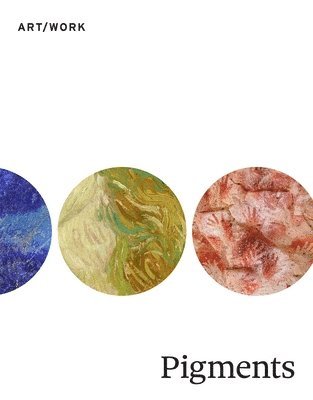
A concise illustrated history of one of art’s most important and elusive elementsOver the millennia, humans have used pigments to decorate, narrate, and instruct. Charred bone, ground earth, stones, bugs, and blood were the first pigments. New pigments were manufactured by simple processes such as corrosion and calcination until the Industrial Revolution introduced colors outside the spectrum of the natural world. Pigments brings together leading art historians and conservators to trace the history of the materials used to create color and their invention across diverse cultures and time periods. This richly illustrated book features incisive historical essays and case studies that shed light on the many forms of pigments—the organic and inorganic; the edible and the toxic; and those that are more precious than gold. It shows how pigments were as central to the earliest art forms and global trade networks as they are to commerce, ornamentation, and artistic expression today. The book reveals the innate instability and mutability of most pigments and discusses how few artworks or objects look as they did when they were first created.From cave paintings to contemporary art, Pigments demonstrates how a material understanding of color opens new perspectives on visual culture and the history of art.
321 kr
Kommande
A beautifully illustrated look at how weaving has influenced art, industry, and society worldwideWeaving is one of humanity’s oldest technologies and remains central to our global economies. Yet because of the fragility of textiles and their association with women’s labor and craft, they have often been marginalized in art history. From the early-modern Andes to the contemporary artist’s studio, weaving has shaped artistic practice and raised important questions for conservators and museums responsible for preserving these delicate materials.At its core, weaving is an act of material transformation in which discrete threads are organized into coherent cloth. This book brings together some of today’s leading conservationists and art historians to examines this process, highlighting the structural principles that underlie an art often assumed to be intuitive. The contributors explore how weaving reshaped material production and social life across cultures and historical periods, creating networks of skilled makers and new forms of exchange and shared knowledge.Taking readers from the human labor of the handloom to the mechanized production of the industrial age, Weaving demonstrates how a practice at the intersection of art, science, and community has shaped social, technological, and economic histories around the globe.
291 kr
Skickas inom 7-10 vardagar
Why modern and contemporary art—and art conservation—can’t be understood without taking account of the revolutionary impact of plasticsModern and contemporary art wouldn’t exist without the invention of plastics. From sculpture to paint, and photography to film, plastics have shaped every major medium of art. In turn, plastics have revolutionized art conservation, transforming the possibilities of preservation but also producing new challenges for conservators struggling to preserve toxic and degrading material. Hailed as utopian in the twentieth century, plastics today are often understood as pollution and waste—a central cause of ecological crisis. Plastics is the first book to address the multifaceted history of plastics from the perspective of artists, art historians, conservators, and environmental scientists.Plastics demonstrates that this material cannot easily be summarized as toxic or utopian, catastrophic or necessary. Instead, plastics define the modern world in both its possibility and failures. The book also reveals how artists have been a critical overlooked voice in debates about plastics, and how they have offered theories of the material through works that explore its potential and harmfulness.Presenting a variety of perspectives on the world of plastics through the lens of art, artmaking, art history, and art conservation, Plastics shows why and how coming to terms with this material is critical to understanding not only modern and contemporary art and art conservation but also the crises of the twenty-first century.
318 kr
Skickas
In Slavery and the Invention of Dutch Art, Caroline Fowler examines the fundamental role of the transatlantic slave trade in the production and evolution of seventeenth-century Dutch art. Whereas the sixteenth-century image debates in Europe engaged with crises around the representation of divinity, Fowler argues that the rise of the transatlantic slave trade created a visual field of uncertainty around picturing the transformation of life into property. Fowler demonstrates how the emergence of landscape, maritime, and botanical painting were deeply intertwined with slavery amp rsquo s economic expansion. Moreover, she considers how the development of one of the first art markets was inextricable from the trade in human lives as chattel property. Reading seventeenth-century legal theory, natural history, inventories, and political pamphlets alongside contemporary poetry, theory, and philosophy from Black feminism and the African diaspora, Fowler demonstrates that ideas about property, personhood, and citizenship were central to the oeuvres of artists such as Rembrandt van Rijn, Hercules Segers, Frans Post, Johannes Vermeer, and Maria Sibylla Merian and therefore inescapably within slavery amp rsquo s grasp.
1 151 kr
Skickas inom 5-8 vardagar